
Swiss destinations can look equally car-free on a map and feel completely different once you start walking. Bern’s arcades carry visitors through a compact historic spine before the Aare introduces real climbs. Geneva spreads farther, yet trams and lake shuttles make its second visitor cluster unusually easy to reach. Lucerne compresses its station, river, Old Town and lakefront into a remarkably small area. Lausanne stacks its sights vertically, while Interlaken stays almost level beneath the mountains. Zurich leads because it combines compact central geography with strong transit and exceptionally easy arrival. Zermatt is the reminder that car-free and walkable are not identical travel experiences.
Switzerland’s 10 Most Walkable Destinations for Travelers
| Rank | City | Overall score | Strongest advantage | Main limitation |
|---|---|---|---|---|
| 1 | Zurich | 93/100 | Best overall balance | East-bank hills, bridge choices and Zürich West |
| 2 (tie) | Bern | 92/100 | Exceptional compact Old Town spine | Aare, Matte and Rosengarten elevation |
| 2 (tie) | Geneva | 92/100 | Excellent public transport and easy airport-to-center arrival | International district beyond the central cluster |
| 4 | Basel | 91/100 | Connected Old Town–Rhine system | Historic paving, tram tracks and outer museums |
| 5 | Lucerne | 90/100 | Exceptionally compact station–Old Town–lakefront core | Cobbles, crowds and Transport Museum extension |
| 6 | Lugano | 89/100 | Lakefront core plus useful station funicular | Station elevation and outer lakefront districts |
| 7 | Interlaken | 88/100 | Flat, direct central spine between West and Ost stations | Major visitor appeal lies in regional excursions |
| 8 | Montreux | 86/100 | Clear, attractive lakefront promenade | Elongated geography; Chillon is about 4 km east |
| 9 | Lausanne | 84/100 | Excellent M2 support for a car-free stay | Most demanding vertical walking terrain |
| 10 | Zermatt | 82/100 | Compact car-restricted village | Major experiences rely heavily on mountain transport |
Bern and Geneva both share second place, so there is no rank 3 and Basel follows at rank 4. The tie is useful because the trips feel different. Bern packs more into one walkable historic corridor, while Geneva makes a broader visitor map easy through transit.
Zurich Starts Working Before You Leave the Station
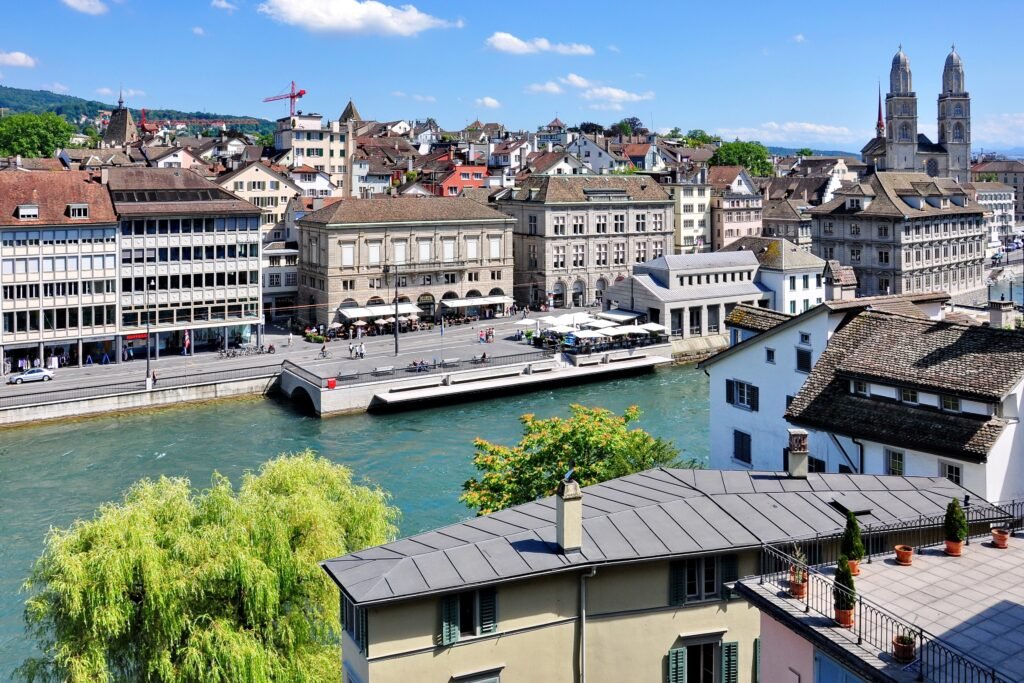
Zürich HB is the strongest starting point in the group. Walk toward Bahnhofstrasse and the weekend begins immediately: Altstadt lanes, the Limmat, major shopping streets and the lakefront all sit close. That compact core is also supported by trams and S-Bahn, so a detour to Zürich West rarely disrupts the day. The Zurich guide shows how the central walk and west-side extension fit together.
Zurich’s lead does not depend on pretending the center is effortless everywhere. Lindenhof and the east-bank university quarter add elevation, while the river channels cross-town movement onto bridges. Zürich West remains a genuine secondary cluster rather than a natural continuation of the Old Town. What separates Zurich is how little friction those limits create once arrival, walking and transit are combined.
Bern and Geneva Tie, but the Weekend Feels Completely Different
Both cities share a score of 92/100, yet their rhythms diverge. In Bern, the reward comes from long continuous walks through a single historic corridor. Geneva, by contrast, works best as a strong central stroll paired with an easy transit jump to a second cluster.
Bern feels tighter from the first step out of the station. Bundesplatz, Zytglogge, the Minster and BärenPark line up along the Old Town, reinforced by extensive arcades. The price of that concentration is vertical movement at the edges. Matte and the Aare sit below the main plateau, while Rosengarten asks for a noticeable climb.
Geneva spreads farther. Cornavin, the lakefront, Old Town and Bastions make a strong core, but Nations is a real second visitor area. Trams, buses, trains and Mouettes make that separation unusually easy to manage. Geneva Airport also feeds directly into Cornavin, so a broader map does not translate into a difficult car-free weekend.
Choose Bern if you want most headline sightseeing to unfold on foot from one central base. Choose Geneva if you are comfortable walking within clusters and using excellent transit between them. he tie reflects two different travel styles rather than a meaningful practical gap.
Basel and Lucerne Keep the Weekend Close to the Water
Basel is organized by the Rhine rather than divided by it. Mittlere Brücke keeps Grossbasel and Kleinbasel connected, so crossing the river feels like part of one central walk. Historic paving, tram tracks and modest slopes add texture without breaking the network. Museum Tinguely stretches the eastern footprint, while Fondation Beyeler is better treated as a transit outing.
Lucerne feels even more compressed around its water. The railway station, Reuss, Chapel Bridge, Old Town and lakefront sit close enough to link naturally without constant transit planning. Cobbles and concentrated crowds can slow the most popular routes, and the Swiss Museum of Transport sits outside the tightest core. The longer international gateway journey explains why arrival is less effortless than Zurich or Geneva, not the station’s city-center position.
Lugano and Lausanne Make Elevation Part of the Plan
Lugano keeps its strongest walking area around Piazza della Riforma, Via Nassa, LAC, Parco Ciani and the lakefront. The catch is the railway station above the lower city. The station funicular is exactly the kind of transit that improves a trip without changing the underlying hill. Paradiso and Cassarate are easy extensions, but neither belongs to one tiny central walking loop.
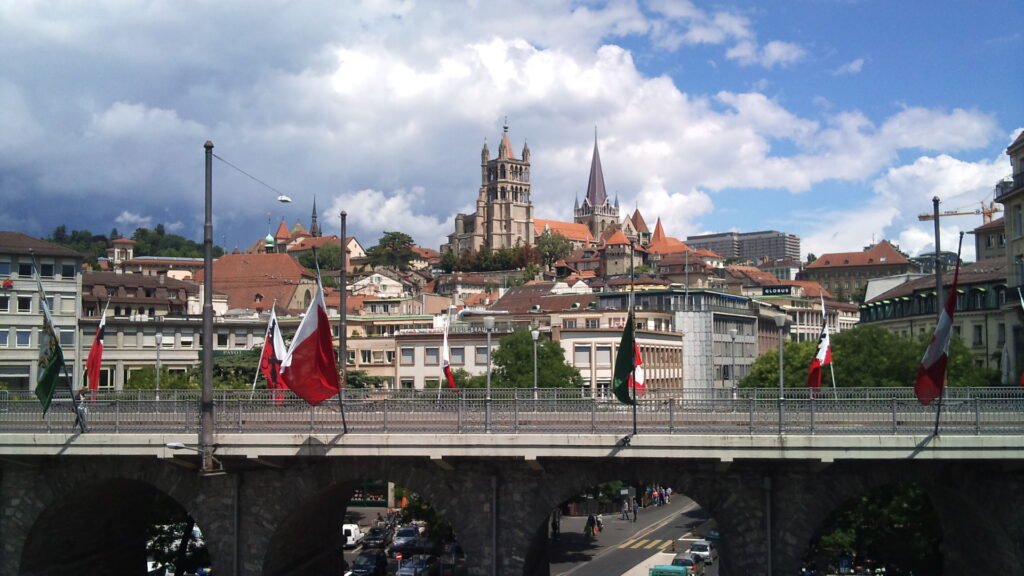
Lausanne pushes this vertical pattern much further. The upper center, Flon, railway station and Ouchy occupy distinct levels, so short map distances can contain real climbing. The M2 is excellent relief, especially for repeated movement between the lake and upper city. It makes Lausanne practical without a car, but it does not make the city flat. Travelers who dislike hills should plan the metro into the day from the start.
When the Town Is Only Part of the Trip
Interlaken: Flat Streets, Bigger Days Beyond Town
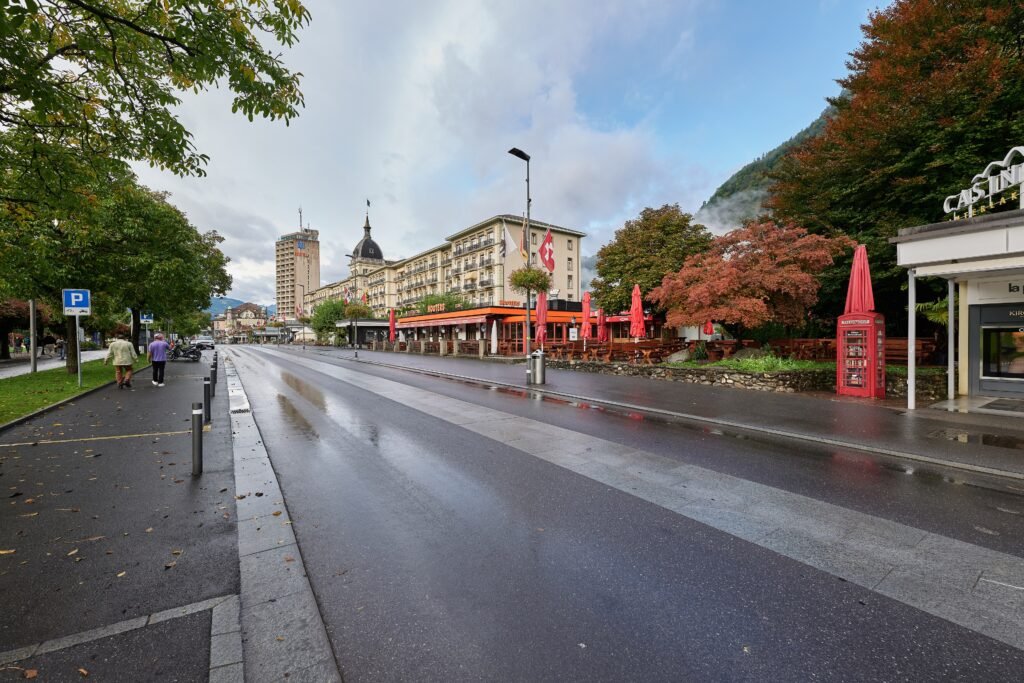
Among Swiss bases, Interlaken offers the easiest central terrain. West and Ost bracket a direct, nearly level spine through Bahnhofstrasse, Höheweg and Höhematte, with Unterseen just across the Aare. The limitation is not walking quality but the fact that visitors often come for excursions: Jungfraujoch, Lauterbrunnen, Grindelwald, Wengen and Mürren. As a result, Interlaken works brilliantly as a car-free hub without becoming the densest urban sightseeing destination.
Montreux: A Promenade That Keeps Stretching East
Montreux is strongest when the trip follows the lake. The central promenade creates a clear walking spine, but the visitor geography lengthens toward Territet and Château de Chillon. Chillon sits roughly four kilometers east of central Montreux, so buses or regional rail can save time. That transport convenience does not change the distance, and streets away from the waterfront are less consistently seamless.
Zermatt: Car-Restricted Village, Mountain-Focused Stay
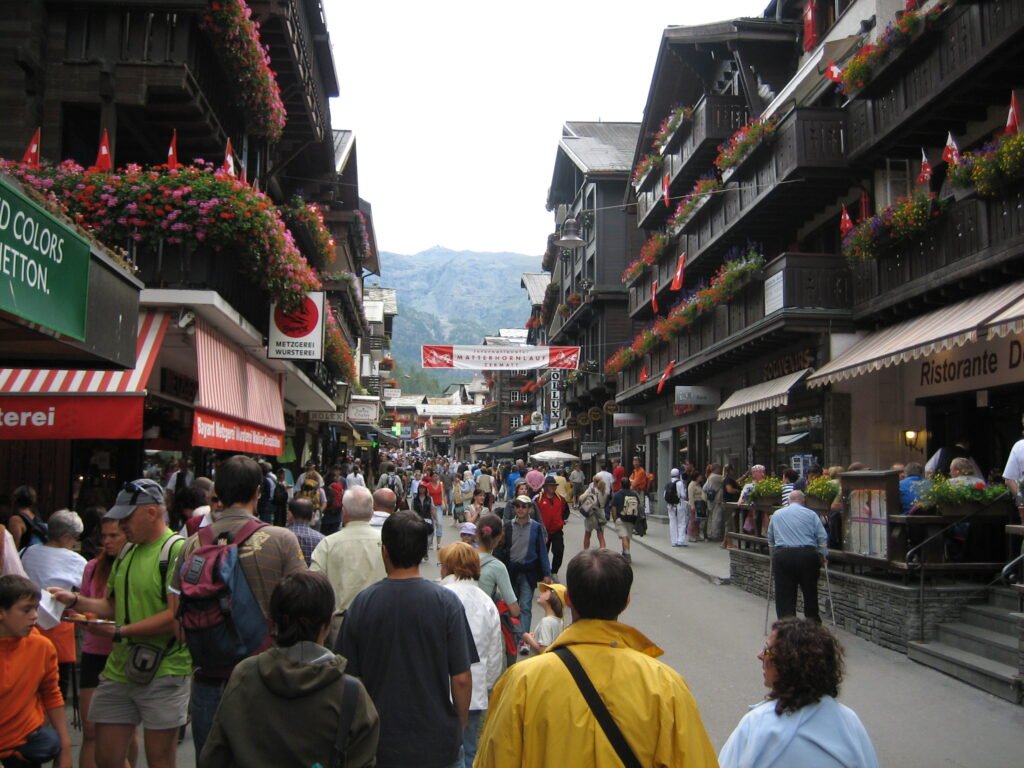
Zermatt is the clearest reminder that car-free and most walkable are not identical. The village core around Bahnhofplatz, Bahnhofstrasse, Kirchplatz, Hinterdorf and the river is compact, and a private car is unnecessary. Yet much of the destination’s appeal sits above the village. Gornergrat, Sunnegga and Matterhorn Glacier Paradise depend on mountain transport, so the weekend quickly becomes a village-plus-mountain trip rather than one continuous walking itinerary.
When the Tram, Metro or Funicular Is Worth Taking
Geneva is the clearest case where transit expands the practical weekend. Use it between the central lakefront and Nations rather than forcing a long low-value walk. Lausanne and Lugano use transit differently: the M2 and station funicular mainly solve vertical movement. Zurich’s trams are most useful for Zürich West and hillside extensions, while Montreux’s lakeshore services shorten its elongated waterfront geography.
The pattern is simple: walk within the strongest visitor area, then use transit where geography stops being efficient. That keeps Bern’s compactness distinct from Geneva’s transit-supported spread, and it keeps Lausanne’s hills visible rather than pretending they disappeared.
Which Swiss Destination Fits Your Walking Style?
| Traveler priority | Best fit | Why |
|---|---|---|
| Strongest all-round weekend | Zurich | A station-led central core, excellent transit and exceptionally easy arrival create the most balanced trip. |
| Maximum sightseeing compactness | Zurich, Bern and Lucerne | All three concentrate major first-time sights unusually well, but through different urban patterns. |
| Historic-center walking | Bern | The station-to-Old-Town-to-BärenPark spine supports long, legible walks with extensive arcades. |
| Strongest transit support | Geneva | Trams, buses, trains and Mouettes make a genuine second visitor cluster unusually easy to reach. |
| Easiest car-free arrival | Zurich and Geneva | Both pair major gateways with fast, direct access into the main visitor geography. |
| Strongest pedestrian environment and easiest terrain | Interlaken | West and Ost stations bracket a direct, nearly level central spine through the valley floor. |
| Most demanding walking terrain | Lausanne | The upper center, Flon, station and Ouchy sit on distinct vertical levels. |
| River-city walking | Basel and Zurich | Basel uses the Rhine as a connected central system; Zurich uses the Limmat as a strong orientation spine. |
| Lakefront walking | Lucerne for compactness; Montreux for promenade length | Lucerne compresses station, Old Town and lake, while Montreux rewards a longer linear waterfront walk. |
| Minimize transit use | Bern, Lucerne and Zurich | Their strongest first-time sightseeing areas can be covered largely on foot from central bases. |
| Comfortable mixing walking and transit | Geneva, Lausanne and Lugano | Transit solves distance or elevation without replacing the strongest walking areas. |
| Mountain-base walking | Interlaken and Zermatt | Interlaken offers a flat rail base; Zermatt pairs a compact car-restricted village with mountain transport. |
Do You Need a Car for Any of These Weekends?
For the normal two- or three-day visit, a private car is unnecessary in every destination ranked here. Zurich, Geneva, Basel, Lucerne, Lugano, Lausanne and Montreux all pair central walking with useful public transport. Bern can be handled largely on foot, while Interlaken is unusually strong for rail-based regional excursions. Zermatt goes further by restricting normal private-car access.
Driving becomes more useful when the trip shifts away from these visitor systems: remote trailheads, rural stops or multi-valley road itineraries. That is a different travel question from choosing the most walkable Swiss city break.
Bottom Line
Zurich is the strongest all-round choice, but the ranking becomes more useful when you choose by walking style. Bern suits travelers who want a concentrated historic core. Geneva suits travelers happy to combine walking with first-rate transit. Lucerne is the clearest compact lakefront option, Interlaken is easiest underfoot, and Lausanne requires the most respect for elevation. Zermatt remains excellent without a car, but its mountains are the trip as much as its village streets.