
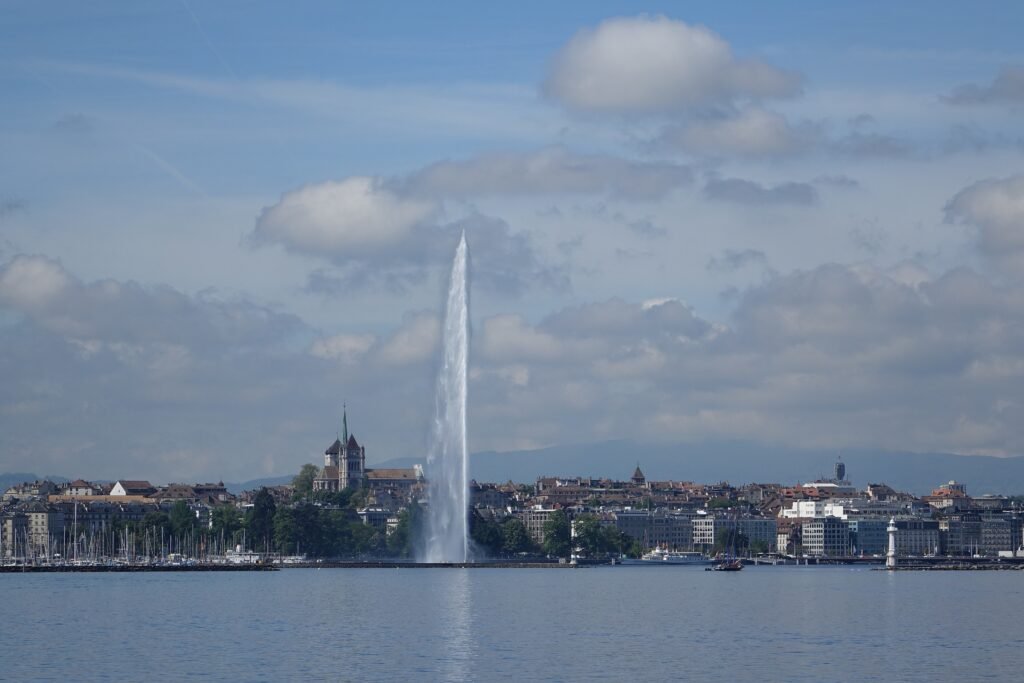
Geneva’s central visitor area wraps around the Rhône’s lake outlet, with Cornavin just north of the water. Pont du Mont-Blanc and nearby bridges connect the station side with Jardin Anglais, Molard, and the lower Old Town. From there, St. Pierre Cathedral rises above the commercial streets, adding a brief but real climb. Bastions sits below the historic quarter, creating a natural downhill continuation after the cathedral and Bourg-de-Four. The lakefront remains flatter and easier. The international district breaks this compact pattern, so Palais des Nations works better as a separate transit-supported cluster.
Why Geneva Works Well on Foot
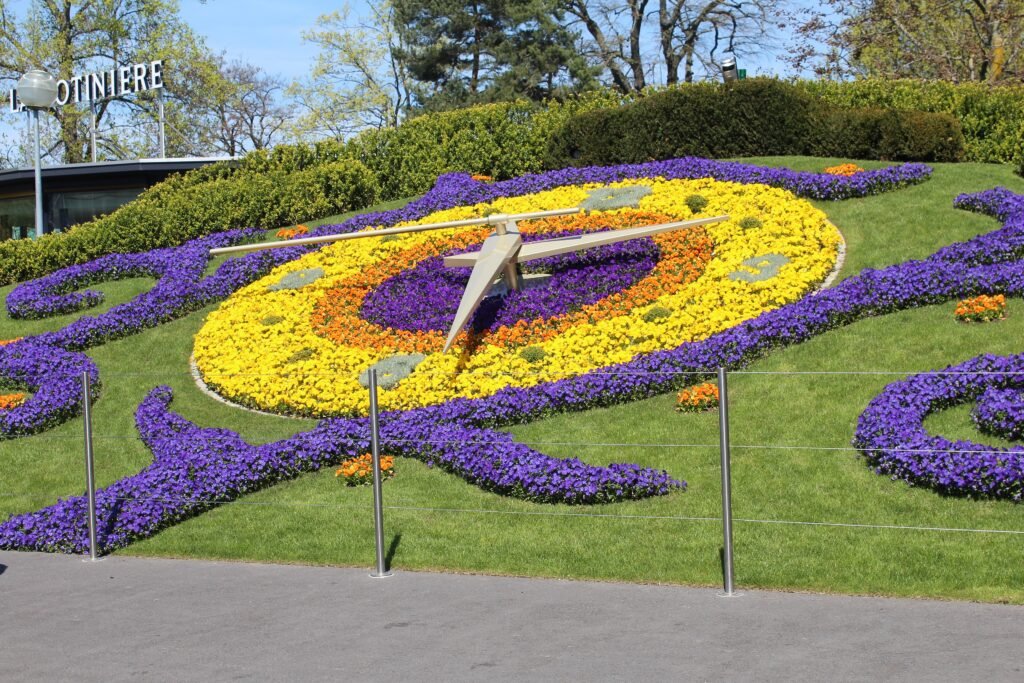
The strongest walking area runs from Cornavin to the lake, across the Rhône outlet, and into the historic left bank. Jardin Anglais, the Flower Clock, Molard, St. Pierre and Bastions fit comfortably into one sightseeing day. Pâquis also links the station directly to the right-bank waterfront. This compactness comes from pedestrian geography, not from Geneva’s excellent transit network.
Water is both an advantage and a constraint. The Rhône and harbor make orientation simple, while bridges determine where cross-bank movement happens. Pont du Mont-Blanc is the most obvious visitor crossing and saves distance, but road traffic reduces comfort. A Mouette can replace a repetitive bridge walk when your route naturally lines up with the boat landings.
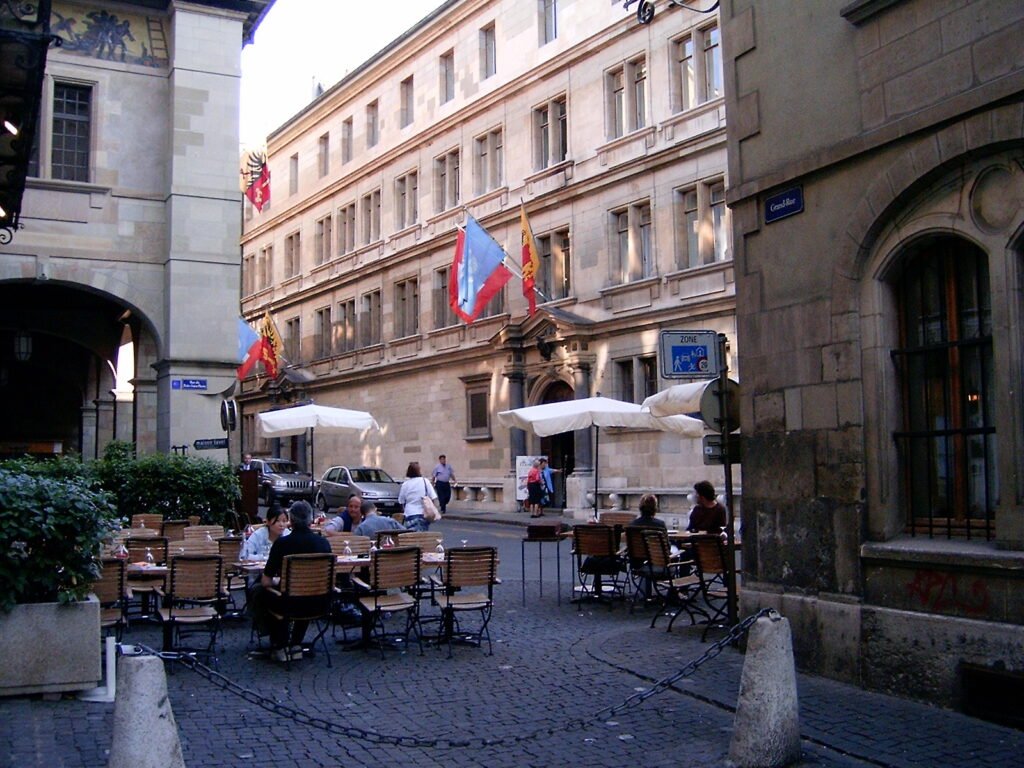
The Old Town requires a different pace from the lakefront. Cobbles, narrower streets and a noticeable climb appear around St. Pierre and Bourg-de-Four. The city itself describes Bourg-de-Four as a pause on the strong slope toward the historic quarter. These gradients are real, but they are concentrated rather than citywide.
Best Areas to Stay for a Walking Weekend
Cornavin and the lower Pâquis are the most practical choices for rail arrivals. Hotels begin directly outside the station, while the lake sits only a short walk south. This base also keeps the international district easy to reach by tram or bus.
Molard, the Rues-Basses and the Old Town edge put the historic core closest to your door. You can reach Jardin Anglais, St. Pierre and Bastions without a transit ride. Staying higher inside the Old Town trades convenience on arrival for atmosphere and slightly more climbing.
Eaux-Vives works well for travelers who prioritize the Jet d’Eau and left-bank lakefront. It remains central, but Cornavin and Nations require a longer walk or a short transit connection.
Realistic Walking Times in Geneva
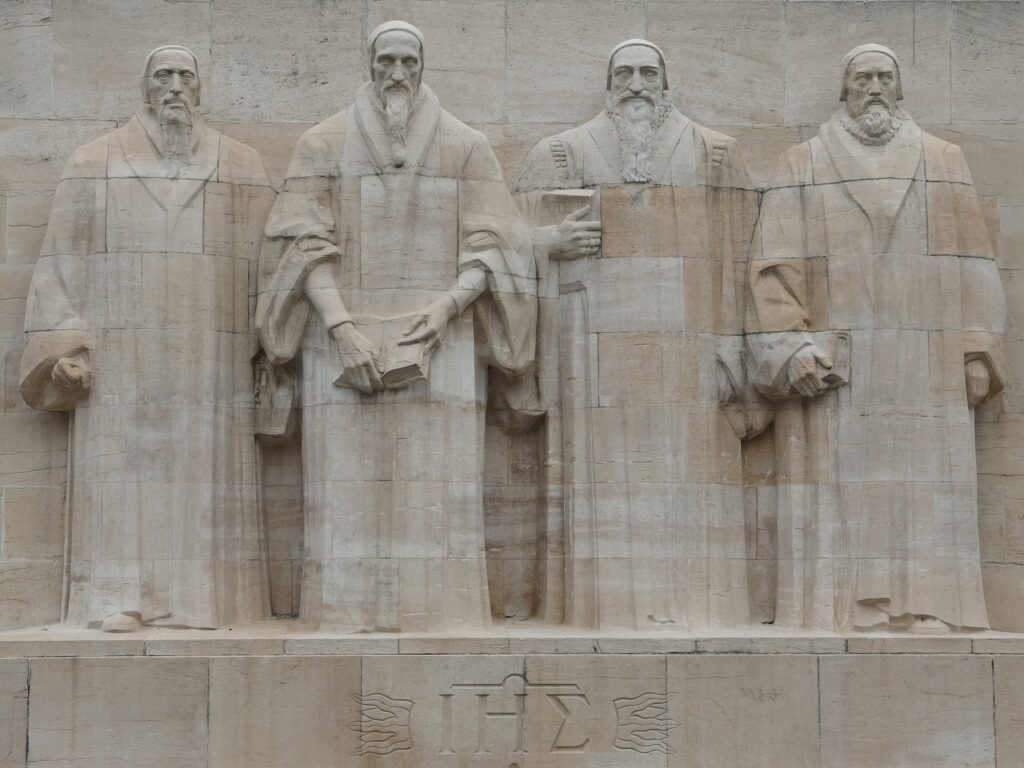
Cornavin to Pont du Mont-Blanc: about 10–12 minutes. Cornavin to the Flower Clock: about 15–18 minutes. Flower Clock to Place du Molard: about 4–5 minutes. Molard to St. Pierre: about 7–10 minutes uphill. Bourg-de-Four to the Reformation Wall: about 6–8 minutes downhill. Pont du Mont-Blanc to the Jet d’Eau pier: about 15–20 minutes. These are practical planning estimates rather than guaranteed walking times.
A 2-Day Walking Route
The two days separate Geneva’s compact historic center from its lakeside and international extensions. Day 1 stays almost entirely on foot. Day 2 uses a Mouette to avoid repeating a low-value bridge crossing.
Day 1 — Cornavin, Lakefront, Old Town and Bastions
Walking route
Day 1 — Cornavin, Lakefront, Old Town and Bastions
- Genève-Cornavin railway station
- Pont du Mont-Blanc
- Jardin Anglais
- Flower Clock
- Place du Molard
- St. Pierre Cathedral
- Place du Bourg-de-Four
- Reformation Wall, Parc des Bastions
Leave Cornavin toward Rue du Mont-Blanc and reach the lake outlet before crossing Pont du Mont-Blanc. Jardin Anglais and the Flower Clock sit immediately on the left bank. Continue through Place du Molard, then climb once into the Old Town for St. Pierre and Bourg-de-Four. Finish by descending into Parc des Bastions and walking past the Reformation Wall. This sequence avoids repeated climbs and unnecessary returns to the lake.
Day 2 — Jet d’Eau, Pâquis and the International District
Walking route
Day 2 — Jet d’Eau, Pâquis Lakefront and International District
- Jet d’Eau
- Bains des Pâquis
- Parc de la Perle du Lac
- Broken Chair
- Palais des Nations — Pregny Gate
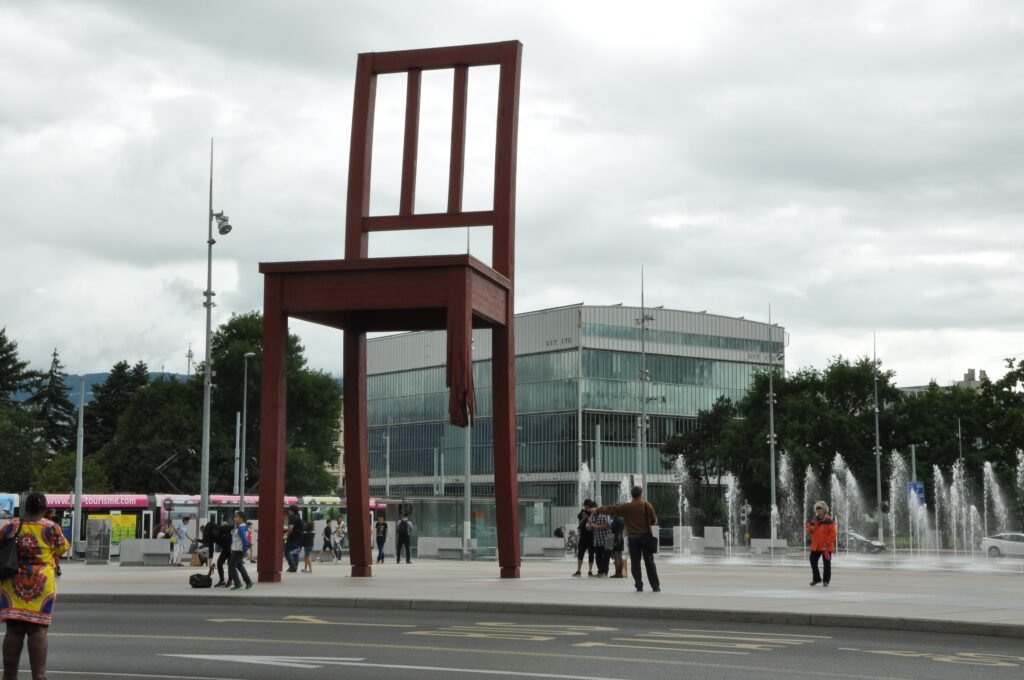
Start at the Jet d’Eau pier rather than only viewing the fountain from the opposite bank. Geneva Tourism confirms that a mobile footbridge provides pedestrian access onto the jetty. Walk to the Eaux-Vives landing, then take a Mouette across the harbor to Pâquis. From Bains des Pâquis, follow the waterfront north toward Perle du Lac. Continue to Broken Chair and finish at the Palais des Nations visitor entrance. Check your UN booking time and current transit guidance before setting out, because works around the international district can change the final approach.
How Useful Is Public Transport?
Geneva’s transit is most useful for the international district, tired-leg returns and outer extensions. Zone 10 covers the canton, with single-journey and other ticket options available through TPG. The tpg+ app supports digital ticket purchase, while ticket machines are available at many stops. Check current fares and products before travel.
Approved overnight accommodation includes a separate Geneva Transport Card for unlimited Zone 10 travel during the stay. It covers TPG services, relevant CFF trains and the Mouettes. The benefit can also be activated before airport arrival. Even without it, normal visitor ticketing remains straightforward.
Weekend and evening coverage is strong, with late services and dedicated night connections available on parts of the network. Exact operating patterns can change by season, so check the current TPG timetable when planning a late return. Mouettes are most useful as short cross-harbor connectors rather than a reason to avoid worthwhile central walking.
Arriving in Geneva Without a Car
Geneva Airport has one of the easiest city-center rail links in Europe. The station sits directly beneath the terminal. Trains reach Genève-Cornavin in about seven minutes without a transfer, with up to seven departures hourly at peak times.
Cornavin itself lies on the northern edge of the main visitor area. Tourist information is inside the station, and central hotels begin immediately outside. Travelers arriving by intercity or international rail therefore start from the same practical gateway without needing a car.
When a Car Actually Helps
A car is unnecessary for the standard Geneva weekend and often adds parking friction. CERN remains an outer extension but has direct tram service. Mont Salève is also a separate cross-border excursion rather than evidence of central compactness. A car becomes more useful for multi-stop vineyard, countryside or rural cross-border itineraries that do not align with one transit corridor.
Walking Limitations and Practical Tips
Save the Old Town climb for one concentrated section instead of repeatedly moving between lake level and St. Pierre. Cobblestones and tighter passages can slow travelers with rolling luggage or limited mobility. Pont du Mont-Blanc is direct but feels busier than the promenades on either side. For the Jet d’Eau, distinguish the easy lakefront view from walking onto the jetty itself.
Construction and temporary service changes can affect access around the Palais des Nations and other parts of the international district. Check current TPG and UN guidance before departure rather than relying on temporary stop arrangements in the guide.
Seasonal Walking Comfort
The lakefront is exposed, so winter wind can make easy distances feel colder than the map suggests. Warm summer afternoons can also reduce comfortable walking range. Neither changes the underlying pedestrian geography. Strong winds can temporarily shut the Jet d’Eau, so check operating status if the jetty is a priority.
Bottom Line
For a two- or three-day first visit, Geneva works best as a compact central walking city with one clear outer cluster. Walk Cornavin, the lakefront, Old Town and Bastions together, then use transit or a Mouette strategically. The main trade-offs are the Old Town climb, bridge-dependent crossings and the separate Nations district—not a need for a private car.