
Spain’s strongest city breaks all work without a car, but they do not ask the same things from your legs. Madrid spreads major sights across a broad central belt that remains unusually connected. Seville compresses its monumental core into a smaller, flatter footprint. Valencia links short old-town walks with the long Turia Gardens. Barcelona covers more distinct visitor clusters, but its transit network makes those gaps manageable. Bilbao stays compact along the river before hills rise around the valley. Granada’s distances look modest on maps, yet elevation changes the experience most sharply.
Spain’s Most Walkable Cities, Ranked
| Rank | City | Overall score | Strongest traveler advantage | Principal walking limitation |
|---|---|---|---|---|
| 1 | Madrid | 94/100 | Connected central sightseeing plus exceptional transit backup | Large central footprint; farther sights quickly become Metro trips |
| 2 | Valencia | 92/100 | Flat center, Turia Gardens and easiest car-free arrival | Modern-architecture and beach districts stretch the city eastward |
| 3 (tie) | Barcelona | 91/100 | Strong Old City/Eixample walking with excellent Metro support | Hills and separated clusters around Park Güell and Montjuïc |
| 3 (tie) | Seville | 91/100 | Compact, flat monumental core with very little wasted mileage | Narrow, crowded and irregular historic lanes reduce comfort |
| 5 | Bilbao | 89/100 | Compact Old Town-to-riverfront-to-Ensanche visitor spine | Hills beyond the valley floor; slightly weaker arrival and late transit |
| 6 | Granada | 81/100 | Compact historic center and closely spaced headline districts | Steep Alhambra, Albaicín and Sacromonte terrain changes the effort |
Barcelona and Seville share rank 3 because both score 91/100. There is no editorial tiebreaker. Their walking experiences are different enough that the better choice depends on whether you value compactness or transit-backed variety.
What Separates the Leading Spanish Cities
The top four are separated by only three points, but the traveler experience varies considerably. Madrid wins through breadth without much fragmentation: its historic core, central shopping streets, museum corridor and Retiro remain connected enough for walking to stay useful. Valencia is easier physically and has the cleanest airport-to-city arrival, but its modern-architecture and beach districts create a longer eastward footprint.
Barcelona solves a larger geographic problem with transit. Its Old City, Eixample and waterfront support excellent walking, while Metro handles the hillier or farther clusters. Seville takes the opposite approach. It concentrates more headline historic sightseeing inside a smaller, flatter center, so transit becomes a backup rather than part of the normal sightseeing rhythm.
1. Madrid — 94/100
Madrid ranks first because its size rarely breaks the central sightseeing experience into isolated pockets. Royal Madrid, Sol, Gran Vía, Las Letras, Paseo del Arte and Retiro form a broad but coherent visitor belt. That gives a first-time traveler more walk-first variety than a smaller historic center, while Metro removes the low-value mileage when the itinerary reaches Bernabéu or farther districts.
The limitation is cumulative distance rather than weak pedestrian geography. Madrid is not perfectly flat, crowds can slow central movement, and major boulevards create larger crossings. Even so, it offers the strongest combination here of connected visitor areas and transit backup. For neighborhood choices and detailed routes, see Is Madrid Walkable? Best Areas, Metro Tips and Routes.
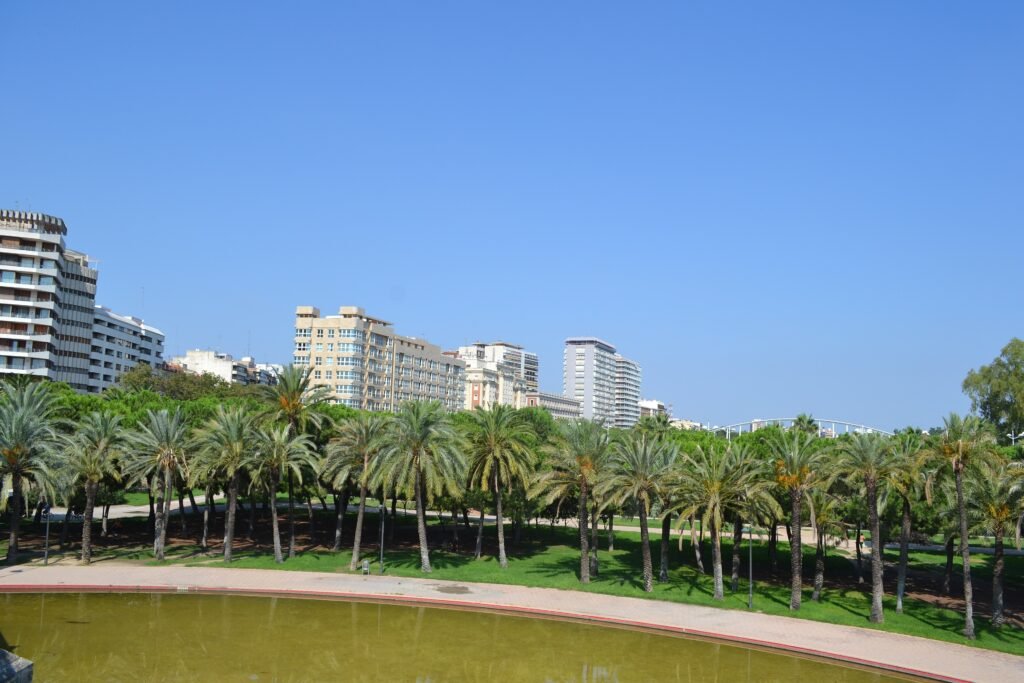
2. Valencia — 92/100
Valencia feels easier on the legs than Madrid while still offering a substantial weekend. Ciutat Vella, the civic center, Ensanche and Ruzafa connect naturally, and the Turia Gardens turn a long eastward axis into part of the sightseeing. Valencia and Seville share the easiest terrain in this comparison.
Its main trade-off is geographic stretch. The City of Arts and Sciences works well with the Turia, but the beach and maritime districts are better treated as a separate transit-linked zone. Valencia also has the easiest car-free arrival of the six, with Metro lines serving the airport terminal. Full planning details are in Is Valencia Walkable? Old Town, Turia and Beach Access.
3. Barcelona — 91/100, tied
Barcelona rewards travelers who are comfortable mixing long walks with strategic Metro rides. Plaça de Catalunya, the Gothic Quarter, El Born and the waterfront can fill a strong walking day. Passeig de Gràcia and the wider Eixample add another legible, high-value axis, while Sagrada Família and Sant Pau pair well on foot.
The city becomes less effortless when Park Güell, Montjuïc or repeated cross-city jumps enter the plan. Those areas add both elevation and spread. Barcelona’s advantage over Seville is not compactness; it is stronger transit support for a broader set of visitor districts. See Is Barcelona Walkable? Old City, Gaudí and Metro Tips for the full city strategy.
3. Seville — 91/100, tied
Seville reaches the same score through a different pattern. The Cathedral, Alcázar, Santa Cruz, Arenal and central pedestrian streets sit inside a remarkably tight visitor core. Plaza de España and María Luisa Park extend that geography without turning the day into a cross-city transfer problem.
The city is also exceptionally flat, matching Valencia for the easiest terrain. Its main limitation comes from the texture of historic walking: narrow lanes, crowding and irregular paving can reduce comfort even when distances are short. Travelers choosing between the two tied cities should compare compact historic atmosphere against Barcelona’s larger variety. See Is Seville Walkable? Best Areas, Transit Tips and Routes.
5. Bilbao — 89/100
Bilbao is smaller in feel than the four cities above it, and that is often an advantage. Casco Viejo, the Ensanche, the Nervión riverfront and the Guggenheim area form a compact corridor with bridges and promenades helping orientation. A short visit can therefore remain heavily walk-first without feeling repetitive.
The surrounding hills become more relevant once the itinerary leaves the valley floor. Bilbao also gives up a little ground on airport arrival and late-weekend transit compared with the leaders. Its core walking geography remains strong, which is why the gap to the top group is small. See Is Bilbao Walkable? Old Town, Riverfront and Transit Tips.
6. Granada — 81/100
Granada shows why a compact map can hide a demanding walking day. The Cathedral, Plaza Nueva, lower Realejo and Carrera del Darro connect well, but the Alhambra, Albaicín and Sacromonte rise sharply around that central base. Short horizontal distances can therefore involve much more effort than in Valencia or Seville.
That does not make Granada a poor car-free choice. It remains excellent without a car, especially when local buses replace selected climbs. The difference is physical effort, route directness and hill geometry rather than a need to drive. Travelers should read Is Granada Walkable? Alhambra, Hills and Transit Tips before building a hill-heavy itinerary.
Which Spanish City Fits Your Trip?
| Traveler priority | Best match | Why |
|---|---|---|
| Maximum walk-first sightseeing | Madrid | The broadest connected central visitor belt, with transit available when the useful walking ends. |
| Easiest terrain | Valencia and Seville | Both are exceptionally flat; Valencia adds a long green corridor, while Seville is more compact. |
| Strongest transit backup | Madrid | Madrid’s extensive Metro and rail network is especially useful once sightseeing moves beyond the central belt. |
| Easiest car-free arrival | Valencia | Direct airport Metro service makes reaching central Valencia particularly simple. |
| Historic atmosphere without a hill penalty | Seville | Its major monumental and old-city areas are tightly concentrated on very easy terrain. |
| Historic atmosphere with dramatic terrain | Granada | The Alhambra, Albaicín and Sacromonte deliver distinctive hillside geography, but the climbs are real. |
| Travelers who dislike hills | Valencia or Seville | Both minimize elevation. Granada is the clear mismatch; Barcelona and Bilbao have more localized hill issues. |
| Compact riverfront weekend | Bilbao | The Old Town, Ensanche and Guggenheim corridor fit naturally around the Nervión. |
| Big-city variety with excellent transit | Barcelona | Walking clusters are broader than Seville’s, but Metro makes the spread practical. |
Walking Effort Matters More Than Map Distance
Valencia and Seville are the easiest choices for travelers who want long sightseeing days without much climbing. Madrid and Barcelona add modest terrain in selected districts, but most central routes remain manageable. Bilbao stays comfortable along the river corridor before the surrounding hills become more noticeable. Granada is different: elevation is part of the basic visitor geography, not an occasional detour.
Surface quality and crowding also matter. Seville’s flat center can still feel slower in narrow historic lanes. Barcelona’s Gothic Quarter is less direct than its short distances suggest. Madrid’s broad central avenues are easier to read but sometimes require larger crossings. These differences explain why a city can be compact without being equally effortless.
When a Car Actually Helps
None of these six cities requires a private car for a normal first-time 2–3 day city break. A car becomes more useful when the trip changes from urban sightseeing to a multi-stop regional itinerary, especially where rural or coastal destinations do not align well with rail or direct buses. Inside the cities themselves, central parking, one-way streets and the availability of transit usually make a rental car more burden than benefit.
Bottom Line
Madrid is the strongest all-around choice in this six-city Spain ranking, but the ranking alone should not decide the trip. Valencia is the easiest combination of flat walking and arrival. Barcelona handles a wider city through excellent transit, while Seville delivers a tighter historic experience on very easy terrain. Bilbao is compact and river-oriented. Granada remains highly rewarding without a car, but travelers should plan around its hills rather than treating every short map distance as an easy walk.