
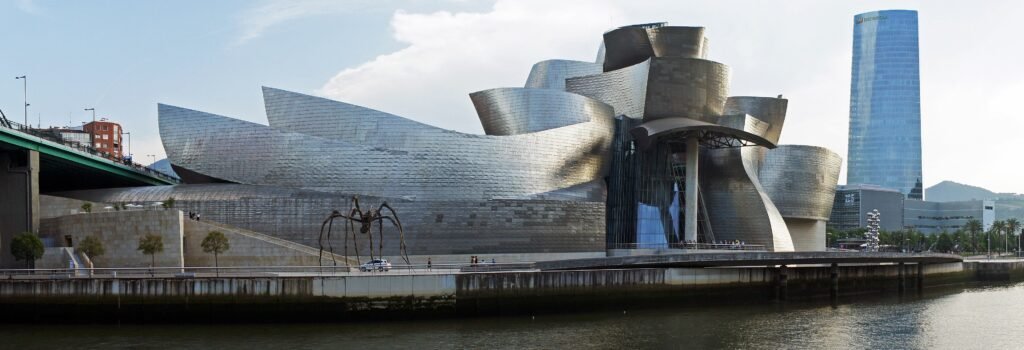
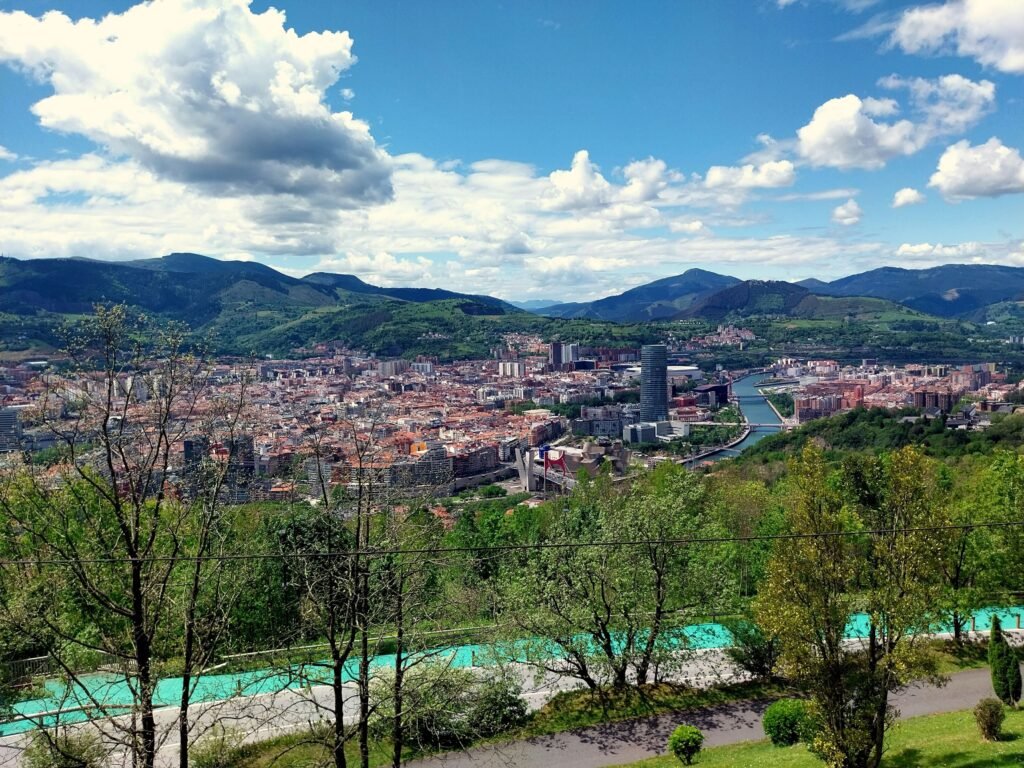
Bilbao’s visitor core follows the Nervión estuary from the medieval Casco Viejo toward the Guggenheim and Abandsoibarra. This creates a sightseeing spine where historic lanes, civic boulevards, museums, and river promenades connect without long transfer gaps. The Old Town is compact and pedestrian-priority, while the Ensanche adds broader streets and straightforward orientation. Regular bridges make both riverbanks usable, and the tram shadows much of the western waterfront. Bilbao becomes more demanding when routes climb toward upper neighborhoods or viewpoints. Those hills matter, but most first-time sights stay on the lower valley floor.
Why Bilbao Works So Well on Foot
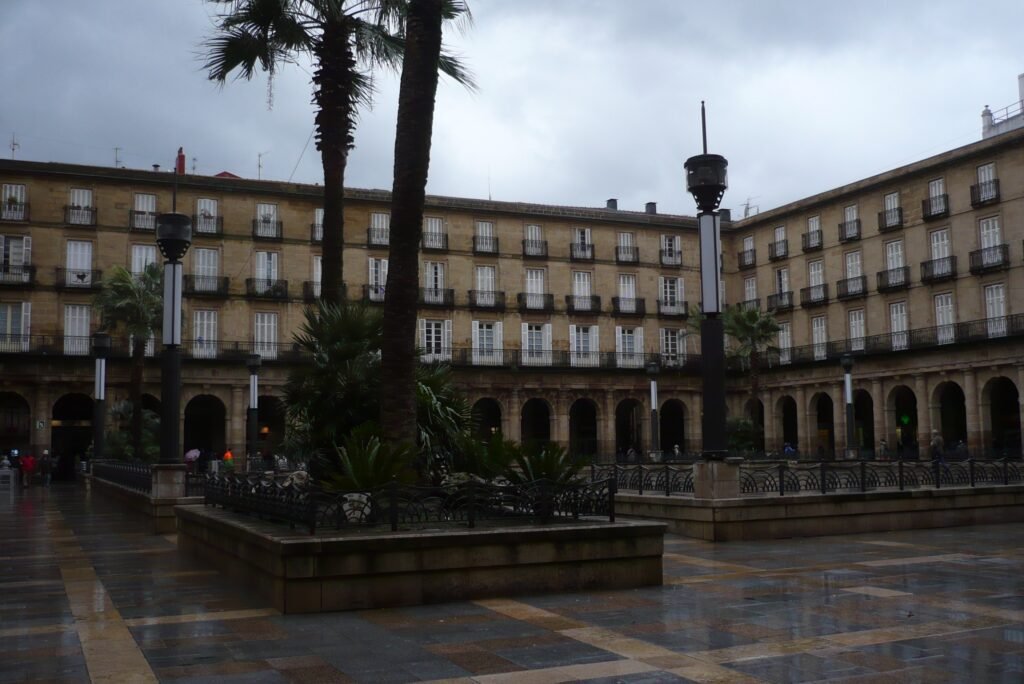
Bilbao Turismo itself divides its core walking experience into two 90-minute areas: Casco Viejo and Ensanche-Abandoibarra. That division is useful because the districts feel different without being far apart. The Old Town concentrates medieval lanes, Plaza Nueva, Santiago Cathedral, San Antón and the Ribera Market. Cross toward Abando and the streets widen into the Ensanche, where Gran Vía and Plaza Moyúa provide a clearer orientation spine. Continue north and the city opens onto the Guggenheim and landscaped Abandoibarra waterfront.
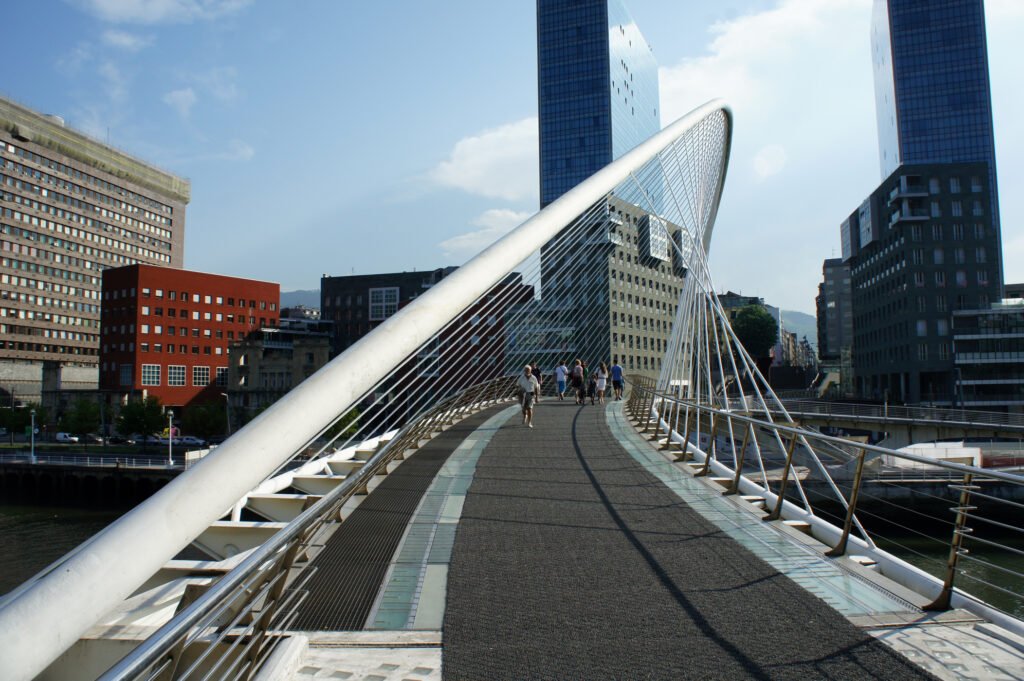
The river is more than scenery here. It acts as a navigation line and creates long, low-gradient promenades through the modern visitor district. Abandoibarra Park stretches between the Guggenheim side and Euskalduna, while Doña Casilda links that waterfront back into the Ensanche. Frequent bridges let a walking route change banks without abandoning the central sightseeing corridor. The result is a compact network rather than a single pedestrian street.
Central pedestrian quality is strong but not perfectly uniform. Casco Viejo has formal pedestrian priority and tightly controlled vehicle access, yet its historic cobbles deserve respect. Abando and Abandoibarra generally offer broader pavements and easier surfaces. Larger roads around Gran Vía, Moyúa and bridge approaches introduce more traffic interaction, although the citywide 30 km/h policy and pedestrian-priority planning improve the overall environment.
Best Areas to Stay for a Walking Weekend
Abando and Plaza Moyúa
Abando and Moyúa are the most balanced bases for a first visit. Casco Viejo lies to the east, while the Guggenheim and riverfront sit north of Gran Vía. Metro stations at Abando and Moyúa make airport-bus connections, San Mamés trips and longer regional outings easier. Bilbao Turismo also lists a substantial hotel inventory across the Gran Vía and Guggenheim zones.
Casco Viejo
Choose Casco Viejo when historic streets and evening pintxo walks matter more than perfect pavement. Plaza Nueva, the cathedral, Ribera Market, Arenal and Teatro Arriaga all sit close together. Walking to Plaza Circular and the Ensanche remains straightforward. Luggage with small wheels is the main practical caveat because cobbles and older surfaces are more common here.
Guggenheim, Abandoibarra and Indautxu
The Guggenheim side works well for visitors prioritizing the riverfront, modern architecture and museums. Indautxu, around Azkuna Zentroa, stays slightly inland but remains central and well connected. Both areas keep the main weekend geography walkable while offering easy access to Moyúa, Gran Vía and the western waterfront.
Realistic Walking Times in Central Bilbao
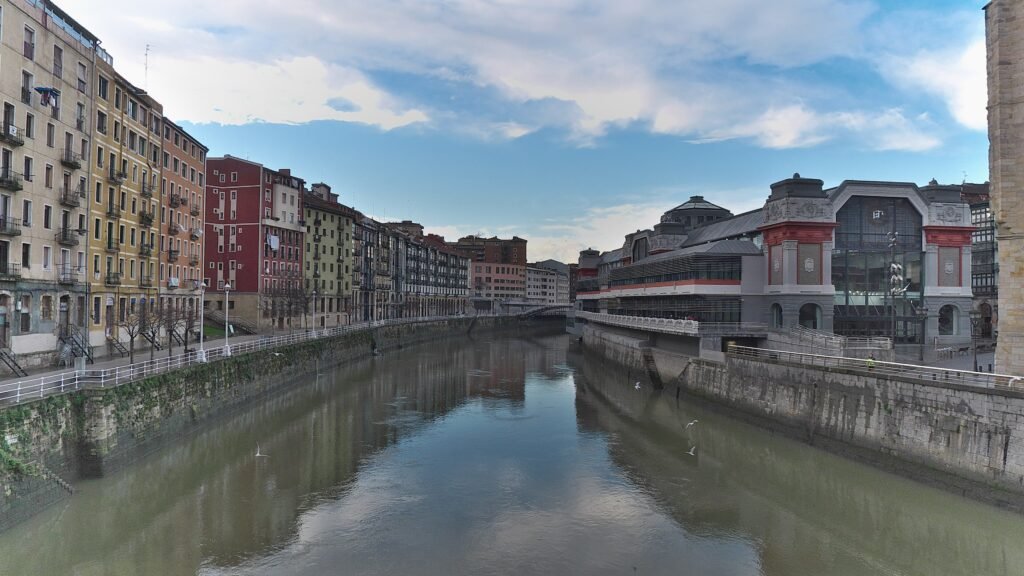
Mercado de la Ribera to Teatro Arriaga: about 10–12 minutes. The direct route stays inside the Old Town river edge.
Teatro Arriaga to Plaza Moyúa: about 15–18 minutes. This is the useful transition from historic Bilbao into the Ensanche.
Plaza Moyúa to the Guggenheim: about 10–12 minutes. It is short enough that Metro would usually add more friction than walking.
Guggenheim to Zubizuri: about 10–12 minutes along the riverfront. The walk is part of the sightseeing experience rather than transfer mileage.
Itsasmuseum or Euskalduna to the Guggenheim: about 18–22 minutes. The Abandoibarra promenade makes this longer connection worthwhile on foot.
A 2-Day Walking Route
These two routes cover different halves of Bilbao’s central corridor. The first day moves from the medieval Old Town into Abando and Indautxu. On the second day, follow the western riverfront eastward and finish at the Artxanda funicular. This avoids retracing the same promenade.
Day 1 — Casco Viejo, Abando and Azkuna Zentroa
Walking route
Day 1: Casco Viejo, Abando and Azkuna Zentroa
- San Antón Church
- Mercado de la Ribera
- Santiago Cathedral
- Plaza Nueva
- Teatro Arriaga
- Plaza Circular
- Plaza Moyúa
- Azkuna Zentroa — Alhóndiga Bilbao
Begin beside San Antón and the Ribera Market, then work north through the compact Casco Viejo to Santiago Cathedral and Plaza Nueva. Teatro Arriaga marks the transition toward the river crossing and Abando. From Plaza Circular, follow Gran Vía west to Plaza Moyúa before finishing at Azkuna Zentroa. This sequence keeps the historic lanes together and avoids walking back through the same central blocks later.
Day 2 — Abandoibarra, Guggenheim and Artxanda
Walking route
Day 2: Abandoibarra, Guggenheim and Artxanda
- Itsasmuseum Bilbao
- Euskalduna Bilbao
- Doña Casilda Park
- Abandoibarra Park / Paseo de la Memoria
- Guggenheim Museum Bilbao
- Zubizuri
- Artxanda Funicular — lower station
Start at Itsasmuseum and the former shipyard docks, then move east past Euskalduna. Doña Casilda provides a green link back into Abandoibarra before the riverfront sculpture walk reaches the Guggenheim. Continue along the estuary to Zubizuri, cross to Campo Volantín and finish at Plaza del Funicular. The three-minute funicular ride is optional, but it is the efficient way to add Artxanda without turning the day into a steep climb.
Using Transit Without Losing the Walk
Metro is most useful for longer jumps rather than short central hops. L1 and L2 serve Casco Viejo, Abando, Moyúa, Indautxu and San Mamés, while L3 adds another northern connection through Casco Viejo. The tram is a better fit for the riverfront, especially when tired legs make the walk between Euskalduna and the central waterfront less appealing.
For a short stay, the official Bilbao Bizkaia Card is unusually simple. Its 24-, 48- and 72-hour versions include unlimited travel on most participating public transport. Travelers using transit more selectively can use Barik, whose Creditrans product works across Metro, tram, Euskotren, Renfe, city and regional buses, and the Artxanda funicular.
Weekend service is strong, but schedules vary by season. Late-night and festival service can differ from the standard timetable, especially during summer. Check live Metro and tram schedules before relying on a late return.
Arriving in Bilbao Without a Car
Bilbao Airport has no direct rail line, but its bus connection is unusually convenient. Bizkaibus A3247 runs directly to Bilbao Intermodal and stops at Gran Vía 79, Plaza Moyúa and Alameda Recalde 11. Aena publishes departures every 15 minutes through the main operating day. For many central hotels, Moyúa or Alameda Recalde can remove the need for a second transfer.
Rail arrival is even more central. Bilbao-Abando sits at Plaza Circular, directly inside the visitor corridor and beside Metro service. Casco Viejo, Gran Vía and many Abando hotels are immediately walkable from the station. Travelers arriving with heavy luggage may still prefer a short Metro or taxi connection, but a rental car adds little value.
When a Car Becomes Useful
A private car is unnecessary for the normal Bilbao weekend. It becomes more useful when the trip expands into several rural, coastal or mountain stops that do not line up well with public transport. Many popular regional destinations, including Getxo, Portugalete, Gernika and Bermeo, already have useful rail or Metro access. Renting a car solely for central Bilbao usually adds parking and navigation work without improving the sightseeing day.
Walking Limitations and Practical Tips
Historic surfaces are the first limitation to plan around. Casco Viejo is pedestrian-priority, but its cobbles and narrow lanes can be slower with luggage, wheelchairs or limited mobility. Rain can make polished stone less comfortable. If surface quality matters, use the riverfront and Ensanche for longer continuous walks and treat the Old Town as a slower exploration zone.
Hills are the second limitation. The main visitor spine stays low, but Bilbao rises quickly toward Begoña, Artxanda and upper neighborhoods. Use the Artxanda funicular for the viewpoint and municipal elevators where they fit the route. Saving steep climbs for sights that genuinely justify them preserves energy for the compact central core.
Finally, avoid turning every river crossing into a detour. Plan one bank at a time and use bridges such as Zubizuri or the central crossings where they naturally advance the route. The city is compact enough that small route choices matter more than squeezing in extra transit rides.
Seasonal Walking Note
Bilbao has a humid oceanic climate with comparatively mild temperatures across the year. Bilbao Turismo gives average temperatures around 8°C in winter and 20°C in summer. The practical variable is often rain rather than extreme heat or cold. Pack a light waterproof layer and shoes with secure grip, especially when a day includes Casco Viejo cobbles and exposed riverfront sections.
Bottom Line
Bilbao fits a walking-first weekend unusually well because its major central districts connect along a clear river-and-boulevard spine. Casco Viejo supplies dense historic wandering, the Ensanche provides easier orientation, and Abandoibarra turns transfer distance into a worthwhile waterfront walk. Metro, tram and the funicular solve the few gaps that are less rewarding on foot. The main trade-offs are historic surfaces and hills beyond the valley floor, not a need for a car.