
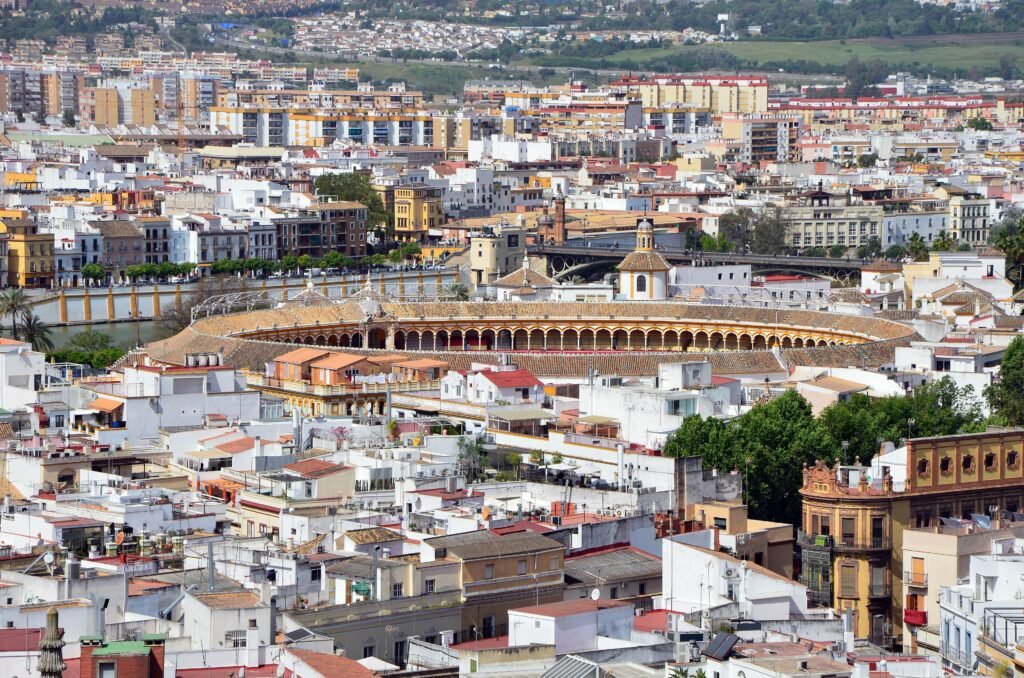
Seville’s central sights sit unusually close together across the historic center, riverfront and María Luisa Park. The Cathedral, Alcázar and Archive of the Indies share the same monumental cluster beside Santa Cruz. From there, pedestrian streets lead north stoward Sierpes and Encarnación, while the river opens a straightforward route toward Triana. Southbound, Plaza de España adds distance without adding meaningful elevation because the city is almost entirely flat. The trade-off appears underfoot and at busy pinch points. Medieval lanes can be narrow, irregular and crowded, while some historic paving is less comfortable than newer pedestrian corridors.
Why Seville Works So Well on Foot
Seville’s strongest advantage is the concentration of its headline sights. The Cathedral, Giralda, Archivo de Indias and Real Alcázar occupy the same few blocks. Santa Cruz begins immediately beside them, while Arenal and the river lie just west. Walking between these places is not transportation between attractions; it is the sightseeing experience itself.
That compactness continues farther than the monument cluster. Sierpes and Tetuán pull the pedestrian network north toward Plaza Nueva, Alfalfa and Encarnación. Triana sits across one short bridge rather than beyond a low-value cross-city transfer. South of the Alcázar, Puerta de Jerez, María Luisa Park and Plaza de España form another continuous extension.
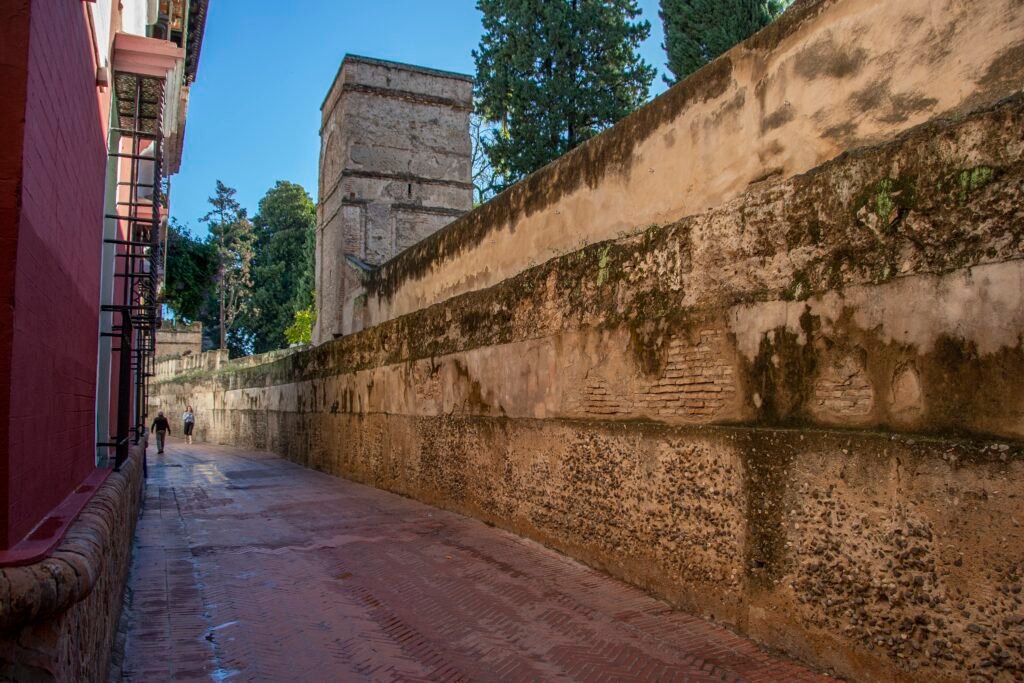
Pedestrian quality is strong but not uniform. Avenida de la Constitución, Sierpes, central plazas and the riverfront give walkers generous, legible space. Recent city projects also use single-level treatments and wider pedestrian zones. Santa Cruz is different: its narrow medieval lanes, irregular paving and crowds make some very short walks slower and less comfortable.
Best Areas to Stay for a Walking Weekend
Arenal and Plaza Nueva: Best All-Around Base
Arenal and Plaza Nueva offer the best balance for many first-time visitors. The Cathedral is only a few minutes away, Triana Bridge is close, and the riverfront leads directly toward Torre del Oro. Sierpes and the central shopping streets begin nearby, while MetroCentro provides easy backup when walking stops being useful. This base avoids the tightest Santa Cruz lanes without giving up centrality.
Santa Cruz and the Cathedral Quarter: Best for Landmark Proximity
Choose Santa Cruz when immediate access to the Cathedral, Alcázar and historic atmosphere matters most. Few European sightseeing bases place so many headline stops inside such a small radius. The trade-off is street comfort. Medieval passages can be narrow, busy and irregular, so luggage movement and simple navigation are less effortless than the map suggests.
Encarnación and Alfalfa: Best for Central Local Life
Encarnación and Alfalfa sit north of the monument core around Setas, plazas, shops and dense dining streets. They still keep the Cathedral within roughly a 15-minute walk, but they feel less dominated by the principal monument entrances. This is a strong compromise if you want central nightlife and everyday services without sacrificing a walking-first itinerary.
Triana: Best for the River and Neighborhood Atmosphere
Triana works well when the river and neighborhood character matter as much as waking beside the Cathedral. The market, ceramics district and Calle Betis are tightly grouped, and Triana Bridge delivers you directly into Arenal. You will walk farther to Plaza de España or Encarnación, but the bridge crossing itself is a high-value part of the city experience.
Puerta de Jerez and Prado: Best for Transit Flexibility
Puerta de Jerez and Prado de San Sebastián are useful for visitors who value easy arrivals and southern sightseeing. The Alcázar, Cathedral and Plaza de España are all nearby, while Metro Line 1, MetroCentro and the airport-bus corridor reduce longer transfers. The streets feel more open and transport-oriented than Santa Cruz, but the location is exceptionally practical.
Representative Walking Times
At a normal sightseeing pace, allow about 3–5 minutes from the Cathedral to the Real Alcázar, roughly 15 minutes from the Cathedral to Setas, and about 20–25 minutes from the Cathedral to Plaza de España. The Cathedral to Triana Market is usually around 15–20 minutes via Arenal and Triana Bridge. Plaza Nueva to the Fine Arts Museum is about 10 minutes. Triana Market to Torre del Oro via the riverside and San Telmo Bridge is roughly 20 minutes. These are practical planning estimates rather than guaranteed walking times.
A 2-Day Seville Route Built Around Walking
These routes keep each day geographically coherent. Day 1 moves from Encarnación through the monumental center and continues south to Plaza de España. Day 2 uses the river as its organizing line, crossing into Triana once and returning by a different bridge before finishing through Arenal. Neither day needs a low-value transit hop unless heat, mobility or fatigue changes the plan.
Day 1: Encarnación, Santa Cruz and Plaza de España
Walking route
Day 1: Encarnación, Monumental Center and Plaza de España
- Setas de Sevilla
- Plaza del Salvador
- Plaza de San Francisco
- Seville Cathedral and Giralda
- Archivo General de Indias
- Real Alcázar of Seville
- Plaza de Doña Elvira
- Jardines de Murillo
- Plaza de España
- Parque de María Luisa
Begin at Setas de Sevilla in Encarnación, then walk south through Plaza del Salvador and Plaza de San Francisco. The route soon reaches Avenida de la Constitución and Seville’s headline cluster: the Cathedral and Giralda, Archivo de Indias and Real Alcázar. These stops are so close that the day’s length comes from interiors and detours, not transfer mileage.
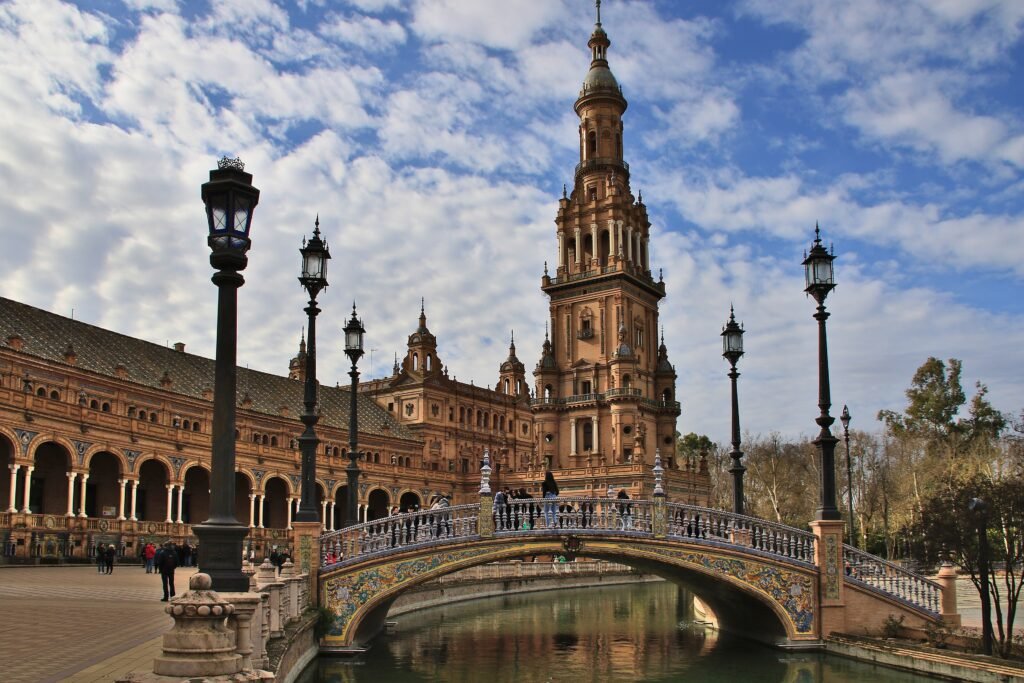
After the Alcázar, enter Santa Cruz through its small plazas and lanes, then exit south through the Jardines de Murillo. Continue toward Plaza de España and finish inside María Luisa Park. The final stretch adds useful distance without a meaningful climb. If summer heat is severe, reverse the route or split the park from the monument interiors rather than forcing a long midday walk.
Day 2: Triana, the River and Arenal
Walking route
Day 2: Fine Arts, Triana and the Arenal Riverfront
- Museo de Bellas Artes de Sevilla
- Puente de Isabel II (Triana Bridge)
- Mercado de Triana
- Centro Cerámica Triana
- Parroquia de Santa Ana
- Calle Betis
- Puente de San Telmo
- Torre del Oro
- Plaza de Toros de la Real Maestranza
- Plaza Nueva
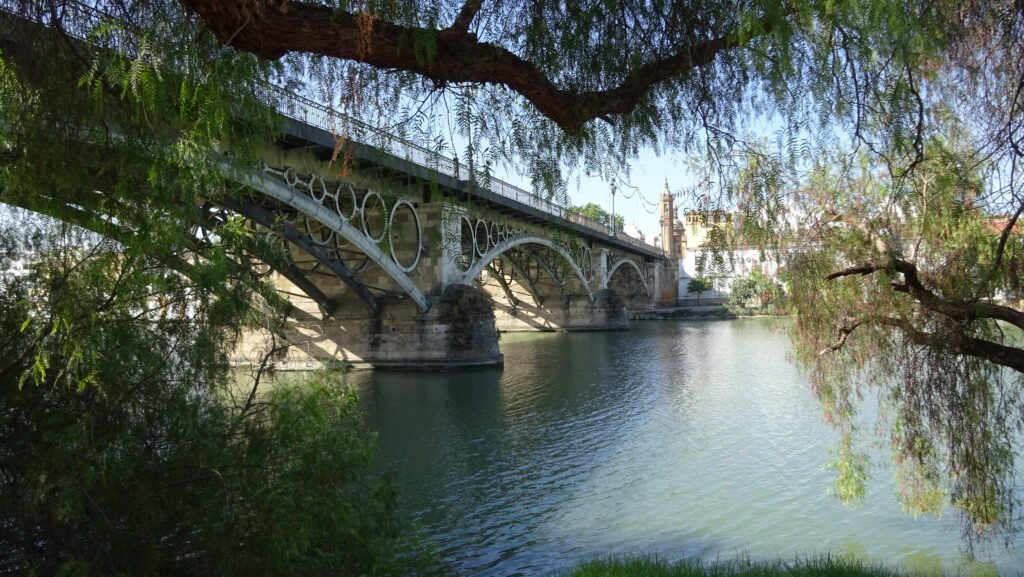
Start at the Museo de Bellas Artes and head west to Triana Bridge. Cross directly to Altozano, visit Triana Market, and continue past the ceramics district toward Santa Ana. From there, work south to Calle Betis. The river keeps orientation simple, and the view back toward central Seville makes the transfer itself part of the day.
Cross back by San Telmo Bridge rather than retracing your steps. Turn north along the east bank to Torre del Oro, then continue through Arenal past the Real Maestranza and finish at Plaza Nueva. This loop demonstrates why Triana works as part of Seville’s walking core: the river separates neighborhoods without creating a difficult pedestrian barrier.
Using Transit Without Losing the Walking Experience
Most first-time sightseeing inside the historic center does not require transit. The Cathedral, Alcázar, Santa Cruz, Arenal, Encarnación and Triana are close enough that riding between them often saves little time. Transit becomes more valuable when you are tired, carrying luggage, reaching Nervión or connecting to gateways outside the central walking network.
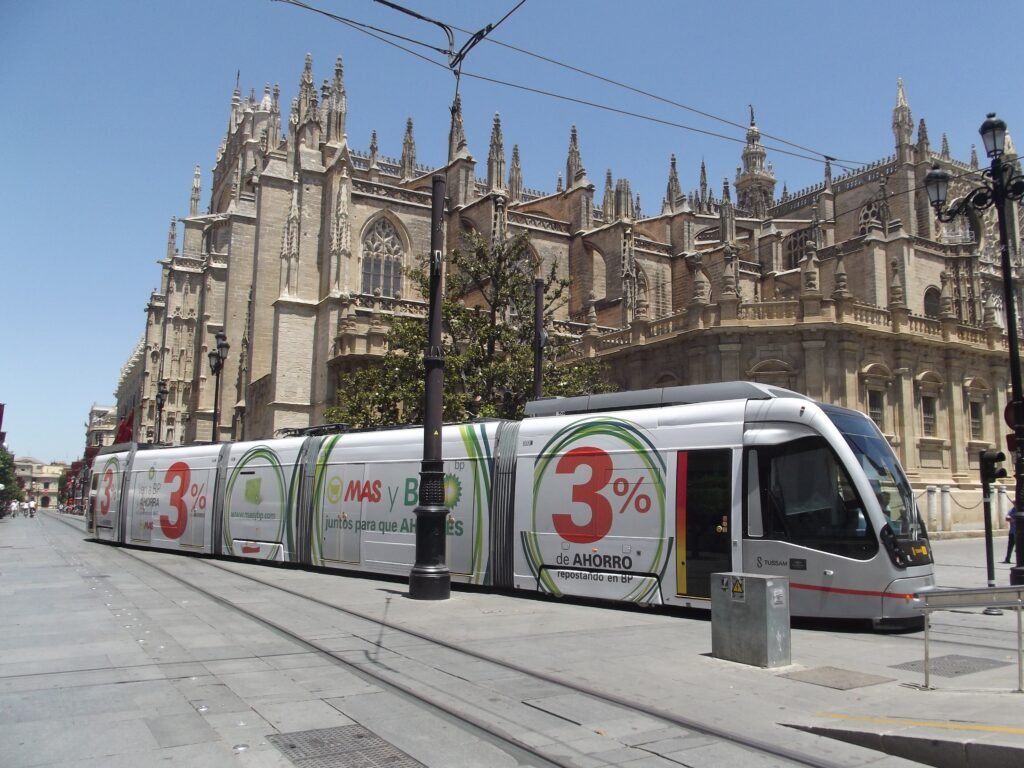
The MetroCentro T1 tram is the most visible central backup. It runs through the Avenida de la Constitución and Puerta de Jerez corridor and continues toward San Bernardo and Nervión-side stops. Metro Line 1 is more useful for cross-city trips, with Puerta de Jerez and San Bernardo the most practical stations for many visitors.
Current Line 1 hours are strong for a weekend. Service runs until 02:00 on Fridays, holiday eves and Saturdays, while Sundays and holidays run to 23:00. Weekend daytime trains are commonly about 7–8 minutes apart. Late-night and edge-of-day intervals are wider, so checking the live timetable still matters.
Payment is straightforward for occasional rides. TUSSAM accepts contactless bank cards on buses and the tram, while Metro de Sevilla offers Tap&Go with bank cards and mobile wallets. The systems are separate, but visitors do not need to master a complicated ticket product for a few gap-filling trips.
Arriving in Seville Without a Car
Seville Airport has no rail station, but the EA Airport Special gives the city a strong one-seat public-transport arrival. The route serves Santa Justa, San Bernardo, Prado de San Sebastián, Paseo de Colón and Plaza de Armas. Aena currently lists a €6 single fare, an €8 same-day return and bank-card payment onboard.
The current timetable runs seven days a week across a broad daily span, roughly from 04:30 until 01:00 across the two directions. Many daytime departures are only about 12–13 minutes apart, with wider early and late gaps. For Arenal, Prado or a Santa Justa connection, that is frequent enough to make a rental car unnecessary on arrival.
Rail travelers arrive at Sevilla Santa Justa, the city’s principal high-speed and intercity station. It sits east of the monumental center rather than inside it. Strong walkers can continue toward the center, but a local bus or taxi is usually more comfortable with luggage. The station’s urban location still makes onward travel into the center relatively straightforward.
When a Car Helps
A private car adds little to the standard Seville weekend in this guide. The central visitor geography is compact, parking creates extra friction, and transit covers the longer urban gaps. A rental car becomes more useful when Seville is the first or last stop on a wider Andalusia road trip with several smaller destinations that are inefficient to combine by rail or bus. In that case, picking up the car when you leave the city is usually the cleaner strategy.
Practical Walking Limitations and Tips
Do not judge Santa Cruz by straight-line distance alone. Its medieval street pattern is part of the appeal, but narrow passages and irregular turns slow navigation. Historic stone and cobbled surfaces can also be tiring over a full day, especially with small-wheel luggage or limited mobility. Use the accessible-route information when surface quality matters to your trip.
Crowding is the other central friction. The Cathedral, Alcázar and Santa Cruz concentrate large visitor flows inside very small spaces. Seville’s city government has specifically addressed tourism pressure in Santa Cruz, and the municipality continues upgrading central streets with single-level pedestrian treatments. Those improvements are real, but they do not make every historic lane equally comfortable.
Further TB1 service toward the central visitor area is planned, but travelers should not treat future extensions as active until the operator confirms service. Works around the Cathedral and Giralda can also temporarily change access or visitor capacity. Check current transit and attraction notices before travel.
Seasonal Walking Note
Seville’s geography stays flat and compact in summer, but the practical walking day changes sharply. AEMET climate normals for Seville Airport show an average daily maximum around 36.0°C in July and 35.5°C in August. In midsummer, schedule the longest outdoor sections early and late, use shaded interiors around midday and carry water.
Bottom Line
A central Seville weekend can be built almost entirely around walking. Stay near Arenal, Santa Cruz, Encarnación, Triana or Puerta de Jerez and most first-visit sights connect naturally. Use transit for gateways, tired legs and farther districts rather than for routine movement inside the historic core. The city’s real limitation is not distance or hills; it is the comfort cost of old paving, narrow lanes, crowding and summer heat.