
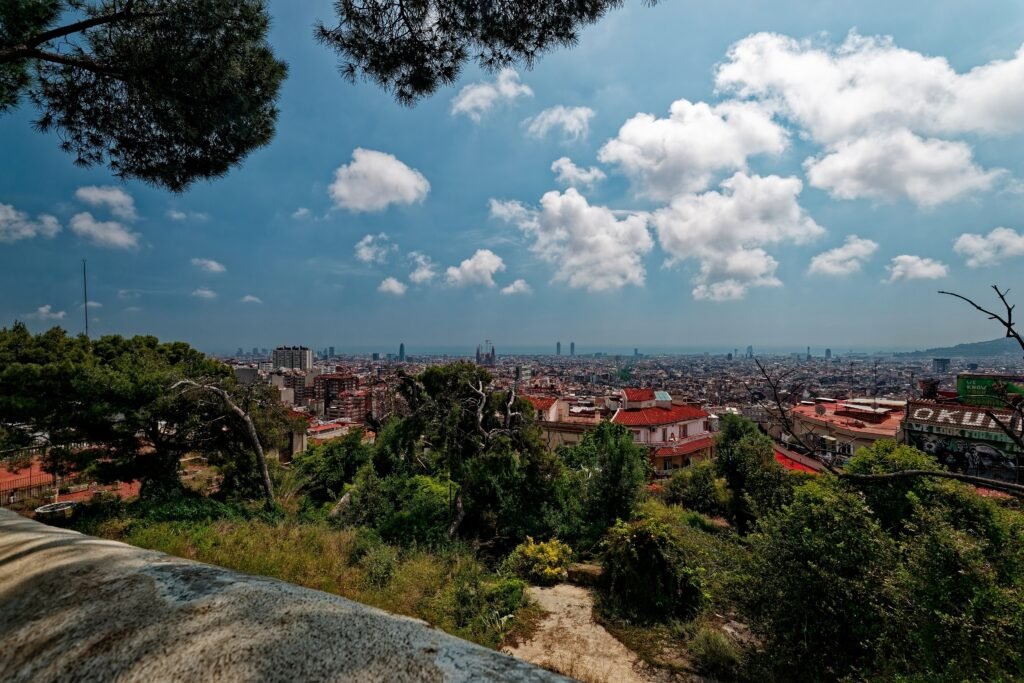
A walk from the Gothic Quarter into the Eixample reveals Barcelona’s defining pedestrian contrast. Narrow medieval streets and crowding can slow progress, even when the next sight is physically close. Beyond Plaça de Catalunya, broad Eixample boulevards make routes easier to read and more direct. Passeig de Gràcia continues that pattern toward Sagrada Família and Sant Pau, extending the central walking network eastward. Park Güell and Montjuïc sit outside this easy flow, with hills making transit more useful. That contrast explains why Barcelona feels both compact and expansive during a short visit.
Why Barcelona Works So Well on Foot
Barcelona’s central geography is unusually useful for a short visitor trip. Tourism of Barcelona describes Plaça de Catalunya as the city’s most central area and the point where the Eixample meets the old town. From there, La Rambla runs 1.2 kilometres toward the sea, while the Gothic Quarter, El Born and Port Vell sit directly beside the same axis. That means a first day can move from square to market to medieval streets to the waterfront without repeatedly opening a transit app.
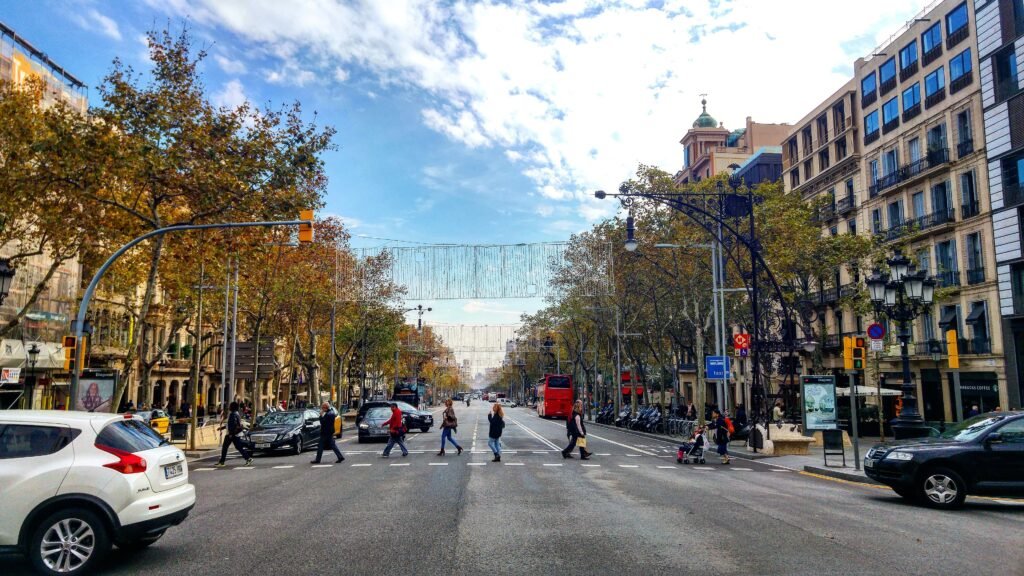
North of Plaça de Catalunya, the walking environment changes rather than breaks. The Eixample’s continuous grid connects the old city with Gràcia and other districts, and its chamfered blocks make route choices much easier to read than the medieval core. Passeig de Gràcia concentrates Casa Batlló, La Pedrera and a long run of modernista architecture on one boulevard, so walking is part of the attraction rather than simply the space between attractions.
The city becomes less compact once Park Güell and Montjuïc enter the plan. Park Güell’s own access guidance puts the walk at about 20 minutes from Lesseps Metro station or about 10 minutes from H6/D40 stops on Travessera de Dalt, and the park documents steep slopes, stairs and uneven paths. That is exactly the kind of transfer where transit improves a walking weekend by saving energy for the parts of the city that are more rewarding on foot.
Best Areas to Stay for a Walking Weekend
Eixample near Plaça de Catalunya is the strongest all-around base. It places you between the Old City and the modernista sights, keeps multiple Metro lines close and makes Passeig de Gràcia useful both as a walking corridor and as a rail/transit gateway. For a first visit with a mixed itinerary, it minimizes the number of trips that begin with a long transfer.
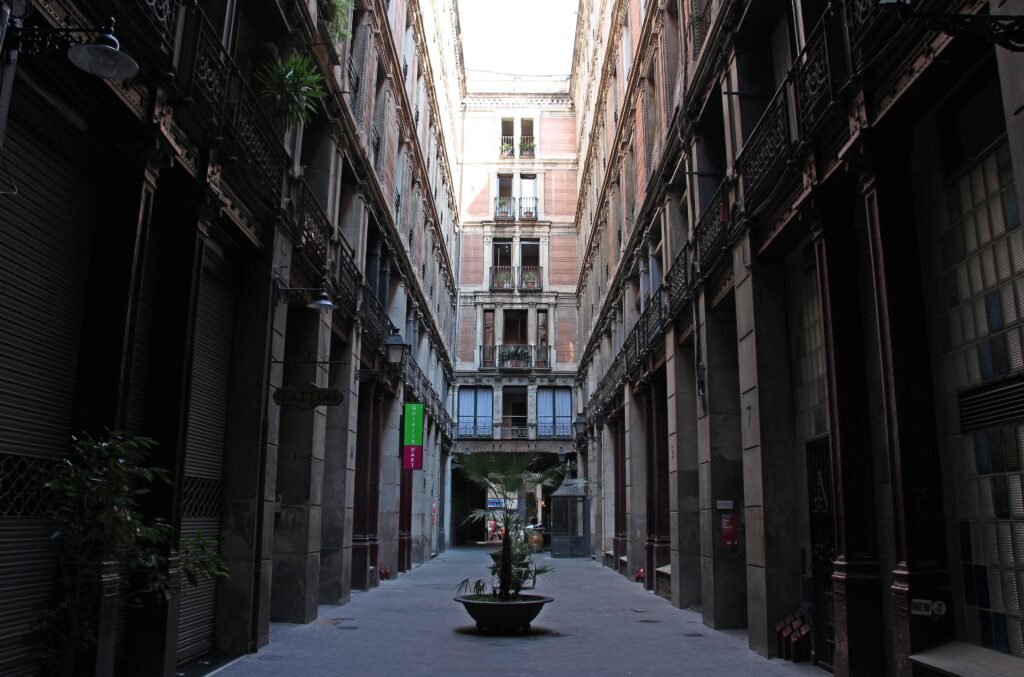
The Gothic Quarter or El Born is better if historic atmosphere matters most. You can walk to La Rambla, the Cathedral, Plaça de Sant Jaume, Santa Maria del Mar, Parc de la Ciutadella and much of the waterfront. The trade-off is practical rather than cultural: narrow lanes, crowds and irregular street geometry are less convenient with luggage and make the shortest map route less predictable.
Gràcia works well for a more neighborhood-focused stay and places you closer to Park Güell, but repeated walks to the Gothic Quarter and waterfront are long enough that Metro becomes part of the routine. Barceloneta is a sensible specialist choice for beach-first travelers, though it is less balanced for the Gaudí and upper-city sights.
Representative Walking Times
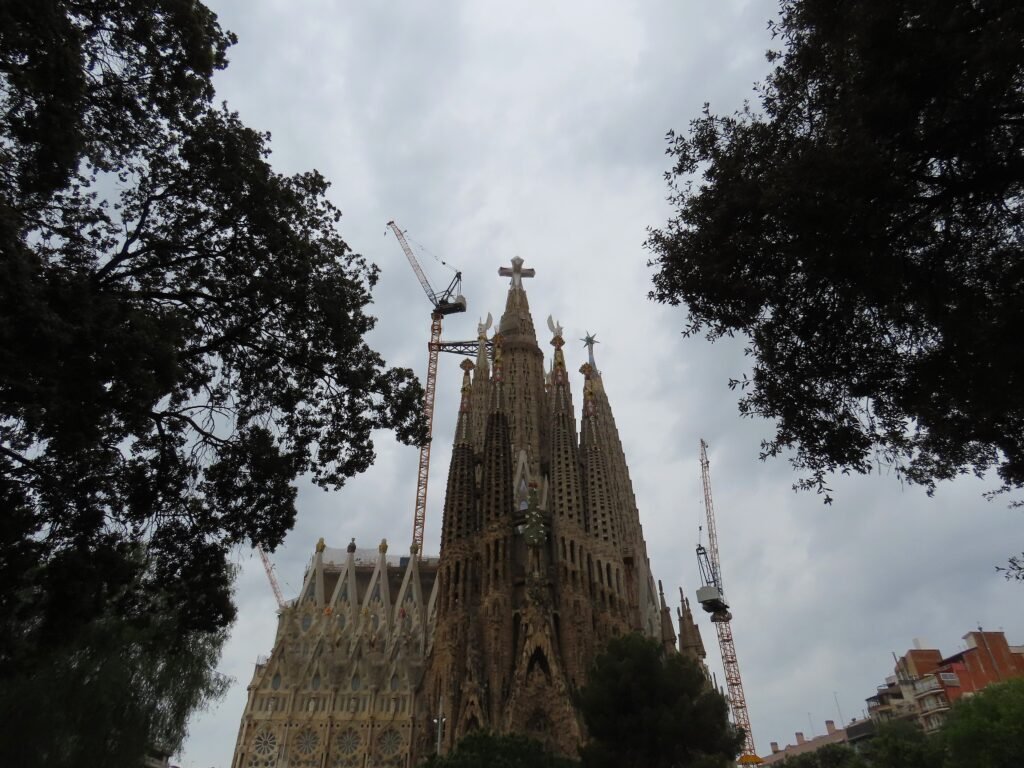
A few distances show why Barcelona rewards a walk-first strategy without being a walk-everywhere city. Plaça de Catalunya to La Boqueria is roughly 8–10 minutes, the Cathedral to Santa Maria del Mar about 8–10 minutes, and Casa Batlló to La Pedrera about 7–10 minutes. Plaça de Catalunya to the Sagrada Família is closer to 30–35 minutes: enjoyable once if the weather and energy are good, but a sensible Metro ride when the day already includes several hours on foot. Sagrada Família to the Recinte Modernista de Sant Pau is only about 12–15 minutes and is worth walking.
Park Güell is the exception where the approach matters as much as the map distance. The official guidance gives about 20 minutes on foot from Lesseps and about 10 minutes from H6/D40 stops on Travessera de Dalt. Because that final approach is uphill, the bus option often preserves more energy for walking inside the park itself.
A 2-Day Walking-Focused Route
These two days avoid a checklist that zigzags between every famous landmark. Day 1 stays inside Barcelona’s strongest continuous central walking network. On the second day, the route follows the modernista axis before a short bus ride to Park Güell.
Day 1: Plaça Catalunya, Gothic Quarter, El Born and Barceloneta
Walking route
Day 1: Plaça Catalunya, Gothic Quarter, El Born and Barceloneta
- Plaça de Catalunya
- Mercat de la Boqueria
- Barcelona Cathedral
- Plaça de Sant Jaume
- Basílica de Santa Maria del Mar
- Parc de la Ciutadella
- Platja de la Barceloneta
Start at Plaça de Catalunya and walk down La Rambla to La Boqueria. From the market, cut into the Gothic Quarter for Barcelona Cathedral and Plaça de Sant Jaume, then continue east to Santa Maria del Mar and the Passeig del Born. Parc de la Ciutadella gives the route a green middle section before the final walk to Barceloneta Beach. The anchor-to-anchor walking is roughly 5–6 kilometres, but the day feels fuller because nearly every transfer passes through a sightseeing district rather than empty mileage.
Finishing at Barceloneta avoids retracing the Old City. If you are tired, use Metro L4 or a bus for the return to your hotel rather than turning the waterfront into an unnecessary out-and-back walk.
Day 2: Passeig de Gràcia, Sagrada Família, Sant Pau and Park Güell
Walking route
Day 2: Passeig de Gràcia, Sagrada Família, Sant Pau and Park Güell
- Plaça de Catalunya
- Casa Batlló
- La Pedrera - Casa Milà
- Basílica de la Sagrada Família
- Recinte Modernista de Sant Pau
- Park Güell
Begin again around Plaça de Catalunya and walk north on Passeig de Gràcia to Casa Batlló and La Pedrera. From La Pedrera, cross the Eixample toward the Sagrada Família; if you want to save roughly half an hour of walking, Metro L5 from Diagonal is the efficient substitute. After the basilica, walk along Avinguda de Gaudí to the Recinte Modernista de Sant Pau. This is a short, coherent connection where staying above ground adds value.
For the final Park Güell transfer, use a TMB bus toward the Travessera de Dalt approach rather than spending the last part of the day on a long uphill walk. Park Güell’s official guidance lists H6 and D40 at Travessera de Dalt with about a 10-minute walk to the park. Check the live TMB planner for the best stop on the day you travel, then finish the route inside the park rather than walking all the way back downhill.
Getting Around Barcelona Without a Car
Barcelona’s Metro is excellent backup for a walking-focused weekend. The network covers the principal visitor districts, and current TMB data lists 165 Metro stations across the network. Normal service runs from 5 a.m. to midnight Monday through Thursday, until 2 a.m. on Fridays, continuously from Saturday morning through the Saturday-to-Sunday night, and until midnight Sunday. Nitbus extends overnight mobility outside normal Metro hours.
For most sightseeing, the question is not whether transit exists but whether it saves useful time. Take Metro or bus for Park Güell, Montjuïc and a tired return from a distant cluster. Walk La Rambla, the Gothic Quarter, El Born, Passeig de Gràcia and the Sagrada Família–Sant Pau connection. Riding one or two stops between those nearby sights usually trades away the most interesting part of the city.
Ticketing is straightforward once you choose the right product, but Barcelona is not completely frictionless for a first-time user. TMB lists several occasional-use tickets, and the airport stations on L9 Sud have special validity rules: the ordinary single ticket and T-casual are not valid for airport Metro entry or exit. Check the current fare page before buying a pass rather than assuming every city ticket includes the airport.
Arriving in Barcelona Without a Car
Barcelona-El Prat is well suited to a car-free city break. Aerobús A1 and A2 run 24 hours from Terminals 1 and 2 to Plaça de Catalunya, putting you directly at the seam between the Eixample and Old City. Current published daytime frequency is as short as every five minutes on A1 and about every ten minutes on A2, with wider overnight intervals.
Rail is another strong option. R2 North serves the airport branch, Barcelona-Sants and Passeig de Gràcia, with the airport route listed every 30 minutes on weekdays. The rail station is on the Terminal 2 side, and Aena operates a free terminal shuttle for travelers who need to connect between T1 and T2. L9 Sud serves both terminals about every seven minutes and reaches Barcelona in roughly 32 minutes, but most central stays require a transfer to another Metro line.
Together, these options make Barcelona easy to reach without a car, but the airport transfer still takes roughly half an hour or more before most visitors reach the central sightseeing area. Intercity rail travelers arriving at Barcelona-Sants start closer to the city network and usually face less transfer burden.
When a Car Helps
A private car adds little to a normal Barcelona weekend. Central parking, traffic and the dense Metro/bus network make it more burden than benefit for the itinerary in this guide. A rental car starts to make sense when Barcelona is only the first stop in a wider regional road trip with several smaller destinations that are awkward to combine by train or bus. Even then, picking up the car when you leave the city is usually more practical than keeping it during the Barcelona portion.
Practical Walking Limitations and Tips
Do not judge the Gothic Quarter by straight-line distance alone. Its narrow lanes and irregular geometry are part of the experience, but they slow navigation and can become crowded. In the Eixample, the opposite problem appears: the grid is easy to read, yet large avenues and busy junctions can make a short-looking connection feel less intimate than the old streets.
Treat Park Güell as a hill destination. Use the bus or Lesseps approach recommended by the park, wear shoes that handle uneven paths and keep some energy for walking once you are inside. Montjuïc deserves the same strategy: use transit to gain or lose elevation, then walk the high-value sections rather than proving that every hill can be climbed from sea level.
Temporary transit works, mechanical-stair outages and conservation projects can occasionally change the easiest approach to Park Güell or other major sights. Check current TMB and attraction notices before travel rather than relying on temporary access details in an article.
Seasonal Walking Note
Barcelona’s underlying walking geography does not change with the season, but the amount of comfortable walking can. Hot, sunny summer afternoons make exposed Eixample avenues, the waterfront and the Park Güell climb more tiring, while cooler shoulder-season days often suit long outdoor routes better. Build shade, water and indoor stops into warm-weather days rather than replacing all walking with transit.
Bottom Line
Barcelona is an outstanding car-free weekend city because its best visitor districts reward walking and its transit network covers the gaps that should not be walked. Spend your first day on foot through Plaça de Catalunya, La Rambla, the Gothic Quarter, El Born and the waterfront. Use the Eixample grid for the modernista sights, keep the Sagrada Família–Sant Pau link on foot, and let Metro or bus handle Park Güell, Montjuïc and tired cross-city returns. For a typical 2–3 day first visit, renting a car is unnecessary.