
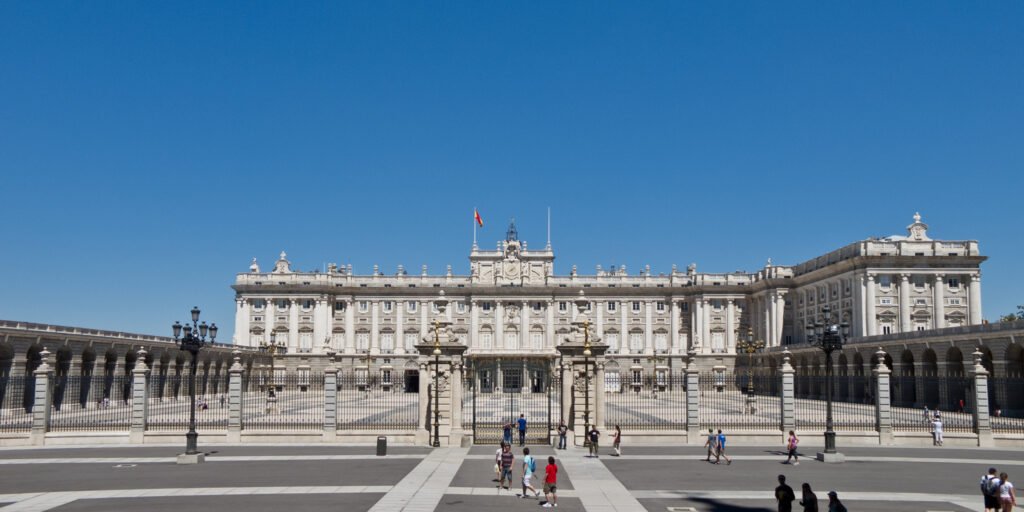
From the Royal Palace to Retiro, Madrid’s main visitor core forms a remarkably continuous east-west band. Sol sits near the middle, linking the Austrias, Gran Vía, Barrio de las Letras, and Paseo del Arte. The three principal art museums sit along a corridor of almost two kilometers. That span is compact enough for ambitious sightseeing days without pretending the entire capital belongs to one walking zone. Wider roads and occasional slopes add friction, but they rarely break the central network. Metro becomes more valuable once the itinerary reaches farther districts.
Why Madrid Works So Well on Foot
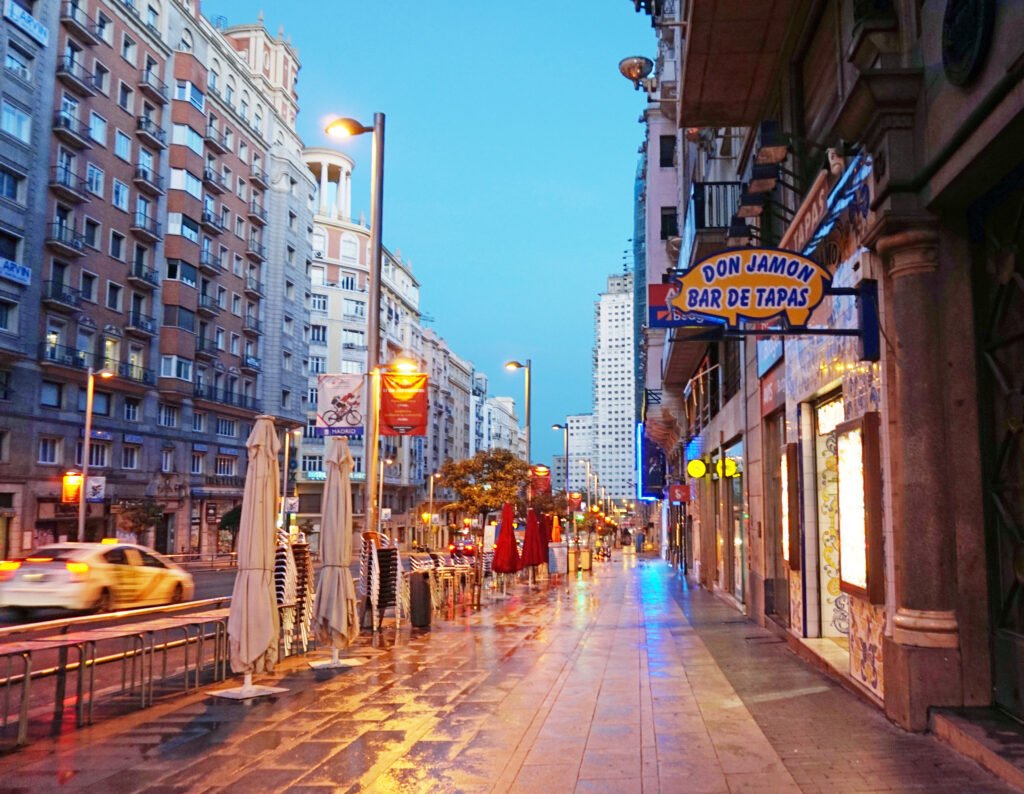
Madrid’s strongest visitor advantage is not a single pedestrian district. It is the way several central districts touch one another. The Royal Palace and Austrias feed naturally into Plaza Mayor and Sol. Gran Vía runs just north, while Las Letras fills the space east toward Paseo del Arte. Retiro then extends the same sightseeing belt beyond the museums. Most transfers between these areas are useful city walking rather than empty mileage.
The museum side is particularly compact. Tourism Madrid places the Prado, Thyssen-Bornemisza and Reina Sofía within roughly two kilometers along Paseo del Arte. Las Letras sits directly between that corridor and Sol–Gran Vía. That adjacency matters independently of Metro because these districts genuinely connect on foot.
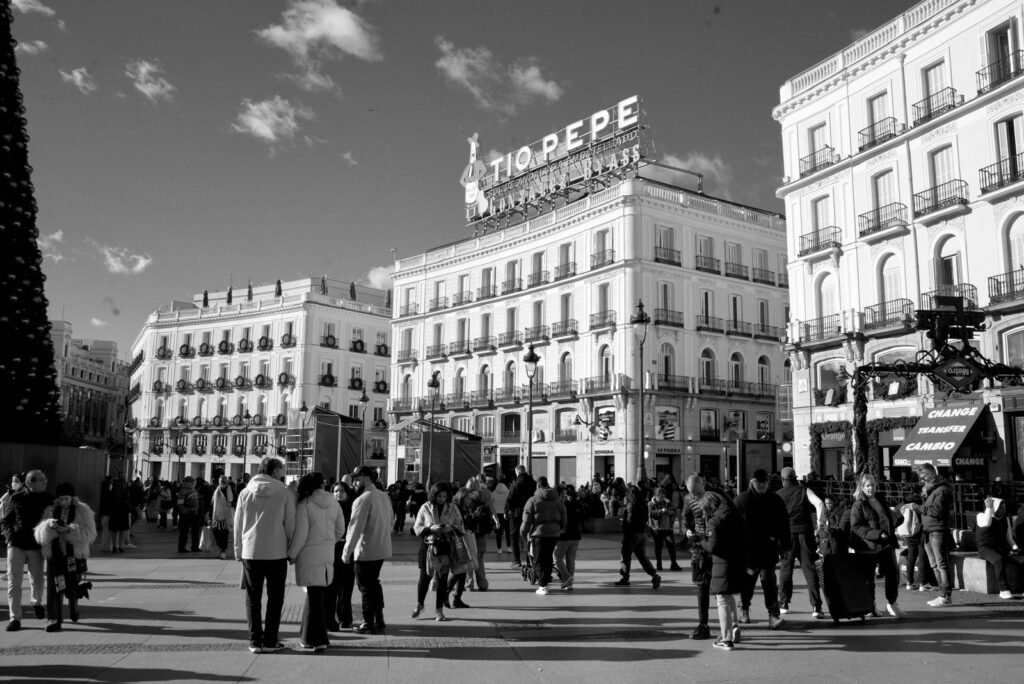
Pedestrian quality is strong but not uniform. Sol has been reshaped around people on foot, while Gran Vía has wider pavements and additional crossings. Retiro’s surrounding neighborhood also uses broad pavements and a more regular street pattern. Crowds, wide junctions around Cibeles and Paseo del Prado, and older historic lanes keep the walking environment short of perfect.
Best Areas to Stay for a Walking Weekend
Sol–Gran Vía is the most convenient all-around base. It places the historic center, shopping streets, Chueca, Las Letras and several Metro lines close together. The trade-off is intensity: this is Madrid’s busiest visitor zone, so central convenience comes with more crowds and late activity.
Barrio de las Letras is the best balance for museums and central walking. It sits between Sol–Gran Vía and Paseo del Arte, with restaurants, accommodation and pedestrian streets inside the district. Some streets slope toward Paseo del Prado, but the geography works especially well for visitors prioritizing the Prado corridor and Retiro.
The Austrias suits a palace-and-old-center trip. Staying near Plaza Mayor or Ópera puts the Royal Palace, Almudena Cathedral, Mercado de San Miguel and Sol within short walks. Chueca is another strong central choice for travelers who want Gran Vía nearby while staying just north of the busiest sightseeing axis.
Representative Walking Times
These are practical planning estimates rather than guaranteed walking times. Sol to Plaza Mayor: about 5–7 minutes. Plaza Mayor to the Royal Palace: about 10–12 minutes. Sol to the Prado: about 15–20 minutes. Reina Sofía to the Prado: about 10–15 minutes. Prado to the Retiro lake: about 15–20 minutes. Callao to Plaza de España: about 10–12 minutes. The pattern matters more than the exact minute: central trips often remain short enough to walk by default.
A 2-Day Walking Route
Day 1: Gran Vía, Royal Madrid and the Austrias
Walking route
Day 1: Gran Vía, Royal Madrid and the Austrias
- Plaza de Cibeles
- Edificio Metrópolis / Gran Vía
- Plaza del Callao
- Plaza de España
- Plaza de Oriente
- Royal Palace of Madrid
- Almudena Cathedral
- Plaza de la Villa
- Mercado de San Miguel
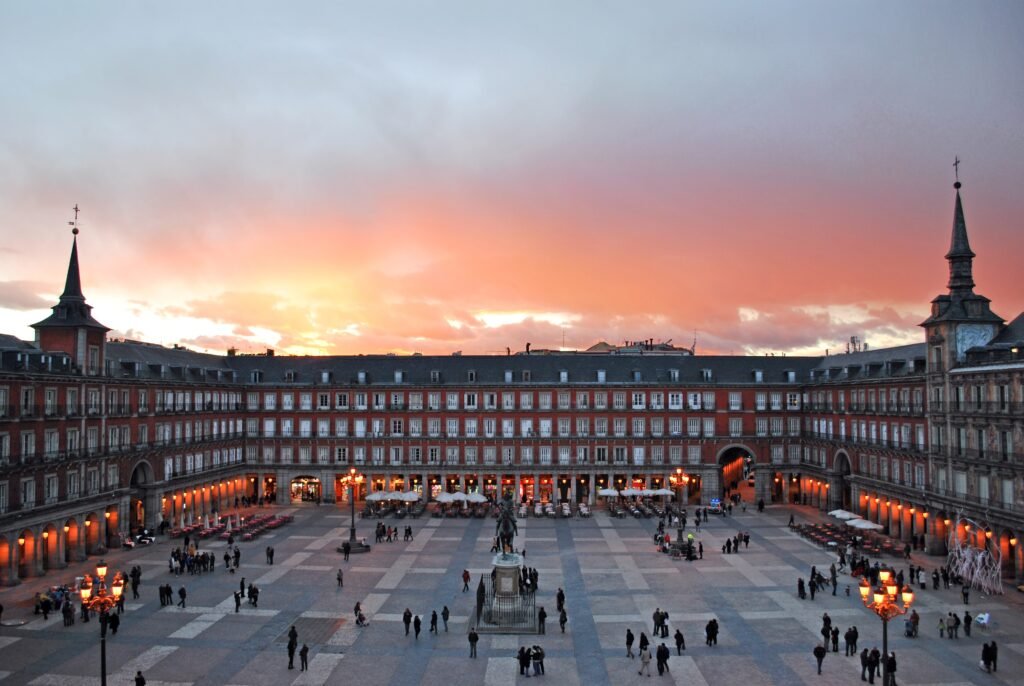
- Plaza Mayor
- Puerta del Sol
Start at Cibeles and follow Calle de Alcalá into Gran Vía. Continue through Callao to Plaza de España, then turn south toward Plaza de Oriente and the Royal Palace. From Almudena Cathedral, follow Calle Mayor through Plaza de la Villa to Mercado de San Miguel and Plaza Mayor. Finish at Puerta del Sol. The route avoids returning along Gran Vía and turns the transition from modern Madrid into the Austrias into part of the sightseeing.
Day 2: Paseo del Arte and Retiro
Walking route
Day 2: Paseo del Arte and Retiro
- Museo Nacional Centro de Arte Reina Sofía
- Real Jardín Botánico
- Museo Nacional del Prado
- Museo Nacional Thyssen-Bornemisza
- Plaza de Cibeles
- Puerta de Alcalá
- Estanque Grande del Retiro
- Palacio de Cristal
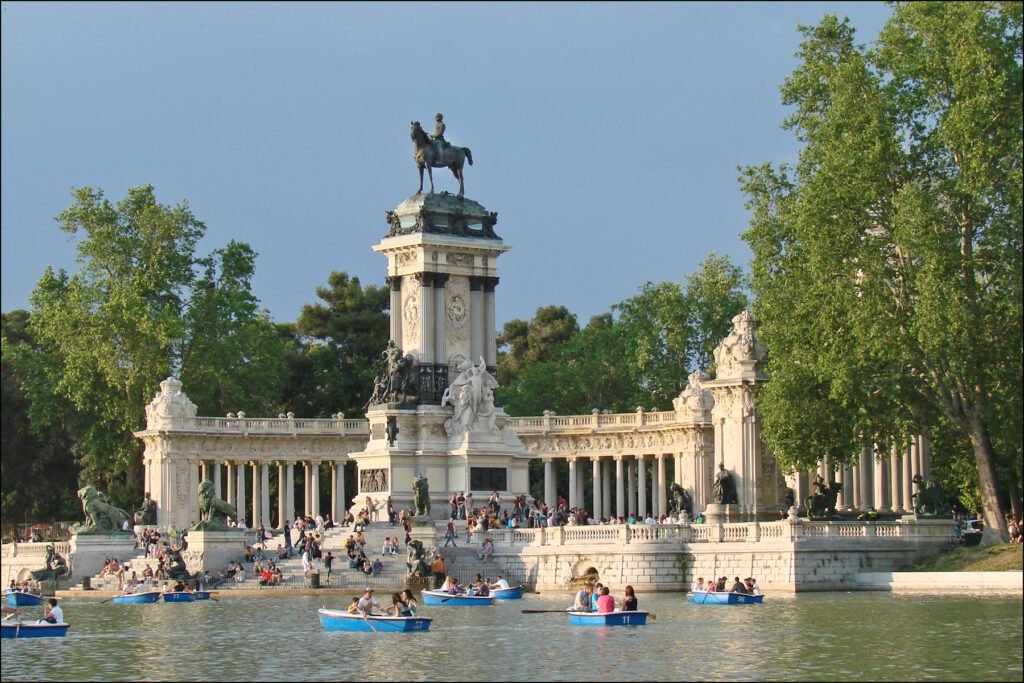
Begin at Reina Sofía and move north through the Royal Botanic Garden edge, the Prado and Thyssen-Bornemisza. Continue to Cibeles, turn east to Puerta de Alcalá, then enter Retiro for the lake and Palacio de Cristal. Visiting all three major museums deeply would overwhelm one day, so choose interiors selectively. The mapped route is designed around outdoor geography, not a requirement to enter every attraction.
Using Madrid Metro Without Overusing It
Metro is most valuable after the central walking belt stops being efficient. Use it for Santiago Bernabéu, farther northern districts, cross-city evening returns or any day when heat and fatigue matter. The network has more than 300 stations, but its strength should complement Madrid’s pedestrian geography rather than disguise the distance to outlying sights.
Normal Metro service runs about 6 a.m. to 1:30 a.m. Since June 2026, single Metro trips can be validated directly with a bank card, phone or compatible wearable. Visitors planning heavier transit use can still buy the Tourist Travel Pass for consecutive days. That combination makes occasional Metro use unusually straightforward without forcing every visitor into the same fare product.
Engineering works can temporarily change Metro service, especially during major modernization projects. These disruptions do not change Madrid’s long-term transit usefulness, but they can affect the best route on a specific day. Check current Metro notices before travel if your itinerary depends on a particular line or late-evening service.
Arriving in Madrid Without a Car
Madrid-Barajas has several strong public-transport arrivals. Metro Line 8 links the airport with Nuevos Ministerios and is published to run from 6:05 a.m. to 2 a.m. daily. It is direct to the urban network, but most historic-center hotels still require an onward transfer from Nuevos Ministerios.
Cercanías C1 serves Airport T4 and runs through Chamartín and Atocha. Travelers using other terminals should not assume the rail station is beside their arrival hall. The Airport Express bus is the most useful overnight fallback: it runs 24 hours, serves Atocha by day and Cibeles at night, and accepts contactless payment.
The Airport Express is scheduled every 15–20 minutes during the day and every 35 minutes at night. Atocha and Chamartín are also low-friction arrivals for intercity rail passengers because both connect directly into Madrid’s urban network. Those central rail gateways make arriving by train especially straightforward, while air travelers still face airport transfers, terminal scale and luggage handling.
When a Car Becomes Useful
A private car adds little to the standard two- or three-day Madrid city break. Parking, central traffic restrictions and the strength of walking plus transit make it unnecessary for the routes in this guide. A car becomes more useful for a wider regional itinerary built around several rural stops that are awkward to combine by rail. Even then, do not rent automatically: Cercanías already reaches popular regional destinations including El Escorial and Aranjuez.
Practical Walking Limitations and Tips
Madrid’s biggest walking friction is usually not missing sidewalks. It is cumulative distance, crowding and the occasional mismatch between a short map line and a busy junction. Sol and Gran Vía can become intensely crowded. Cibeles and Paseo del Prado require more attention at broad crossings. Las Letras introduces modest slopes, while older Austrias streets are less geometrically direct than the major avenues.
Group sightseeing by adjacent areas rather than repeatedly crossing the center. The two mapped days do this deliberately: the first links Gran Vía with Royal Madrid and the Austrias, while the second keeps the art corridor and Retiro together. If you plan to enter the Royal Palace, confirm the current visitor entrance before setting out because operational access can change.
Seasonal Walking Note
Madrid’s underlying walkability does not change with the season, but summer comfort can change dramatically. Official tourism guidance says summer is usually very hot and recommends avoiding tourist walking during midday and early afternoon. In hot weather, start the longest outdoor segments earlier, use museums or lunch for the hottest hours, and resume longer walks later in the day.
Bottom Line
Madrid works best when walking is the default across the central belt and Metro is reserved for longer gaps. A well-located visitor can connect the Royal Palace, Sol, Gran Vía, Las Letras, Paseo del Arte and Retiro on foot across two focused days. The capital is larger than that core, but its scale does not require a rental car for a normal weekend.