
Six compact Italian city breaks can demand completely different legs. Florence keeps most first-time sights inside one connected core, but crowds and uneven stone slow the shortest routes. Bologna channels visitors beneath porticoes, while Milan spreads worthwhile districts across flat terrain and lets transit bridge the gaps. Venice replaces hills with canal detours and repeated bridge stairs. Rome puts monuments close together yet makes many connections rougher through cobbles, narrow sidewalks, and busy crossings. Naples feels compact at lower elevations, then changes sharply toward Vomero and San Martino. Station location and transit often decide whether those differences feel convenient or exhausting.
The Ranking: 6 Most Walkable Cities in Italy for Travelers
| Rank | City | Overall score | Strongest advantage | Main limitation |
|---|---|---|---|---|
| 1 | Florence | 93/100 | Tight first-time sightseeing geography with easy Arno crossings | Crowds, uneven paving, and the separate Piazzale Michelangelo climb |
| 2 (tie) | Bologna | 92/100 | Compact porticoed center and direct station-to-core walking | San Luca sits beyond the core and finishes with a serious climb |
| 2 (tie) | Milan | 92/100 | Flat terrain and exceptional transit between worthwhile clusters | Porta Nuova, Navigli, and Centrale broaden the visitor footprint |
| 4 | Venice | 87/100 | Dense historic clusters with strong vaporetto backup | Canal routing, bridge stairs, and luggage-heavy approaches |
| 5 | Rome | 86/100 | Exceptional concentration of ancient and central sights | Rough paving, busy crossings, and inconsistent pedestrian comfort |
| 6 | Naples | 81/100 | Dense lower-city core with Metro and funicular hill relief | Steep vertical layers, traffic interaction, and less consistent transit |
Bologna and Milan both sit at 92/100 and share rank 2, so there is no rank 3. Bologna delivers the tighter walking-first weekend, while Milan supports a wider city break with flatter terrain and stronger transit. Despite the identical score, the two cities offer very different kinds of strong car-free weekend.
Florence Keeps the Weekend in One Continuous Core
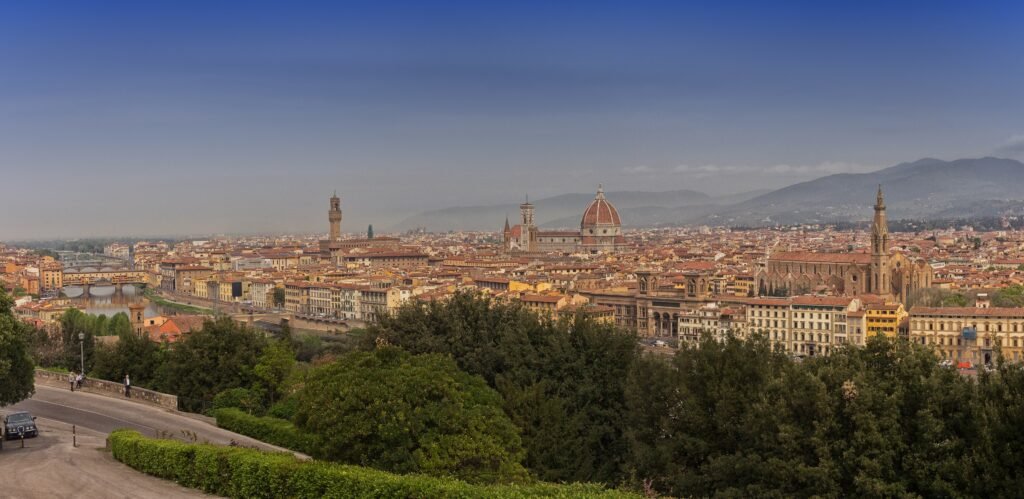
Florence leads because the first-time visitor map rarely breaks apart. Firenze Santa Maria Novella sits beside the historic center, with the Duomo about a 15-minute walk away. From there, Piazza della Signoria, the Uffizi, Ponte Vecchio, Santa Croce, and central Oltrarno connect through short, worthwhile streets. Ponte Vecchio, Ponte Santa Trinita, and Ponte alle Grazie keep the Arno from splitting the core into separate sightseeing zones.
The friction appears after distance stops being the problem. Narrow sidewalks, worn historic paving, and heavy crowds around the Duomo–Uffizi–Ponte Vecchio corridor can slow very short routes. Piazzale Michelangelo and San Miniato add a real climb south of the river, but they remain a hill extension rather than the city’s normal terrain. The full Florence walkability guide shows how to keep that extension separate from the compact central circuit.
Bologna and Milan: Same Score, Different Weekend Rhythm
Bologna: Porticoes Keep the Core Tight
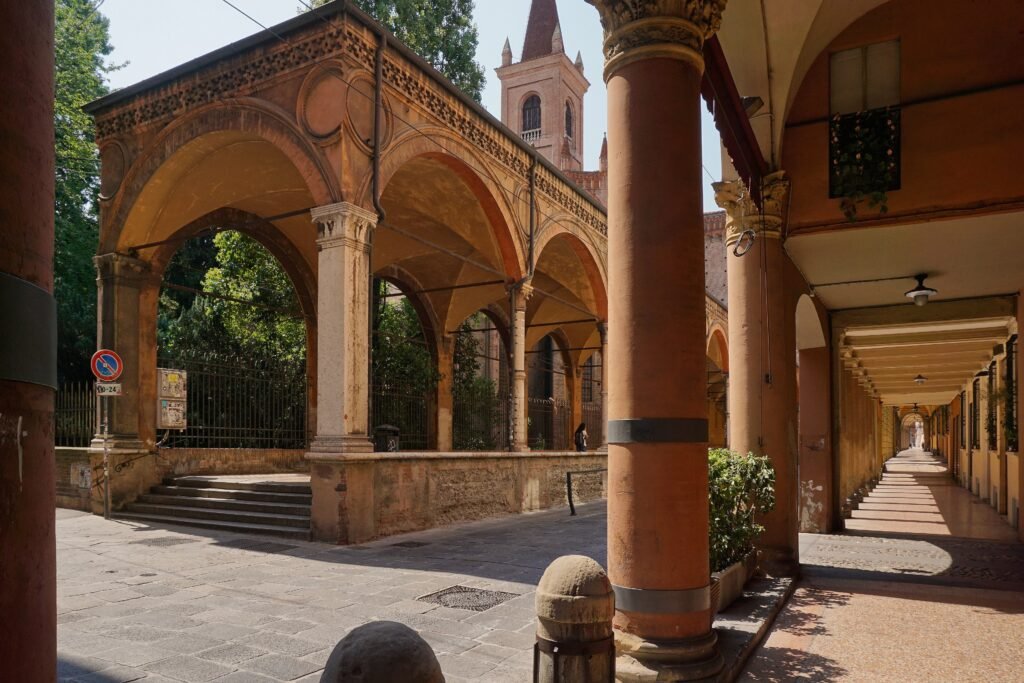
Bologna Centrale connects to Piazza Maggiore on a clear route along Via dell’Indipendenza. The Quadrilatero, Two Towers area, Santo Stefano, and the university quarter then sit inside a tightly connected historic web. Porticoes materially improve ordinary walking continuity and shelter, which makes repeated central trips easier in sun or rain. The exception is San Luca. Its long western approach continues well beyond the compact core and ends with sustained climbing, regardless of bus access. See the Bologna walking guide for the full core-and-San-Luca strategy.
Milan: Flat Ground, Wider Clusters, Stronger Transit
Milan begins with a very strong central walking cluster. The Duomo, Galleria Vittorio Emanuele II, La Scala, Brera, Castello Sforzesco, and Parco Sempione connect naturally on foot. The weekend expands once Porta Nuova, Navigli, and Milano Centrale enter the plan. Those districts are highly walkable after arrival, but they do not become one continuous pedestrian core simply because Metro and trams connect them well. Milan’s flat terrain keeps longer walks physically easier, while transit removes low-value mileage between clusters. The Milan walkability guide maps that cluster-based approach in detail.
The tie makes more sense when viewed through trip style. Choose Bologna when you want most sightseeing inside a compact, porticoed walking network. Choose Milan when you want a larger city with several worthwhile districts and exceptionally strong transit between them.
Venice, Rome and Naples: Three Different Ways Walking Gets Harder
Venice: Canals Decide the Route
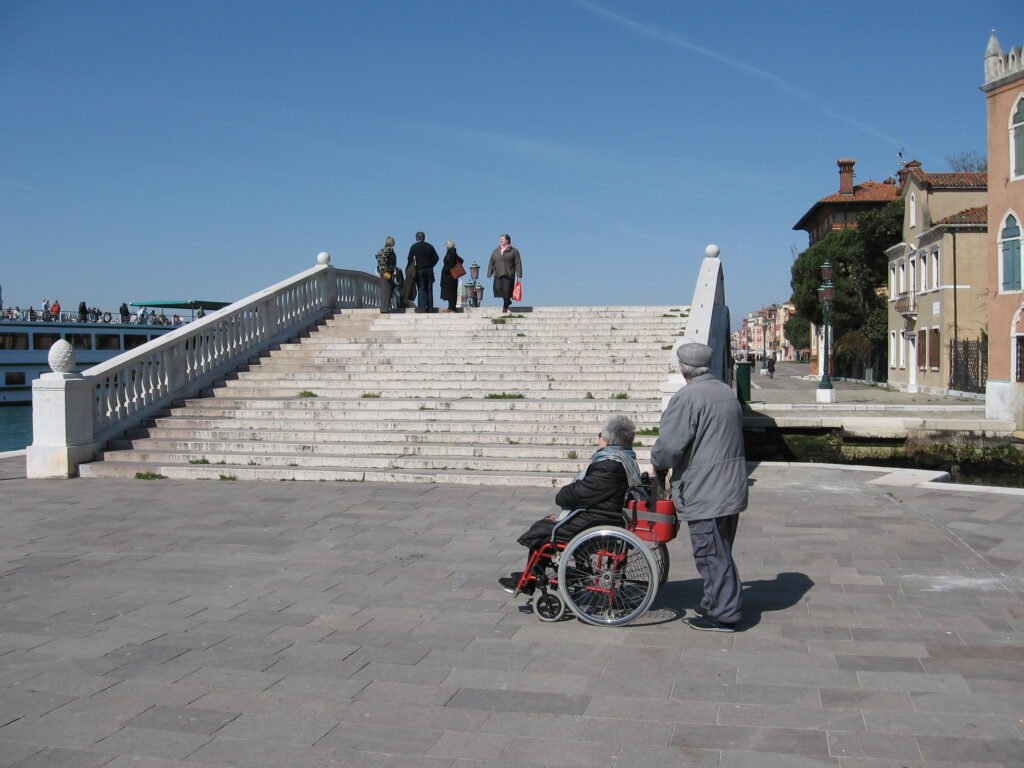
Venice is not a conventional compact center with cars removed. San Marco, Rialto, San Polo, Dorsoduro, Cannaregio, and Castello contain dense walking clusters, but canals decide how those clusters connect. The Grand Canal has only four fixed pedestrian crossings, making Rialto and Accademia especially important for visitor routes. Smaller canals add many more bridge stairs, so a nearly flat city can still create substantial vertical effort across a full day.
Santa Lucia and Piazzale Roma make car-free arrival practical, yet the final hotel approach can remain demanding. A stay near the arrival edge can still leave a 30–40 minute, bridge-heavy walk to San Marco. Vaporetti are most useful when they replace repetitive transfer mileage, reduce luggage handling, or reach islands beyond the pedestrian network. They do not make the physical districts closer together. The Venice walkability guide explains which crossings and vaporetto legs save the most effort. Fourth place reflects route and stair burden, not a lack of dense central sights.
Rome: Dense Sights, Rougher Connections
Rome’s major sights are not the problem. The Colosseum and Forum, Piazza Venezia, Trevi, Pantheon, Piazza Navona, the Ghetto, and nearby historic streets create exceptional sightseeing density. Trastevere and Vatican City broaden the map rather than erasing that central concentration. The difficulty comes between attractions: sampietrini and other uneven paving, narrow or inconsistent sidewalks, crowded lanes, and busy crossings make short routes less predictable.
Metro, buses, and trams work best as longer resets between separated areas or after a demanding walking block. They do not turn Vatican City, Trastevere, and the ancient core into one compact pedestrian district. Rome’s fifth place therefore says more about street-level friction than attraction distance. The Rome walkability guide gives the route-level detail for the ancient core, Vatican, and Trastevere.
Naples: Compact Below, Steep Above
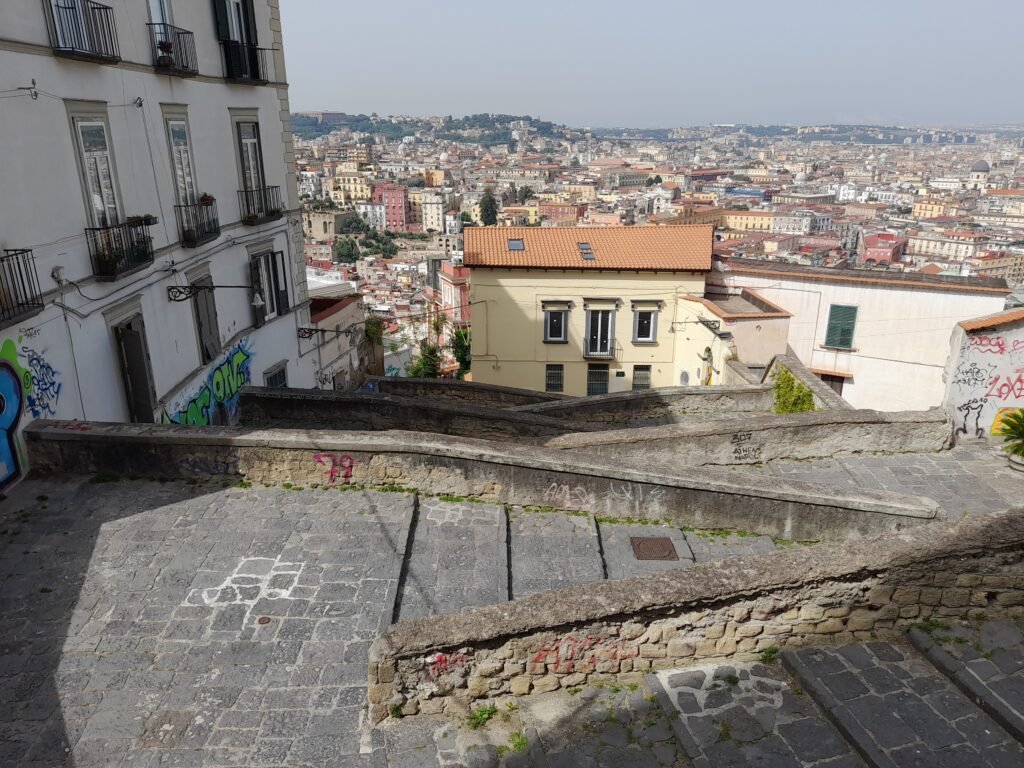
Naples changes most sharply with elevation. Spaccanapoli, Via dei Tribunali, Via Toledo, the Spanish Quarter, Piazza del Plebiscito, and the central waterfront create a dense lower-city network. Walking toward Vomero and San Martino introduces steep streets and long stair routes, so a short map distance can become a major physical commitment. Funiculars are valuable precisely because they remove those climbs without pretending the terrain is flat.
Chiaia and Mergellina extend the western waterfront and deserve their own time rather than automatic attachment to an already long historic-center day. Metro Line 1 and the funiculars can remove low-value distance or climbing, while Napoli Centrale gives rail travelers a strong central arrival. The airport uses a road-based bus connection rather than direct rail, making arrival less seamless than in cities with terminal rail service. The Naples walkability guide shows where the lower city ends and vertical Naples begins. Sixth place does not make the historic center weak on foot; the gap comes from hills, street interaction, and transit consistency.
The Arno Is a Seam; the Grand Canal Is a Constraint
Florence and Venice show why water alone says little about walking difficulty. In Florence, several central bridges keep the Arno woven into the sightseeing network, so crossing between Signoria, Ponte Vecchio, Pitti, and Santo Spirito feels natural. In Venice, the Grand Canal channels movement toward a small number of fixed crossings, while smaller canals repeatedly redirect local routes toward stepped bridges. Both cities are compact, but only one lets most river crossings behave like ordinary street connections.
Porticoes, Cobbles, Bridge Stairs and Hill Steps
These six cities also separate compactness from physical ease in very different ways. Florence keeps distances short but adds crowding, uneven stone, and one meaningful southern climb. Bologna’s porticoes improve everyday continuity and shelter, although San Luca remains a long uphill extension. Milan is the easiest on sustained terrain because the principal visitor areas are flat. Venice substitutes repeated bridge stairs for conventional hills. Rome combines remarkable sight density with rough historic surfaces and busier crossings. Naples layers a compact lower city beneath much steeper hill districts.
Travelers sensitive to hills should look first at Milan, or at central Bologna while leaving San Luca out. Travelers sensitive to repeated steps should be cautious with Venice and Naples even when the map looks compact. In Rome and Florence, surface quality and crowding may matter more than gradient for many central routes.
When Transit Changes the Weekend
Transit plays a different role in each city. Florence needs it mainly for airport arrival, hill relief, and selected edges, while Bologna uses buses mostly for outliers such as San Luca. Milan is the clearest case where transit belongs inside the ideal weekend plan because it efficiently connects a wider set of walkable districts. Venice uses vaporetti to bypass bridge-heavy transfers and handle island trips. Rome benefits from longer Metro or surface-transport resets, while Naples gains most from Metro Line 1 and funiculars that remove climbing.
The important distinction is practical rather than cosmetic. Good transit can make a separated district easy to visit without making it geographically closer. That is why Porta Nuova, Navigli, the Vatican, Vomero, and Venice’s farther islands remain distinct visitor areas even when the ride between them is simple.
Arriving Without a Car: Central Stations Change the First Hour
Florence and Bologna have the easiest overall arrival profiles in this six-city group. Santa Maria Novella and Bologna Centrale both sit beside the main visitor geography, and each city has a direct airport connection into that central transport area. Venice is especially strong by rail because Santa Lucia opens directly onto the historic-city edge, although luggage can still meet several bridges before the hotel.
Milan’s rail arrival is easy, but the airport story ranges from close-in Linate to much more distant Malpensa and Bergamo. Rome pairs strong Termini rail arrival with direct Fiumicino rail, while Ciampino adds more transfer friction. Napoli Centrale integrates directly with the urban network, whereas the airport relies on a road-based bus rather than rail at the terminal. None of those differences creates a reason to rent a car for the standard central weekend.
Which Italian City Fits Your Walking Style?
| Traveler priority | Best fit | Why |
|---|---|---|
| Tightest first-time sightseeing geography | Florence | Santa Maria Novella, the Duomo, Signoria, Uffizi, Ponte Vecchio, Santa Croce, and central Oltrarno connect naturally. |
| Best porticoed walking | Bologna | The portico network reinforces direct central routes and adds useful shelter without changing San Luca’s distance or climb. |
| Strongest transit-supported city break | Milan | Metro and trams efficiently connect the Duomo core with Porta Nuova, Navigli, Centrale, and other worthwhile clusters. |
| Easiest terrain | Milan | The main visitor geography is flat, so longer distances create mileage rather than sustained climbing. |
| Bridge-and-canal walking | Venice | Canals dictate route choice, while repeated bridge stairs make a nearly flat city physically demanding in a different way. |
| Ancient-city walking | Rome | Major ancient and baroque sights sit close together, but historic paving and busy crossings make those short links less smooth. |
| Hill-and-funicular walking | Naples | The lower historic city is dense, while funiculars are most valuable when Vomero and San Martino enter the day. |
| Easiest car-free arrival | Florence and Bologna | Both combine straightforward central rail arrival with direct airport connections into the city’s main visitor geography |
| Minimizing transit use | Florence | Most headline first-visit sights fit inside one continuous walking network before transit becomes necessary. |
| Sensitive to hills or repeated steps | Milan; Bologna if San Luca is skipped | Venice adds repeated bridge stairs, Naples adds steep vertical links, and Florence has a distinct southern hill extension. |
These priorities explain why two travelers can reasonably choose different cities even when the overall ranking is unchanged. Bologna and Milan remain tied overall, but the better fit depends on whether you value compactness or broader transit-supported variety.
When a Car Actually Helps
A private car is unnecessary for the normal two- or three-day city break in all six destinations. It becomes more useful when the itinerary expands into rural Tuscany, Emilia-Romagna countryside, lake or mountain driving, or other dispersed regional stops. In those cases, collecting a rental after the city stay usually preserves the advantages of rail, walking, and central lodging. Historic Venice remains the clearest example where road vehicles stop outside the sightseeing network rather than improving it.
Seasonal Walking Conditions
Hot summer afternoons can shorten a comfortable walking day, especially on Florence’s hill extension, Bologna’s San Luca route, Rome’s exposed crossings and Naples’ stair climbs. Rain matters most where polished stone, cobbles and bridge steps reduce traction. Milan’s flat terrain stays easier physically, but long cluster-to-cluster distances still add up. Adjust longer walks, climbs and rough-surface routes to the day’s weather conditions.
Bottom Line
Florence is the strongest choice for maximum walking concentration. Bologna and Milan share second place but suit different weekends: compact porticoed walking in Bologna, or flat multi-cluster travel with exceptional transit in Milan. Venice asks you to manage bridges and canal crossings, Rome asks you to tolerate rougher historic streets, and Naples asks you to manage elevation. All six support a car-free central trip. The individual Walkable Weekend city guides linked above provide the route-level detail for turning that comparison into a practical itinerary.