

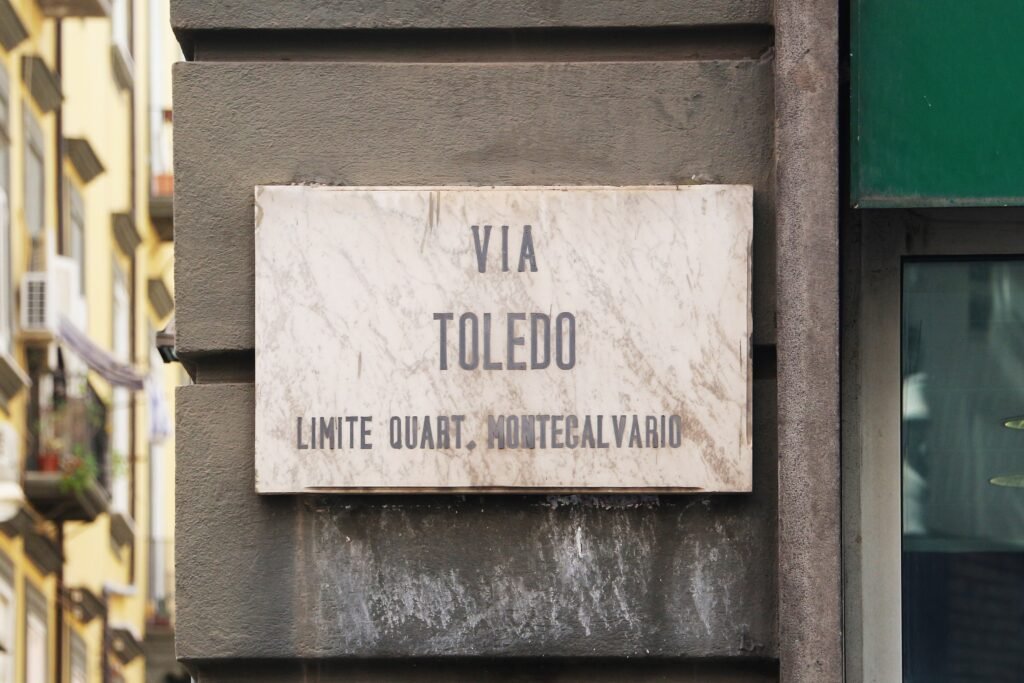
Two street systems define a visitor’s walking experience in Naples: the ancient decumani below and steep hill routes above. The historic center is intensely concentrated, placing major churches, chapels, museums, and food streets within short walks. Via Toledo forms a clear north-south hinge between that maze, the Spanish Quarter, and Piazza del Plebiscito. Beyond the royal district, the waterfront continues west through Santa Lucia, Chiaia, and eventually Mergellina. Those extensions remain attractive on foot, but they add real mileage. San Martino and Vomero then introduce stair routes and sharp elevation changes that reshape a short weekend.
Why Naples Works So Well on Foot
Spaccanapoli and Via dei Tribunali run almost parallel through the old center, keeping headline stops inside a compact east-west band. Cappella Sansevero sits only minutes from both corridors, while Santa Chiara and Piazza del Gesù fit naturally into the same walk. MANN marks the northern edge rather than a separate museum district. South and west, Via Toledo creates an unusually useful walking spine toward Galleria Umberto I, the Royal Palace, and Piazza del Plebiscito.
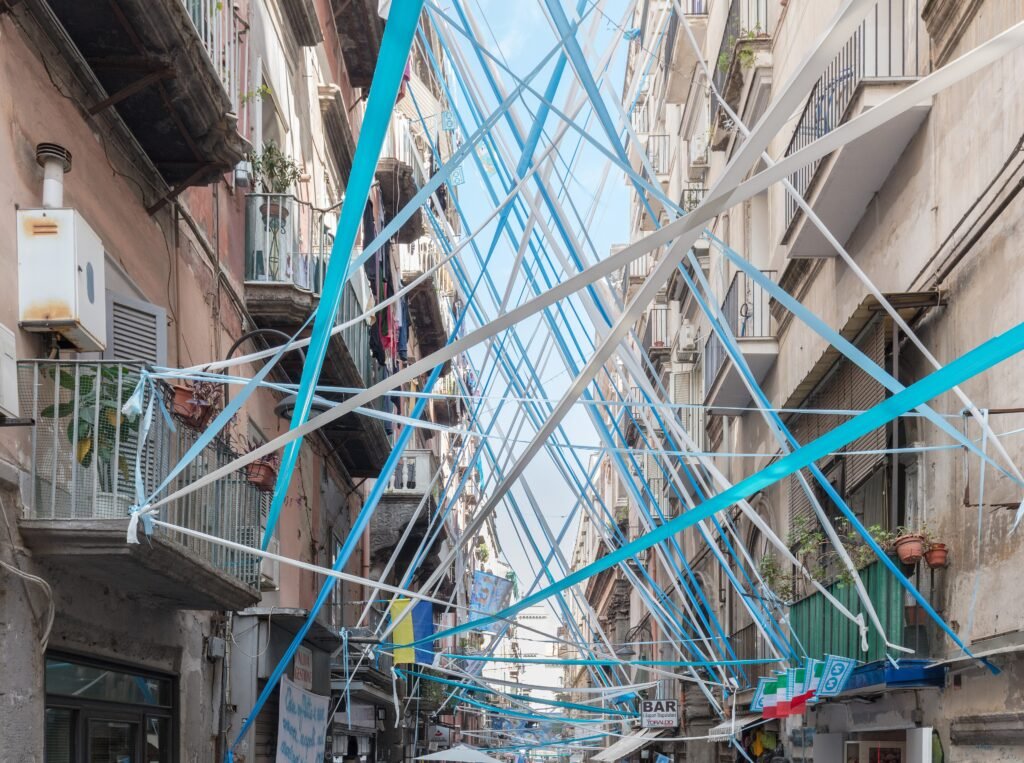
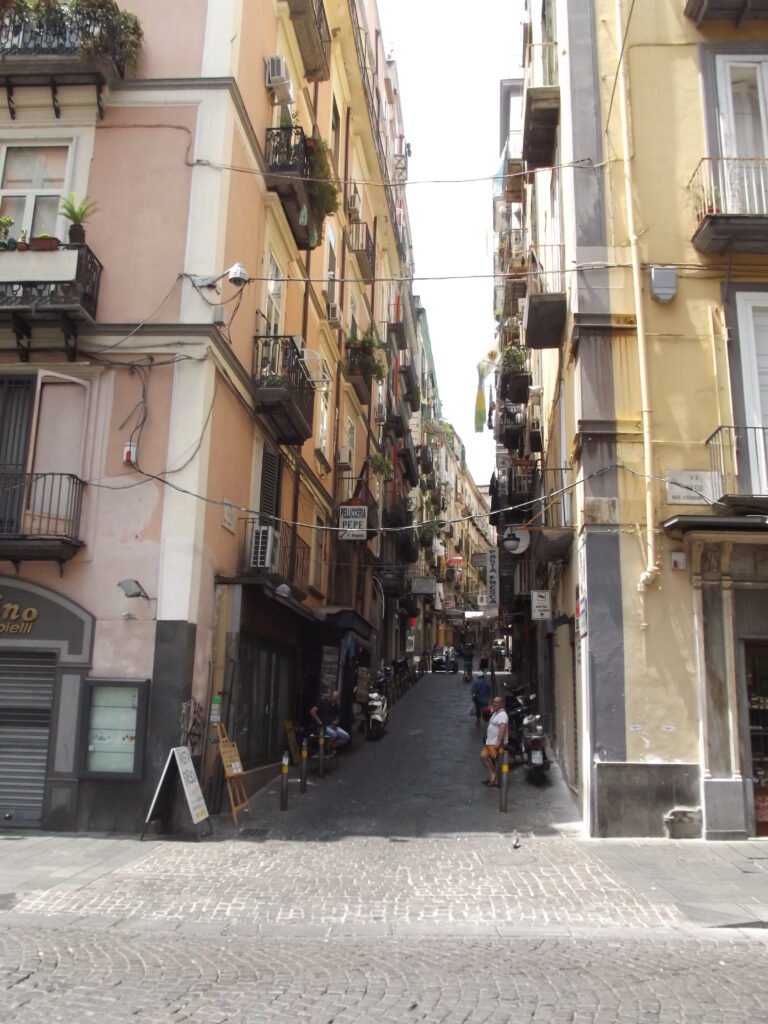
The pedestrian experience is strongest where the historic grid meets formal pedestrian areas and traffic controls. Via dei Tribunali has pedestrian sections, and several central squares remove through traffic. The Centro Antico ZTL also limits access, but it is not a fully car-free zone. Scooters and authorized vehicles still share selected lanes, so compact distances do not always translate into effortless walking.
Where Walking Gets Harder
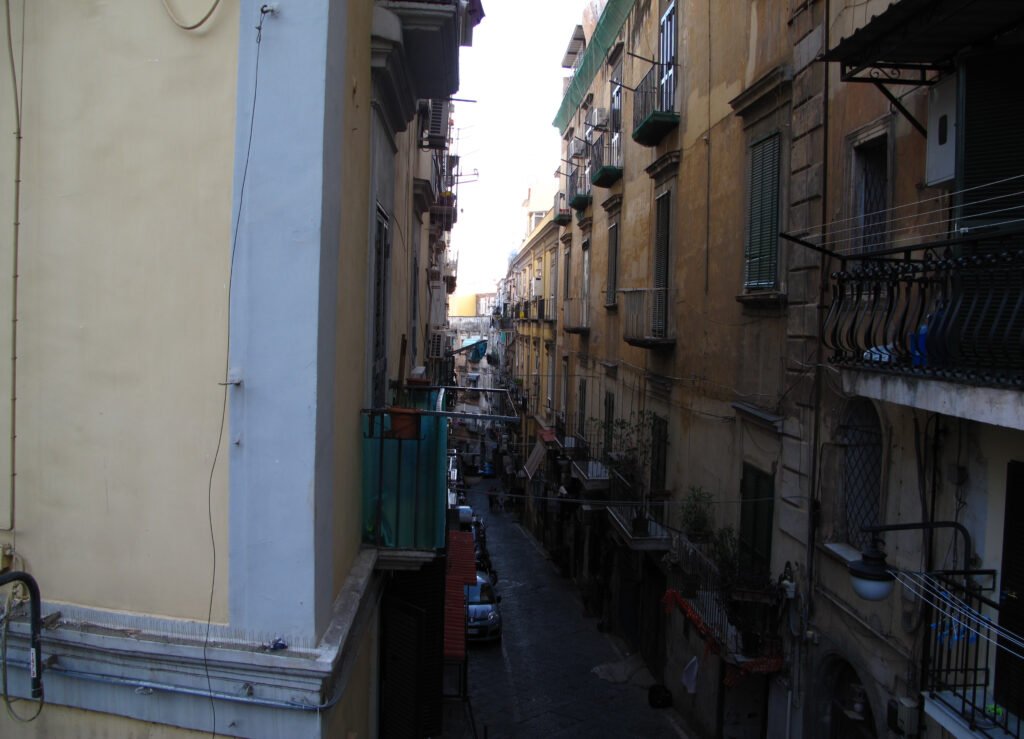
The main challenge is vertical. Vomero and San Martino sit above the central districts, and stair routes such as the Pedamentina make the climb or descent part of the experience. These routes can be rewarding, but they should not be treated like ordinary flat city blocks. The Spanish Quarter also rises quickly away from Via Toledo, while several Chiaia streets climb toward the same hills.
The other limitation is length rather than poor pedestrian quality. Piazza del Plebiscito reaches Santa Lucia easily, and the seafront is excellent for a long promenade. Continuing through Chiaia and Villa Comunale to Mergellina adds substantial mileage, however. Capodimonte is another separate case: it sits uphill beyond the dense central sightseeing core and deserves its own access plan.
Best Areas to Stay for a Walking Weekend
Centro Storico puts the greatest concentration of major sights within short walks, with Spaccanapoli, Via dei Tribunali, Sansevero, Santa Chiara, and evening dining outside your door.. Expect crowds, noise, uneven paving, and tight lanes.
Toledo or the Spanish Quarter edge is the most balanced base for a first visit. Via Toledo, Metro Line 1, Plebiscito, and the historic core are all close, while hill connections remain easy to reach.
San Ferdinando and Plebiscito work well for the royal district and Santa Lucia. They remain close to Toledo but sit slightly farther from the eastern historic-center sights.
Chiaia suits travelers who value the waterfront and a calmer evening base. It is still practical without a car, but transit becomes more useful for repeated trips into the old center.
Useful Walking Times
MANN to Piazza Bellini takes about 5–8 minutes. Piazza San Gaetano to Cappella Sansevero takes about 6–8 minutes. Piazza del Gesù to Toledo Metro takes about 8–10 minutes. Toledo to Piazza del Plebiscito takes about 12–15 minutes. Plebiscito to Castel dell’Ovo takes about 15–20 minutes. The same square to Mergellina is closer to 35–45 minutes along the waterfront.
These are planning ranges rather than promises. Crowds, crossings, steps, photo stops, and historic paving can slow the pace considerably. The official museum-to-museum walking connection from MANN toward Capodimonte is roughly 30 minutes and climbs throughout.
A 2-Day Walking Route
These two days keep the dense historic core together, then use one uphill transit assist before a mostly downhill second route. That structure avoids wasting energy on Naples’ steepest low-value climb and reduces backtracking.
Day 1: Historic Center to Santa Lucia
Walking route
Day 1: Historic center to Santa Lucia
- Museo Archeologico Nazionale di Napoli, Piazza Museo 19, Napoli, Italy
- Piazza Bellini, Napoli, Italy
- Piazza San Gaetano, Napoli, Italy
- Via San Gregorio Armeno, Napoli, Italy
- Museo Cappella Sansevero, Via Francesco de Sanctis 19/21, Napoli, Italy
- Piazza San Domenico Maggiore, Napoli, Italy
- Complesso Monumentale di Santa Chiara, Via Santa Chiara 49/C, Napoli, Italy
- Piazza del Gesù Nuovo, Napoli, Italy
- Via Toledo, Stazione Toledo, Napoli, Italy
- Galleria Umberto I, Napoli, Italy
- Piazza del Plebiscito, Napoli, Italy
- Castel dell'Ovo, Via Eldorado 3, Napoli, Italy
Start at MANN, then move through Piazza Bellini toward Via dei Tribunali and Piazza San Gaetano. Cut south through San Gregorio Armeno to Cappella Sansevero, Piazza San Domenico Maggiore, Santa Chiara, and Piazza del Gesù. From there, continue west to Via Toledo rather than circling back through the old center. Follow Toledo south to Galleria Umberto I and Piazza del Plebiscito, then finish beside the water at Castel dell’Ovo.
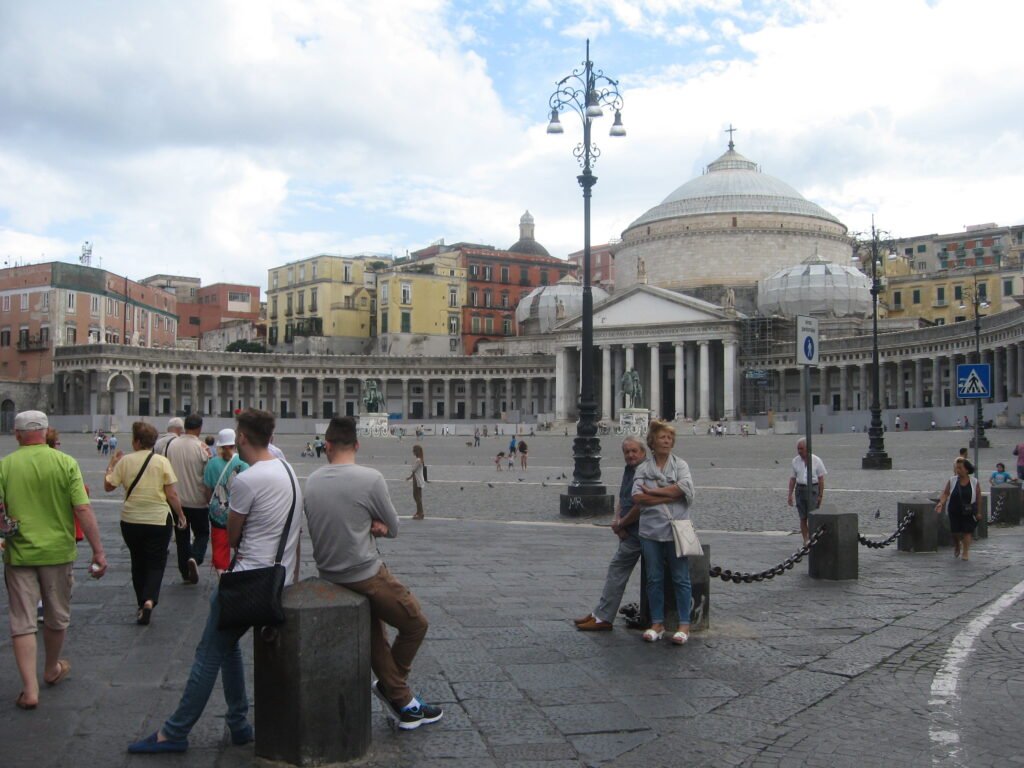
This route uses Naples’ strongest continuous walking network. It also exposes the main caveat: even pedestrian-priority historic streets can feel crowded and shared. If museum visits run long, stop at Plebiscito and move Santa Lucia to the following morning.
Day 2: Vomero Descent and the Western Waterfront
Walking route
Day 2: Vomero descent, Spanish Quarter and western seafront
- Piazza Fuga, Napoli, Italy
- Castel Sant'Elmo, Via Tito Angelini 20/A, Napoli, Italy
- Certosa e Museo di San Martino, Largo San Martino 5, Napoli, Italy
- Pedamentina a San Martino, Napoli, Italy
- Vico Lungo Gelso, Quartieri Spagnoli, Napoli, Italy
- Via Chiaia, Napoli, Italy
- Piazza dei Martiri, Napoli, Italy
- Villa Comunale di Napoli, Piazza Vittoria, Napoli, Italy
- Rotonda Diaz, Lungomare Caracciolo, Napoli, Italy
- Piazza Sannazaro, Mergellina, Napoli, Italy
Take the Central Funicular uphill to Piazza Fuga before starting the walking route. Continue to Castel Sant’Elmo and the Certosa di San Martino, then descend using the Pedamentina toward the Spanish Quarter. The descent saves your legs for sightseeing while still showing Naples’ most dramatic change in elevation. If the steps are wet, closed, or unsuitable for your mobility, return downhill by funicular instead.
From the Spanish Quarter, continue toward Via Chiaia and Piazza dei Martiri. Cross into Villa Comunale and follow the seafront west through Rotonda Diaz to Mergellina. Finish there rather than reversing the entire waterfront. Line 2 is usually the most practical rail return, especially after Line 6 service ends for the day
When the Metro and Funiculars Help
Metro Line 1 is the visitor workhorse. Garibaldi, Duomo, Università, Municipio, Toledo, Dante, Museo, and Vanvitelli match the main first-time sightseeing areas unusually well. Current daytime service is frequent, with later operation on Fridays and Saturdays. Use it for Garibaldi arrivals, hill access, or any cross-city jump that would add low-value mileage.
The funiculars matter even more than their short lines suggest because they remove major climbs. Montesanto and Chiaia are especially useful for Vomero, while the Central Funicular works well for a San Martino day. Line 2 helps between Garibaldi, Cavour, Montesanto, Piazza Amedeo, and Mergellina.
Line 6 deserves a specific warning. It serves Municipio, Chiaia, Mergellina, and the western corridor, but the current timetable ends around mid-afternoon. Do not build an evening return around it. ANM Tap&Go works on Metro Lines 1 and 6 and the funiculars, simplifying occasional rides.
Arriving in Naples Without a Car
Naples Airport has no rail station, but Alibus runs directly to Napoli Centrale at Piazza Garibaldi and the port. The airport quotes about 15 minutes to Central Station and about 35 minutes to the port, before traffic variability. ANM currently publishes daily service with a maximum frequency of about 15 minutes.
Napoli Centrale is an even stronger gateway. High-speed trains from Rome can reach Naples in roughly one hour, and Garibaldi’s Metro Line 1 sits directly below the rail complex. A central stay therefore needs no rental car after arrival.
When a Car Helps
Inside Naples, a car usually adds parking, ZTL, and traffic complications without improving the standard visitor route. It becomes more useful for regional drives beyond the strongest rail and ferry corridors, especially with luggage or several rural stops. For a city-focused weekend, keep it out of the plan.
Walking Limitations and Practical Tips
Do not read “ZTL” as “pedestrian only.” Scooters and authorized vehicles remain part of the street environment in selected areas. Expect the tightest sharing on old-center lanes, and use formal crossings at wider roads around the historic core. Comfortable shoes with good grip help on worn stone and long stair descents.
Use a funicular for the uphill leg to Vomero and walk down only if stairs suit your mobility. Treat Mergellina as an extension, not a mandatory continuation after an already long central day. If Capodimonte is a priority, give it a dedicated transit-assisted window rather than forcing it into the historic-center loop.
Seasonal Walking Conditions
Summer heat and humidity can make the exposed waterfront and stair climbs more tiring, especially around midday. Spring and fall usually suit longer walking days better. Rain can make polished paving and old steps feel slick, so footwear matters more on hill routes than on the flat seafront. These conditions change comfort, not the underlying distances or street layout.
Bottom Line
Naples works best when compact walking is the default and vertical transport is a tool. Base near Centro Storico, Toledo, Plebiscito, or Chiaia, then group sights by geography. Use a funicular for the uphill leg, Line 1 for inefficient cross-city jumps, and your feet for the dense core. That balance makes Naples an excellent walking-first city break without pretending every visitor district is one continuous stroll.