
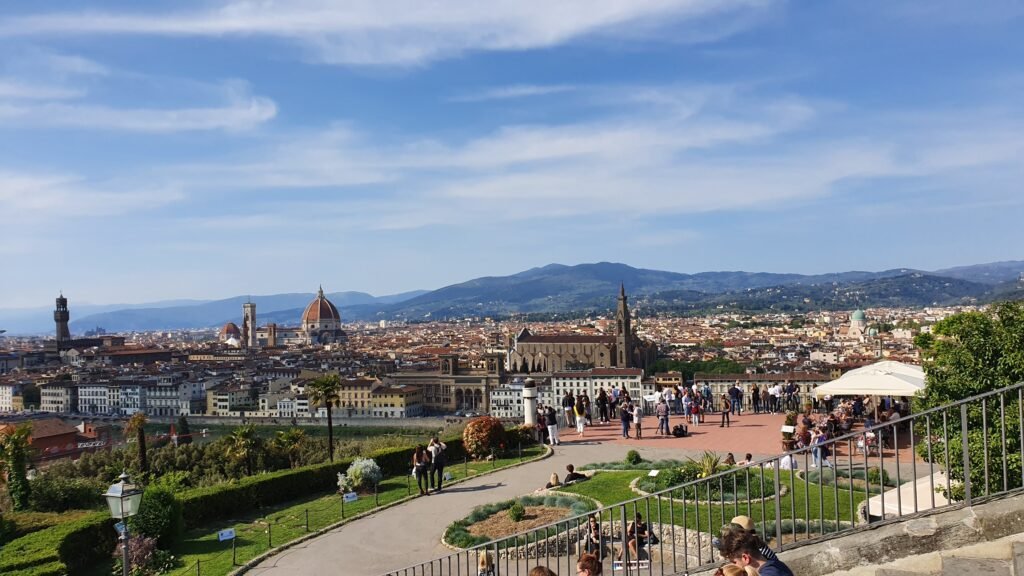
Inside the old walls and along both banks of the Arno, Florence concentrates a remarkable share of its headline sights. From Santa Maria Novella, the Duomo sits around a fifteen-minute walk away, with Signoria and Uffizi beyond. Ponte Vecchio then carries the visitor directly into Oltrarno, where Pitti and Santo Spirito remain close. This density makes walking the default, but medieval surfaces and narrow pavements demand more attention than the distances suggest. The exception rises south of the river, where Piazzale Michelangelo turns a short map distance into a sustained climb.
Why Florence Works So Well on Foot
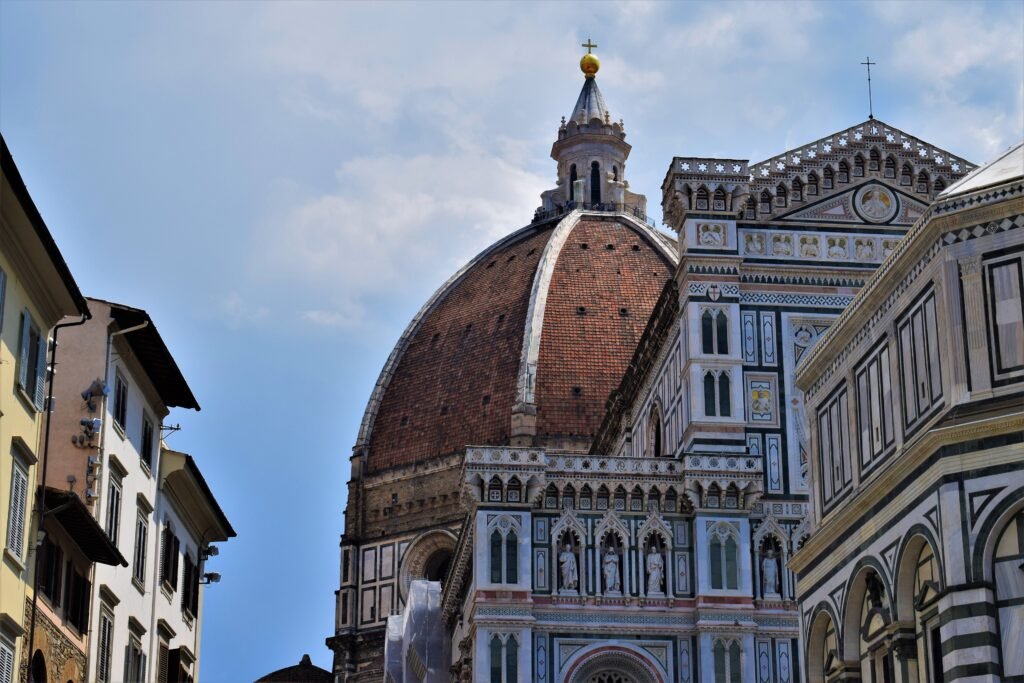
Florence’s first-time visitor geography is unusually concentrated. The UNESCO-listed historic center spans both sides of the Arno, with several central bridges stitching the districts together. The Duomo, Piazza della Signoria, Uffizi and Ponte Vecchio sit close enough to feel like one continuous walking circuit. Santa Croce extends that circuit east, while Santa Maria Novella anchors the western side near the main railway station.
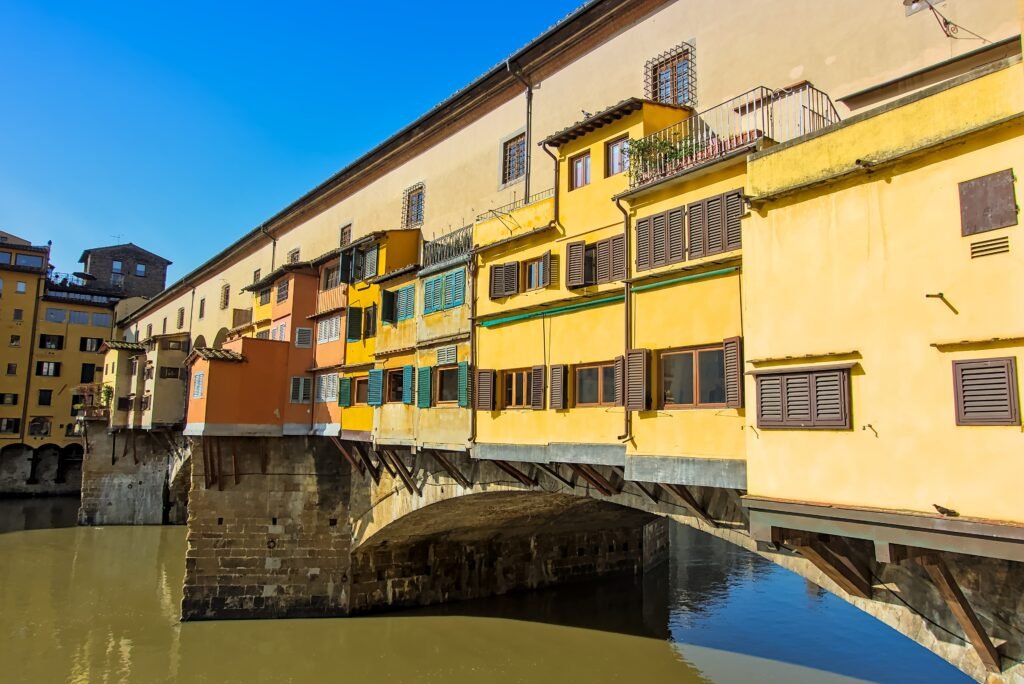
Crossing the river does not break the trip into a separate zone. Ponte Vecchio leads almost directly toward Palazzo Pitti, and Santo Spirito lies only a short walk farther west. This is why a two-day visit can be organized around continuous walking rather than repeated transit hops.
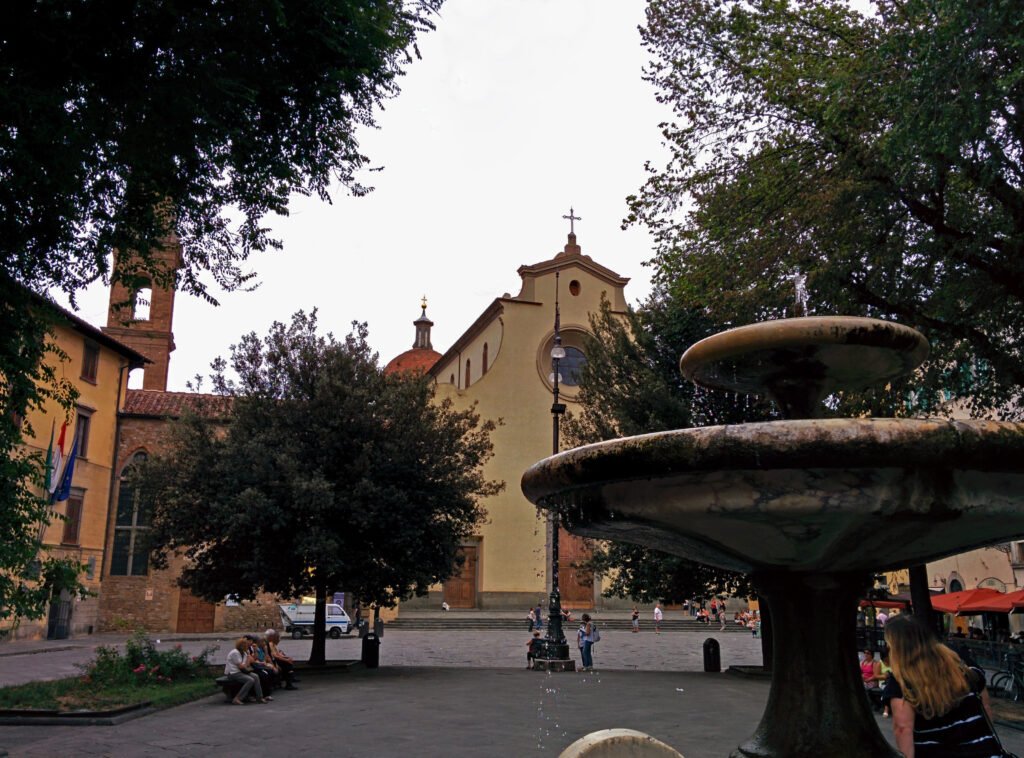
The strongest pedestrian areas also benefit from restricted vehicle access. Florence’s municipal mobility system designates substantial parts of the central visitor zone as pedestrian areas or restricted-traffic streets. That lowers traffic pressure around many major squares, although service vehicles, residents and mixed-traffic streets never disappear completely.
What Walking in Florence Actually Feels Like
Short distances do not always mean effortless walking. Florence’s oldest streets can have narrow sidewalks, irregular paving and surfaces that are uncomfortable for wheelchairs, strollers or tired feet. The municipal accessibility guidance specifically warns that the oldest parts of the center are not always linear or easy to negotiate.
Crowding is the other practical constraint. The Duomo, Via dei Calzaiuoli, Piazza della Signoria, Uffizi approaches and Ponte Vecchio can become slow-moving pedestrian funnels. Early starts and later-evening walks make the same geography feel much easier.
Terrain stays gentle across most of the headline historic circuit. The change comes south of the Arno, where roads and paths climb toward Piazzale Michelangelo and San Miniato al Monte. Boboli also introduces steeper slopes and gravel, so visitors with limited mobility should treat the hillside as a separate effort.
Best Areas to Stay for Walking
Duomo and San Lorenzo: choose this area for the shortest walks to major sights. You can reach Signoria, Uffizi, Santa Maria Novella and much of Santa Croce without planning around transit. The tradeoff is crowding, especially through the middle of the day.
Santa Maria Novella: this is the most convenient base for rail arrivals and airport-tram access. The Duomo is roughly a fifteen-minute walk from the station, while the western historic center begins almost immediately.
Santa Croce: stay here for a central eastern base that still connects easily to Signoria and the Duomo. It also positions you well for Sant’Ambrogio and the route toward San Niccolò.
Oltrarno and Santo Spirito: this side of the river is excellent for Pitti, artisan streets and evening atmosphere. You will cross the Arno for many headline museums, but the central bridges make those crossings easy.
Useful Walking Times
Santa Maria Novella to the Duomo takes about 15 minutes. From the Duomo, allow roughly 7 minutes to Piazza della Signoria and another few minutes to Uffizi. Ponte Vecchio is about 5 minutes from Uffizi, while Palazzo Pitti is roughly another 5 minutes after crossing the bridge.
The Duomo to Santa Croce is roughly a 10–12 minute walk. Palazzo Pitti to Santo Spirito takes about 7 minutes. The notable exception is Ponte Vecchio to Piazzale Michelangelo, which is closer to 25–30 minutes and includes sustained uphill walking.
A 2-Day Walking Route
These routes separate the compact historic core from the hillier eastern and southern side. That keeps both days directional and avoids wasting energy on repeated crossings or backtracking.
Day 1 — Santa Maria Novella, Duomo, Signoria & Oltrarno
Walking route
Day 1 — Santa Maria Novella, Duomo, Signoria, Uffizi & Oltrarno
- Firenze Santa Maria Novella
- Basilica of Santa Maria Novella
- Mercato Centrale
- Piazza del Duomo
- Piazza della Repubblica
- Piazza della Signoria
- Uffizi Gallery
- Ponte Vecchio
- Palazzo Pitti
- Piazza Santo Spirito
Start at Santa Maria Novella and move through Mercato Centrale before reaching the Duomo. Continue south through Piazza della Repubblica to Piazza della Signoria and Uffizi. From there, cross Ponte Vecchio and finish in Oltrarno with Palazzo Pitti and Piazza Santo Spirito.
The mapped route is only about 3.2 kilometers before museum interiors and optional detours. The day still becomes long if you add major timed-entry visits, so reserve attractions before filling every walking gap.
Day 2 — Santa Croce, San Niccolò & Piazzale Michelangelo
Walking route
Day 2 — Santa Croce, Sant'Ambrogio, San Niccolò & Piazzale Michelangelo
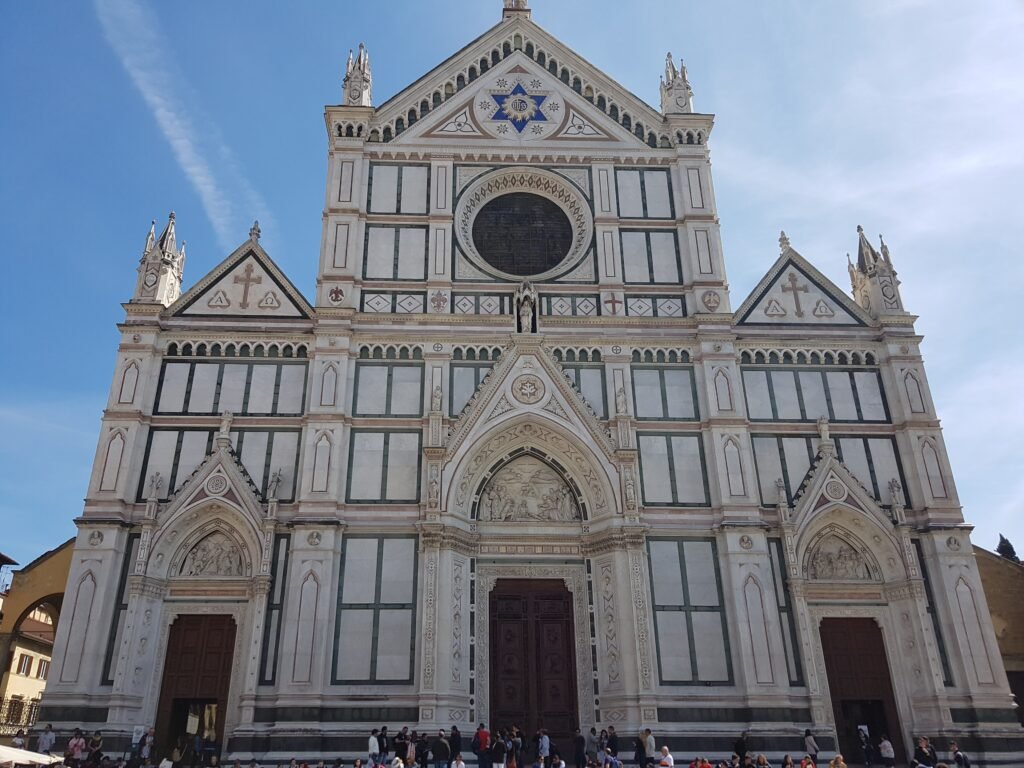
- Basilica of Santa Croce
- Sant'Ambrogio Market
- Piazza dei Ciompi
- Ponte alle Grazie
- Porta San Niccolò
- Giardino delle Rose
- Piazzale Michelangelo
- Basilica di San Miniato al Monte
Begin at Santa Croce, then continue toward Sant’Ambrogio and Piazza dei Ciompi. Turn south toward Ponte alle Grazie and cross the Arno into San Niccolò. The route then climbs through the Rose Garden to Piazzale Michelangelo before finishing at San Miniato al Monte.
This day is longer and more strenuous than Day 1. The mapped route is about 4.3 kilometers, but the final section climbs steadily. If you prefer to save your knees, use bus 12 or 13 for the return toward Santa Maria Novella.
When Transit Helps
Transit is a backup rather than the engine of central sightseeing. The T2 tram is especially useful for the airport, Santa Maria Novella and San Marco. T1 also serves the station corridor, while the C1–C4 buses penetrate streets that trams do not reach.
For Piazzale Michelangelo, buses 12 and 13 are the most useful energy-saving options. They connect the hill with the Santa Maria Novella area, although temporary roadworks can move stops or alter routing. Check live Autolinee Toscane alerts before waiting at a specific stop.
The standard Florence urban fare is €1.70 and lasts 90 minutes across trams and urban buses. Contactless payment is available onboard, while ticket machines and the at-bus app provide alternatives.
Trams run daily from around 05:00 until after midnight, with service extended to about 02:00 on Friday and Saturday. Weekend daytime frequencies remain useful, although Sunday intervals are generally wider than peak weekday service.
Arriving in Florence Without a Car
Florence Airport is unusually easy for a European city break. The T2 stop sits about a two-minute walk from the terminal, and the tram reaches the central city in about 20 minutes. It continues through the Santa Maria Novella area toward San Marco.
Rail arrival is even simpler. Firenze Santa Maria Novella sits inside the visitor geography, with the Duomo around a fifteen-minute walk away. High-speed trains connect Florence with Rome, Milan, Bologna and other major Italian cities, making a car-free multi-city trip straightforward.
When a Car Helps
A private car adds little to a standard Florence weekend. The historic center is covered by restricted-traffic rules, many key streets are pedestrianized, and the main sights are already clustered around walking routes. Parking and ZTL access can create more friction than convenience.
A car becomes useful when Florence is only the base for countryside driving. Chianti villages, rural wineries and dispersed Tuscan stops are the clearest cases. For the city itself, arrive by rail or tram and leave the vehicle outside the sightseeing plan.
Walking Limitations and Practical Tips
Wear shoes that handle stone rather than choosing only for distance. The short center still includes uneven paving, polished surfaces and narrow sidewalks. If mobility is limited, use Florence’s accessible-route resources before choosing a hotel or daily route.
Schedule the busiest central sights early, then use quieter side streets between major squares. Cross the Arno whenever it improves the route instead of treating Oltrarno as a separate excursion. Save Piazzale Michelangelo for the day when you have enough energy for a real climb.
Seasonal Walking Comfort
Florence’s underlying distances do not change with the season, but comfort does. Summer heat can make the exposed river and hillside tiring, while rain makes polished stone and uneven paving more awkward. In hot months, start early and leave the Piazzale climb for later in the day.
Bottom Line
Florence is built for a weekend organized around walking. Its major Renaissance sights, main station and central neighborhoods sit close enough to connect naturally on foot. Transit is most valuable for airport arrival, tired-leg backups and the Piazzale Michelangelo hill. The main planning challenge is pacing historic surfaces and crowds, not bridging large distances.