
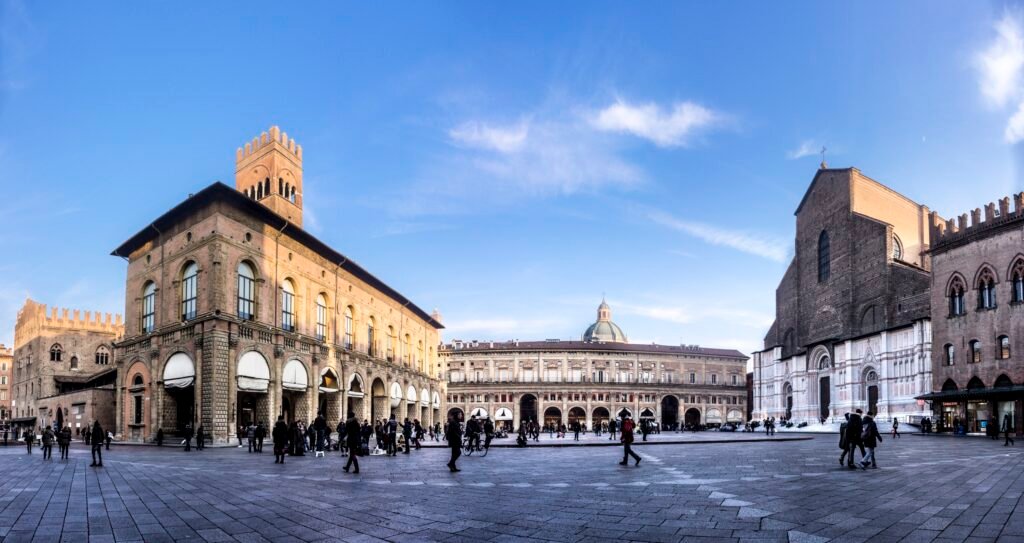
Between Bologna Centrale, Piazza Maggiore, the university quarter, and Santo Stefano, the visitor map forms a tight historic web. Covered porticoes turn many ordinary sidewalks into continuous sheltered corridors, with more than 42 kilometers across the historic center. Piazza Maggiore borders the Quadrilatero, while the Two Towers and Via Zamboni follow within a short eastward walk. Via dell’Indipendenza provides the clearest north-south approach from Bologna Centrale, with its lower section now pedestrianized. Historic paving and busy crossings still add small frictions. San Luca breaks the pattern, extending the weekend outward through a long portico and a serious final climb.
Why Bologna Works So Well on Foot
The strongest walking advantage is concentration. Piazza Maggiore, the Quadrilatero, Piazza Santo Stefano, the Two Towers area, and the university quarter sit within a compact central web. Via dell’Indipendenza adds a clear connection from Bologna Centrale, while Via Zamboni carries visitors east through the university district. Most first-time sightseeing therefore happens through useful streets rather than long transfer corridors.
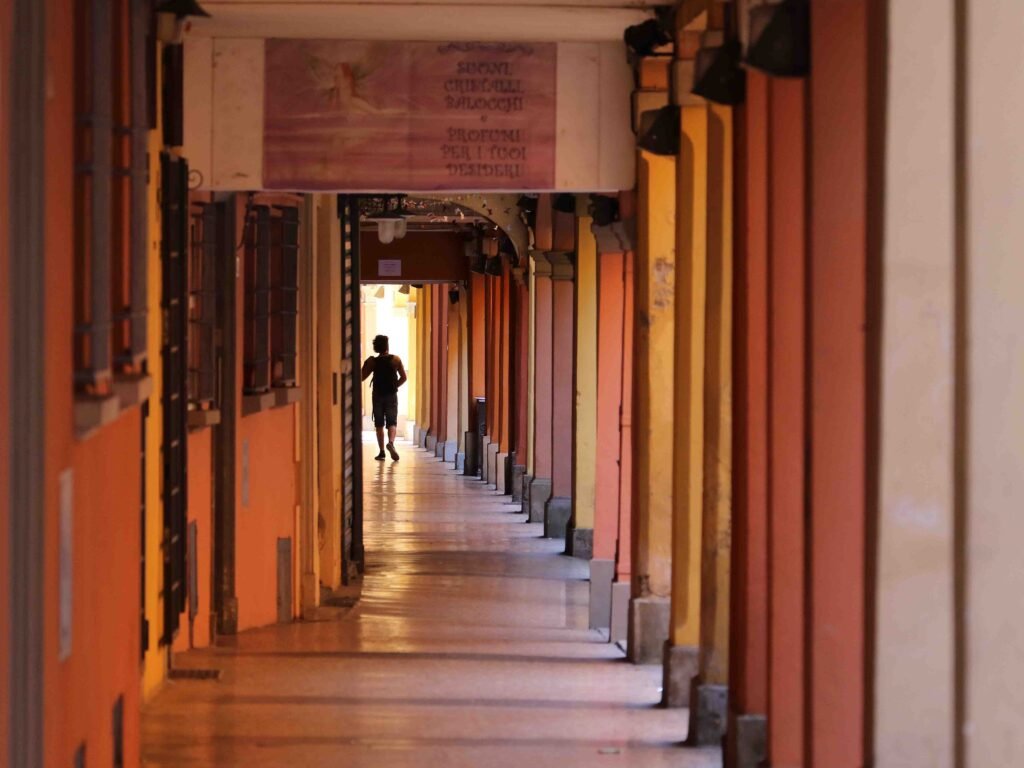
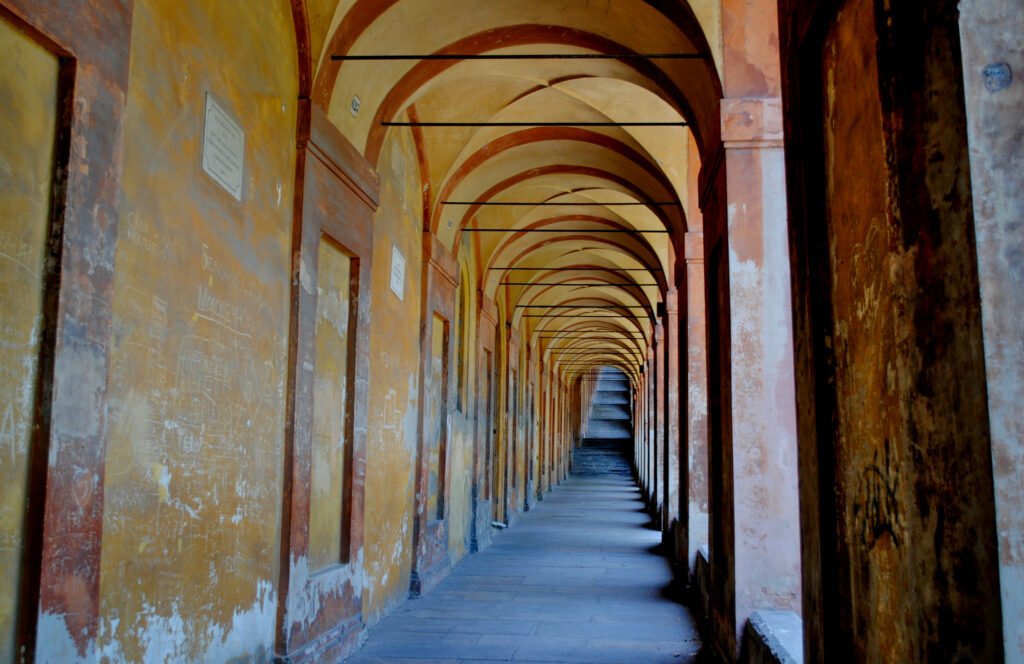
The porticoes matter because they function as infrastructure, not because they are famous. Bologna has 62 kilometers of porticoed walkways, with more than 42 kilometers across the historic city. They create long stretches of sheltered pedestrian space, soften summer sun and rain, and often separate walkers from moving traffic. Their quality is not perfectly uniform, however, and historic paving or small level changes still appear.
Where the Porticoes Help Most
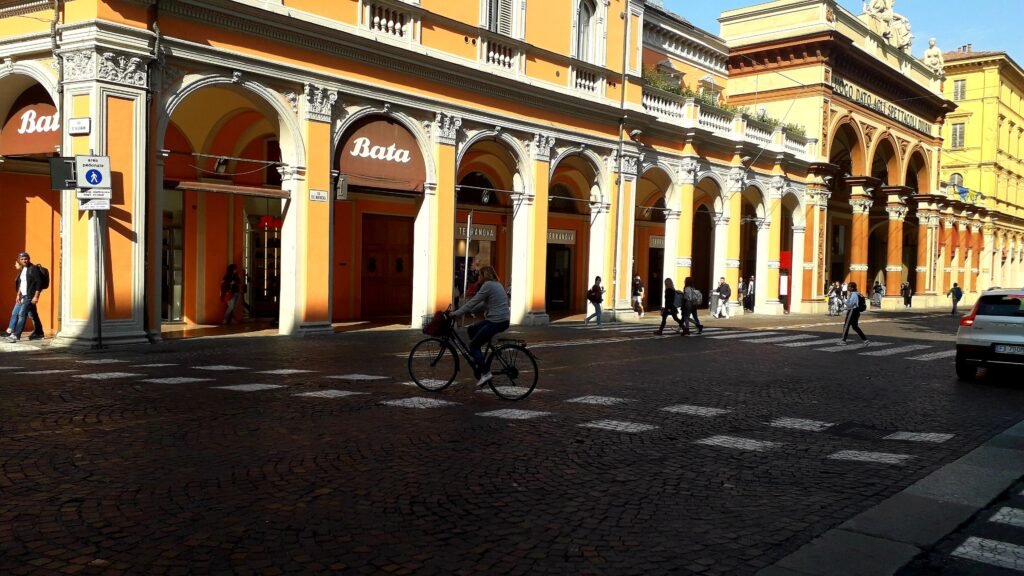
Via dell’Indipendenza is the easiest orientation spine for a new arrival. The street runs from Piazza Maggiore toward Bologna Centrale, and its lower section is now a pedestrian area. Around Piazza Maggiore and the Pavaglione, covered routes continue beside major civic buildings and the Quadrilatero. East of the center, porticoes remain useful along the approach toward the Two Towers and university streets.
The practical benefit is strongest during an ordinary sightseeing day: shelter, continuous frontage, and fewer abrupt changes between shops, museums, cafés, and squares. Porticoes do not eliminate every pedestrian problem. Bologna Welcome’s accessibility guidance notes bumpy paving at the start of Via Zamboni and occasional steps or outdoor seating that can interrupt the smoothest line.
Best Areas to Stay for Walking
For maximum sightseeing density, stay around Piazza Maggiore, the Quadrilatero, or the lower Via dell’Indipendenza. Santo Stefano is a strong alternative for a quieter southeastern base that remains close to the core. The university district works well for Via Zamboni and eastern sights, although evenings can feel busier around student streets. Staying near Bologna Centrale favors rail and airport transfers and still leaves Piazza Maggiore about a 15–20 minute walk away.
Realistic Walking Times
Expect roughly 15–20 minutes from Bologna Centrale to Piazza Maggiore. Piazza Maggiore to the Two Towers is about 7–10 minutes, depending on the exact route. The Two Towers to Piazza Santo Stefano takes roughly 6–8 minutes, and Via Zamboni’s main university stretch adds another 10–15 minutes. Porta Saragozza to San Luca is a different category: allow around an hour or more, because the long portico finishes with sustained climbing.
A 2-Day Bologna Walking Route
Day 1 — Station to Piazza Maggiore and the University District
Walking route
Day 1 — Bologna Centrale, Via dell’Indipendenza, Piazza Maggiore, Quadrilatero & University District
- Bologna Centrale
- Piazza VIII Agosto
- Via dell’Indipendenza
- Piazza Maggiore
- Quadrilatero
- Two Towers / Piazza di Porta Ravegnana
- Palazzo Poggi
- Piazza Verdi
Start at Bologna Centrale and follow the Via dell’Indipendenza axis toward Piazza Maggiore. Explore the square and slip directly into the Quadrilatero before continuing east toward Piazza di Porta Ravegnana. The Two Towers remain an essential street-level landmark even while Asinelli is closed. Continue along Via Zamboni to Palazzo Poggi and Piazza Verdi, finishing inside the university district instead of walking back across the center.
Day 2 — Santo Stefano to San Luca
Walking route
Day 2 — Santo Stefano, Archiginnasio, Saragozza & San Luca
- Piazza Santo Stefano
- Archiginnasio of Bologna
- Porta Saragozza
- Arco del Meloncello
- Sanctuary of the Madonna di San Luca
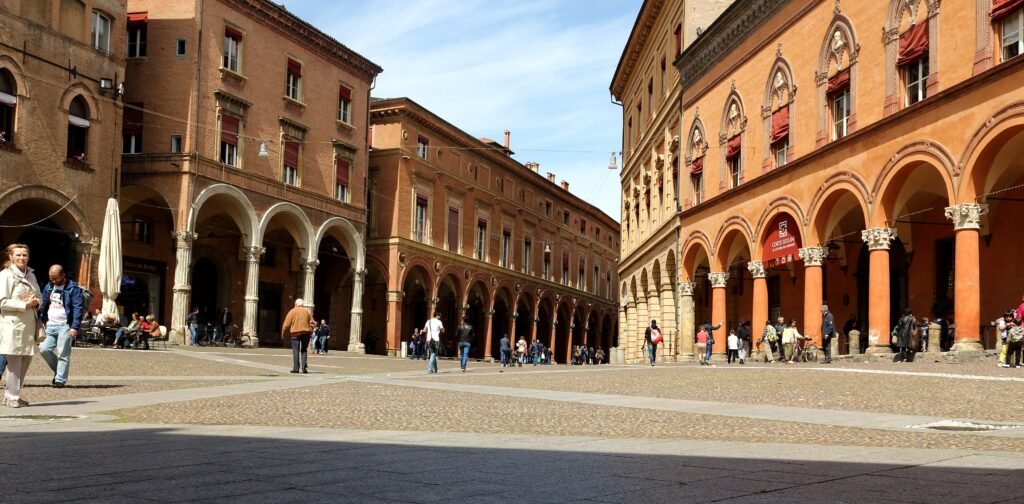
Begin at Piazza Santo Stefano, then walk west to the Archiginnasio and continue toward Porta Saragozza. From there, the portico becomes the organizing line for the rest of the day. The lower stretch toward the Arco del Meloncello is steady and sheltered; beyond the arch, the route climbs more seriously. Finish at the Sanctuary of the Madonna di San Luca. If the ascent has used enough energy, return by bus rather than retracing the entire portico.
When Transit Helps
Bologna’s central sightseeing area rarely needs a bus. Transit becomes useful for saving energy on San Luca, reaching farther neighborhoods, or returning to a station-side hotel after a long day. The network is currently bus-led. Tram tracks are visible in parts of the city, but passenger service is not yet an option for this trip.
TPER’s current Bologna urban fare is €2.30 with normal or contactless purchase, and tapping a bank card is straightforward for occasional rides. Contactless best-fare limits also reduce the need to choose a pass in advance. Dedicated N night lines provide useful late service, though route patterns differ from daytime buses and live information matters during construction periods.
Arriving in Bologna Without a Car
Bologna Centrale is one of the city’s biggest car-free strengths. High-speed, intercity, and regional trains arrive beside the northern edge of the historic center, and Via dell’Indipendenza leads directly toward Piazza Maggiore. With light luggage, walking is usually the simplest onward transfer for a central stay.
From Bologna Guglielmo Marconi Airport, Marconi Express reaches Bologna Centrale in about seven minutes. The service normally runs every 7–15 minutes from 05:40 until midnight, every day. The route is sheltered and designed without steps. A lower-cost Q bus also connects the airport with the city, but it takes longer than the monorail.
When a Car Helps
A private car adds little to the standard Bologna weekend. The historic center has extensive traffic restrictions, pedestrian zones, and limited-access streets, while the main visitor areas are easier on foot. A car becomes more useful for deliberately road-based extensions into the Apennines, rural Emilia-Romagna, or dispersed destinations outside the rail-and-bus network. For a city-only trip, renting one usually creates more parking and access friction than value.
Walking Limitations and Pratical Tips
Historic paving is the main everyday surface caveat. Porticoes often give a smooth covered line, but stone streets, occasional uneven sections, outdoor seating, bicycle movements, and vehicle crossings still require attention. The center is compact enough that these frictions rarely create major detours, yet they can matter for wheelchairs, luggage, or anyone who needs consistently level surfaces.
Access around the Two Towers area can change during restoration and safety works. Check Bologna Welcome and Comune di Bologna updates before relying on a precise approach to Piazza di Porta Ravegnana.
Seasonal Walking
The porticoes make Bologna more resilient to rain and strong sun than many historic cities, but they do not erase seasonal discomfort. Summer heat still shortens comfortable midday range, especially on the San Luca climb. Wet historic stone can feel slick, while winter fog or cold changes comfort rather than route viability. Plan shorter midday walks in hot weather, and choose shoes with good grip when historic stone is wet.
Bottom Line
Bologna fits a walking-first weekend unusually well because the sights visitors most want are close, connected, and often sheltered. The porticoes improve real pedestrian continuity rather than merely decorating the route. Use buses selectively, keep the San Luca climb as a separate effort, and take advantage of Bologna Centrale and the airport monorail. For a focused two- or three-day city break, a private car is unnecessary.