
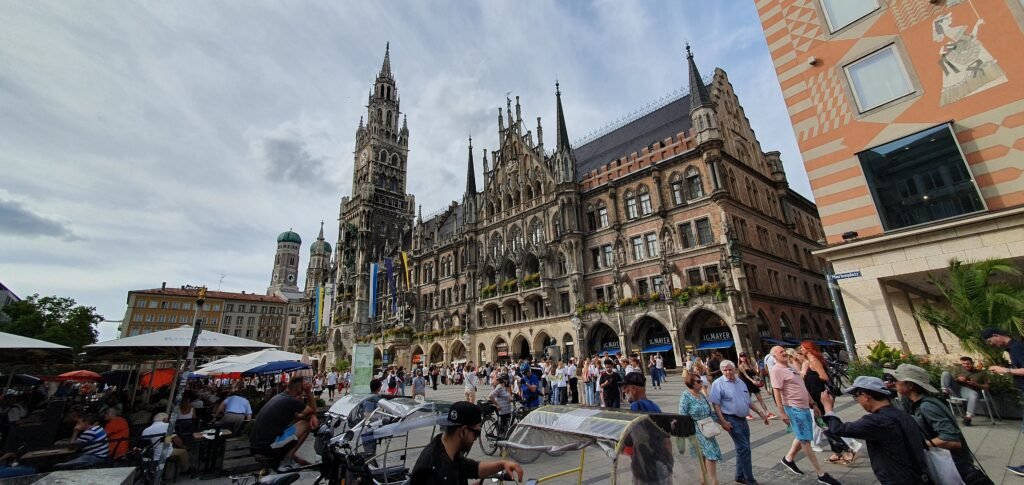
Munich begins as a compact Altstadt walk, then expands into museums, parks, and the Isar. Cologne compresses arrival further, placing its main station beside the Cathedral and Rhine. Hamburg stretches sightseeing west along the harbor, while Berlin breaks it into several rail-linked districts. Dresden reverses Berlin’s scale with a tiny monument core facing Neustadt across the Elbe. Heidelberg is compact beside the Neckar, but its castle and Philosopher’s Walk rise sharply above the Old Town. Those contrasts create six very different walking weekends, even though none requires a car for standard city sightseeing.
Germany’s Six Most Walkable Cities for Travelers
| Rank | City | Overall score | Strongest advantage | Main limitation |
|---|---|---|---|---|
| 1 | Munich | 94/100 | Compact Altstadt walking plus the group’s strongest transit backup | Museums, English Garden and Isar extensions widen the weekend footprint |
| 2 | Cologne | 92/100 | Hauptbahnhof, Cathedral, Altstadt and Rhine meet almost immediately | Belgian Quarter, Rheinauhafen and Deutz stretch the core |
| 3 | Hamburg | 90/100 | A strong center-to-harbor walking chain with excellent transit | The waterfront extends far west toward Landungsbrücken and St. Pauli |
| 4 (tie) | Berlin | 89/100 | Exceptional rail makes several strong walking districts easy to combine | Major visitor clusters sit too far apart for one continuous walking core |
| 4 (tie) | Dresden | 89/100 | An unusually compact Altstadt monument circuit | The Elbe and Neustadt create a second walking geography |
| 6 | Heidelberg | 85/100 | A highly compact Old Town built around the pedestrian Hauptstraße | Castle and Philosopher’s Walk routes turn short distances into steep climbs |
Berlin and Dresden share rank four at 89/100, so there is no rank five. Berlin combines excellent rail with several separated walking districts, while Dresden puts far more headline sights inside a compact historic core.
Why Munich Leads and Cologne Stays Close
Munich’s advantage is not that every major sight sits inside one tiny circle. Its advantage is that the central walking experience works extremely well before transit becomes necessary. Marienplatz, Viktualienmarkt, the Residenz and Odeonsplatz connect through direct, mostly flat streets and pedestrian spaces. The Kunstareal and Maxvorstadt then pull the visitor geography north, while the English Garden and Isar extend it farther. That wider footprint is real. Munich simply gives visitors unusually strong U-Bahn, S-Bahn and tram backup once the itinerary spreads. The result is the best balance in this group between walking first and using transit selectively. The full Munich walking guide shows where the compact center ends and those extensions begin.
Cologne comes closest by making the start of a weekend almost absurdly convenient. Köln Hauptbahnhof, the Cathedral and Museum Ludwig sit beside one another, with the Altstadt and Rhine immediately beyond. Hohe Straße and Schildergasse continue the walk south and west through a strong pedestrian shopping axis. Hohenzollern Bridge also makes Deutz a practical cross-river extension when that crossing fits the route. The Rhine is therefore not an automatic barrier; bridge location decides whether a loop stays efficient. Cologne becomes less compact when the Belgian Quarter and Rheinauhafen enter the plan, so those areas should not be folded artificially into the Cathedral core. See the Cologne walking and transit guide for the fuller left-bank and Deutz route pattern.
Cologne also has the clearest station-placement advantage in the comparison. Intercity rail arrives beside the Cathedral, while Cologne Bonn Airport has direct rail access into the city. That makes arrival especially straightforward without making farther neighborhoods any closer to the Cathedral core.
Hamburg Turns a City Center Into a Harbor Walk
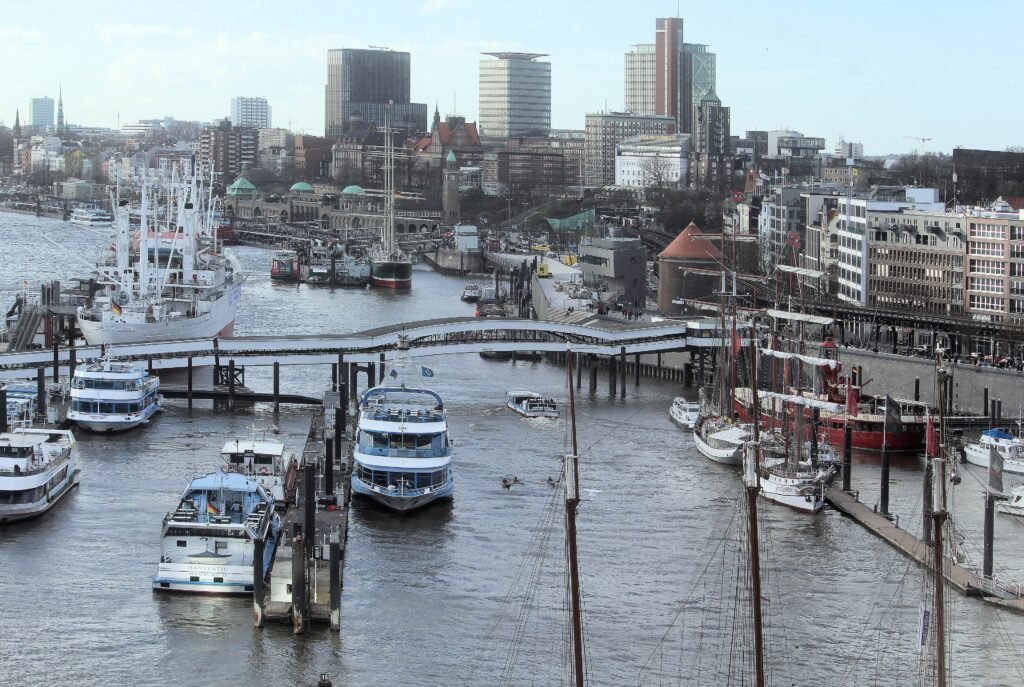
Hamburg works less like a compact historic center and more like a long waterfront city. Hauptbahnhof, the Altstadt, Rathaus, Jungfernstieg, Speicherstadt and the Elbphilharmonie form a strong continuous walking chain. Canals and bridges shape the route, but they usually add texture rather than creating major breaks. The geography changes west of HafenCity. Landungsbrücken, St. Pauli and the Reeperbahn remain naturally linked to the harbor, yet the cumulative mileage is large enough to feel like a second major visitor zone.
That is where Hamburg’s U-Bahn, S-Bahn, buses and ferries become most useful. They shorten an elongated city rather than making the waterfront physically compact. Rail is especially valuable when a day starts near Hauptbahnhof or Rathaus and finishes around Landungsbrücken or St. Pauli. Public ferries can enrich a harbor day, but they do not turn distant sights into neighbors. Flat terrain keeps the mileage physically manageable, while bridges, quay approaches and waterfront exposure still affect comfort. The Hamburg walkability guide builds its two days around exactly that east-to-west pattern.
Berlin and Dresden: Same Score, Opposite Weekend
Berlin is the larger and more dispersed half of the tie. Mitte still gives a first-time visitor a genuinely strong walking day through Museum Island, Unter den Linden, Brandenburg Gate and the government district. The Berlin Wall Memorial, Kreuzberg and East Side Gallery belong to separate clusters, however. Flat terrain makes those districts easy to explore once reached, but it does nothing to shorten several-kilometer cross-city gaps. Berlin therefore works best as a collection of excellent walkable districts connected by exceptional rail. The Berlin walking and transit guide deliberately uses rail between low-value cross-city gaps.
Dresden reaches the same total from almost the opposite direction. Frauenkirche, Residenzschloss, Brühl’s Terrace, Semperoper and Zwinger fit inside an unusually small Altstadt monument circuit. Hauptbahnhof sits farther south, but Prager Straße and Altmarkt create a straightforward approach toward that core. Crossing the Elbe changes the scale. Baroque Neustadt, Hauptstraße, Albertplatz and Outer Neustadt form a second north-bank walking geography. Bridge placement matters because the river channels the most efficient pedestrian connections between those areas. The Dresden walking guide treats those crossings as deliberate connectors rather than ignoring the Elbe.
The tie captures two very different weekends. Berlin asks visitors to use rail between excellent but separated walking districts. Dresden puts more headline monuments inside a much tighter radius, then adds Neustadt across the Elbe. One is a large networked city; the other is a compact historic city with a second-bank extension.
Heidelberg Is Compact Until the Street Tilts Upward
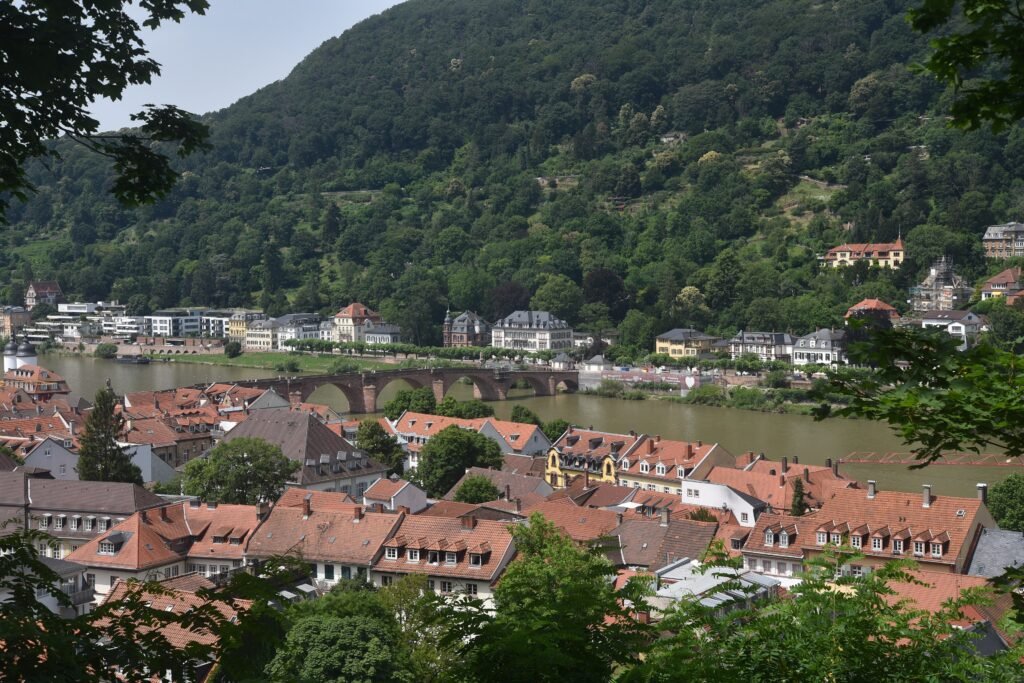
Heidelberg is the clearest warning against judging a walking weekend from horizontal distance alone. Bismarckplatz feeds directly into the long pedestrian Hauptstraße, linking the university quarter, Marktplatz, Kornmarkt and the Old Bridge. The castle sits almost directly above the Old Town rather than far away, and Philosopher’s Walk lies just across the Neckar. Those sights are close geographically. Reaching them on foot is another matter. Burgweg, stairs and Schlangenweg turn short map distances into steep climbs, making Heidelberg’s compact map considerably more demanding on foot than it first appears.
The funicular can remove much of the castle climb, but it does not make the hillside flat. Hauptbahnhof also sits west of the tight Old Town core, so a tram or bus is useful with luggage. Air travelers commonly face a more involved regional connection from Frankfurt Airport than visitors arriving into Cologne, Hamburg or Berlin. The Heidelberg walking guide separates the easy east-west Old Town spine from the genuinely strenuous vertical routes.
Munich, Hamburg and Berlin Use Transit in Three Different Ways
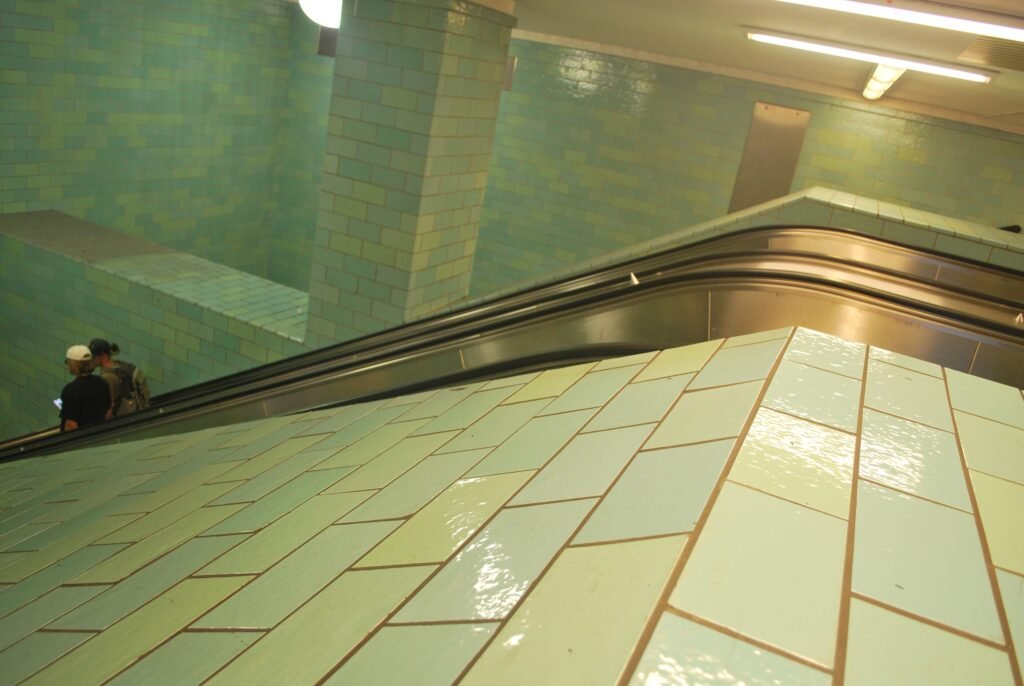
Strong transit plays three distinct roles across the top half of the list. Munich uses it mainly to extend an already strong central walking experience toward museums, the English Garden and other farther stops. Hamburg uses transit to shorten an elongated waterfront city, especially when the day spans the center and western harbor. Berlin depends on it more heavily because several worthwhile visitor districts are genuinely separate from one another. All three are easy without a car, but the pedestrian geography underneath that convenience is very different.
That distinction matters when planning energy. A traveler can spend much of central Munich on foot and add rail selectively. In Hamburg, transit often saves a repeated walk along the same long east-west corridor. In Berlin, skipping rail can mean spending valuable sightseeing time on low-value cross-city mileage between otherwise excellent walking districts.
Rhine, Elbe and Neckar: Three Different River Walks
Cologne, Dresden and Heidelberg show why a river should never be treated as automatically helpful or harmful. In Cologne, Hohenzollern Bridge can turn the Rhine into part of an efficient central loop between the Cathedral side and Deutz. Other cross-river movements still depend on where the bridges actually sit.
Dresden’s Elbe creates a clearer division between the compact Altstadt and the broader Neustadt visitor area. Useful pedestrian crossings keep the two banks practical together, but the river still channels movement toward specific bridge approaches. That makes bridge choice part of route planning rather than a trivial detail.
Heidelberg’s Neckar lies directly beside the Old Town, and the Old Bridge crosses it almost immediately. The challenge begins after the crossing. A route toward Philosopher’s Walk can turn sharply upward within minutes, so the river itself is easy to cross while the north-bank terrain quickly changes the physical effort.
Flat Streets Do Not Always Mean Short Days
Munich, Cologne, Hamburg, Berlin and Dresden are all broadly easy underfoot on standard visitor routes. That does not make their walking days equally short. Berlin’s problem is scale, Hamburg’s is waterfront length, and Munich’s is the spread toward parks and museums. Cologne and Dresden keep their strongest first-time sightseeing more concentrated, though both broaden once secondary districts and river crossings enter the plan.
Heidelberg is the outlier because effort comes from elevation instead of long cross-city mileage. Its famous hillside sights are geographically close to the Old Town, yet walking to them can be more tiring than a much longer flat route elsewhere. Travelers sensitive to hills should therefore treat Heidelberg differently from the other five.
Where the Station Lands Changes the First Hour
Cologne offers the most striking station-to-sightseeing transition. Leave Köln Hauptbahnhof and the Cathedral is immediately outside, with Museum Ludwig, the Altstadt and Rhine only steps farther. That convenience is a real visitor advantage, not evidence that every Cologne district is equally compact.
Hamburg Hauptbahnhof also sits inside the main central geography, while Berlin Hauptbahnhof lands close to the government district and dense local rail. Munich’s central rail arrival is similarly useful, although its airport journey takes longer than the most straightforward arrivals in this group. Dresden Hauptbahnhof begins south of the monument core but connects cleanly through Prager Straße or tram. Heidelberg Hauptbahnhof is the clearest case where the principal rail gateway and historic center do not overlap, making a short local connection useful.
Which German City Fits Your Walking Style?
| Traveler priority | Best fit | Why |
|---|---|---|
| Strongest overall walking-plus-transit balance | Munich | A compact, direct Altstadt already works well on foot, and transit extends the weekend without disguising the wider geography. |
| Easiest arrival directly into sightseeing | Cologne | Köln Hauptbahnhof sits beside the Cathedral, Museum Ludwig and Rhine, so intercity arrival begins inside the primary sightseeing core. |
| Harbor and waterfront walking | Hamburg | Rathaus, Speicherstadt, HafenCity, Elbphilharmonie and Landungsbrücken create the group’s clearest long-form waterfront weekend. |
| Strongest big-city transit support | Berlin | Berlin’s rail network is especially important because it connects several separate visitor districts that are inefficient to join entirely on foot. |
| Most compact monumental core | Dresden | Frauenkirche, Residenzschloss, Brühl’s Terrace, Semperoper and Zwinger fit inside an unusually small Altstadt circuit. |
| Easiest terrain | Munich, Cologne, Hamburg, Berlin and Dresden | All five keep standard visitor routes broadly flat. Their main walking differences come from distance, crossings and urban scale. |
| Compact historic-center walking | Cologne and Dresden | Both keep headline first-time sights unusually close together on easy terrain. Heidelberg is similarly compact horizontally but much hillier. |
| River-city walking | Cologne and Dresden | Both support useful cross-river walking, but bridge placement matters. Heidelberg adds a much steeper north-bank experience. |
| Best fit if you enjoy steep viewpoint walks | Heidelberg | The Old Town remains compact, while castle and Philosopher’s Walk routes reward travelers comfortable with sustained climbs and stairs. |
Do You Need a Car in These Cities?
A private car is unnecessary for the normal two- or three-day city break in all six destinations. The practical differences are about how much walking, rail or tram use each weekend needs. Driving becomes more useful when the trip expands into dispersed regional sights, countryside routes or deliberately road-based extensions. Inside Berlin, Hamburg or Munich, strong transit is usually a better response to distance than renting a car.
Bottom Line
Munich is the sole leader because its central walking network is excellent before its transit system solves the wider extensions. Cologne follows with an exceptionally easy station-to-Cathedral start and a compact Rhine-side core. Hamburg remains superb without a car, but its harbor turns the weekend into a longer east-west walk. Berlin and Dresden deserve their exact tie: Berlin links separated districts brilliantly, while Dresden compresses more monuments into less space. Heidelberg is the smallest-feeling weekend horizontally, yet its steep signature climbs create the clearest physical tradeoff.