
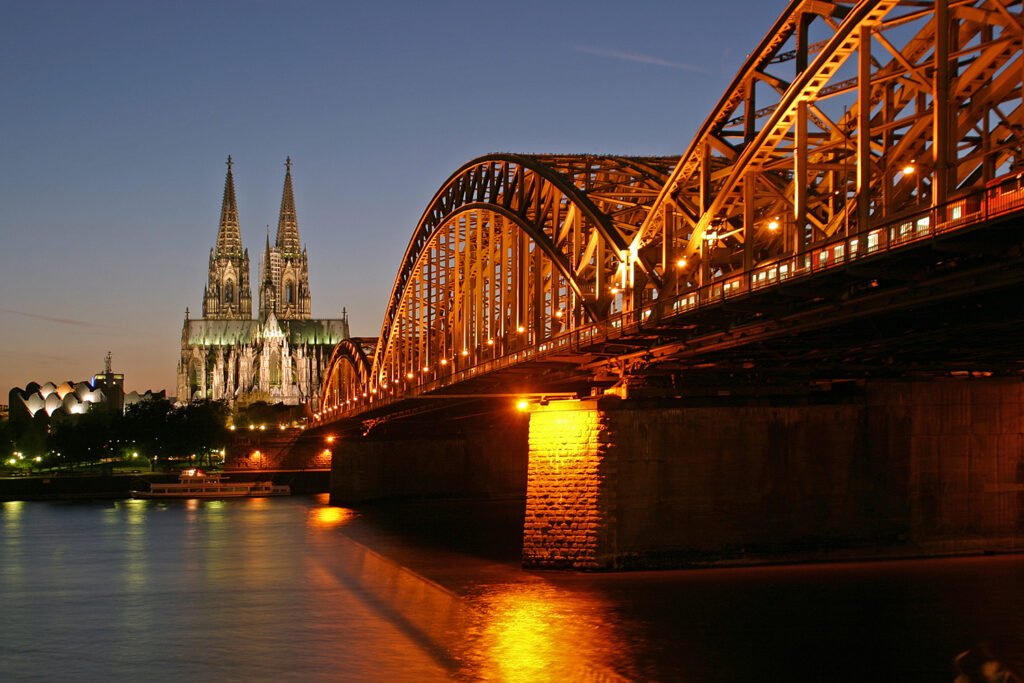
The Cathedral, Hauptbahnhof and Museum Ludwig compress three visitor anchors into a few blocks beside the Rhine. From that doorstep, the Altstadt, Rhine promenade, Hohe Straße, and Schildergasse unfold through a dense central walking network. The terrain is notably flat, while large pedestrian zones remove traffic from several busy visitor streets. Distance becomes more noticeable beyond this core, especially toward the Belgian Quarter and southern Rheinauhafen. Across the Rhine, Deutz remains close, but bridge locations determine where a direct walking line actually exists.
Why Cologne Works So Well on Foot
Cologne’s strongest visitor network is unusually concentrated. The Hauptbahnhof exits almost beneath the Cathedral, while Museum Ludwig and the Rhine sit immediately nearby. A few minutes south, the Altstadt links Alter Markt, Heumarkt, Groß St. Martin and the river without requiring a vehicle.
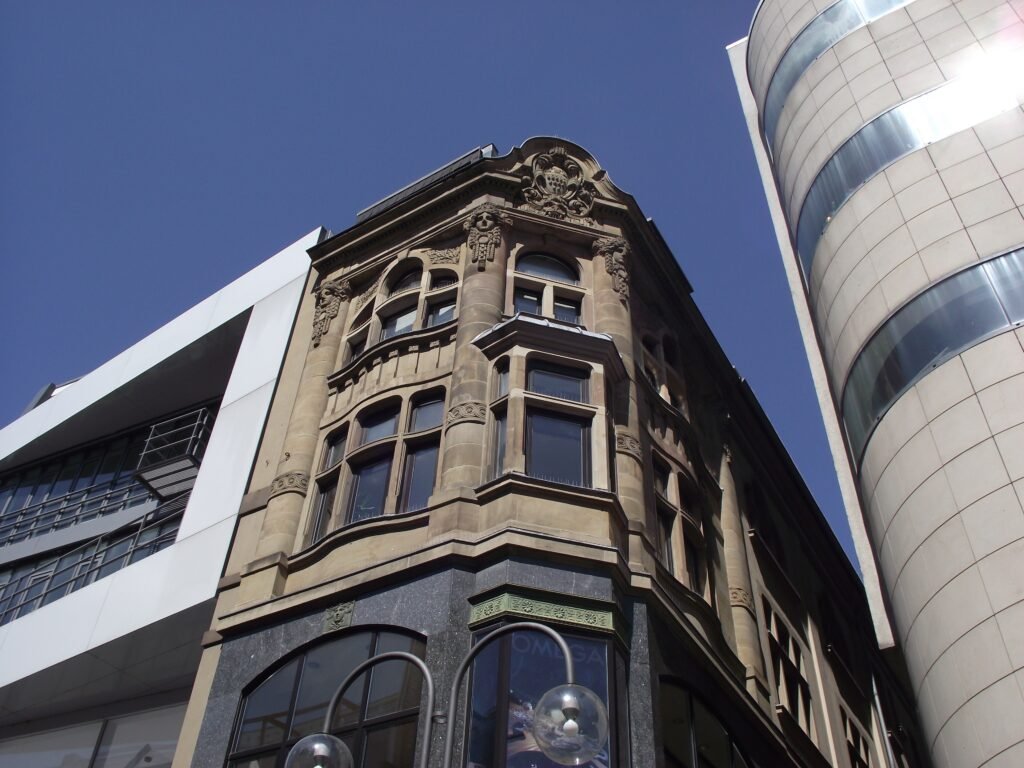
West of the old town, Hohe Straße continues into Schildergasse, a 534-meter pedestrian street ending near Neumarkt. Cologne has also expanded pedestrian priority around Alter Markt and eastern Heumarkt. These spaces make the center easier to cross than a normal traffic-heavy downtown.
The Rhine improves orientation, but it also creates a real geographic break. Hohenzollern Bridge gives the Cathedral area an excellent pedestrian connection to Deutz. Farther south, Deutzer Bridge provides another useful crossing. Between bridges, the water prevents a direct east-west line, so route choice matters.
Best Areas to Stay for a Walking Weekend
Cathedral and Hauptbahnhof: This is the strongest base for a first visit. Rail arrival, Museum Ludwig, the Altstadt, Rhine and shopping streets all begin within a short walk.
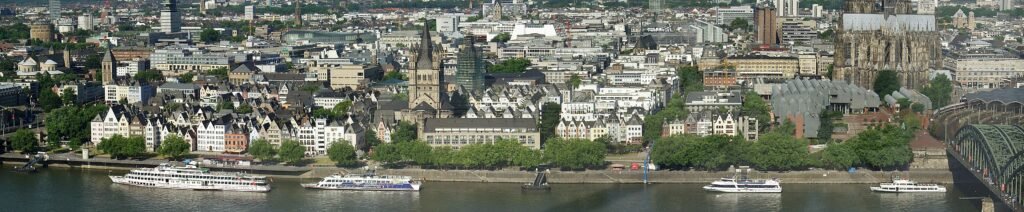
Altstadt and Heumarkt: Stay here for the riverfront, historic squares and evening restaurants. The Cathedral remains close, while Rheinauhafen is easier to reach on foot.
Neumarkt and Rudolfplatz: These areas trade a few extra minutes to the Cathedral for excellent access to Schildergasse, Stadtbahn connections and the western Innenstadt.
Belgian Quarter: This is a strong choice for cafés, restaurants and neighborhood atmosphere. It is still central, but the Cathedral is no longer a quick doorstep walk.
Deutz: The right bank can work well near Hohenzollern Bridge. Cathedral access is straightforward, although every return to the left-bank core still depends on a bridge.
Useful Walking Times in Cologne
Hauptbahnhof to Cologne Cathedral: about 2–3 minutes.
Museum Ludwig from the Cathedral: about 2 minutes.
Alter Markt from the Cathedral: about 8–10 minutes.
Rheinboulevard in Deutz from the Cathedral: about 10–15 minutes via Hohenzollern Bridge.
Alter Markt to Heumarkt: about 4–5 minutes.
Heumarkt to the Chocolate Museum: about 10 minutes.
Neumarkt from the Cathedral: about 15–20 minutes via Hohe Straße and Schildergasse.
Brüsseler Platz from the Cathedral: about 25–30 minutes. These are practical estimates, not guaranteed travel times.
A 2-Day Walking Route
These two days keep Cologne’s best walking inside coherent corridors instead of zigzagging between distant districts. Day 1 uses both central Rhine bridges for a compact loop. On the second day, start west and walk one direction through the shopping core to Rheinauhafen.
Day 1: Cathedral, Old Town, Hohenzollern Bridge and Deutz
Walking route
Day 1: Cathedral, Old Town, Hohenzollern Bridge and Deutz
- Cologne Cathedral
- Museum Ludwig
- Hohenzollern Bridge
- KölnTriangle
- Rheinboulevard
- Deutzer Bridge
- Heumarkt
- Alter Markt
- Great St. Martin Church
- Cologne Cathedral
Begin at Cologne Cathedral, then step into Museum Ludwig before joining the pedestrian route onto Hohenzollern Bridge. Cross to Deutz and use KölnTriangle as an optional viewpoint stop. Continue south along the Rhine Boulevard, where the Cathedral skyline stays visible across the water. Deutzer Bridge returns you directly toward Heumarkt. Finish through Alter Markt and the lanes around Groß St. Martin before returning to the Cathedral.
The route works because it treats the Rhine as part of the walk instead of an obstacle to cross twice at the same point. Most of the day is flat, and the two bridges prevent unnecessary backtracking.
Day 2: Belgian Quarter, Shopping Streets and Rheinauhafen
Walking route
Day 2: Belgian Quarter, pedestrian shopping streets and Rheinauhafen
- Stadtgarten Köln
- Brüsseler Platz
- Rudolfplatz
- Neumarkt
- Schildergasse
- Hohe Straße
- Heumarkt
- Chocolate Museum Cologne
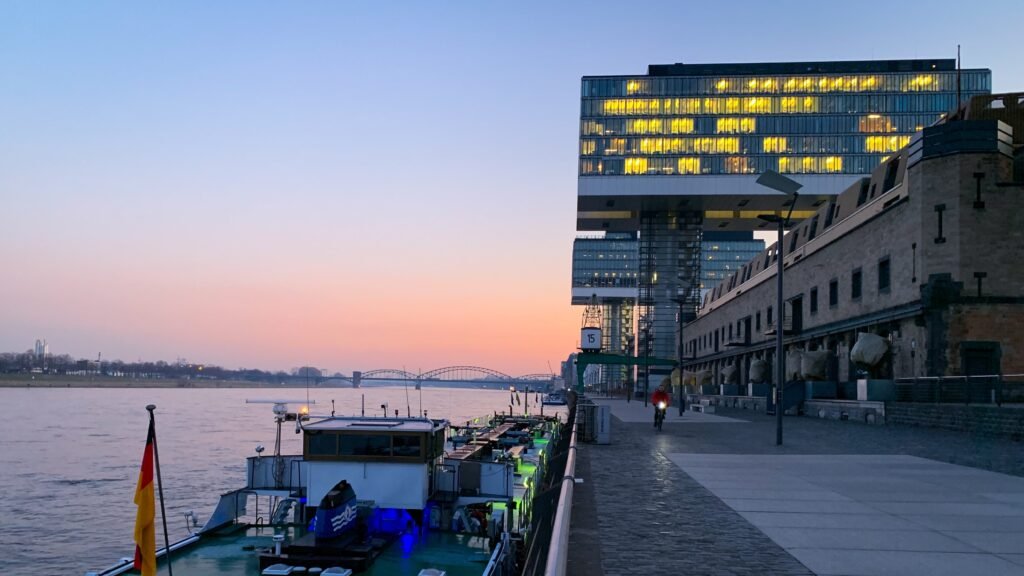
- Rheinauhafen Crane Houses
If your hotel is near the Cathedral, take Stadtbahn toward the Belgian Quarter rather than spending the morning repeating central streets. Start around Stadtgarten and Brüsseler Platz, then walk through Rudolfplatz to Neumarkt. Schildergasse and Hohe Straße carry the route east through the pedestrian shopping core. Turn south at Heumarkt for the Chocolate Museum and finish among the Crane Houses in Rheinauhafen.
This direction makes Cologne’s changing scale visible. The western neighborhood section feels more residential, the shopping core becomes intensely pedestrian, and Rheinauhafen opens onto a longer river promenade.
Using Transit Without Losing the Walking Experience
KVB’s Stadtbahn is most valuable for repositioning, not for replacing short central walks. Rudolfplatz and Neumarkt are useful western hubs, while Dom/Hauptbahnhof combines Stadtbahn, S-Bahn and regional rail beside the Cathedral.
The network is especially useful when your day starts in the Belgian Quarter or continues beyond the central visitor footprint. KVB publishes a tourist network map, real-time trip planning and mobile tickets. A Cologne 1b adult single ticket is €4.00 under the tariff introduced in June 2026; check current pricing before travel.
Weekend and evening service remains useful enough for a car-free stay, with separate KVB night-service information. Construction can temporarily split through routes, so checking the live app before a longer trip is worthwhile.
Arriving in Cologne Without a Car
Cologne Hauptbahnhof is one of the city’s biggest advantages. Step outside and the Cathedral is immediately in front of you, with Museum Ludwig, the Altstadt and Rhine all nearby. Intercity rail arrivals therefore begin inside the strongest visitor walking network.
Cologne Bonn Airport also has a low-friction public-transport arrival. Its railway station sits close to both terminals and receives S-Bahn and regional services around the clock. Trains continue toward central Cologne, avoiding an airport bus-to-rail transfer.
When a Car Helps
A private car adds little to the standard Cathedral, Altstadt, Deutz, Belgian Quarter and Rheinauhafen weekend. Parking and central traffic are more likely to interrupt the trip than improve it. A car becomes more useful for regional excursions that are poorly aligned with rail or for multi-stop countryside days.
Limitations and Practical Walking Tips
Do not mistake the Cathedral core for the whole visitor city. Brüsseler Platz and Rheinauhafen are manageable extensions, but combining both with Deutz in one uninterrupted walk creates unnecessary mileage.
Choose Rhine crossings deliberately. Hohenzollern Bridge is ideal near the Cathedral and Museum Ludwig, while Deutzer Bridge better serves Heumarkt and the southern riverfront. Walking to the wrong bridge can add distance quickly.
Historic Old Town lanes can include cobbles and uneven surfaces. The main pedestrian streets and riverfront are easier, but comfortable shoes still matter. Crowds around the Cathedral, shopping streets and seasonal events can slow otherwise short walks.
Seasonal Walking Notes
Cologne remains practical for walking throughout the year, but seasonal conditions change comfort and crowding. Summer can favor long Rhine evenings, while winter brings shorter daylight and colder river exposure. Christmas-market periods can make the Cathedral, Altstadt and central shopping streets much more crowded. Treat those conditions as trip-planning context rather than a change in the city’s underlying walking geography.
Bottom Line
Cologne gives a first-time visitor an unusually strong car-free starting point: the main station, Cathedral, Old Town and Rhine overlap almost immediately. Walking remains the best way to understand that core. Use Stadtbahn for the longer western extensions, choose Rhine bridges carefully, and a two- or three-day visit stays practical without a private car.