
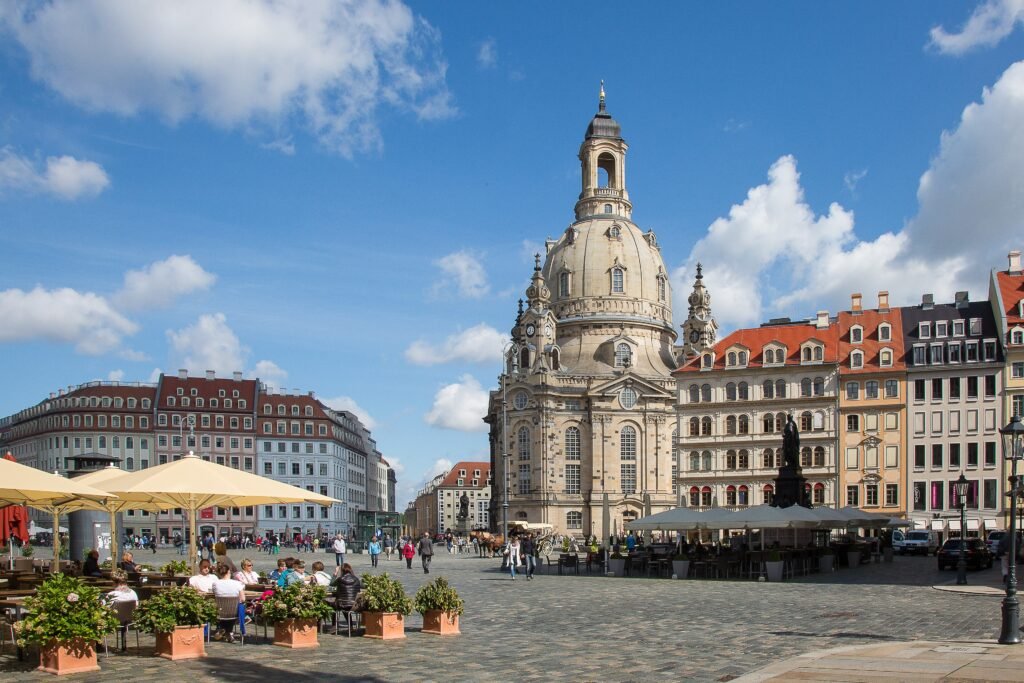
Beside the Elbe, Dresden concentrates its most important monuments within a remarkably small section of the Altstadt. Frauenkirche, Residenzschloss, Brühl’s Terrace, Semperoper, and Zwinger fit inside a tight historic walking circuit. Hauptbahnhof sits farther south, with the Frauenkirche about a 20-minute walk away through Prager Straße and Altmarkt. Across the river, Neustadt unfolds in stages from the Baroque Quarter to Albertplatz and the livelier streets beyond. That river crossing turns a compact monument circuit into a broader weekend, making bridge choice more important than terrain.
Why Dresden Works Well on Foot
The strongest walking geography is concentrated around Neumarkt and Theaterplatz. Frauenkirche, Brühl’s Terrace, Residenzschloss, Fürstenzug, Hofkirche, Semperoper and Zwinger sit close enough to link without transit. Official tourism information places many of these sights immediately around the same squares.
The approach from Hauptbahnhof is longer but simple. Frauenkirche lists the station at roughly 20 minutes on foot, with Prager Straße and Altmarkt providing a natural northbound line into the historic center.
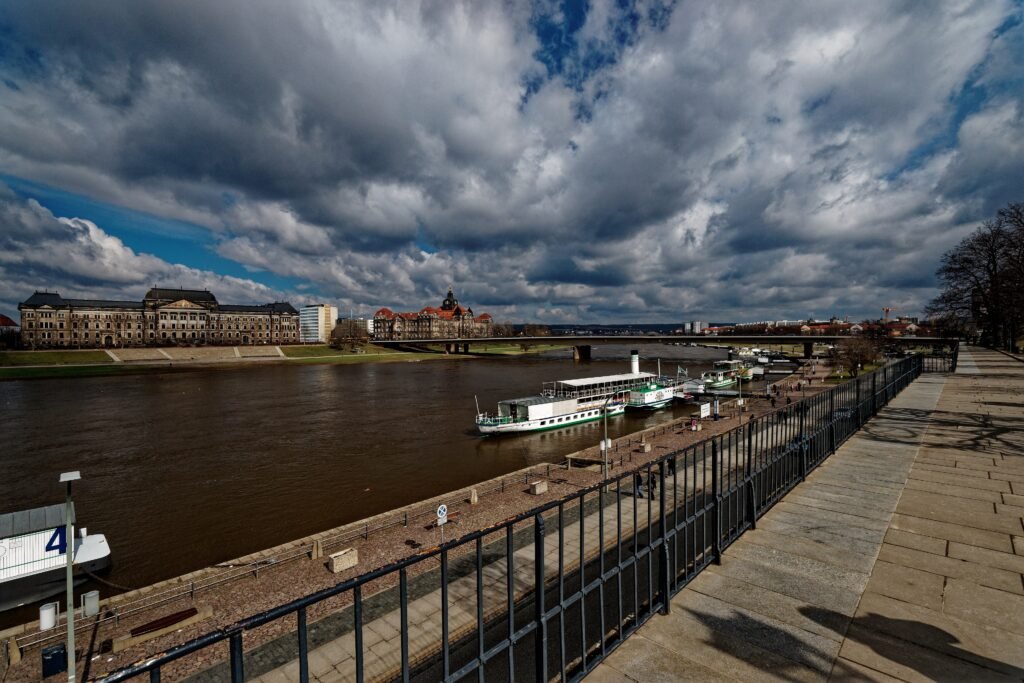
The Elbe changes the pattern. Augustus Bridge links Schlossplatz with Neustädter Markt, then Hauptstraße leads toward Albertplatz. Outer Neustadt continues beyond that hinge toward Louisenstraße, Alaunstraße and Kunsthofpassage, turning a tiny monument core into a two-bank visitor footprint.
Best Areas to Stay for a Walking Weekend
Neumarkt and the Innere Altstadt: This is the strongest first-time base. The Frauenkirche, Residenzschloss, Brühl’s Terrace, Semperoper and Zwinger are all close, and official tourism information notes numerous hotels and restaurants around Neumarkt.
Altmarkt, Postplatz and Prager Straße: Stay here for a useful compromise between Hauptbahnhof and the monument core. Postplatz also gives excellent tram access when you want to shorten a longer cross-city move.
Innere Neustadt and Albertplatz: This works well for travelers who want both riverbanks. Augustus Bridge keeps the Altstadt reachable on foot, while Albertplatz connects naturally with the livelier streets farther north.
Äußere Neustadt: Choose it for cafés, bars, independent shops and neighborhood evenings. The trade-off is a longer walk to the Zwinger and Frauenkirche, so trams become more useful during a short stay.
Realistic Walking Times
Hauptbahnhof to Frauenkirche: about 20 minutes. Frauenkirche publishes this walking time directly.
Frauenkirche to Brühl’s Terrace: about 3–5 minutes. These sights share the eastern Altstadt core.
Frauenkirche to Semperoper or Zwinger: about 8–10 minutes. This is the compact monument circuit at its best.
Schlossplatz to the Golden Rider: about 8–10 minutes across Augustus Bridge.
Golden Rider to Albertplatz: about 10–12 minutes through the Inner Neustadt.
Albertplatz to Kunsthofpassage: about 10–15 minutes. The route continues into the Outer Neustadt rather than staying in the Baroque Quarter.
Except for the published Hauptbahnhof figure, these are practical planning estimates rather than guaranteed walking times.
A 2-Day Walking Route
These two days separate Dresden’s compact monument core from the broader Neustadt extension. That keeps each route geographically coherent and avoids wasting time on repeated river crossings.
Day 1: Hauptbahnhof to the Altstadt Monuments
Walking route
Day 1: Hauptbahnhof to the Altstadt monuments
- Dresden Hauptbahnhof
- Prager Straße
- Altmarkt
- Frauenkirche and Neumarkt
- Brühl's Terrace
- Fürstenzug and Stallhof
- Dresden Residenzschloss
- Dresden Cathedral and Schlossplatz
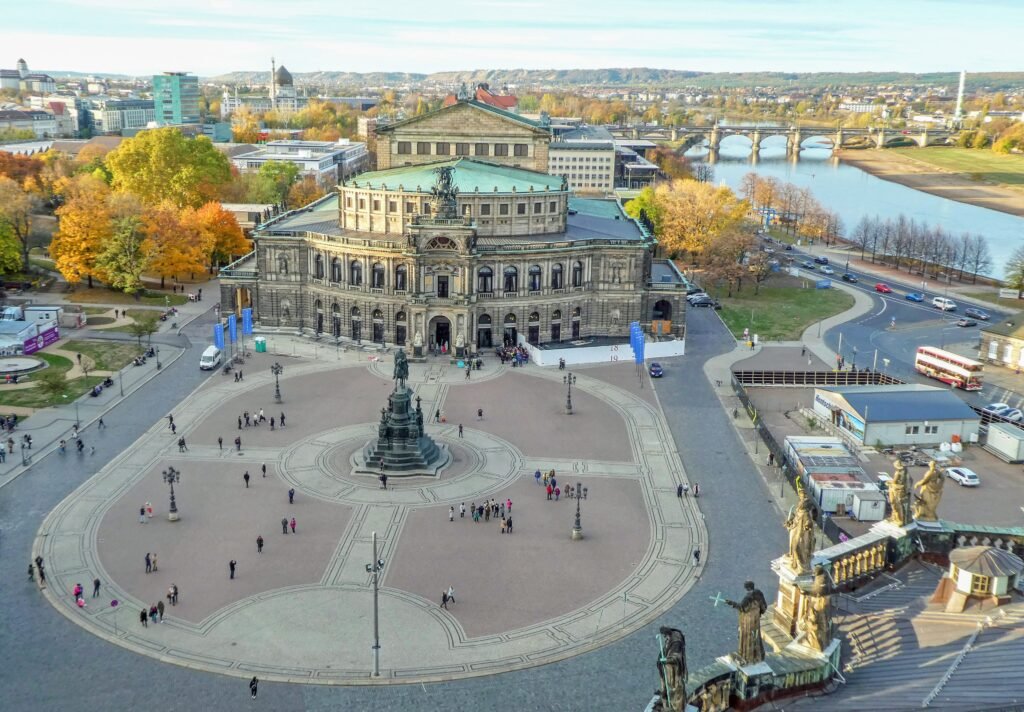
- Semperoper and Theaterplatz
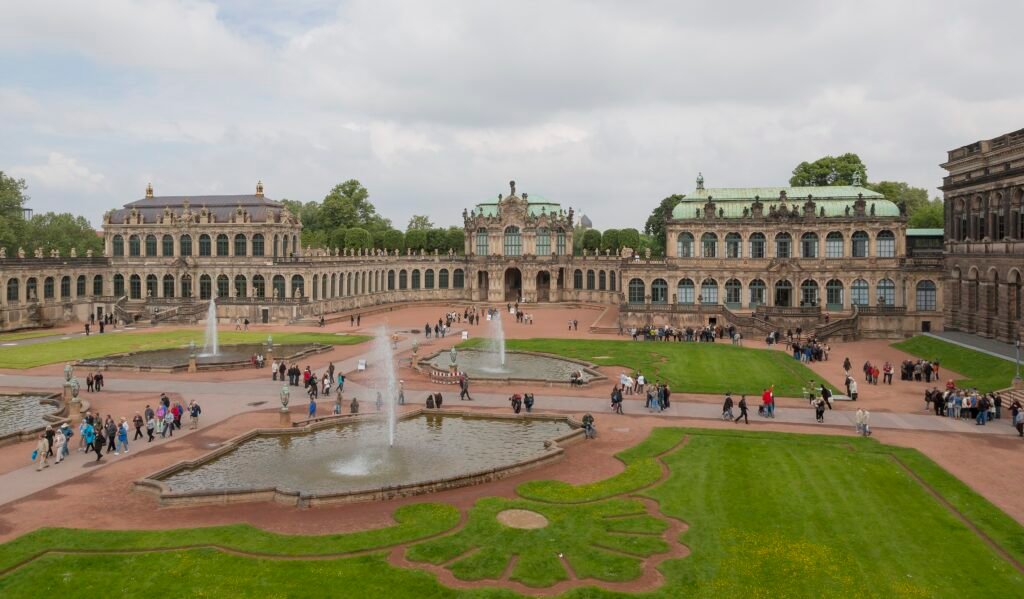
- Dresden Zwinger
- Postplatz
Start at Hauptbahnhof and walk north through Prager Straße and Altmarkt. Continue to Neumarkt and the Frauenkirche, then turn toward Brühl’s Terrace before moving west through Fürstenzug and the palace complex. Theaterplatz follows naturally, placing Semperoper and Zwinger at the end of the monument sequence.
Finishing at Postplatz prevents unnecessary backtracking. It also gives you one of Dresden’s strongest tram hubs if a museum visit, dinner or weather has shortened your walking range.
Day 2: Augustus Bridge, Neustadt and the Elbe
Walking route
Day 2: Augustus Bridge, Neustadt and the Elbe
- Schlossplatz
- Augustus Bridge
- Neustädter Markt and Golden Rider
- Hauptstraße and Baroque Quarter
- Albertplatz
- Louisenstraße and Alaunstraße
- Kunsthofpassage
- Martin-Luther-Platz
- Rosa-Luxemburg-Platz and Albert Bridge
- Königsufer at Albert Bridge
Begin at Schlossplatz and cross Augustus Bridge once. Walk through Neustädter Markt and Hauptstraße to Albertplatz, then continue into the Outer Neustadt along Louisenstraße and Alaunstraße. Kunsthofpassage is the northeastern anchor before the route turns south toward Martin-Luther-Platz and the Albert Bridge riverfront.
The route finishes on the north bank instead of returning to the Altstadt on foot. Use a nearby tram when you are ready to leave, keeping the second day focused on streets and riverfront worth walking.
Getting Around Dresden Without a Car
Dresden’s tram network is the ideal backup for a walking weekend. DVB routes connect Hauptbahnhof, Prager Straße, Postplatz, Theaterplatz, Neustädter Markt, Albertplatz and Bahnhof Neustadt, covering nearly every transfer a short-stay visitor is likely to need.
Evening coverage is unusually useful. DVB’s GuteNachtLinie system runs throughout the night, with 30-minute service through the overnight period on Friday, Saturday and nights before holidays.
A standard Dresden-zone single ticket costs €3.60 in the current 2026 fare schedule and allows transfers for up to one hour. Pre-purchased conventional tickets must be validated, so occasional visitors should check the current DVB or VVO ticket instructions before boarding.
Arriving in Dresden Without a Car
Dresden Airport has a direct S2 rail connection to Dresden-Neustadt, Dresden Mitte and Hauptbahnhof. The current standard timetable shows service about every 30 minutes, with Hauptbahnhof-to-airport trips taking about 21 minutes.
Hauptbahnhof is already close enough to begin a city visit on foot. The Frauenkirche gives roughly 20 minutes as the walking time, while direct trams shorten the trip when luggage makes that walk unattractive.
When a Car Helps
A private car adds little to a standard Dresden weekend. The core sights, Neustadt and the airport all work well with walking and public transport. A car becomes more useful only when a wider regional itinerary combines several dispersed rural stops that are awkward to link efficiently by rail or bus.
Walking Limitations and Practical Tips
The Elbe is Dresden’s main walking separator. Augustus Bridge is the most useful central crossing for the routes in this guide, while Albert Bridge gives another practical north-bank connection farther east. Bridge choice matters because the river prevents a direct line between every pair of nearby-looking sights.
The Carolabrücke remains unavailable as a central crossing following its 2024 partial collapse. Do not plan a walking route across it, and check current city maps for any later changes to the river-crossing network.
Historic surfaces are part of the Altstadt experience. Cobblestones, stone paving, tram tracks and occasional steps can slow travelers with luggage, strollers or reduced mobility even when distances are short.
Seasonal Walking Note
The same compact geography feels different with the season. The open Elbe riverfront can feel exposed in colder or windier periods, while hot summer afternoons make shade and tram breaks more valuable. These conditions change comfort, not the underlying distances.
Bottom Line
Dresden’s strongest weekend pattern is simple: walk the Altstadt slowly, cross the Elbe once, and give Neustadt its own half-day. The city’s flat terrain and dense monument core keep most sightseeing mileage rewarding. Trams are best used to protect time and energy on the longer extensions, not to disguise the real separation between the two riverbanks.