
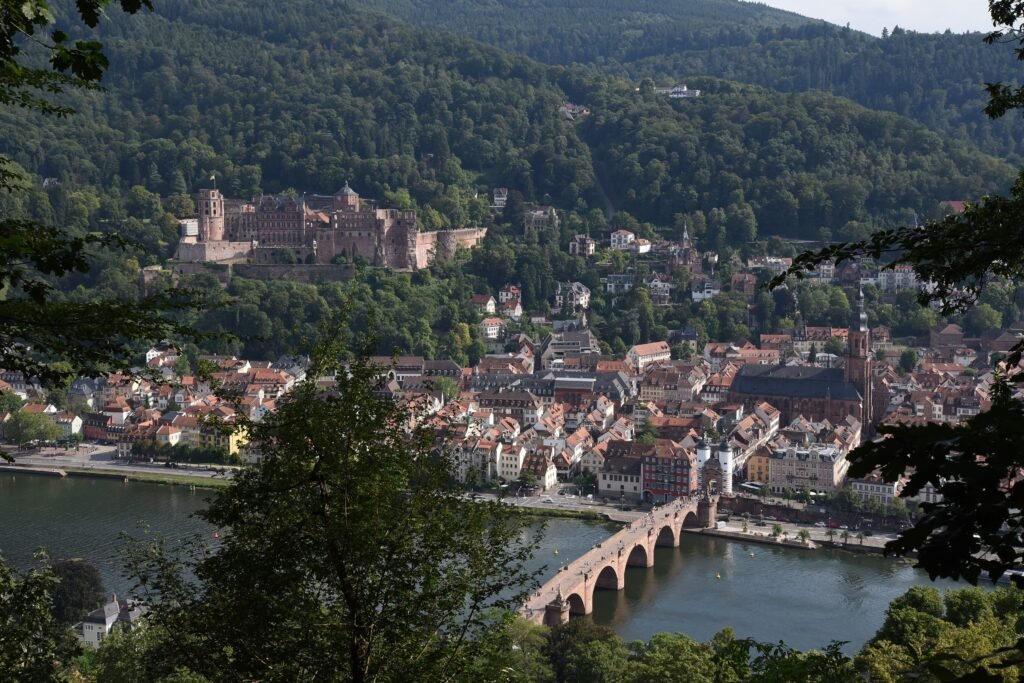
Between the Neckar and the Königstuhl hillside, Heidelberg’s historic sights occupy a remarkably narrow visitor corridor. The car-free Hauptstraße runs about 1.4 kilometers from Bismarckplatz toward Marktplatz, linking shops, university buildings, squares, and side lanes. The Old Bridge then crosses directly into Neuenheim, while the castle rises immediately above Kornmarkt. That compact map can be deceptive. Burgweg climbs steeply to the castle, and Schlangenweg gains the Philosopher’s Walk in under half a kilometer. Most central sightseeing is easy; the famous viewpoints demand noticeably more effort.
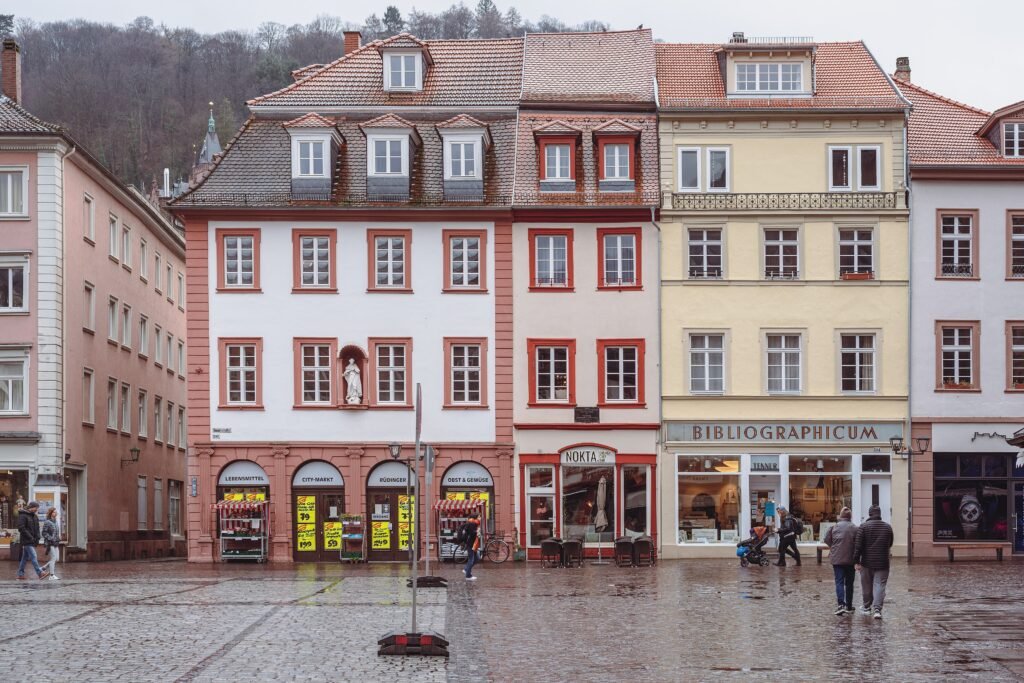
Why Heidelberg Works Well on Foot
The strongest walking experience is the Old Town’s long, simple east-west sequence. Bismarckplatz feeds directly into Hauptstraße, which the city identifies as a 1.4-kilometer car-free pedestrian street. University Square, the Student Prison, Marktplatz and Kornmarkt sit just off or directly on that line. The Old Bridge is only a few minutes beyond Marktplatz, so many first-time sights fit into one compact day without local transit. This concentration also makes navigation forgiving: the river marks the northern edge, the castle marks the southern hillside, and Hauptstraße keeps the center legible.
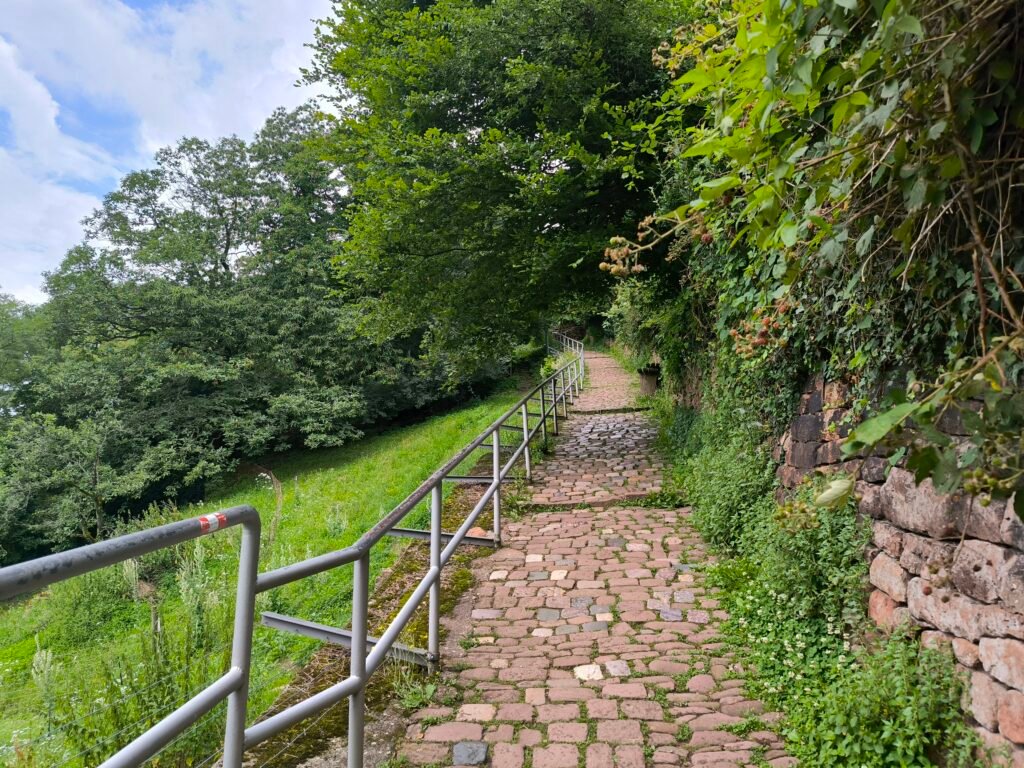
Compactness stops being the whole story once you look upward. Heidelberg Castle is almost directly above Kornmarkt, but State Palaces describes Burgweg as steep and another approach as having many steps. Across the Neckar, the city describes Schlangenweg as very steep and just under half a kilometer long. That path climbs from the Old Bridge to the Philosopher’s Walk. These are not distant attractions, yet they impose the kind of effort that a flat map hides.
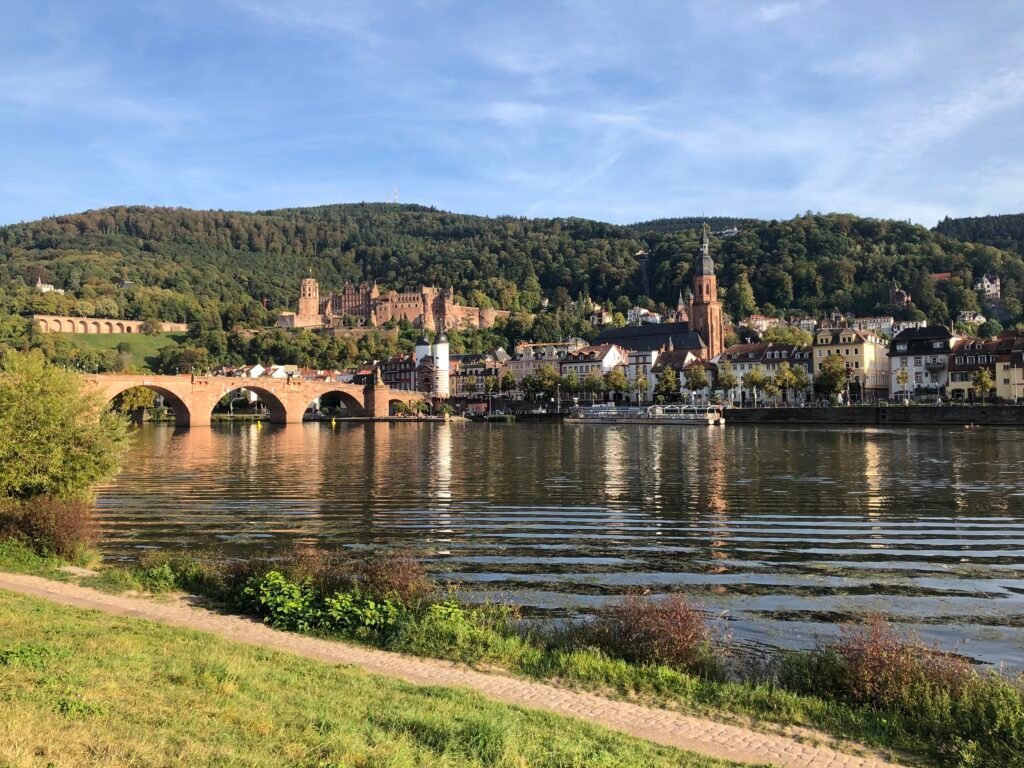
Best Areas to Stay for a Walking Weekend
Altstadt is the most efficient base if your priority is walking to the headline sights. Hotels around Marktplatz, Kornmarkt and Hauptstraße place the Old Bridge, university quarter and castle base within minutes. Bismarckplatz and eastern Bergheim are a strong compromise for easier Hauptbahnhof access while remaining at the pedestrian zone’s western end. Neuenheim works well for riverfront walks and Philosophenweg, but most historic sights remain across the Neckar. Staying immediately around Hauptbahnhof favors rail convenience over atmosphere and adds a local-transit leg to most sightseeing days.
Realistic Walking Times
Bismarckplatz to Universitätsplatz is roughly a 15–20 minute walk along the main pedestrian axis. Universitätsplatz to Marktplatz takes about 5–8 minutes, and Marktplatz to the Old Bridge only a few more. Kornmarkt to the castle is short but steep, usually around 10–15 minutes on foot for a fit visitor. The Schlangenweg climb from the Old Bridge to Philosophenweg is similarly short yet much harder than its distance suggests. From Hauptbahnhof, official guidance gives about ten minutes to the Old Town by tram or bus, making transit sensible with luggage.
A 2-Day Walking Route
These two days keep horizontal sightseeing efficient and treat the hills as deliberate experiences rather than accidental extra mileage. Day 1 follows the Old Town spine and finishes at the castle. The second day crosses the Neckar, climbs to Philosophenweg, then descends through Neuenheim and returns along the river.
Day 1: Hauptstraße, University Quarter and Heidelberg Castle
Walking route
Day 1: Hauptstraße, university quarter, Marktplatz and Heidelberg Castle
- Bismarckplatz
- Universitätsplatz
- Studentenkarzer
- Marktplatz
- Kornmarkt
- Heidelberg Castle
Start at Bismarckplatz and walk east on Hauptstraße toward the historic university. Detour briefly to Universitätsplatz and the Student Prison, then continue to Marktplatz and Kornmarkt. This sequence keeps the Old Town moving in one direction and avoids unnecessary returns along the same pedestrian street. At Kornmarkt, choose between the lower funicular and the steep walking approach to Heidelberg Castle. The funicular is the better choice when preserving energy matters, especially before another long walking day. End at the castle terraces rather than descending only to repeat the route.
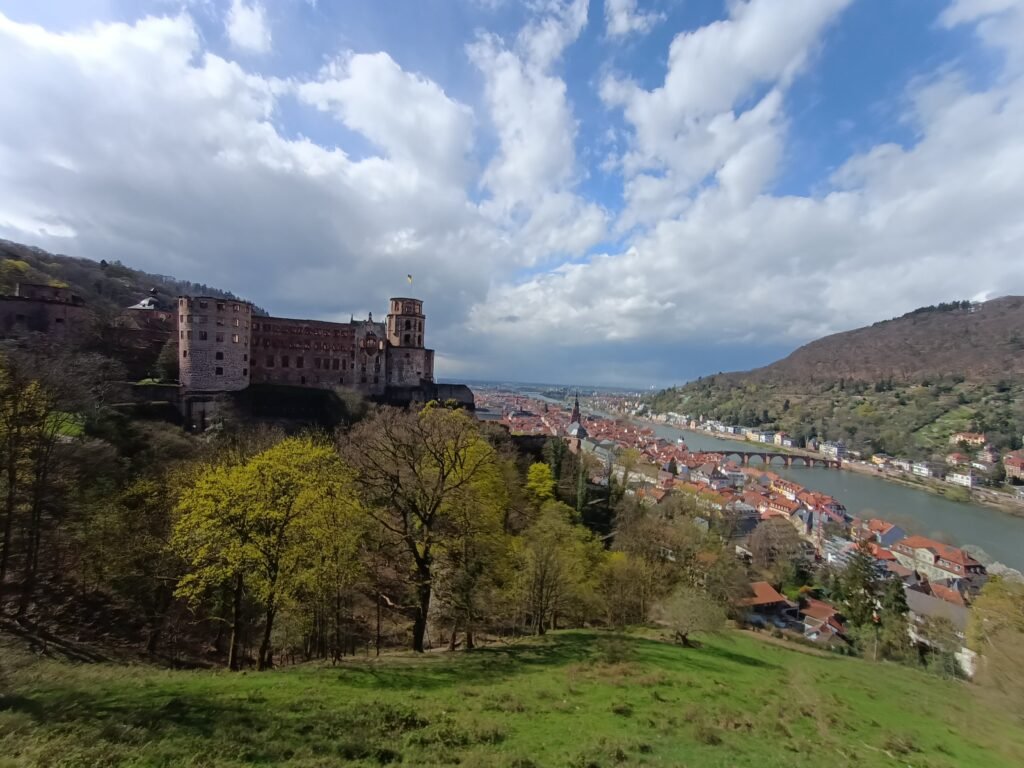
Day 2: Old Bridge, Philosopher’s Walk and Neckar Riverfront
Walking route
Day 2: Old Bridge, Schlangenweg, Philosopher’s Walk and Neckar riverfront
- Old Bridge (Karl Theodor Bridge)
- Schlangenweg
- Philosophengärtchen
- Philosophenweg
- Neuenheimer Marktplatz
- Neckarwiese
- Theodor-Heuss-Brücke
- Bismarckplatz
Begin at the Old Bridge and cross to the north bank. Schlangenweg starts almost immediately and supplies the day’s hardest sustained climb. Once you reach Philosophengärtchen, continue west along Philosophenweg instead of dropping straight back to the bridge. Descend into Neuenheim, pass its neighborhood center, and join the broad Neckarwiese. Follow the river west to Theodor-Heuss-Brücke, cross back to the south bank, and finish at Bismarckplatz. This creates one clean loop with one major ascent and no low-value cross-city transfer.
Using Trams, Buses and the Funicular
Transit is most useful for saving effort, not for stitching together a scattered attraction map. RNV trams and buses connect Hauptbahnhof, Bergheim, Bismarckplatz and the Old Town, so the station transfer is easy. The lower funicular is the most valuable visitor-specific ride because it removes the steep castle climb from Kornmarkt. Its published 2026 timetable uses ten-minute intervals during operating hours. VRN and RNV apps simplify local ticketing, while the HeidelbergCARD bundles public transport with the castle ticket. The ordinary VRN check-in/check-out fare does not include the funicular.
Late returns are also manageable. RNV’s 2026 night network shows Moonliner services through Friday and Saturday nights and before holidays, with additional late service on other days. Core stops include Bismarckplatz, Universitätsplatz, Hauptbahnhof, Alte Brücke and the Altstadt S-Bahn station. Always check live departures because construction can alter surface routes temporarily.
Arriving in Heidelberg Without a Car
Heidelberg Hauptbahnhof is a strong intercity gateway, but it is not inside the tight Old Town core. ICE, IC and regional trains serve the station, then trams and buses reach the Old Town in about ten minutes. Frankfurt Airport is the main international gateway for many visitors. Heidelberg Marketing describes the airport as roughly 80 kilometers away and about 60 minutes by rail with a transfer. Deutsche Bahn currently shows fastest trips around 50 minutes and many daily connections, but only a small number are direct. That makes arrival practical without making it completely frictionless.
When a Car Helps
A private car adds little to the standard 2–3 day Heidelberg itinerary. The Old Town is pedestrianized, parking is constrained, and the castle is easier to approach by foot, bus or funicular than by driving. A car becomes more relevant only when Heidelberg is one stop in a road-based regional itinerary with several rural destinations. For the city itself, arriving by rail and using occasional local transit is simpler.
Walking Limitations and Practical Tips
Do not judge the castle or Philosopher’s Walk by horizontal map distance alone. Wear shoes with reliable grip for stone paving, steps and the steep Schlangenweg. Use the funicular if a castle climb would reduce the rest of your day. Visitors with limited mobility should also check current accessible-routing information, because the historic hillside paths are not equivalent to the smoother pedestrian core. The Old Bridge and Hauptstraße can become crowded at popular times, so early starts make the most scenic links calmer and easier to navigate.
Seasonal Walking Context
Warm, dry shoulder-season days suit Heidelberg’s exposed viewpoints best. Summer heat can make the castle and Schlangenweg climbs more tiring, even when the Altstadt remains easy. Wet leaves, frost or winter darkness deserve extra caution on stone steps and hillside paths. The lower funicular keeps operating on a published winter timetable, but with a shorter daily span than in summer.
Bottom Line
Heidelberg is a strong car-free weekend city because most first-time sights occupy a remarkably compact historic strip. Hauptstraße, the university quarter, Marktplatz and Old Bridge reward walking as the default. The important caveat is elevation: the castle and Philosopher’s Walk demand real climbing unless you use the funicular selectively. Hauptbahnhof also sits outside the tightest core, but a short tram or bus closes that gap. Plan the hills intentionally, and the city works very well without a private car.