
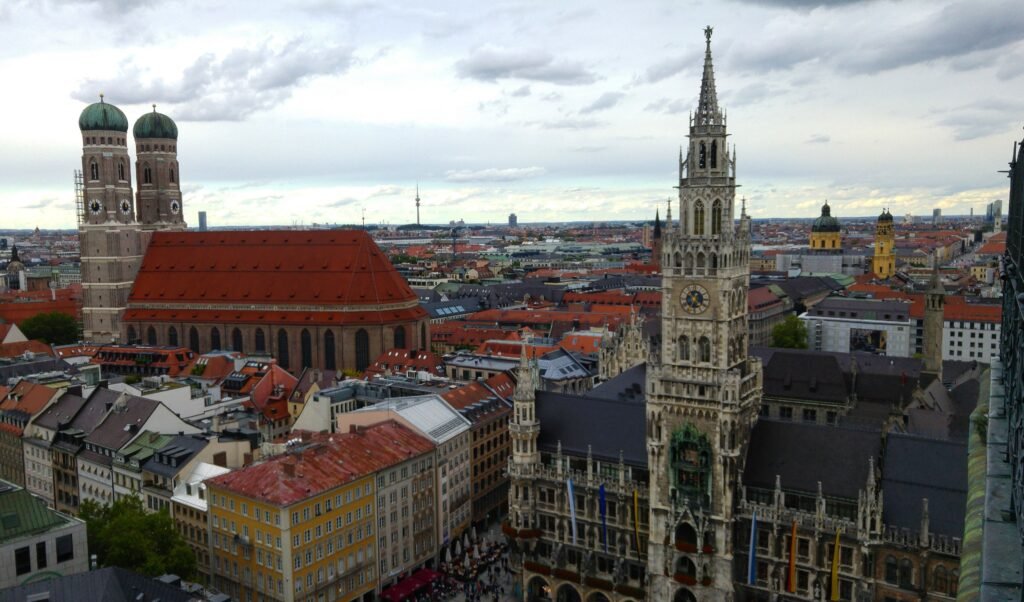
Around Marienplatz, royal landmarks, markets and pedestrian streets fit into a remarkably compact central area. The main west-east pedestrian spine runs roughly one kilometer from Karlsplatz-Stachus to Marienplatz. From there, the Residenz, Odeonsplatz and Viktualienmarkt remain close enough for short, direct walks. The pattern changes beyond the Altstadt, where the museum quarter and English Garden stretch the practical visitor footprint northward. Those extensions are still reachable on foot, but they turn sightseeing into longer half-day walks. Munich’s flat terrain and dense transit network keep those distances manageable without making them disappear.
Why Munich Works So Well on Foot
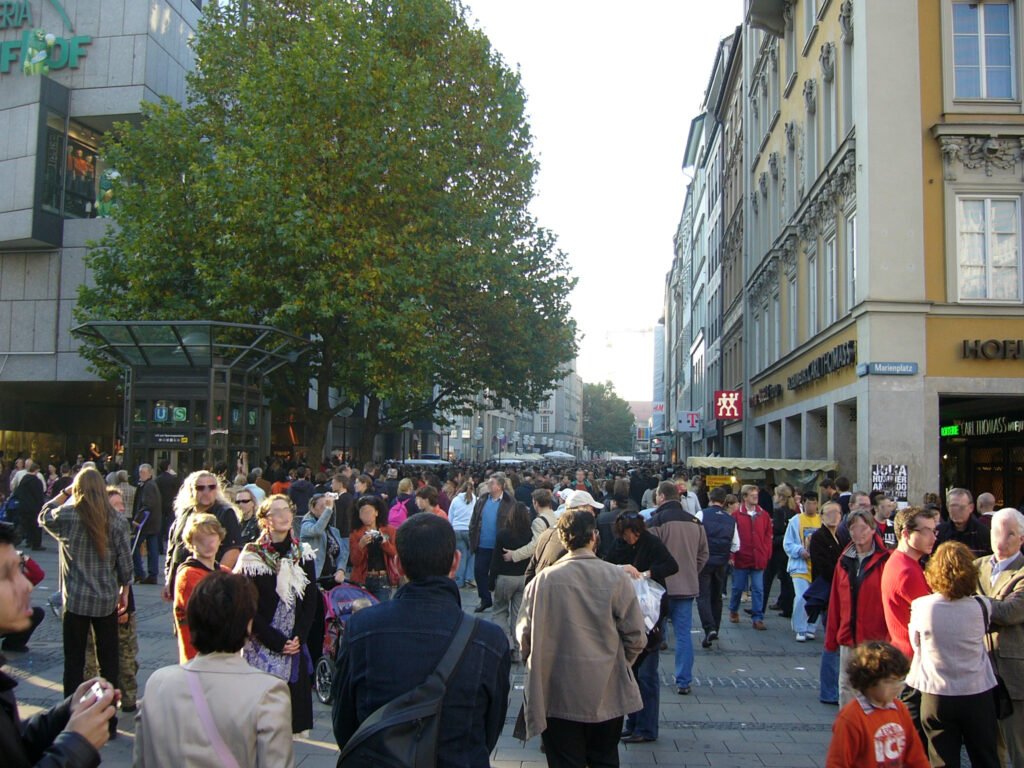
The strongest walking experience sits inside and immediately around the Altstadt. Munich’s official Old Town tour covers about three kilometers while linking many signature sights. Marienplatz anchors the network, with Viktualienmarkt, Frauenkirche, the Residenz and Odeonsplatz all close by. Large pedestrianized sections reduce traffic friction, especially along Kaufingerstraße and Neuhauser Straße. This makes the center feel more compact than the wider metropolitan map suggests.
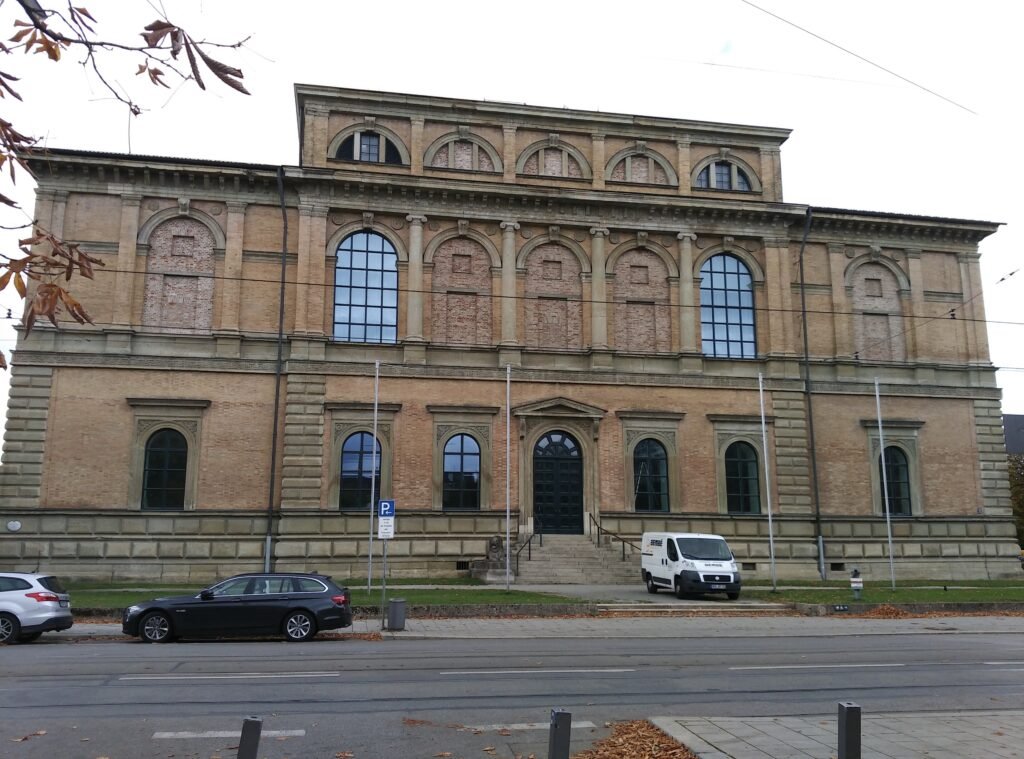
Walking remains practical as the visitor footprint expands north. Maxvorstadt begins directly beyond the Old Town and concentrates the Kunstareal around Königsplatz and the Pinakotheken. The southern English Garden then extends the network eastward through the Eisbach, Monopteros and Chinese Tower. These areas connect naturally, but they add enough distance that a full weekend benefits from selective transit rather than continuous walking.
Terrain is a major advantage. Munich’s official statistics show only a 37-meter difference between the city’s highest and lowest points. The central routes in this guide are generally gentle, aside from small local rises inside parks. That keeps long museum-and-park days physically easier than equally long itineraries in hillier cities.
Best Areas to Stay for Walking
Altstadt-Lehel is the strongest base for a first visit. You can reach Marienplatz, Viktualienmarkt, the Residenz, Odeonsplatz and the southern English Garden with minimal transit. It also places restaurants, shopping and visitor services directly outside your hotel.
Maxvorstadt is especially useful for museum-focused trips. Königsplatz, the Pinakotheken and the university district sit close together, while the Altstadt remains a short walk south. This base slightly increases walking to Viktualienmarkt and the Isar, but reduces museum-day mileage.
Karlsplatz and the Hauptbahnhof edge work well for rail travelers and often offer broad accommodation choice. The pedestrian zone begins near Karlsplatz and leads directly toward Marienplatz. Hauptbahnhof reconstruction can complicate some exits, so the area is more practical than elegant as an arrival base.
Useful Walking Times for First-Time Visitors
Marienplatz to Viktualienmarkt is about 3–5 minutes. Marienplatz to the Residenz takes roughly 8–10 minutes, while Odeonsplatz is around 10–12 minutes. The pedestrian walk from Marienplatz to Karlsplatz-Stachus is roughly 12–15 minutes. Reaching Königsplatz usually takes around 18–22 minutes, and the Deutsches Museum is about 15–18 minutes away.
The outer visitor extensions are where planning matters more. Odeonsplatz to the Eisbach is roughly 10–15 minutes. Alte Pinakothek to the Eisbach is closer to 20–25 minutes. Those are comfortable individual walks, but combining several extensions can push a sightseeing day well beyond six kilometers.
A 2-Day Walking Route
Both routes keep each day geographically coherent. Day 1 moves through the historic center toward the Isar. On Day 2, the walk links Maxvorstadt with the southern English Garden without retracing the same museum streets.
Day 1: Altstadt, Residenz and the Isar
Walking route
Day 1: Altstadt, Residenz and the Isar
- Odeonsplatz
- Munich Residenz
- Hofbräuhaus München
- Marienplatz
- Viktualienmarkt
- Isartor
- Deutsches Museum
- Ludwigsbrücke / Isar riverfront
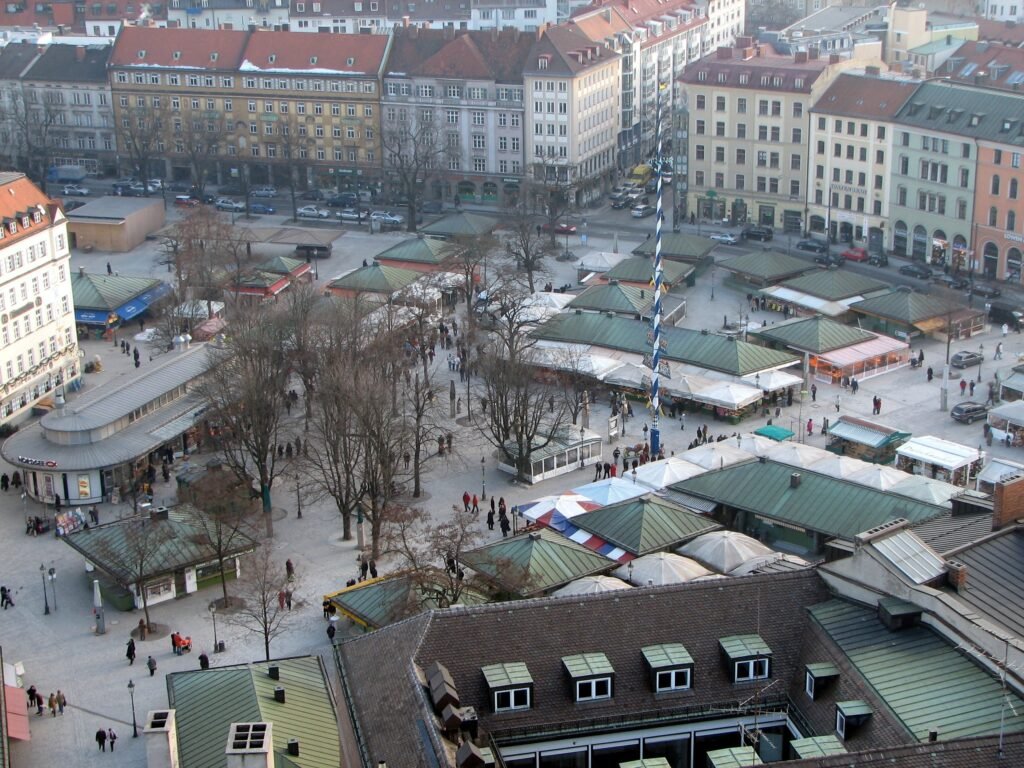
Start at Odeonsplatz and enter the Residenz before moving toward Platzl and Hofbräuhaus. Continue to Marienplatz, then spend time at Viktualienmarkt before walking east to Isartor. Finish at the Deutsches Museum and Ludwigsbrücke beside the Isar. The route is about 4.2 kilometers before museum interiors, shopping detours or extended market browsing.
Day 2: Kunstareal and the English Garden
Walking route
Day 2: Kunstareal, Maxvorstadt and English Garden
- Königsplatz
- Lenbachhaus
- Alte Pinakothek
- Pinakothek der Moderne
- Museum Brandhorst
- Ludwig-Maximilians-Universität main building
- Eisbachwelle
- Monopteros
- Chinese Tower
- Max-Joseph-Brücke / Isar
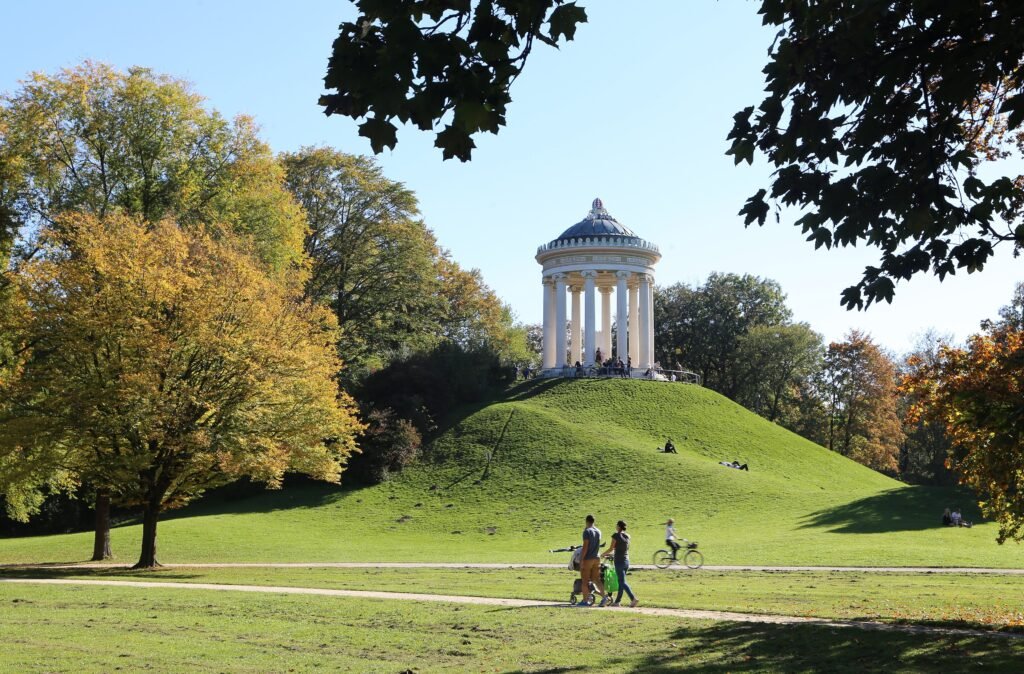
Begin at Königsplatz, then work east through Lenbachhaus, Alte Pinakothek, Pinakothek der Moderne and Museum Brandhorst. Continue past the university toward the Eisbach and enter the English Garden. Walk through Monopteros and the Chinese Tower before finishing near the Isar at Max-Joseph-Brücke. The mapped route is about 5.7 kilometers before time spent inside museums or wandering park paths.
How Useful Is Munich Public Transit?
Transit is the ideal complement to Munich’s walking geography rather than a substitute for it. U-Bahn and S-Bahn lines cover the central city, while trams fill many short cross-center gaps. Visitors can use the same integrated MVV system across U-Bahn, S-Bahn, tram and bus services. The MVV app adds real-time routing, mobile tickets and disruption alerts.
Weekend evening coverage is unusually strong for a short city break. U-Bahn trains now run overnight on Friday and Saturday nights and before public holidays. Night trams and buses provide additional coverage. This makes it easy to finish a long walk in another district without planning a car return.
Arriving in Munich Without a Car
Munich Airport has one of the simpler rail arrivals among large European airports. S1 and S8 trains run directly into the city center, with the airport publishing about 40 minutes to Hauptbahnhof. Because the two lines alternate, service between the airport and center is roughly every ten minutes through most normal daytime periods.
Intercity rail passengers arrive at München Hauptbahnhof on the western edge of the central visitor area. Karlsplatz and the pedestrian route toward Marienplatz are close enough to continue without a car. Major station reconstruction can change exit patterns, so follow posted signs rather than assuming the east forecourt is available.
When a Car Helps
A car adds little value to the two-day city itinerary in this guide. Central parking and traffic are more likely to create friction than save time. A vehicle becomes more useful for rural Alpine trailheads, multi-stop countryside itineraries or destinations poorly matched to rail schedules. Many classic Bavarian day trips still work by train, so renting a car should be driven by the excursion rather than the Munich stay.
Walking Limitations and Practical Tips
The biggest limitation is distance between clusters, not poor pedestrian conditions. The English Garden stretches for about 5.5 kilometers and covers 375 hectares, so “walking the park” can mean very different distances. Maxvorstadt also adds a separate museum-focused zone north of the Altstadt. Use transit when a cross-city transfer adds little sightseeing value.
Crowds can slow the central pedestrian streets around Marienplatz, especially during major events and seasonal markets. The Old Town also meets wider roads around its edges, where crossings feel less intimate than inside the pedestrian core. In the English Garden, branching paths can make navigation less direct than the street network.
Seasonal Walking Note
Munich supports a walking-focused visit throughout the year, but comfort changes with the season. Warm months make the English Garden and Isar especially appealing, while busy summer periods can increase crowding. Winter brings shorter daylight and possible snow or ice, so even the city’s generally flat routes may require more time.
Bottom Line
Munich works best when you treat the Altstadt as a compact walking core and the northern extensions as connected second zones. The historic center delivers many major sights without transit, while Maxvorstadt, the English Garden and Isar add meaningful but manageable distance. Strong U-Bahn, S-Bahn and tram service lets you save energy without giving up the city’s best walking stretches. For a first 2–3 day visit, a private car is unnecessary.