
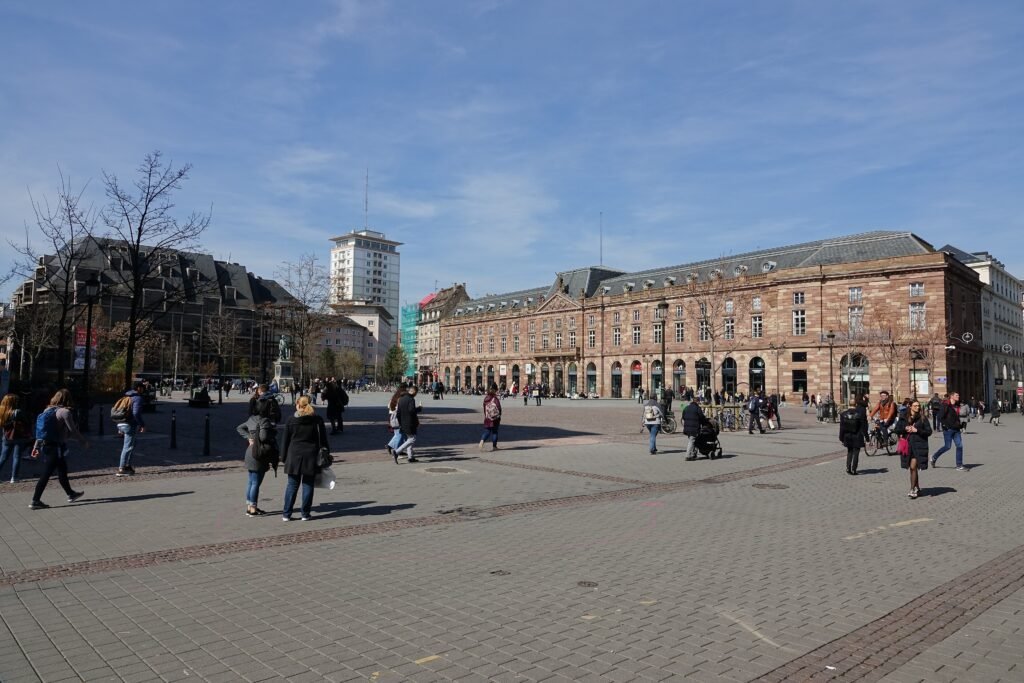
France’s leading walking cities solve the same weekend problem in very different ways. Bordeaux and Strasbourg compress major sights into flat, legible cores with excellent car-free arrival. Paris spreads farther, yet its central neighborhoods connect unusually well and the Metro keeps distant icons practical. Nice adds a long Mediterranean walking spine, interrupted mainly by Castle Hill and Cimiez. Lyon’s two rivers organize a strong center, while Fourvière and Croix-Rousse make terrain more consequential. Marseille offers rewarding harbor and coastal walking, but its hills and separated visitor zones require more deliberate transit use.
France’s Walkability Ranking at a Glance
| Rank | City | Overall score | Strongest advantage | Main limitation |
|---|---|---|---|---|
| 1 (tie) | Bordeaux | 94/100 | Flat historic core, long pedestrian and quay spines, and low-friction arrival | Cité du Vin and Bacalan stretch the visitor footprint north |
| 1 (tie) | Paris | 94/100 | Dense central neighborhoods backed by exceptional Metro and RER coverage | A larger footprint, Montmartre hills, and slightly heavier airport arrival |
| 1 (tie) | Strasbourg | 94/100 | Exceptionally compact old town, flat terrain, and low-burden arrival | The European Quarter is the main longer extension beyond the core |
| 4 | Nice | 92/100 | A continuous seafront core with a direct airport-to-center tram | Castle Hill and Cimiez add concentrated climbing above the flat coastal core |
| 5 | Lyon | 91/100 | Excellent metro and funicular backup for a strong but hillier central walking network | Fourvière and Croix-Rousse make terrain more consequential than in the flatter leaders |
| 6 | Marseille | 83/100 | A compact Vieux-Port core combined with memorable harbor and coastal walking | Hills, wider geographic spread, and less consistent pedestrian continuity |
Bordeaux, Paris, and Strasbourg are exact co-leaders at 94/100. They therefore share rank 1, and the next position is rank 4. No tiebreaker is applied. The tie matters because each city reaches the same total through a different traveler experience.
Why Bordeaux, Paris, and Strasbourg Tie at 94/100
Bordeaux is the flattest-feeling all-rounder. Its historic center, Saint-Michel, riverfront, and Chartrons connect through long, legible walking corridors. Rue Sainte-Catherine gives the center a strong pedestrian spine, while the quays turn the Garonne into a second one. The main compromise comes farther north around Cité du Vin and Bacalan, where transit saves useful mileage.
Paris solves a bigger geographic problem. Its central visitor neighborhoods connect exceptionally well, while Metro and RER make distant sightseeing clusters easy to add. That combination lets travelers walk heavily around the Seine, Marais, Saint-Germain, and Latin Quarter, then reposition efficiently for Montmartre or western landmarks. The tradeoff is greater scale, more varied terrain, and slightly heavier airport arrival.
Strasbourg offers the most concentrated version of the same score. Grande Île, Petite France, and the cathedral district form a very tight historic core, with Neustadt continuing the walking geography north. Flat terrain keeps effort low. Trams are excellent, but most first-time sightseeing does not need them until the route stretches toward the European Quarter.
Which French City Fits Your Walking Style?
| Traveler priority | Best fit | Why |
|---|---|---|
| Maximum compactness | Strasbourg | Grande Île and Petite France put a remarkable share of first-time sightseeing inside one small, flat walking core. |
| Easiest terrain | Bordeaux and Strasbourg | Both have flat central visitor areas that support long walking days with little climbing. |
| Strongest transit | Paris and Lyon | Paris uses its network to bridge a large city, while Lyon’s metro and funiculars are especially useful for hills. |
| Easiest car-free arrival | Bordeaux, Strasbourg, and Nice | Each offers a straightforward public-transport connection from its main arrival gateway into the visitor core. |
| Focused historic walking | Strasbourg | The cathedral, Grande Île, Petite France, and Neustadt make history the continuous walking environment rather than separate stops. |
| Waterfront walking | Nice | Its long Mediterranean promenade connects directly with the central visitor core; Bordeaux excels for riverside walking, too. |
| Minimizing transit use | Strasbourg | Most central sightseeing works naturally on foot; Bordeaux is the closest alternative for a broader, still-flat walking weekend. |
The tied leaders suit different travelers. Someone who dislikes hills may prefer Bordeaux or Strasbourg, while a traveler who values breadth and easy cross-city movement may prefer Paris. Their identical overall scores therefore describe different kinds of successful car-free weekends.
Nice, Lyon, and Marseille: Where the Gaps Open Up
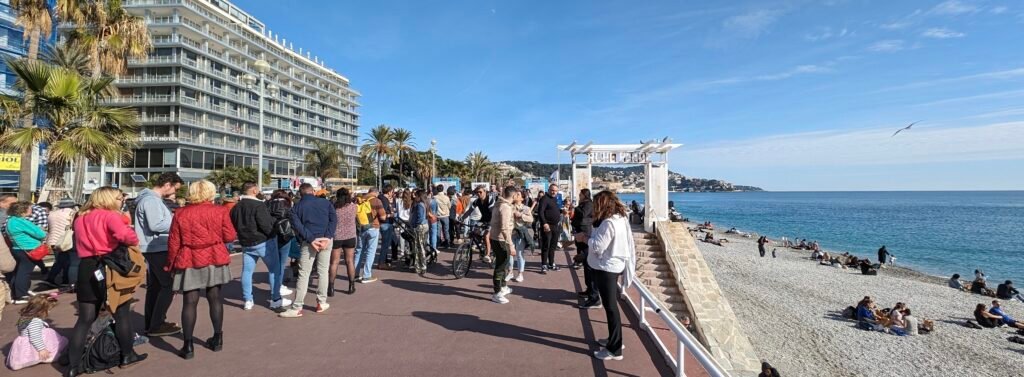
At 92/100, Nice stays very close to the leaders. Vieux Nice, Place Masséna, the seafront, Garibaldi, and Port Lympia create a continuous central corridor. The Promenade des Anglais also gives the city this comparison’s clearest Mediterranean walking spine. Castle Hill is an abrupt local climb, while Cimiez adds a longer uphill extension that is better handled one way by transit.
Lyon follows at 91/100. Presqu’île and Vieux Lyon are close, coherent, and rewarding on foot, with the Rhône and Saône providing useful orientation. The difference is vertical. Fourvière rises immediately above the old town, and Croix-Rousse climbs north from the center. Lyon’s metro and funicular network is especially valuable because it removes some of the least rewarding climbing and transfer mileage.
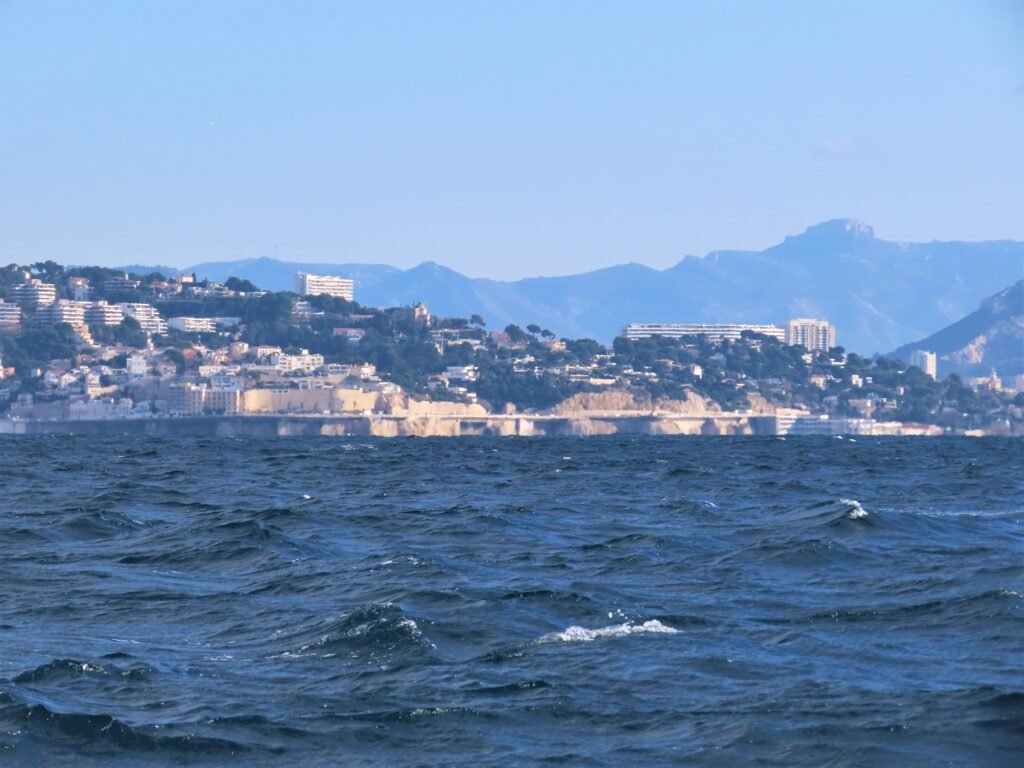
Marseille ranks sixth at 83/100, still an excellent result for a car-free city break. Its Vieux-Port, lower Canebière, Le Panier, Fort Saint-Jean, and Mucem cluster is genuinely compact. The challenge begins when the itinerary expands. Notre-Dame de la Garde adds a steep ascent, and the Corniche stretches the visitor geography south. Pedestrian continuity is also less uniform than in the five higher-ranked cities.
Compactness, Terrain, and Transit Change the Experience
The most important comparison is not simply score versus score. Bordeaux and Strasbourg are the easiest cities here to treat as walk-first weekends because their central terrain stays flat and major sights remain tightly connected. Nice is similarly intuitive at sea level, but its hills appear abruptly. Lyon and Marseille make gradient a larger planning factor.
Paris shows why compactness and transit should not be confused. It is larger than Bordeaux or Strasbourg, yet the central neighborhoods connect exceptionally well. Metro and RER then protect time when the itinerary jumps to a distant cluster. Lyon uses transit differently: the network often saves elevation as much as distance.
The Mediterranean pair illustrates another contrast. Nice’s waterfront is a continuous part of the central sightseeing map. Marseille’s harbor is compact, but its best coastal walking extends farther from the center. Both reward a waterfront-focused weekend, yet Marseille benefits more from deliberate bus or metro positioning.
When a Car Helps — and When It Doesn’t
None of these six cities needs a private car for a standard first-time weekend. Central lodging, walking, and public transport cover the normal urban itinerary more efficiently than driving and parking.
A car becomes more useful when the trip changes from a city break into a dispersed regional itinerary. Wine-country stops around Bordeaux, rural Provence, or several small destinations in one day can change the calculation. Even then, rail and organized excursions can remain practical alternatives depending on the route.
Marseille’s Calanques are not automatically a rental-car case. Access restrictions and trailhead transport mean a car can add complications rather than solve every approach. Check current park and transit guidance for the exact trail before deciding.
Seasonal Walking Context
Season changes how comfortable these cities feel on foot. Nice and Marseille can become demanding during hot, exposed summer afternoons, especially on climbs and long waterfront sections. Bordeaux and Paris also reward shade and earlier starts during heat. Strasbourg and Lyon bring a different winter tradeoff, with colder conditions and shorter daylight affecting the pace of longer sightseeing days.
Bottom Line
Bordeaux, Strasbourg and Paris share first place but suit very different weekends. Choose Bordeaux for flat historic streets and riverfront walking, Strasbourg for maximum compactness, or Paris for the broadest city experience with exceptional transit. Nice is the standout coastal choice, while Lyon suits travelers comfortable pairing historic walking with hill-saving transit. Marseille remains rewarding without a car, but it asks for the most deliberate route planning of the six.