
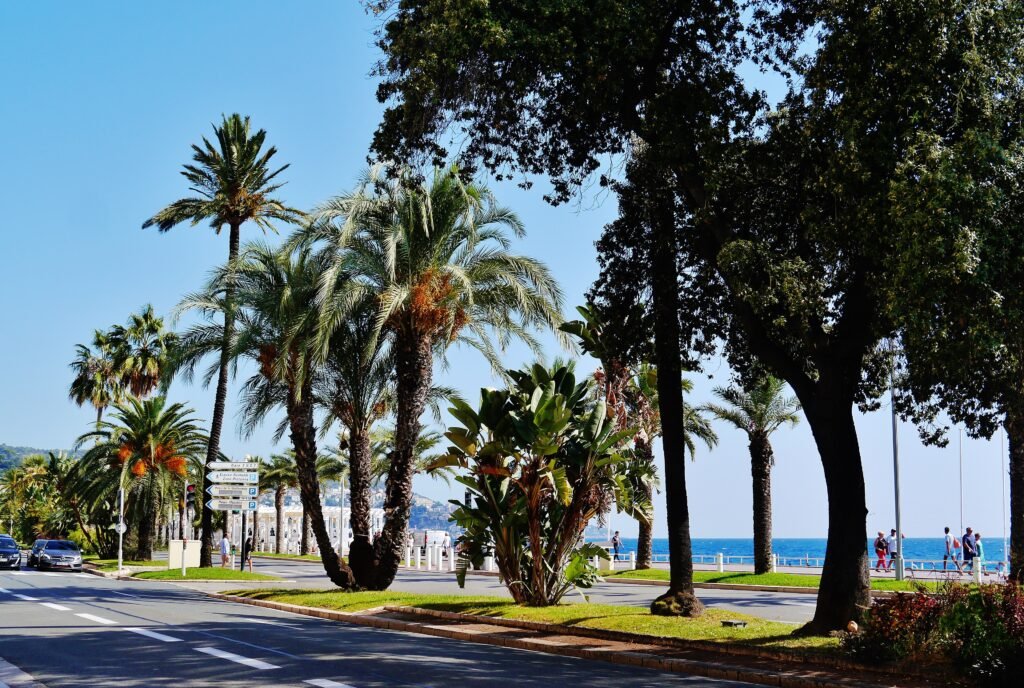
Between the railway station and Port Lympia, most visitor movement follows a compact crescent around the old town and seafront. Place Masséna links Avenue Jean Médecin, Vieux Nice, and the waterfront inside a few easy walking minutes. The Promenade des Anglais continues west for nearly seven kilometers, but central sightseeing occupies only part of that distance. Castle Hill rises abruptly beside the old town, creating Nice’s clearest vertical challenge without breaking horizontal compactness. Farther uphill, Cimiez is better treated as a separate museum outing supported by bus service.
Why Nice Works So Well on Foot
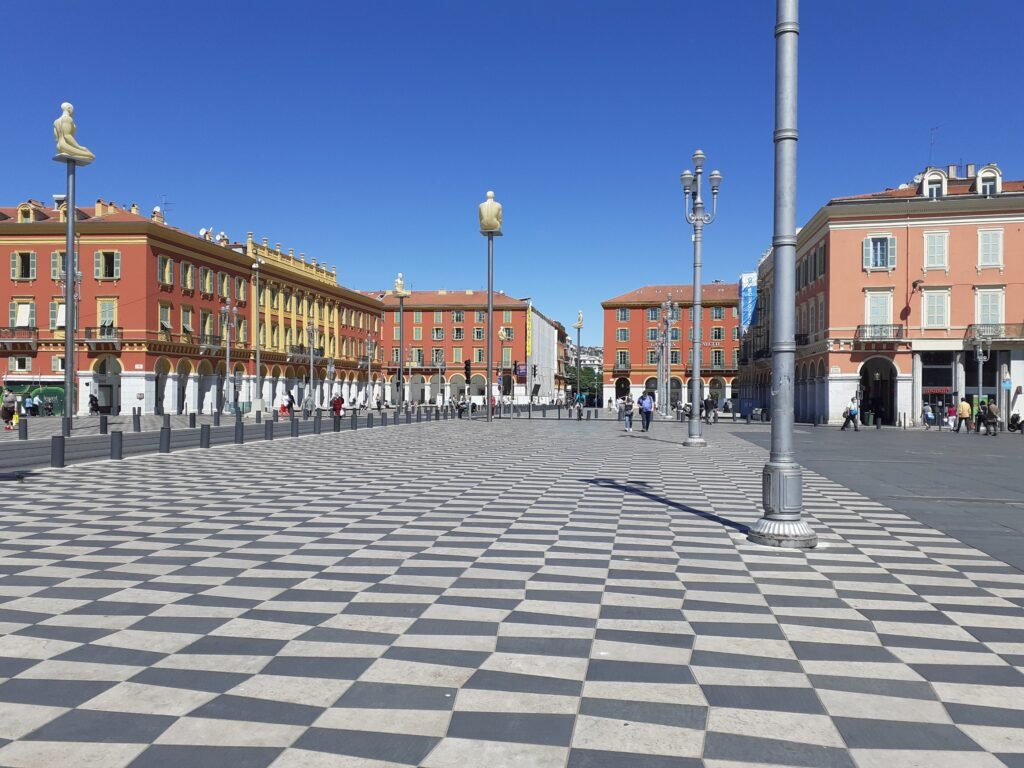
Place Masséna is the hinge that makes central Nice unusually easy to understand. Old Nice begins just east, Avenue Jean Médecin runs north toward the station, and Albert I Gardens open directly toward the sea. The square itself is a large pedestrian space, while the city also regulates pedestrian areas across the historic center and other central districts. That creates a useful chain of low-friction walking rather than isolated pedestrian pockets.
The seafront reinforces the same pattern. The Promenade des Anglais stretches for almost seven kilometers, but a weekend visitor rarely needs its full length. Its central section joins Carré d’Or and Masséna, while Quai des États-Unis continues east beside Vieux Nice and Castle Hill. The official tourism office describes that quay as protected from motor traffic, and it leads naturally toward the port.
Terrain changes the experience without breaking the core geography. Castle Hill is immediately beside Vieux Nice, yet its stairs make the short map distance physically demanding. A free lift near Rue des Ponchettes can remove most of the ascent. Farther north, the Chagall Museum and Cimiez sit beyond the flat central crescent, so their uphill access deserves a separate plan.
Best Areas to Stay for a Walking Weekend
Place Masséna / Carré d’Or: the strongest all-around base. Old Nice, the Promenade, Jean Médecin, restaurants and tram access spread out in different directions without requiring a transfer. The tradeoff is central-city activity and heavier visitor traffic during busy periods.
Vieux Nice: best for historic atmosphere and shortest access to Cours Saleya, the cathedral, Quai des États-Unis and Castle Hill. The district is highly compact, but narrow lanes and older surfaces can be less convenient with wheeled luggage.
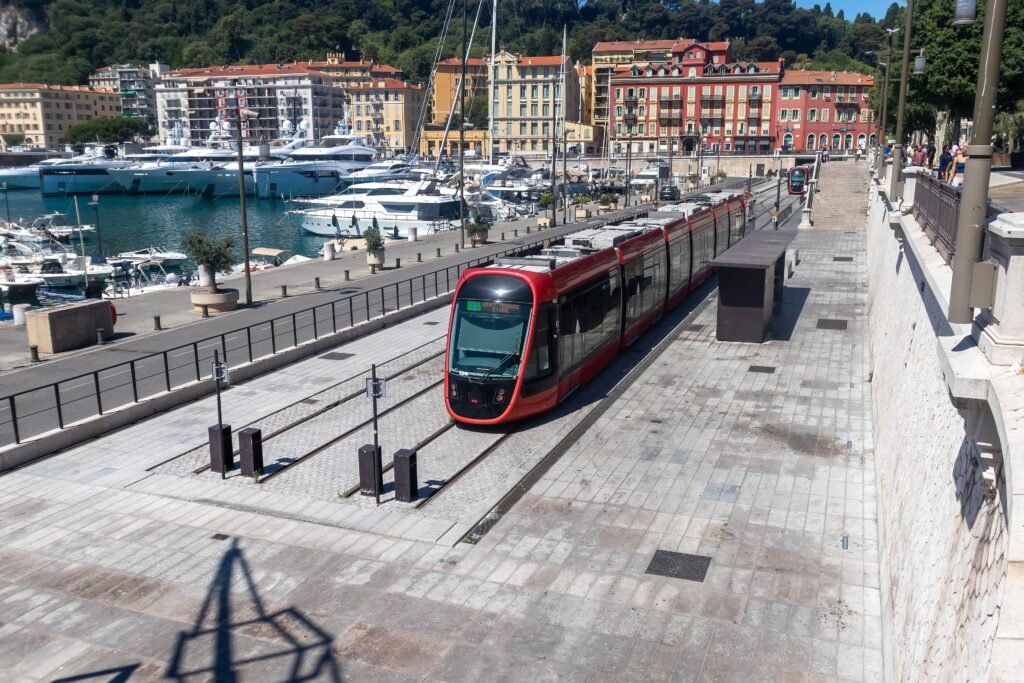
Garibaldi / Port Lympia: a strong alternative for harbor atmosphere and eastern sights. Vieux Nice remains close, Castle Hill sits nearby, and Tram 2 runs directly to the airport. The western Promenade is farther away, although the seafront walk remains attractive.
Jean Médecin / Nice-Ville: best for rail convenience. The station sits near the main north-south shopping corridor, with Place Masséna roughly a 15-minute walk away. This area sacrifices some immediate waterfront atmosphere for simpler arrival and departure logistics.
Realistic Walking Times in Nice
Nice-Ville to Place Masséna: about 15 minutes. Masséna to Cours Saleya: about 8–10 minutes. Reaching Le Negresco from Masséna takes roughly 15 minutes. Masséna to Port Lympia: about 20–25 minutes. Cours Saleya to Castle Hill access: about 5–10 minutes before the climb. Chagall Museum to Musée Matisse: about 20–25 minutes uphill. These are representative planning estimates rather than guaranteed walking times.
A 2-Day Walking Route
Day 1 — Seafront, Vieux Nice and Port Lympia
Walking route
Day 1 — Promenade, Vieux Nice, Castle Hill and Port Lympia
- Hôtel Le Negresco
- Jardin Albert 1er
- Place Masséna
- Cours Saleya
- Cathédrale Sainte-Réparate
- Colline du Château
- Port Lympia
Start beside Le Negresco and follow the Promenade east toward Albert I Gardens and Place Masséna. Turn into Vieux Nice for Cours Saleya and Place Rossetti rather than repeating the waterfront. From there, climb Castle Hill by stairs, or use the free lift near Rue des Ponchettes. Descend toward Port Lympia and finish on the harbor quays. Tram 2 provides the efficient return toward Jean Médecin, so the route stays linear instead of doubling back.
Day 2 — Libération, Chagall and Cimiez
Walking route
Day 2 — Libération, Chagall and Cimiez
- Marché de la Libération
- Gare du Sud
- Musée National Marc Chagall
- Jardin des Arènes de Cimiez
- Musée Matisse Nice
- Monastère de Cimiez
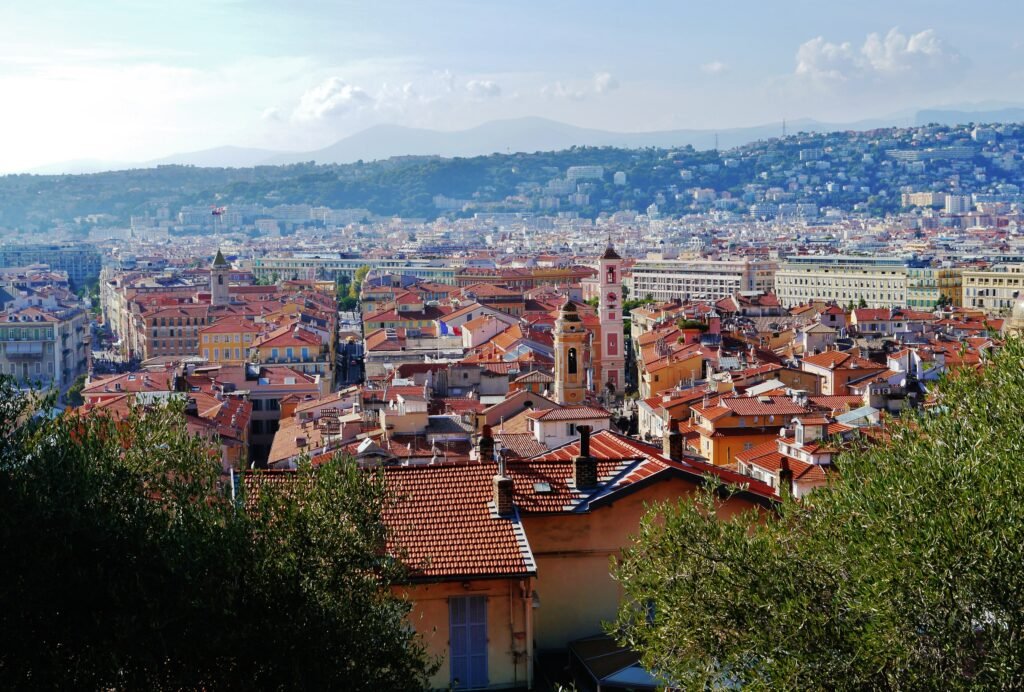
Use Tram 1 to position at Libération, then walk through the market district and Gare du Sud. Continue east toward the Marc Chagall National Museum, where the route begins climbing. The ascent then continues to the Arènes de Cimiez, Musée Matisse and the Cimiez monastery. Finish high and take a bus back toward central Nice. Both Chagall and Matisse are open on weekends under the current 2026 schedules, but both are closed Tuesdays.
Using Nice Trams Without Overusing Them
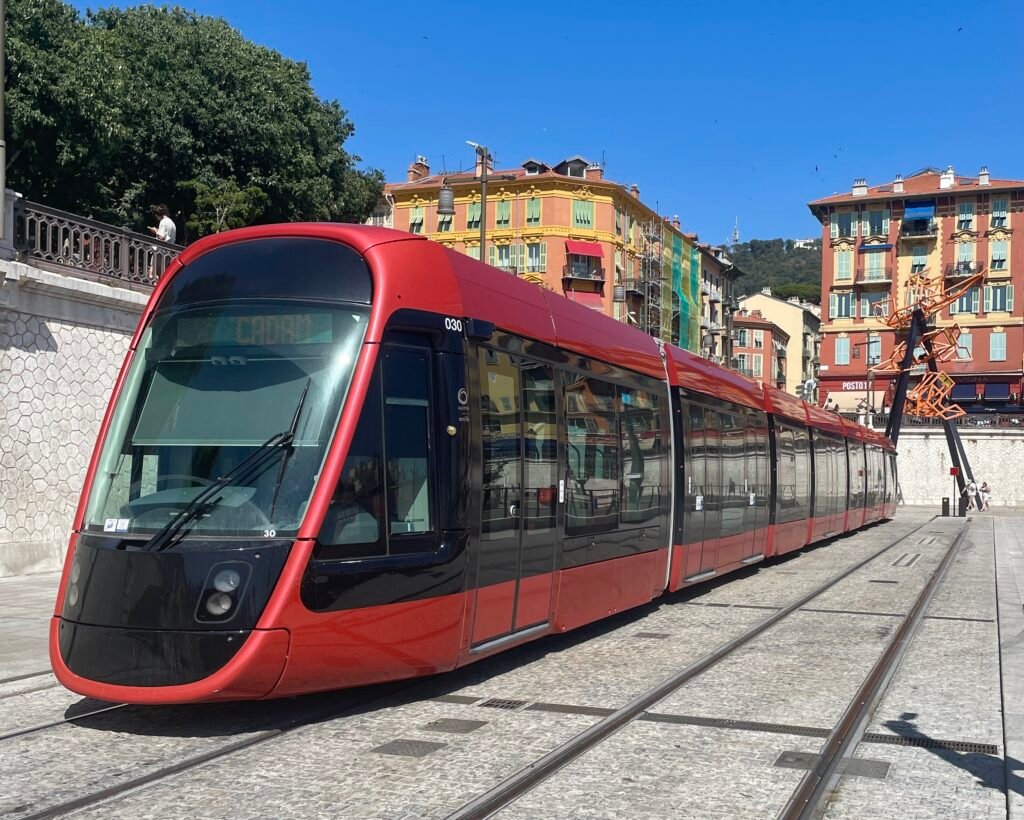
Nice does not require constant transit inside the main visitor core. Tram 2 is most valuable for airport trips, Port Lympia returns and longer east-west resets. Tram 1 supports the Jean Médecin and Libération axis. Buses are more important for the museum hills, especially Cimiez. The practical rule is simple: walk the seafront and old-town clusters, then use transit when distance or elevation stops adding value.
The standard Solo fare is €1.70 and includes connections for 74 minutes. A reusable anonymous card carries a €2 refundable deposit, while airport ticketing has its own products and rules. For a walk-heavy weekend, occasional single journeys may be enough. Travelers planning several hill or airport trips should compare the current network passes before buying.
Weekend and evening coverage is a strength. Current Lignes d’Azur schedules show central tram departures after midnight on Friday and Saturday, with several useful bus corridors also running late. Exact last departures vary by line and season, so live service information matters more than memorizing one cutoff.
Arriving in Nice Without a Car
Nice Côte d’Azur Airport is one of the city’s biggest car-free advantages. Tram 2 runs directly from Terminals 1 and 2 to Jean Médecin and Port Lympia. The airport gives a journey of under 30 minutes to the city center and roughly seven-to-eight-minute weekday frequency. That removes the transfer burden found at many major leisure airports.
Rail arrival is nearly as convenient. Nice-Ville sits at the top of Avenue Jean Médecin, already within the central urban fabric. A traveler with light luggage can reach Masséna on foot, while Tram 1 is nearby for shorter positioning. The station also makes regional rail trips easy without adding a rental car.
When a Car Actually Helps
A private car adds little to the normal Nice weekend. Central parking, pedestrian areas and short visitor distances create more friction than value. Even major coastal extensions remain easy without driving: current SNCF schedules show very frequent service toward Monaco and Cannes. A car becomes more useful for a deliberately dispersed hinterland itinerary combining villages, viewpoints or rural stops that would otherwise require multiple bus connections.
Walking Limitations to Know
The biggest mistake is treating every short map distance as equally easy. Castle Hill is close to the old town but steep, and Cimiez requires a longer sustained rise. Use the Castle Hill lift when stairs are undesirable, and consider walking uphill only once on the museum day before taking a bus back.
Vieux Nice is compact, but its narrow irregular lanes can slow navigation. Tram tracks, delivery access and busy pedestrian areas also require attention at some central crossings. Along the seafront, the walking space is generous, yet sun, wind and crowds can affect comfort more than the underlying distance.
Best Seasons for Walking
Spring and fall usually suit long walking days especially well, with fewer reasons to shorten exposed seafront sections. Summer keeps the city lively and transit running late, but strong sun can make midday walking more tiring. Winter remains practical for walking, although rain, wind and shorter daylight can reduce comfort.
Bottom Line
Nice works best as a compact seafront city with two deliberate uphill exceptions. Walk between Masséna, Vieux Nice, the Promenade, Castle Hill and the port, then use transit for airport trips and Cimiez. That preserves the city’s strongest walking sections without wasting energy on climbs or repeated mileage. For a standard two- or three-day visit, a private car is unnecessary.