
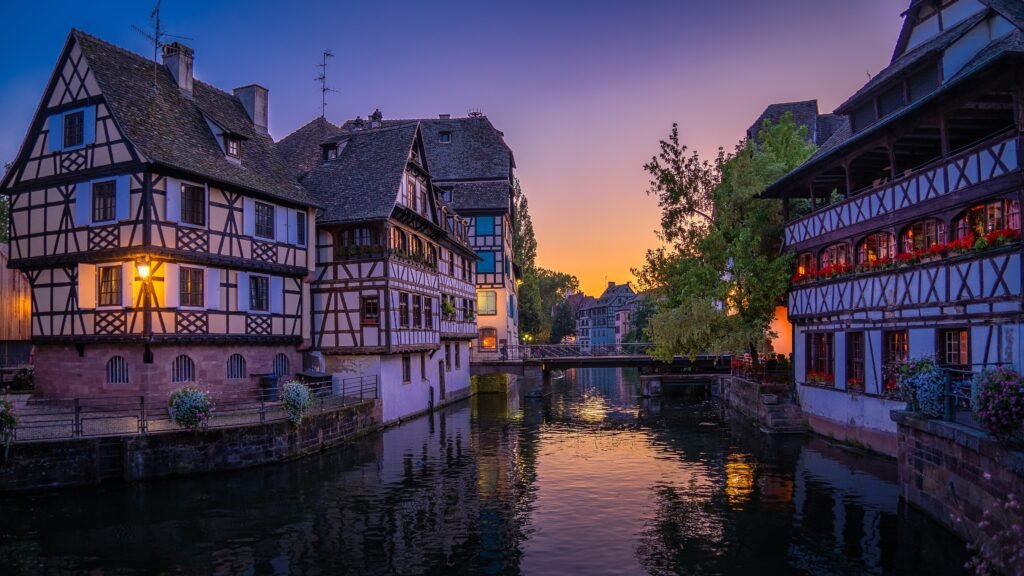
Strasbourg’s historic center works as an island of short walks, with the Ill and canals shaping a compact visitor map. Cathedral Square, Petite France, Kléber, Palais Rohan, and the covered bridges sit inside that tight network. Pedestrian streets dominate much of Grande Île, while bridges make the waterways feel connective rather than divisive. Neustadt begins just beyond the northern edge with broader avenues and equally gentle terrain. The pattern finally stretches around Orangerie and the European institutions, where walking remains practical but takes more time. That makes Strasbourg unusually easy to organize by foot without pretending every headline sight is adjacent.
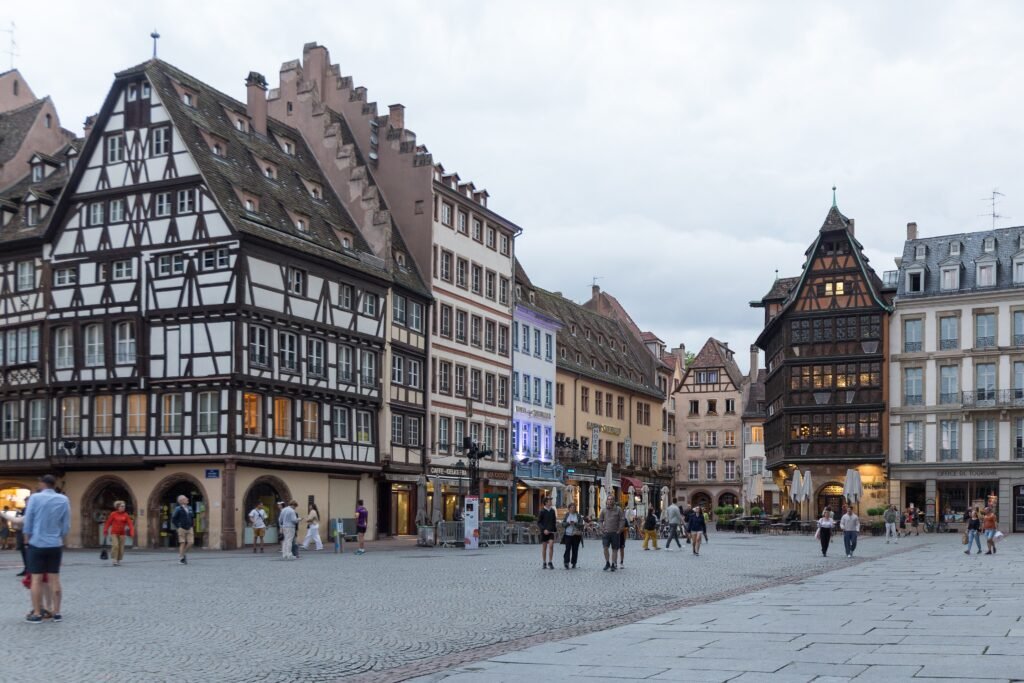
Why Strasbourg Works So Well on Foot
The strongest advantage is concentration. Grande Île is only 183 hectares within the UNESCO property, and many first-time sights sit inside it. The cathedral, Palais Rohan, Place Gutenberg, Place Kléber and Saint-Thomas all connect through short central walks. Petite France occupies the island’s southwest edge, so adding canals, Ponts Couverts and Barrage Vauban does not require a separate cross-city transfer.
Pedestrian conditions reinforce that geography. Strasbourg Tourism describes the Cathedral district as fully pedestrianized, while UNESCO records decades of tram-led public-space redesign and pedestrian streets. The Ill and its channels create frequent bridges rather than major barriers. Surfaces are not uniformly smooth, however, and the busiest historic lanes mix visitors, bicycles, deliveries and tram corridors at their edges.
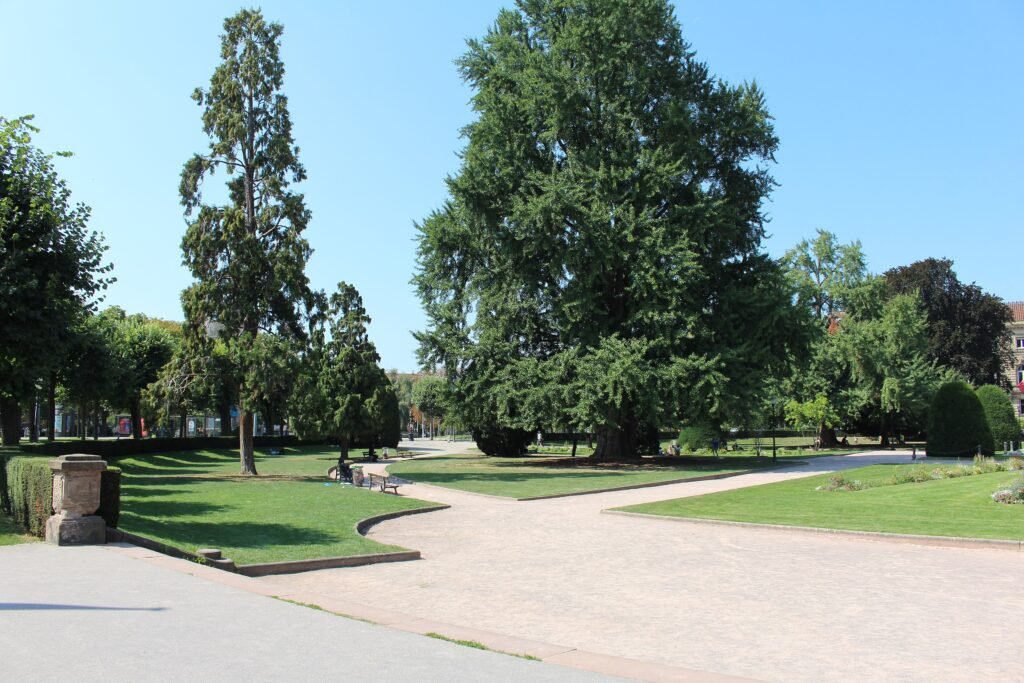
Neustadt is the important second layer. It was planned as a functional extension of the historic center, and the transition around Place de la République is easy to make on foot. The streets become broader and more regular, with monumental buildings replacing medieval lanes. Farther northeast, Orangerie and the European institutions remain walkable, but the mileage becomes meaningful enough for a tram return.
Best Areas to Stay for a Walking Weekend
Grande Île / Cathedral district: the strongest all-around base for a first visit. You are surrounded by the cathedral, central squares, restaurants, museums and the densest pedestrian streets. The tradeoff is visitor intensity, especially around the cathedral and major shopping routes.
Petite France / western Grande Île: best for canal scenery and quick access from the railway station. The district places Barrage Vauban, Ponts Couverts, Saint-Thomas and the rest of Grande Île within easy walking distance. Historic paving and narrow lanes can be less comfortable with wheeled luggage.
Place de la République / Neustadt: a quieter strategic base between the old city and the European Quarter. Grande Île remains a short walk south, while Day 2 sights begin almost outside the door. It is less atmospheric than staying beside the cathedral or canals, but its geography is efficient.
Gare Centrale: the practical arrival-first choice. The station sits just west of the core, with Petite France roughly a short walk away and multiple tram lines outside. It saves luggage friction without forcing a transit commute for every sightseeing day.
Useful Strasbourg Walking Times
The compact center produces short transfers: Gare Centrale to Barrage Vauban is about 10 minutes, while the station to Petite France is roughly 10–15 minutes. Petite France to the cathedral is about 10–15 minutes, depending on the exact lane and bridge. Cathedral Square to Place de la République is also roughly 10–15 minutes.
The European Quarter changes the scale. Place de la République to the European Parliament is roughly a 20–25 minute walk, while the cathedral to Parliament is about 30 minutes. These are still reasonable city walks, but they are long enough that Tram E can protect time and energy on a short weekend.
A 2-Day Strasbourg Walking Route
The two routes deliberately use different parts of Strasbourg. Day 1 stays inside the dense station–Petite France–Grande Île chain. On the second day, the route moves continuously through Neustadt toward Orangerie and the European Quarter, then uses transit for the return.
Day 1 — Station, Petite France and Grande Île
Walking route
Day 1 — Station, Petite France and Grande Île
- Strasbourg-Ville railway station
- Barrage Vauban
- Ponts Couverts
- Place Benjamin Zix
- Saint Thomas Church
- Place Kléber
- Place Gutenberg
- Strasbourg Cathedral
- Palais Rohan
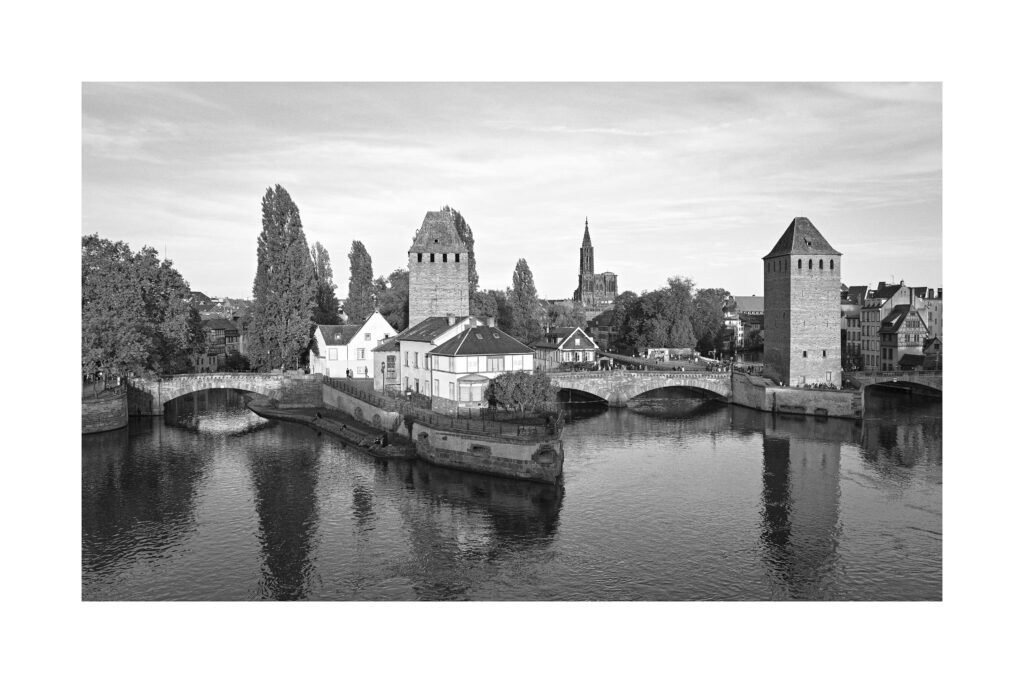
Start at Strasbourg-Ville station and walk southeast to Barrage Vauban before entering the Ponts Couverts and Petite France canals. Continue through Place Benjamin Zix and Saint-Thomas, then cross the island toward Place Kléber. From there, move through Place Gutenberg to the cathedral and finish at Palais Rohan. The route progresses eastward rather than circling back through Petite France, and most of the day’s headline sights fit naturally along that line.
Day 2 — Neustadt, Orangerie and the European Quarter
Walking route
Day 2 — Neustadt, Orangerie and the European Quarter
- Place de la République
- Palais du Rhin
- National and University Library
- Saint Paul Church
- Palais Universitaire
- Parc de l’Orangerie
- Palace of Europe — Council of Europe
- European Court of Human Rights
- European Parliament
Begin at Place de la République with the Palais du Rhin and National and University Library. Continue toward Saint-Paul and the university quarter, then follow the eastward line to Orangerie Park. The Palace of Europe, European Court of Human Rights and European Parliament form a natural final cluster. After the Parliament, take Tram E back toward République or central Strasbourg instead of repeating the same northeast mileage.
Using Strasbourg Trams Without Overusing Them
Strasbourg has a mature tram network, but the historic center rarely requires it for short sightseeing hops. CTS operates six tram lines, with the network designed to connect central Strasbourg, surrounding districts and nearby municipalities. Tram E is the most useful line for this guide’s European Quarter extension, serving Parlement Européen and connecting back toward the central network.
Published tram hours are strong for a weekend trip. Service runs from about 4:30 a.m. to 12:30 a.m. Monday through Saturday and 5:30 a.m. to 12:30 a.m. Sundays and holidays. CTS gives typical frequencies of about five to ten minutes from 6:30 a.m. to 8 p.m., then roughly 15 minutes outside those hours.
A standard single fare is €1.90 on Badgéo, the CTS app or a reloaded Contactless Ticket. It remains valid for one hour with transfers. The CTS app can turn a compatible smartphone into the travel card itself. Remember that tram validation happens on the platform before boarding.
Arriving in Strasbourg Without a Car
Strasbourg Airport is unusually simple for a city of this size. The airport’s rail stop is linked to the terminal by a covered pedestrian footbridge. TER trains reach Strasbourg station in about eight minutes, with up to five trains per hour. SNCF TER publishes 61 daily round trips, including roughly 20-minute daytime service and tighter peak intervals.
Rail arrival is even more straightforward because Strasbourg-Ville is already beside the visitor geography. Official tourism presents the station as the center of the regional TGV network, with direct high-speed links including Paris. Petite France and Barrage Vauban are close enough to reach on foot, while trams are available if luggage makes even a short walk inconvenient.
When a Car Actually Helps
A private car adds little to a normal Strasbourg weekend. The historic core prioritizes pedestrians, the station is central, airport rail is direct and trams cover the main outer visitor extension. Driving also introduces parking and access constraints around the very areas most visitors want to explore on foot.
A car becomes more useful when Strasbourg is only the starting point for a deliberately rural Alsace itinerary. The tourism office highlights the Alsace Wine Route, villages and wider regional excursions beyond the city. Rail can still handle larger destinations such as Colmar, but a car or organized excursion is more flexible for combining several small villages in one day.
Limitations and Practical Walking Tips
The main limitation is not distance inside Grande Île; it is surface and shared-space friction. Cobbles and older paving can slow wheeled luggage or mobility aids. Tram tracks require attention near crossings, and Strasbourg’s strong cycling culture means pedestrians should expect regular bicycle interaction even on otherwise calm streets.
Water is usually an asset, but canals still dictate where you can cross. Petite France can therefore produce small detours even when two points look close on a map. The medieval street pattern also creates occasional wrong turns. The cathedral spire and river edges provide useful orientation when the lane network becomes less obvious.
The European Quarter is the one major visitor cluster that can make a walking-only day unnecessarily long. Walking there through Neustadt and Orangerie is worthwhile once. Using Tram E for the return prevents low-value repetition and keeps the weekend centered on interesting streets rather than mileage.
Seasonal Walking Note
Strasbourg supports a walking-focused visit throughout the year, but seasonal conditions change the pace. Summer heat can make exposed squares and the European Quarter extension more tiring. Rain makes cobbles and older paving less comfortable, while winter cold and holiday crowds can slow the same central routes.
Bottom Line
A first-time Strasbourg weekend can be organized around two walking zones without sacrificing the major sights. Grande Île, Petite France and the cathedral area form the compact core; Neustadt extends it naturally. Walk the European Quarter once, use the tram for the return, and keep a car for regional countryside plans rather than the city itself.