
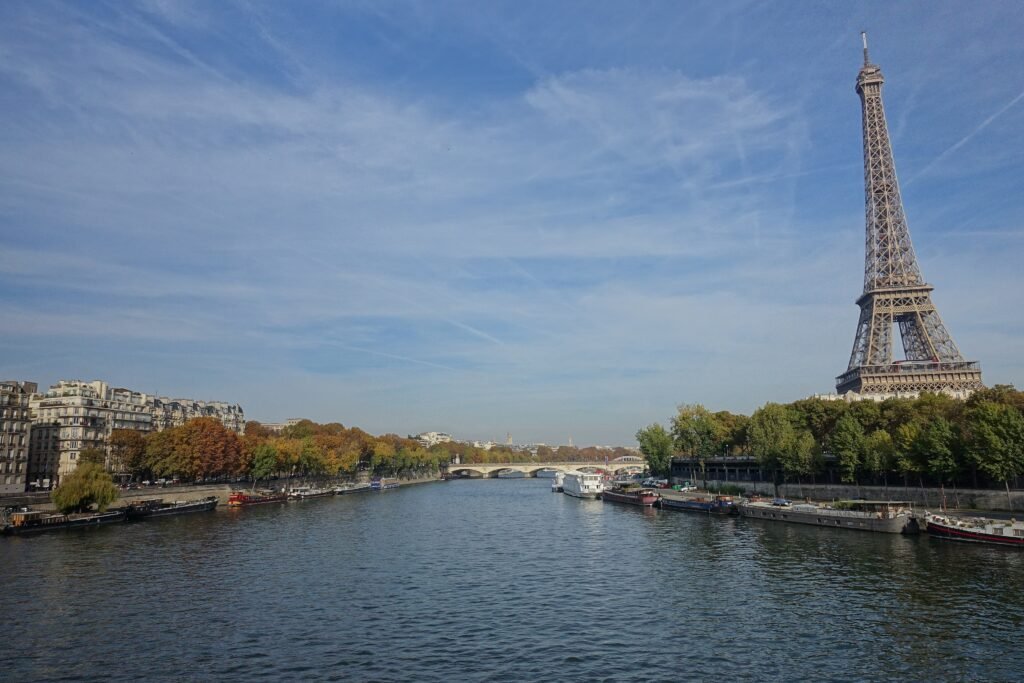
Central Paris unfolds around the Seine, where major visitor districts sit close together and bridges keep both banks connected. The Louvre, Marais, Saint-Germain and Latin Quarter form an unusually dense major-city visitor network. Historic streets often favor exploration, although irregular layouts and broad junctions can slow otherwise short walks. Montmartre breaks the pattern with steeper grades, steps and cobbles beyond the flatter river-centered core. The city’s scale still matters at the edges, especially between Montmartre and western landmarks. That contrast makes Paris best understood as a compact central walking network with several farther clusters.
Why Paris Works So Well on Foot
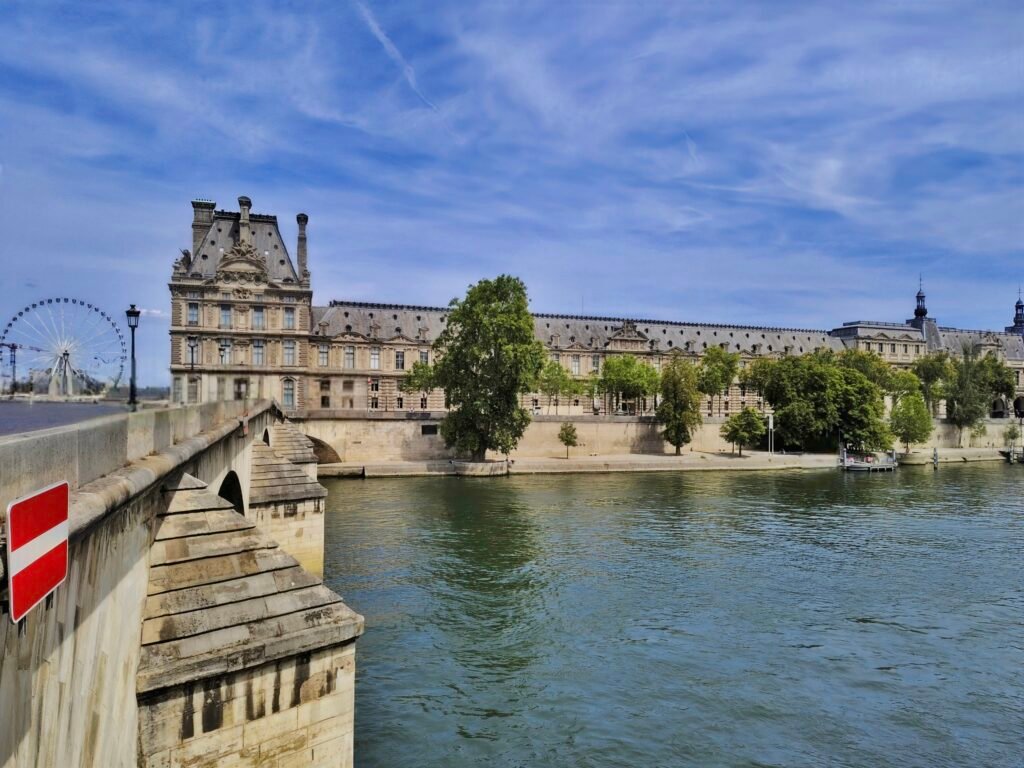
Paris’s strongest advantage is the concentration of visitor destinations around the Seine. The Louvre and Tuileries sit opposite the Musée d’Orsay; Notre-Dame and the central islands connect the Marais with the Latin Quarter and Saint-Germain; and the riverbanks themselves provide long pedestrian sections. Frequent bridges mean the Seine is more often an orientation tool than a barrier.
The same density continues away from the river. Paris je t’aime describes the 1st arrondissement as the city’s central core and specifically notes that major places there are within walking distance for a short first stay. The Marais, Latin Quarter and Saint-Germain add compact historic neighborhoods with restaurants, cafés, shops and cultural stops embedded directly into the street network.
Those drawbacks are real but limited. Older districts can be irregular rather than grid-like, large boulevards and junctions require more deliberate crossings, and Montmartre creates a genuine hill-and-stairs penalty. Those constraints make some walks less effortless without changing the broader conclusion: for central sightseeing, walking is normally the default rather than a special activity.
Where to Stay for the Most Walkable Paris Weekend
1st Arrondissement / Louvre-Les Halles: Best for Maximum Efficiency
For a first visit focused mainly on how much sightseeing can be linked on foot, the 1st arrondissement is the strongest base. The Louvre, Tuileries, Seine, Palais-Royal and Les Halles are close, while the Marais and central islands are easy extensions. Châtelet-Les Halles also gives you unusually strong Metro and RER backup when the next destination is not worth a long walk.
Le Marais: Best for Neighborhood Walking and Evenings
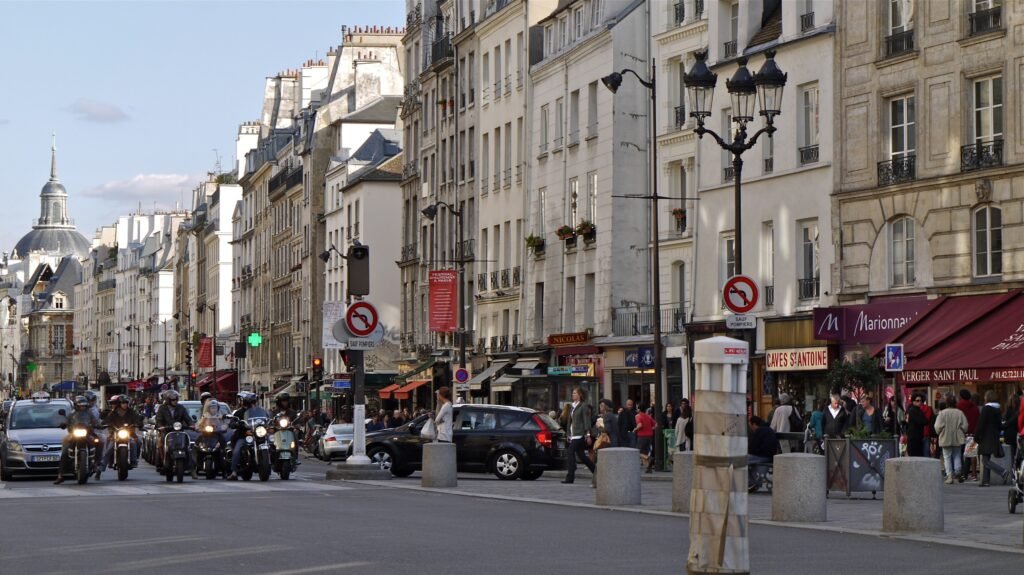
Le Marais is the better choice if you want the hotel area itself to feel like part of the sightseeing day. Place des Vosges, historic streets, restaurants and shops create strong local walking, and Notre-Dame, the Seine and central Paris remain close. The trade-off is that narrow streets, historic paving and heavy weekend foot traffic can slow movement.
Saint-Germain and the Latin Quarter: Best Left Bank Bases
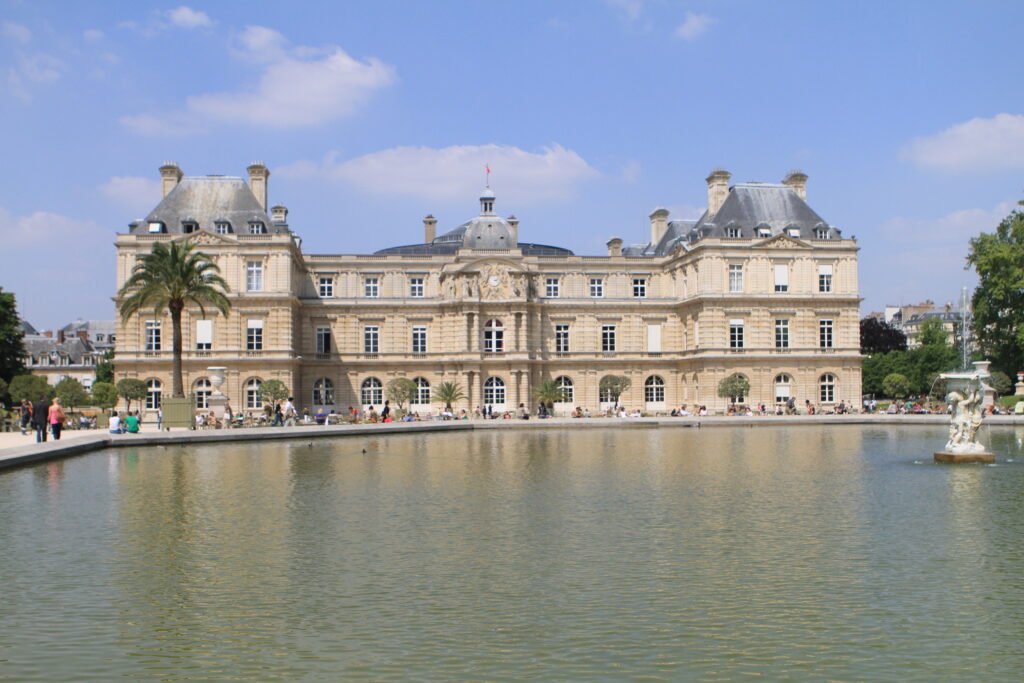
Saint-Germain-des-Prés gives you direct walking access to the Seine, Musée d’Orsay, Luxembourg Gardens and the Latin Quarter. The Latin Quarter is similarly central for Notre-Dame, the Panthéon and historic Left Bank streets. Either works well if your first two days lean toward museums, architecture and long neighborhood walks rather than nightlife farther north.
Opéra / 9th Arrondissement: Best for Transport Flexibility
The Opéra and Grands Boulevards area is a practical compromise for travelers who value hotel choice, transport and access toward the main rail-station corridors. It is still central, but it places you a little farther from the most continuous Seine-Left Bank walking network than the 1st, Marais or Saint-Germain.
Representative Walking Times
At a normal city pace, plan on roughly 15–20 minutes from the Louvre to the Musée d’Orsay, 20–25 minutes from the Louvre to Notre-Dame, about 15 minutes from Saint-Germain-des-Prés to Luxembourg Gardens and around 20 minutes from Notre-Dame to Place des Vosges. The Louvre to the Eiffel Tower is closer to 45–50 minutes, which is where transit begins to save meaningful weekend time. On Day 2, Sacré-Cœur to Pigalle is roughly 20 minutes downhill, while Pigalle to the Arc de Triomphe is roughly 45–50 minutes on foot—a low-value stretch that Metro line 2 replaces directly. These are practical planning estimates rather than guaranteed walking times.
A 2-Day Paris Route Built Around Walking
These two days deliberately avoid a checklist that zigzags across the whole city. Day 1 stays inside the strongest continuous central pedestrian network. On the second day, one Metro transfer connects Montmartre with the western landmarks, preserving Paris’s most valuable walking sections.
Day 1: Louvre, Left Bank, Île de la Cité and the Marais
Walking route
Louvre, Left Bank, Île de la Cité and the Marais
- Louvre Museum
- Jardin des Tuileries
- Musée d'Orsay
- Église de Saint-Germain-des-Prés
- Jardin du Luxembourg
- Panthéon
- Cathédrale Notre-Dame de Paris
- Place des Vosges
Start at the Louvre, then walk through the Tuileries before crossing the Seine to the Musée d’Orsay. From there, continue through Saint-Germain-des-Prés to the Jardin du Luxembourg and the Panthéon. This keeps the first half of the day on the Left Bank instead of repeatedly crossing the river.
Turn back toward the Seine for Notre-Dame, then cross into the Right Bank and finish at Place des Vosges in the Marais. The outdoor route is roughly 7.5–8.5 km before museum interiors and optional detours. If you plan a long Louvre or Orsay visit, shorten the later section rather than turning the day into a step-count exercise.
Day 2: Montmartre, Arc de Triomphe, Trocadéro and the Seine
Walking route
Montmartre, Arc de Triomphe, Trocadéro and the Seine
- Basilique du Sacré-Cœur de Montmartre
- Place du Tertre
- Place des Abbesses
- Pigalle Metro Station
- Arc de Triomphe
- Place du Trocadéro et du 11 Novembre
- Eiffel Tower
- Hôtel des Invalides
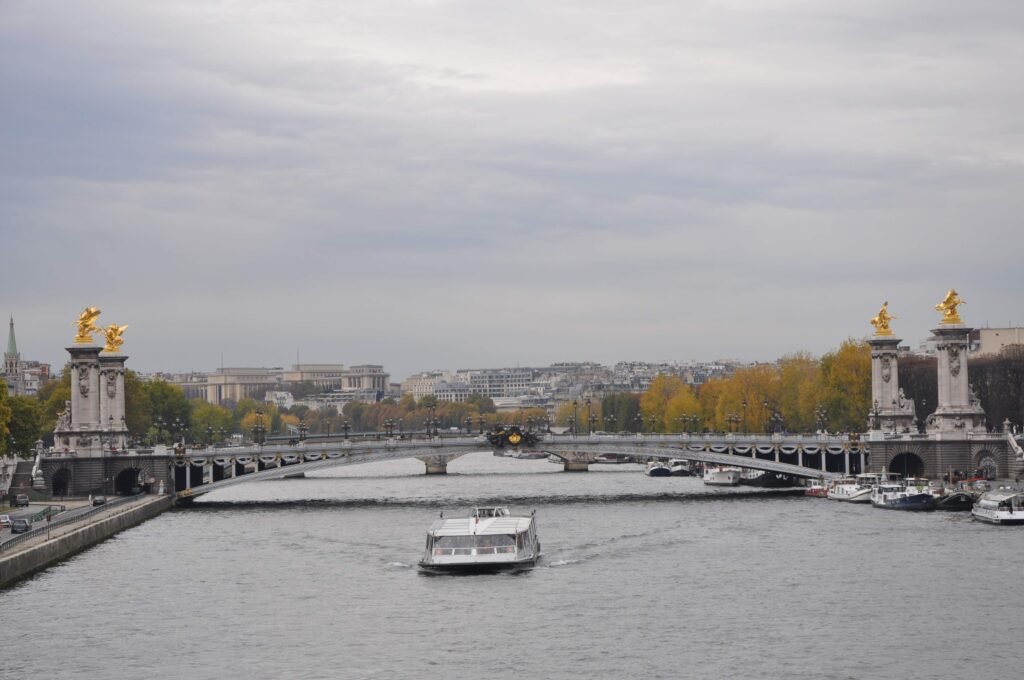
- Pont Alexandre III
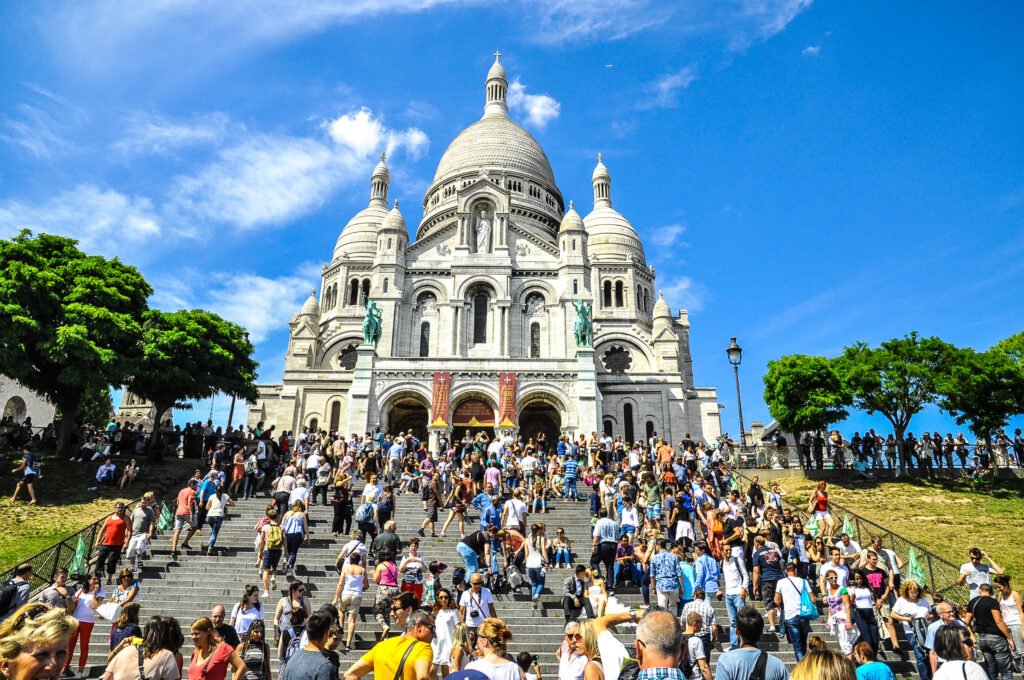
Begin at Sacré-Cœur so the Montmartre portion trends downhill. Walk through Place du Tertre and Abbesses to Pigalle. If the climb to Sacré-Cœur is difficult, use the funicular rather than spending your energy on the steepest approach.
At Pigalle, take Metro line 2 directly to Charles de Gaulle-Étoile. This is the strategic transfer of the weekend: it removes a long cross-city walk while depositing you at the Arc de Triomphe. From there, walk to Trocadéro, cross toward the Eiffel Tower, continue to Invalides and finish at Pont Alexandre III. The second day’s outdoor walking is roughly 5.5–6.5 km, plus the Metro transfer.
Getting Around Paris Without a Car
Paris works best when transit acts as a walking extender rather than replacing the street experience. The Metro and RER cover every major visitor cluster in this guide. Normal Metro service begins around early morning and runs past 1 a.m., with later service on Friday and Saturday nights; night buses extend coverage beyond the rail operating span.
For 2026, a standard Metro-Train-RER ticket costs €2.55 outside airport trips, while Bus-Tram is a separate €2.05 ticket. Tickets can be bought and validated by smartphone or loaded onto Navigo Easy. That makes occasional transit simple enough that there is little reason to force a 45-minute walk merely to avoid buying one ride.
The strongest visitor pattern is therefore simple: walk the Louvre-Seine-Marais-Left Bank network intensively, then use Metro or RER for Montmartre, the western monuments or any cross-city reset that would consume a large fraction of the day.
Arriving in Paris Without a Car
By Air
Charles de Gaulle Airport has a direct RER B connection into central Paris. Current official guidance shows frequent service across a long operating day, and trains serve central stations including Gare du Nord and Châtelet-Les Halles. The connection is direct, but CDG is far enough from central Paris that terminal circulation, luggage and a roughly 35–50 minute rail journey still make arrival more time-consuming than from Orly.
Paris-Orly Airport is easier. Metro line 14 runs directly into central Paris, and RATP gives about 25 minutes to Châtelet-les-Halles. Airport trips use the dedicated Paris Region-Airports fare rather than the normal €2.55 Metro ticket.
By Intercity or International Train
Rail arrival is a major Paris advantage. Gare du Nord handles important international and northern routes while connecting directly to multiple Metro and RER lines. Gare de Lyon, Gare de l’Est and Montparnasse similarly deliver intercity passengers into the city rather than to an outlying terminal. For many European and French visitors, the practical arrival experience is therefore station-to-hotel rather than airport-to-city.
Where Paris Is Less Effortless on Foot
Paris’s main walking limitation is scale at the edges of the visitor map. The central river districts connect beautifully, but the Eiffel Tower, Arc de Triomphe and Montmartre stretch the footprint far enough that trying to join every famous sight on foot becomes inefficient. Montmartre also adds the most obvious terrain penalty through steep grades, steps and cobbled streets.
Accessibility deserves a separate practical note. The historic Metro network is not uniformly step-free. RATP identifies line 14 as fully wheelchair accessible, while many older stations involve stairs, escalators or long interchange corridors. Paris buses and trams can be better alternatives for some travelers. This affects comfort and transit use for particular mobility needs without changing the core conclusion that a private car is unnecessary.
When a Car Becomes Useful
For a typical short city break, a private car adds little. Central Paris is better handled by walking and transit, and even major rail-served excursions do not automatically require driving. A car becomes useful mainly when Paris is the starting point for a wider rural or multi-stop regional itinerary where the destinations themselves are poorly served by rail, or when unusual luggage or mobility requirements make door-to-door transport more important than city-center efficiency.
Practical Walking Tips
Group sights by river bank and neighborhood before you start the day. Use the Seine, major monuments and Metro station names as orientation anchors, but check the correct station exit at large complexes such as Châtelet-Les Halles. Around the Arc de Triomphe, follow the designated pedestrian access instead of treating the roundabout as a normal crossing. Comfortable shoes matter because several historic districts mix pavement with cobbles, and museum days add substantial indoor walking that route maps do not show.
Seasonal Walking Note
Paris remains practical to explore on foot year-round, but comfort changes with the season. Hot summer afternoons can make exposed riverbanks and large plazas more tiring, while winter rain, cold and shorter daylight can make the same distances feel longer. Spring and fall often support the longest walking days.
Bottom Line
Paris is outstanding for a walking-first weekend without a private car. Its best visitor districts connect closely enough to support full sightseeing days on foot, the Seine is crossed frequently rather than acting as a barrier, and the Metro removes the long transfers that would otherwise waste a short trip. Stay centrally, walk aggressively inside each cluster, use rail for Montmartre and the longest cross-city resets, and a first 2–3 day visit works exceptionally well without driving.