
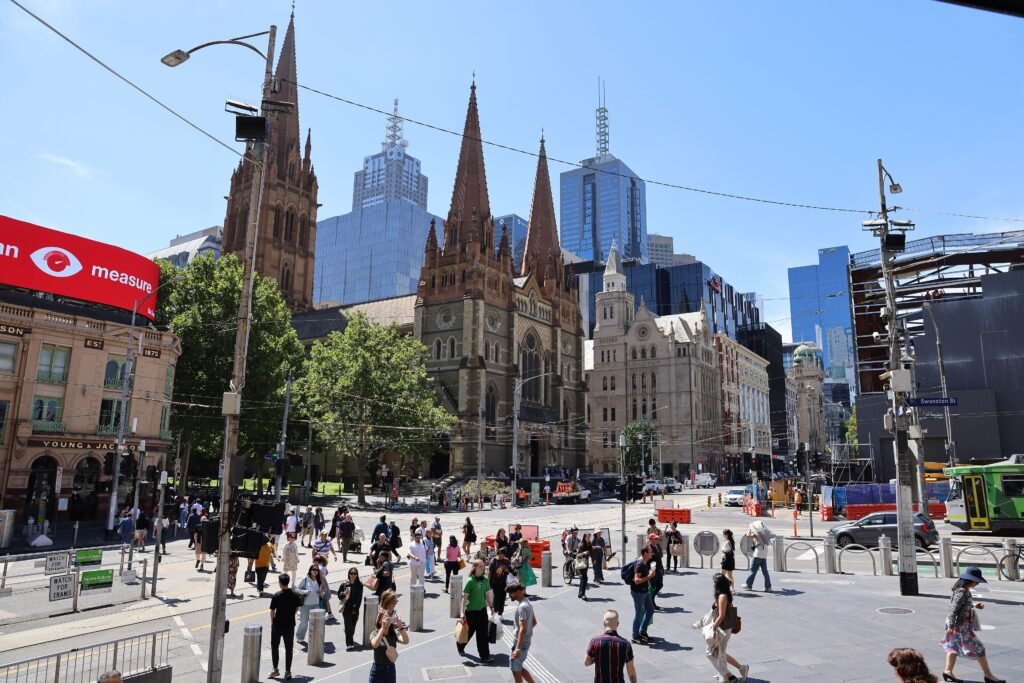
Arriving without a car feels surprisingly natural in Australia’s strongest city destinations, but the walking patterns differ immediately. Adelaide keeps major sights inside a level, legible grid where transit often feels optional. Melbourne spreads farther, then uses trams and trains to connect extensions without making them walkable neighbors. Sydney asks for more hills, stairs and harbor detours, yet its transport network removes most car dependence. Perth makes its sprawling metropolitan reputation largely irrelevant inside the CBD. Brisbane rewards a walk-plus-transit strategy across both riverbanks. Hobart concentrates sightseeing tightly around its waterfront, even though its wider transport network is shallower.
The Ranking: 6 Most Walkable Cities in Australia
| Rank | City | Score | Strongest advantage | Main limitation |
|---|---|---|---|---|
| 1 | Melbourne | 92/100 | Strong central walking with exceptionally deep public transport | Carlton, Fitzroy and Docklands extend the visitor footprint beyond the tight CBD core |
| 2 | Adelaide | 91/100 | Flat, direct CBD grid with exceptional walking continuity | Glenelg and other outer destinations sit beyond the central walking core |
| 3 | Sydney | 90/100 | Exceptional public transport with straightforward airport rail | Hills, stairs and harbor geography spread major visitor clusters |
| 4 | Perth | 87/100 | Compact central sequence with free transit backup and airport rail | Kings Park adds real elevation and major outer destinations remain separate |
| 5 | Brisbane | 85/100 | River bridges and very strong transit connect both banks | Visitor districts become more dispersed beyond the central river core |
| 6 | Hobart | 81/100 | Compact Salamanca–waterfront–CBD sightseeing core | Shallower transit and local gradients reduce wider car-free coverage |
Only eleven points separate first from sixth, and every city supports a credible weekend without a private car. The differences come from how much walking fits naturally together and how effectively transit handles the remaining gaps. Melbourne wins the overall balance. Adelaide comes closest through simpler walking, while Sydney trades compactness for exceptional transport reach.
1. Melbourne — The Strongest All-Round Car-Free City
Melbourne’s complete car-free city guide shows why it leads this comparison at 92/100. Federation Square, central laneways, Bourke Street Mall, Queen Victoria Market, Southbank and the arts precinct form a strong visitor network. Carlton, Fitzroy and Docklands extend that geography, so Melbourne does not win because every major stop sits together.
Its decisive advantage is transit depth. Trams, trains and the operational Metro Tunnel make longer hops easy without turning separate districts into pedestrian neighbors. The Free Tram Zone is useful central backup, but it remains transit rather than proof of compactness. For travelers wanting city variety, strong central walking and minimal car dependence, Melbourne offers the most complete balance.
2. Adelaide — The Strongest Pure Walking Environment
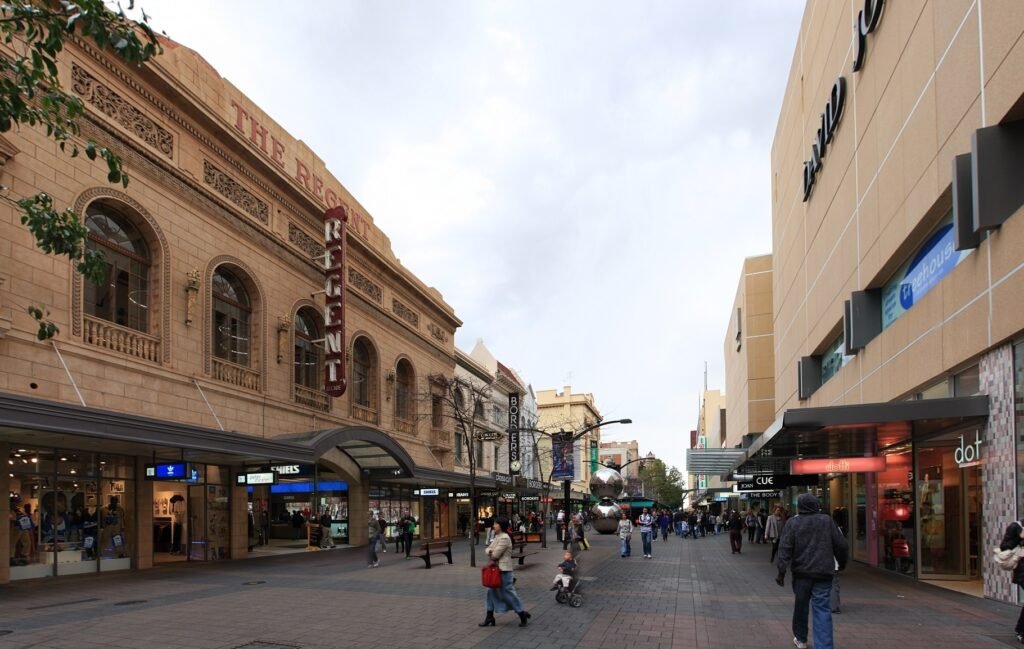
Adelaide’s walking guide finishes only one point behind at 91/100, yet the city feels noticeably simpler on foot. Central Market, Victoria Square, Rundle Mall, East End, North Terrace, the cultural institutions and riverbank form a clear, mostly level central sequence.
The CBD is generally level, direct and easy to understand. Free central trams and buses provide backup, but Adelaide rarely needs transit to make the central weekend work. That creates the clearest contrast with Melbourne: Adelaide is flatter and more naturally compact, while Melbourne offers deeper transport and broader reach. Glenelg remains a separate outing, and wine-region access does not change the city comparison.
3. Sydney — Exceptional Transport, More Demanding Geography
Sydney’s harbor and CBD walking guide ranks third at 90/100. Circular Quay, the Opera House, The Rocks, Barangaroo, the CBD, Darling Harbour, Chinatown and Central create a substantial visitor chain. It is a powerful car-free network, but not the simplest walking geography in the country.
Sydney combines exceptional public transport with direct airport rail, yet hills and harbor geography still matter. The Rocks adds stairs and steep streets, while the CBD itself has meaningful elevation. Water and shoreline shape create indirect routes that a flat street map can understate. Bondi, Manly and Taronga Zoo remain genuine outer destinations, with ferries counted as transit rather than pedestrian connections. Choose Sydney for the largest mix of headline attractions supported by exceptional transport, not for the tightest all-walking weekend.
4. Perth — Compact CBD, Easy Transit Backup
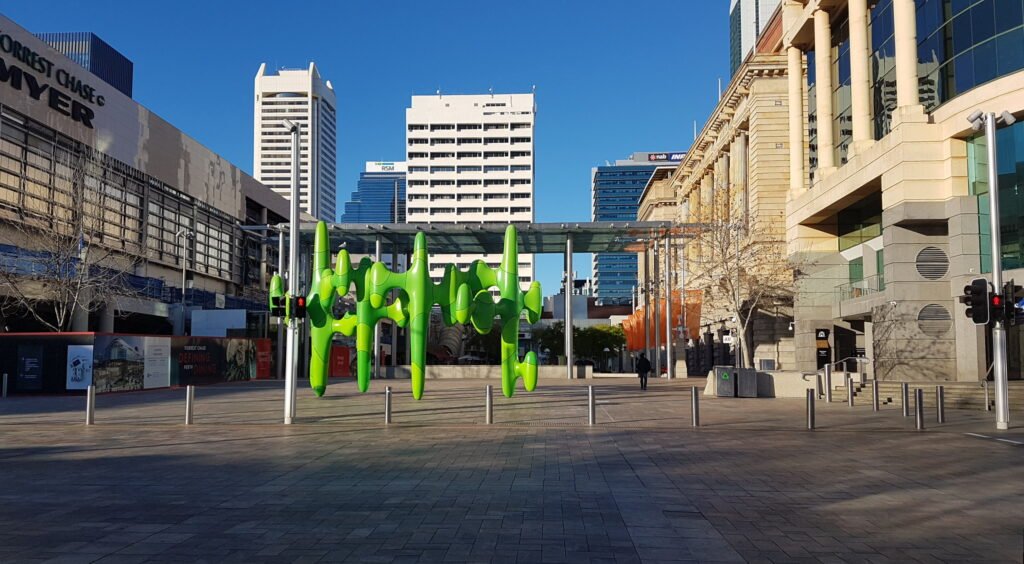
Perth’s CBD walking guide places the city fourth at 87/100. Elizabeth Quay, the CBD malls, Forrest Place, the Cultural Centre and Northbridge make a straightforward central sequence. That visitor core is much easier on foot than Perth’s sprawling metropolitan reputation might suggest.
Free CAT buses and the Free Transit Zone strengthen practical movement without making distant areas geographically closer. The major physical exception is Kings Park, where Mount Eliza introduces a real climb above the center. Airport rail also gives Perth one of the easiest car-free arrivals in this group. Fremantle, the beaches, Rottnest Island and the Swan Valley remain separate trips rather than extensions of CBD walkability.
5. Brisbane — Strong River Connections, More Dispersed Weekend
Brisbane’s river-focused guide ranks fifth at 85/100. Queen Street Mall, South Bank, the Cultural Centre and City Botanic Gardens form the strongest central visitor network. Multiple pedestrian bridges materially improve connections across the Brisbane River and make a two-bank walking day practical.
The footprint expands once Fortitude Valley, Howard Smith Wharves, New Farm and parts of Kangaroo Point enter the plan. That spread makes Brisbane less compact than the cities above it, but transit remains a major strength through Brisbane Metro, buses, rail and ferries. Ferries help reposition between districts but remain transit, not walking connections. Brisbane works best when travelers combine long river walks with selective transit rather than forcing every district into one route.
6. Hobart — Compact Center, Shallower Transit
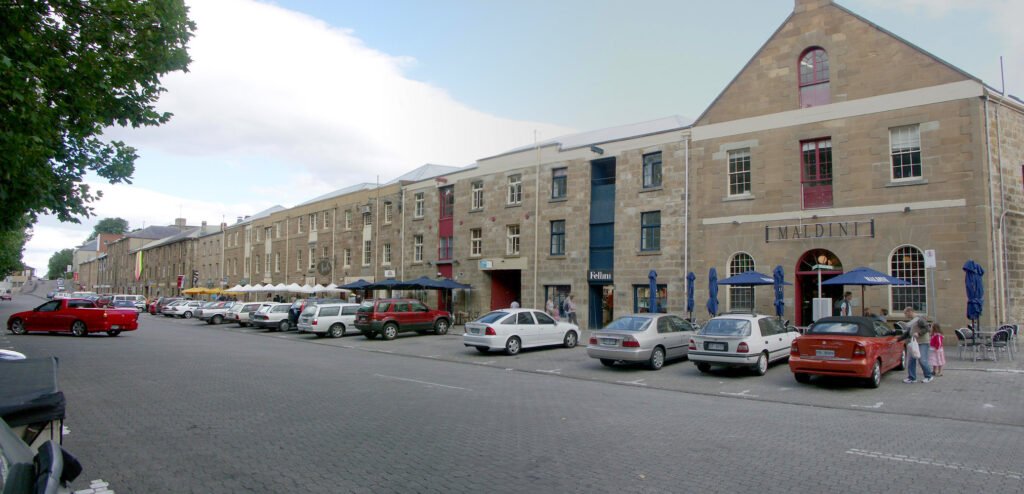
Hobart’s compact-city guide ranks sixth at 81/100, but its central walking experience remains strong. Salamanca, Battery Point, the waterfront, Constitution Dock, TMAG and the CBD form a genuinely compact sightseeing area. That core is as concentrated as several higher-ranked cities despite Hobart’s lower overall position.
The lower overall result comes from Battery Point gradients, shallower transit and weaker weekend frequency beyond the center. North Hobart and the Botanical Gardens extend the practical visitor footprint. MONA is geographically separate and belongs to a ferry or bus trip rather than the central walking network. Hobart therefore finishes sixth because its complete car-free system is thinner, not because Salamanca and the waterfront are difficult to explore on foot.
Best Australian City by Traveler Priority
| Traveler priority | Best fit | Why |
|---|---|---|
| Best overall car-free weekend | Melbourne | The strongest balance of central walking, city variety and transit depth. |
| Best for walking almost everywhere | Adelaide | Its flat CBD grid keeps the largest share of first-time sightseeing inside one continuous walking network. |
| Best public transport | Melbourne and Sydney | Both have exceptionally deep networks, although they solve different kinds of geographic spread. |
| Best big-city weekend | Sydney | Major landmarks span a large visitor footprint, but exceptional transport keeps the trip practical without a car. |
| Best flat walking | Adelaide | Its level CBD and direct street grid make long central walking days unusually straightforward. |
| Best compact waterfront core | Hobart | Salamanca, the docks, TMAG and the CBD sit unusually close together. |
| Best airport arrival | Sydney and Perth | Both provide direct airport rail into their central transport networks. |
| Best for travelers who dislike relying on transit | Adelaide | Most central sightseeing works naturally on foot, with free transit mainly serving as backup. |
| Best walk-plus-transit balance | Melbourne | Walking covers the core while an exceptionally useful network handles extensions efficiently. |
Compactness Versus Transport Depth
Australia’s top two show why compactness and car-free convenience are related but not identical. Adelaide keeps more of the weekend inside a simple pedestrian grid, so a visitor can often ignore transit until tired. Melbourne spreads into Carlton, Fitzroy and Docklands, then compensates with a much deeper transport network. Hobart goes further toward compactness inside its waterfront core, but its weaker network becomes more noticeable when the itinerary expands.
Sydney and Brisbane demonstrate the opposite pattern. Both cover more territory, yet transit prevents that geographic spread from becoming car dependence. Perth sits between the two models: its CBD is compact enough for long walks, while free central services make small repositioning easy. Strong transport can save time and energy, but it never turns separated visitor areas into walkable neighbors.
Terrain Changes Otherwise Short Distances
Adelaide is the easiest city here for terrain, and Melbourne stays gentle across most central visitor routes. Sydney feels different because The Rocks and parts of the CBD add meaningful hills, stairs and level changes. Perth is mostly easy until Kings Park rises above the center. Brisbane’s central riverfront is manageable, but localized climbs appear around Kangaroo Point and several inner neighborhoods. Hobart changes fastest: Battery Point begins climbing almost immediately behind Salamanca.
Those terrain differences should not be confused with distance. A short Hobart or Sydney walk can demand more effort than a longer Adelaide route. Conversely, a flat route can still be inefficient when attractions sit far apart. Planning around both geography and grade produces a more realistic weekend than judging either factor alone.
When Public Transport Changes the Weekend
Transit plays a different role in every city. Melbourne and Sydney use it as a defining strength because major visitor extensions would otherwise consume large parts of the weekend. Brisbane also benefits substantially once the plan moves beyond the central river bridges. Perth’s free central services are useful backup, while airport rail makes arrival especially easy. Adelaide needs transit less inside the CBD, and Hobart offers a shallower safety net once the core is left behind.
Airport access reinforces those differences without deciding the ranking by itself. Sydney and Perth offer the simplest arrivals through direct airport rail. Melbourne, Adelaide, Brisbane and Hobart also work well without a car, but their airport connections involve slightly more time or road-based travel. Airport convenience matters most at the beginning and end of the trip rather than changing how compact the city feels after check-in.
Which Australian City Should You Choose?
- Melbourne: choose it for the strongest overall balance of walking, city variety and public transport.
- Adelaide: choose it for a compact, flat and unusually simple weekend where transit often stays optional.
- Sydney: choose it for a landmark-heavy big-city trip where exceptional transport compensates for hills and spread.
- Perth: choose it for an easy central core with free transit backup and a straightforward airport rail arrival.
- Brisbane: choose it for a river-focused trip that works best by combining substantial walks with selective transit.
- Hobart: choose it for a small-scale waterfront weekend needing little transport inside the center.
Bottom Line
Melbourne wins this Australian comparison because it combines strong central walking with the deepest practical transit support. Adelaide may still feel easier to travelers who prioritize simple, flat walking and want to minimize transit use. Sydney takes the opposite route, pairing more demanding geography with exceptional transport and arrival.
Perth and Brisbane remain strong car-free choices, but their limits differ: Kings Park challenges Perth, while Brisbane spreads across more districts. Hobart’s sixth place reflects network depth more than any weakness in its compact Salamanca-to-waterfront core. Across all six cities, the most useful question is not whether transit exists, but how much of the weekend naturally connects on foot before transit becomes valuable.