
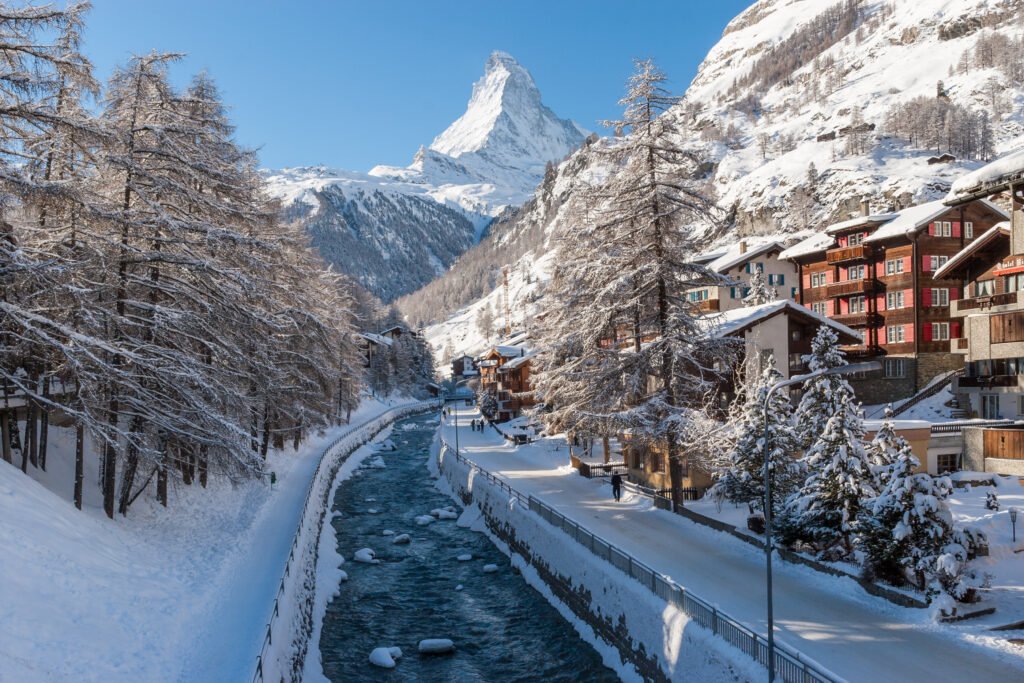
Zermatt compresses everyday visitor life onto a narrow valley floor, while its famous experiences climb far beyond the village. Bahnhofplatz feeds directly into Bahnhofstrasse, with Kirchplatz, the museum, Hinterdorf, and the river all reached quickly on foot. That compact core feels pedestrian-first, but authorized electric taxis, hotel shuttles, buses, and service vehicles still share several streets. The surrounding mountains can mislead map reading because the center itself has only moderate elevation changes. Outer lodging areas and lift bases introduce steeper approaches, longer walks, and more dependence on e-buses. The result is a village that walks efficiently without pretending its entire resort geography is compact.
Why Zermatt Works Well on Foot
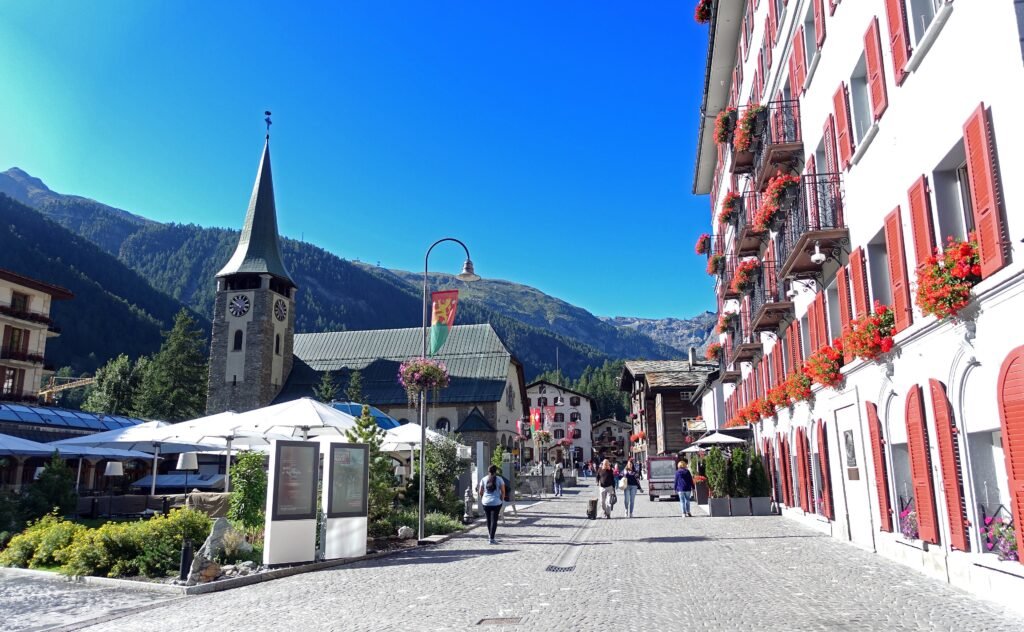
The clearest evidence is Zermatt Tourism’s own village circuit. It covers about 1.8 kilometers and links Bahnhofplatz, Hinterdorf, Kirchplatz and the river with only 47 meters of ascent. Bahnhofstrasse supplies the main orientation spine, placing restaurants, cafés, shops and visitor services between the station and historic center. This makes most everyday sightseeing faster on foot than by local transport.
The resort’s traffic rules improve that experience without making the streets literally vehicle-free. Authorized electric taxis, hotel shuttles, e-buses and service vehicles still circulate on permitted routes. Bahnhofplatz can therefore feel busy even though conventional private-car traffic is heavily restricted.
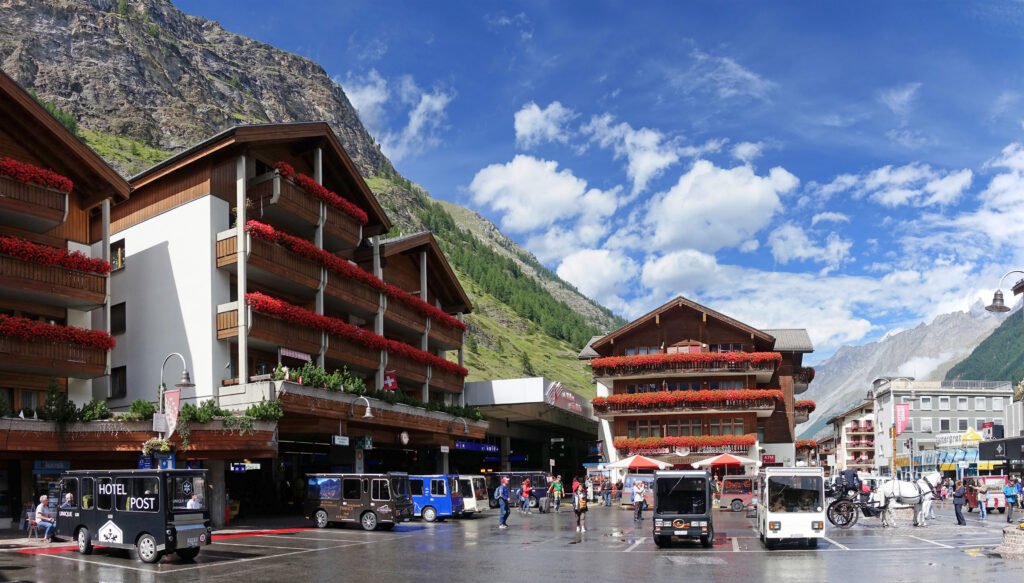
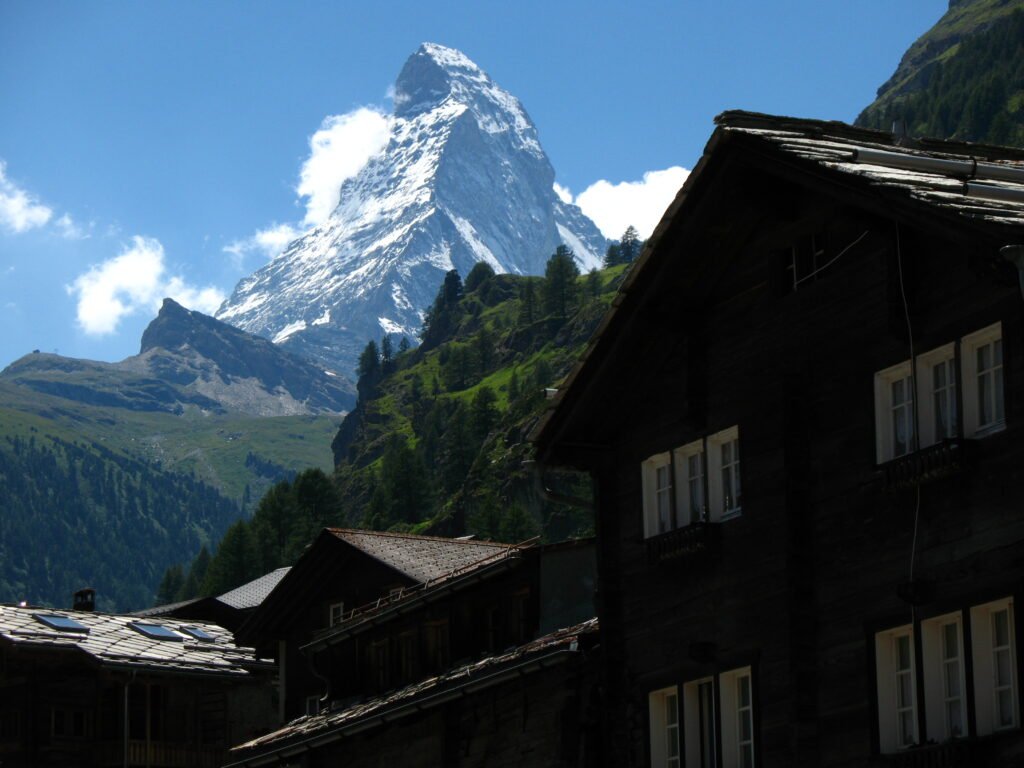
The important boundary comes at the village edge. Gornergrat, Sunnegga and Matterhorn Glacier Paradise are major reasons to visit Zermatt, but they are mountain extensions. Their railways, funiculars and gondolas make those places easy to reach without proving that Zermatt’s urban attractions sit closer together.
Best Areas to Stay for Walking
Bahnhofplatz and central Bahnhofstrasse: This is the easiest first-time base. Hotel Pollux, for example, is about 200 meters from the station, while the museum, Kirchplatz and everyday amenities remain close.
Getwing and the Sunnegga side: This area keeps the village center within a short walk while improving access to the Sunnegga funicular. Hotel National is about five minutes from the railway station and sits opposite the Sunnegga valley station.
Winkelmatten and Schluhmattstrasse: These southern areas suit visitors prioritizing the Matterhorn Glacier Paradise base. Repeated walks to Bahnhofstrasse are longer and can involve more grade, so the free e-bus becomes more valuable.
Useful Walking Times in Zermatt
Station to central Bahnhofstrasse: about 2 minutes to Hotel Pollux.
From Bahnhofplatz to the Sunnegga valley station: about 10 minutes.
Kirchplatz and Matterhorn Museum from the station: about 8–10 minutes.
Kirchplatz to Hinterdorf: about 2–4 minutes.
Central Bahnhofstrasse to the Matterhorn Glacier Paradise valley-station area: about 12 minutes. These are practical planning estimates rather than guaranteed walking times.
A 2-Day Walking Route
These two days keep Zermatt’s village experience separate from its alpine transport network. Day 1 stays inside the historic core and river loop. Day 2 walks from the station past Sunnegga’s lower station toward Winkelmatten and the southern lift base, with one optional mountain extension.
Day 1: Bahnhofstrasse, Hinterdorf and the Matter Vispa
Walking route
Day 1 — Bahnhofstrasse, Hinterdorf and the Matter Vispa
- Zermatt Railway Station
- Bahnhofstrasse / Hotel Pollux
- Matterhorn Museum - Zermatlantis
- Kirchplatz
- Hinterdorf
- Kirchbrücke
- Brücke zum Steg
- Obere Matten
- Zermatt Tourism at Bahnhofplatz
Start at the railway station and follow Bahnhofstrasse south to the Matterhorn Museum at Kirchplatz. Step into Hinterdorf’s narrow historic lanes, then angle east to Kirchbrücke and the Matter Vispa. Follow the river north to Brücke zum Steg, cross once, and return through Obere Matten toward Bahnhofplatz. The route is intentionally short, leaving time for the museum, shops and old-village details instead of inventing mileage.
Day 2: Sunnegga Base, Riverside Streets and Winkelmatten
Walking route
Day 2 — Sunnegga Base, Riverside Streets and Winkelmatten
- Zermatt Railway Station
- Sunnegga-Rothorn Valley Station
- Vispa e-bus stop / river corridor
- Winkelmatten Chapel
- Matterhorn Glacier Paradise Valley Station
Walk from the station to the Sunnegga-Rothorn valley station, which Zermatt Tourism places about ten minutes away. If conditions and operating dates suit your plans, the funicular can provide one optional mountain extension before you return to the same lower station. Continue south through the Matter Vispa corridor toward Winkelmatten Chapel, then finish at the Matterhorn Glacier Paradise valley station. The gondola journey beyond that point is an alpine excursion, not part of the city walking route.
When Transit Helps
Local transport matters most when your hotel sits outside the Bahnhofstrasse core or you are moving between lift bases. Zermatt’s two free e-bus routes serve 14 official stops. The Bergbahnen line connects Bahnhof, Sunnegga and the southern lift base, while the Winkelmatten line covers the southern neighborhood and outer lodging.
Local e-bus service is strongest during daytime visitor hours and becomes thinner later in the day. That makes the buses useful for saving slope and distance rather than replacing walking inside the center. Check current e-bus timetables before relying on an evening return; authorized electric taxis remain a separate paid option.
Mountain transport is a different layer. Gornergrat Railway, the Sunnegga funicular and Zermatt Bergbahnen make major alpine destinations exceptionally practical without a car. Ticketing is less unified than the local bus: excursion fares, reductions and pass products differ by operator, so check current official prices before travel.
Arriving Without a Car
Zermatt railway station is unusually convenient once you arrive because Bahnhofplatz and the main visitor spine begin immediately outside. Reaching that station, however, still requires a substantial rail journey from the main international gateways.
Zermatt has no commercial airport, so international arrivals usually continue by rail via Visp. Swiss intercity services connect the major gateways with Visp, where travelers change to the Matterhorn Gotthard Bahn for Zermatt. The final station is already in the village center, so the main consideration is journey length rather than a difficult last transfer. Check the current SBB timetable for your travel date.
Visitors driving into the region stop at Täsch rather than Zermatt. Matterhorn Terminal provides parking, and frequent Matterhorn Gotthard Bahn shuttles complete the trip into the village. Treat this as practical parking context, not a reason to rent a car for a Zermatt weekend. Check current shuttle times before travel.
When a Car Actually Helps
A private car has little value for the standard Zermatt weekend because it cannot normally enter the resort center. It becomes useful only if Zermatt is one stop inside a wider road itinerary through Valais or neighboring regions. Even then, the practical handoff occurs at Täsch, followed by rail into the village.
Walking Limitations and Practical Tips
Do not read “car-restricted” as “vehicle-free.” Look and listen for electric taxis, hotel shuttles, buses and service vehicles on shared streets, especially around Bahnhofplatz and major hotel approaches.
The official central loop has modest elevation change, but outer streets are not equally level. If your lodging sits in Winkelmatten or higher on a slope, use the free e-bus strategically rather than spending energy repeating the same climb.
Peak visitor periods can slow Bahnhofstrasse and lift-base approaches. The underlying distances remain short, but a crowded promenade will not feel as effortless as the same route early in the day.
Seasonal Walking Context
Snow and ice can change footing even when the underlying route remains compact, while summer crowds can reduce comfort. Mountain railways and lifts also use seasonal timetables and maintenance windows. Check the relevant operator for exact travel dates, but treat those changing conditions separately from the village’s permanent walking geography.
Bottom Line
Zermatt works best when you think of it as two connected layers. The village is compact enough for short, efficient walking between the station, Bahnhofstrasse, historic center and river. Free e-buses make outer lodging and lift bases easier, while mountain railways carry the trip far beyond the pedestrian core. A rental car adds little to the normal 2–3 day stay.