
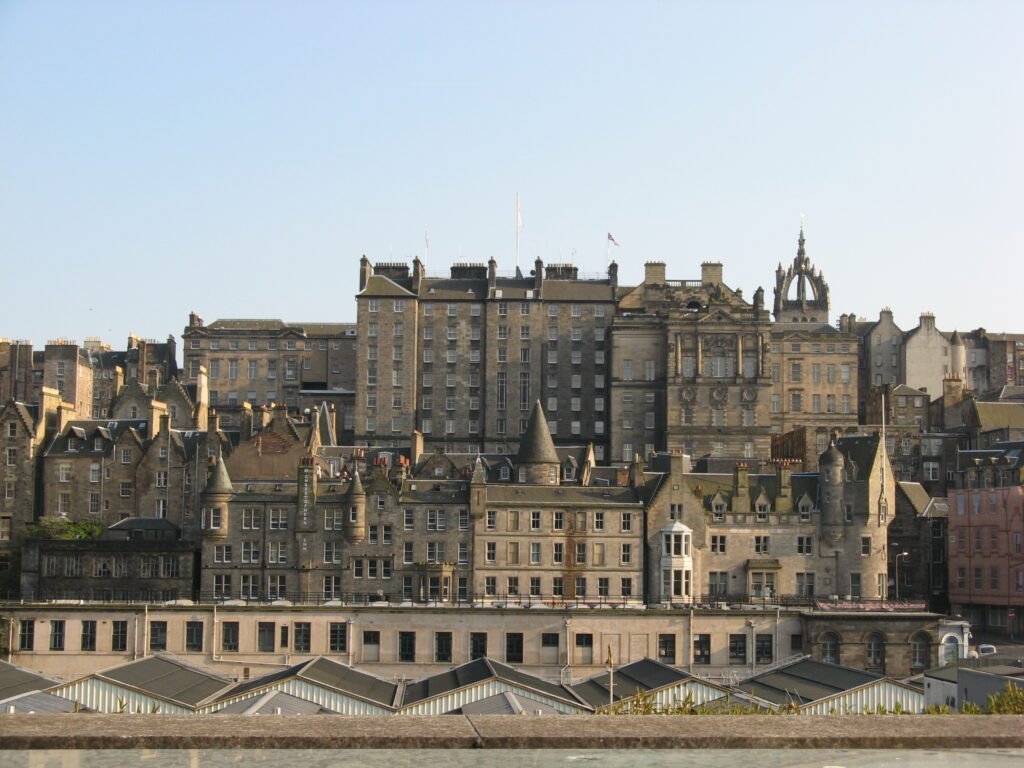
Across two historic districts separated by a deep central valley, Edinburgh concentrates a remarkable share of its visitor experience. The Royal Mile runs along a high ridge from Edinburgh Castle toward Holyrood, with major sights clustered around it. North of Waverley Station, Princes Street and the Georgian New Town create another dense walking zone. Those districts are geographically close, but they are not level with each other. The Mound, North Bridge, steep closes, stair routes, and long slopes repeatedly turn short distances into real effort. That contrast defines an Edinburgh weekend: compact enough to walk extensively, yet hilly enough to reward selective transit use.
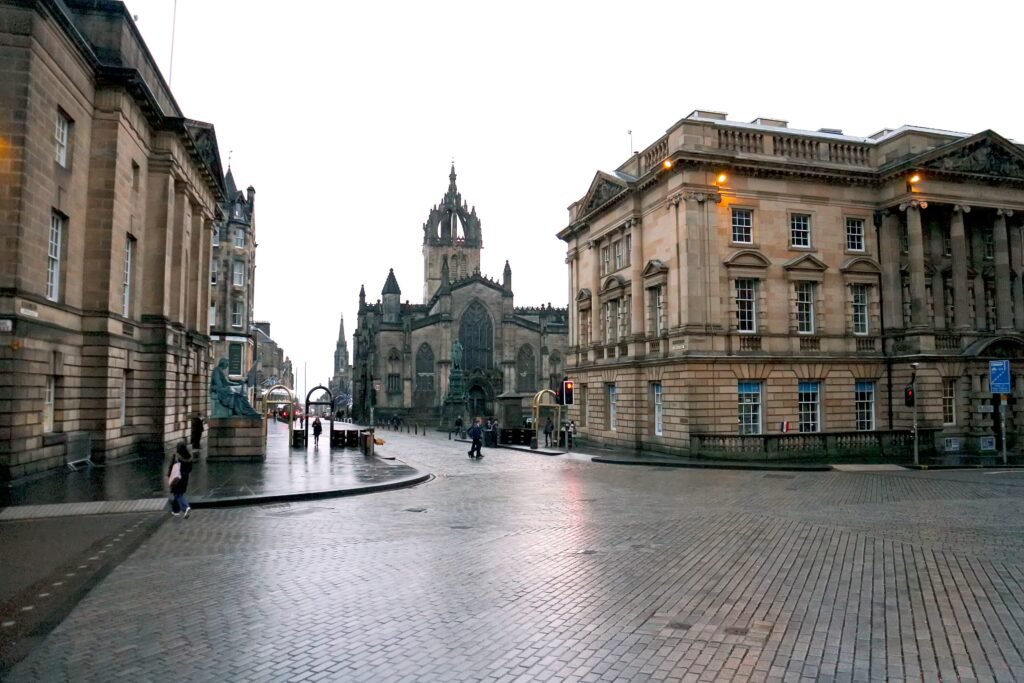
How Edinburgh Works on Foot
The strongest walking network sits between Castle Rock, the Royal Mile, Chambers Street, Waverley Station, Princes Street and central New Town. Edinburgh World Heritage describes Old Town as a high ridge linked across the landscape divide to New Town by North Bridge and the Mound. That geography keeps attractions close while making vertical movement unavoidable. Holyrood remains a natural continuation of the Royal Mile, while Calton Hill is a short but purposeful climb. Dean Village is close to central New Town on a map, yet its lower river setting adds a descent and return climb.
Pedestrian continuity is generally strong where visitors spend most of their time. The complications are historic rather than suburban: cobbles, narrow closes, stairs, crowded pavements and sharp changes of level. Main routes such as Princes Street, George Street and the Royal Mile are easy to understand. Smaller Old Town links can be less intuitive because a nearby street may sit above or below your current level.
Best Areas to Stay for Walking
Old Town gives the shortest access to Edinburgh Castle, the Royal Mile, Grassmarket and the National Museum of Scotland. It is the most atmospheric central base, but it also exposes you to more slopes, cobbles and stairs. New Town around Princes Street, St Andrew Square and George Street offers a more balanced base near Waverley, shopping, restaurants and the tram. The West End works well for travelers who want a quieter central stay with easier access toward Dean Village. Southside near Chambers Street is practical for the museum and Old Town, though some New Town trips add a climb or bridge crossing.
Useful Walking Times
Treat these as planning ranges rather than flat-city promises. Waverley Station to St Giles’ Cathedral is roughly 8–10 minutes, usually with an uphill finish. Waverley to Edinburgh Castle is about 0.4 miles and often takes 10–15 minutes once the climb is included. Castle to Holyrood along the Royal Mile is roughly a mile, around 20–25 minutes without sightseeing stops. St Giles’ to the National Museum is about 5–7 minutes. Princes Street to the top of Calton Hill is roughly 15–20 minutes. Charlotte Square to Dean Village is usually around 15–20 minutes, mostly downhill on the outward walk.
A 2-Day Walking Route
These routes use Edinburgh’s terrain rather than fighting it. Day 1 makes the Grassmarket descent once, then follows the Old Town spine east. Day 2 tackles Calton Hill early, crosses New Town, and finishes lower near the Water of Leith.
Day 1: Castle Rock, Grassmarket and the Royal Mile
Walking route
Day 1 — Old Town ridge, Grassmarket and Holyrood
- Edinburgh Castle
- Grassmarket
- Victoria Street
- National Museum of Scotland
- St Giles' Cathedral
- John Knox House
- Canongate Kirk
- Palace of Holyroodhouse
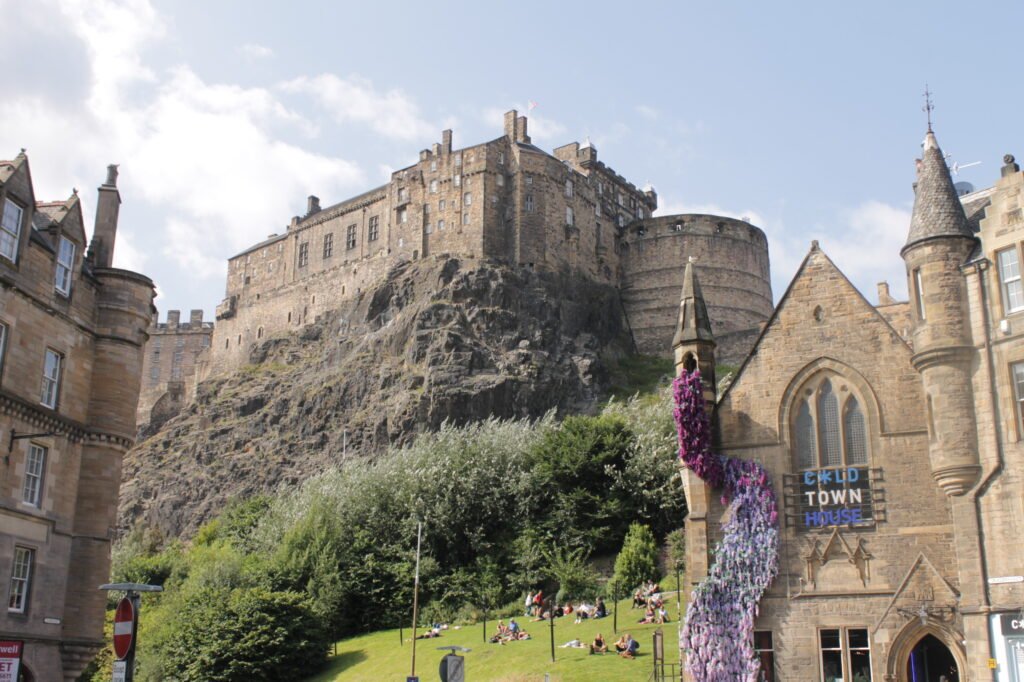
Start at Edinburgh Castle before descending toward Grassmarket and curving back up Victoria Street. The National Museum of Scotland is a short detour on Chambers Street before you rejoin the Royal Mile at St Giles’. From there, continue east through the High Street and Canongate to Holyrood. This direction puts much of the later Royal Mile on a gradual descent. After Holyrood, a bus back toward the center is sensible if another uphill walk would add little to the day.
Day 2: Calton Hill, New Town and Dean Village
Walking route
Day 2 — Calton Hill, New Town and Dean Village
- Calton Hill
- St Andrew Square
- Scott Monument and Princes Street Gardens
- George Street
- Charlotte Square
- Dean Village
- Stockbridge
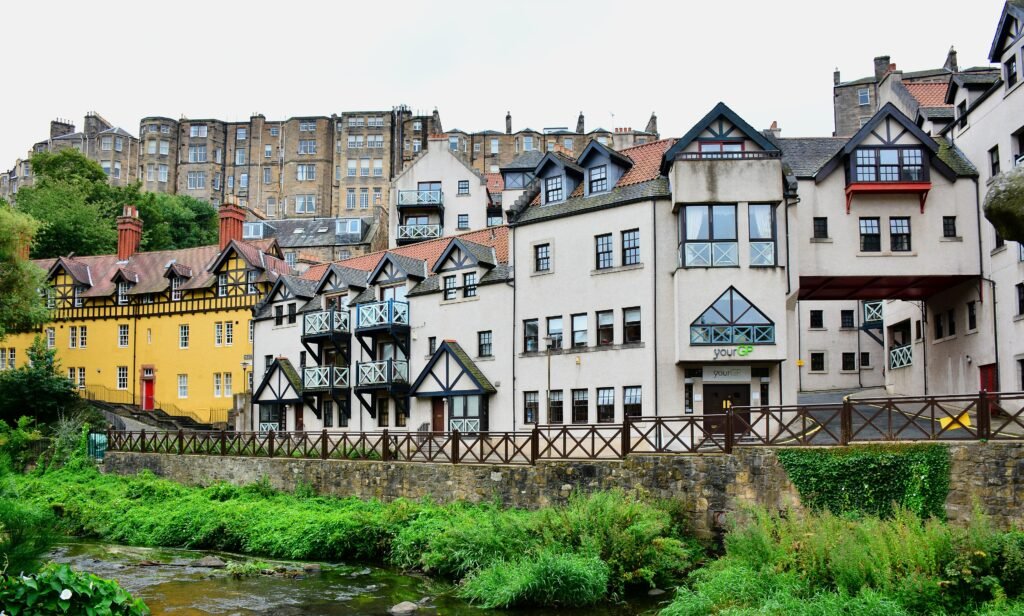
Climb Calton Hill while your legs are fresh, then descend toward St Andrew Square and Princes Street. Continue west through the Georgian New Town toward George Street and Charlotte Square. From there, descend to Dean Village for the Water of Leith setting. Finish in Stockbridge rather than climbing directly back to Princes Street. Frequent buses make the return easy and avoid turning a scenic extension into unnecessary uphill mileage.
Using Buses and Trams
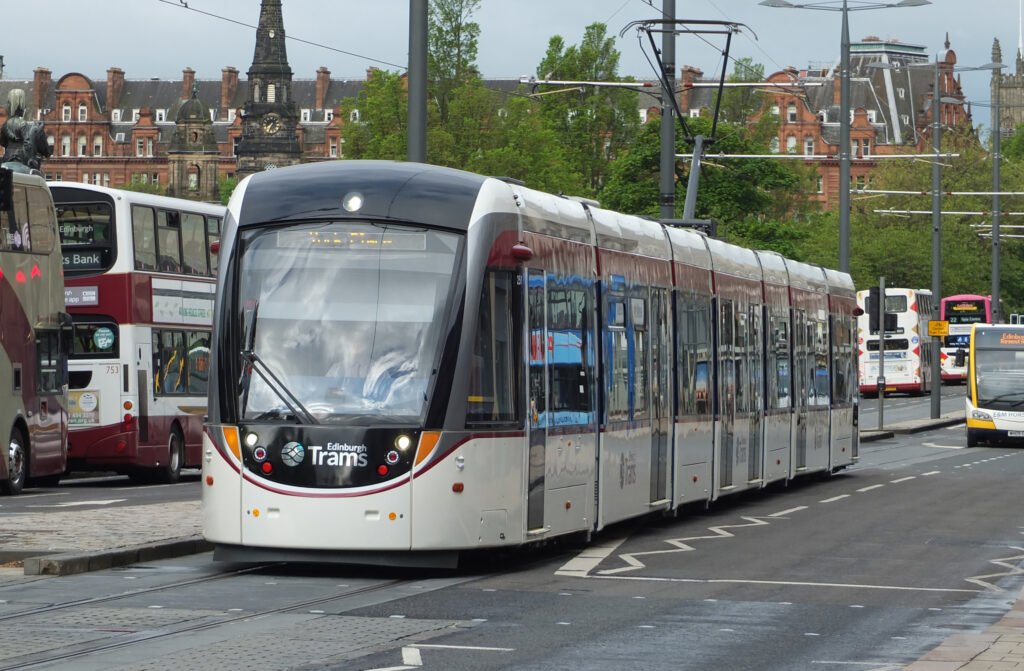
Edinburgh’s public transport is a complement to walking, not a reason to ignore the terrain. Lothian operates more than 50 regular bus routes, which is especially useful for uphill returns and cross-city repositioning. Trams run from the airport through the West End, Princes Street and St Andrew Square toward Leith and Newhaven. Normal service is every seven minutes during the daytime and every ten minutes early and late. NightBus provides overnight coverage from midnight until 4:30 a.m.
Contactless payment is straightforward. On trams, tap on before boarding and tap off after leaving; automatic capping can combine tram and Lothian bus travel. The adult city single fare increased to £2.40 in February 2026, while the contactless city daily cap became £5.70. Check the current fare table before travel because ticket products can change.
Arriving Without a Car
Waverley Station is one of Edinburgh’s biggest visitor advantages because it sits directly between Old Town and New Town. National Rail confirms step-free access to all platforms, but the platforms are below the main entrance level. Network Rail shows several exits to Princes Street, Waverley Bridge, Market Street and Calton Road. Those exits use different combinations of lifts, stairs, escalators and ramps. With luggage, choosing the exit closest to your hotel can matter more than the short map distance.
Edinburgh Airport is also easy without a car. The tram stop is immediately outside the terminal, with city-center journeys taking about 30 minutes. Airlink 100 provides a separate 24/7 airport-to-center option, usually up to every ten minutes through most of the day.
When a Car Helps
A private car adds little to a standard two- or three-day Edinburgh city break. Central parking, historic street geometry and the compact visitor core make walking plus transit the more practical combination. A car becomes more useful when Edinburgh is the launch point for rural destinations, dispersed trailheads or touring beyond frequent rail and bus corridors. For the city itself, it usually creates more friction than freedom.
Walking Limitations and Practical Tips
The main mistake is judging Edinburgh by straight-line distance alone. A ten-minute map estimate may include stairs, a steep close or a climb from Grassmarket to the Royal Mile. Comfortable shoes with dependable grip matter on cobbles and wet stone. If stairs are a problem, favor main streets, bridges and signed step-free station routes rather than assuming the shortest pedestrian link is easiest. Use buses for low-value uphill returns, especially late in a long sightseeing day.
Major festival periods can substantially increase pedestrian traffic around the Royal Mile, Old Town and central venues. During busy August events, allow extra time for routes that would normally be quick
Seasonal Walking Note
Edinburgh remains highly practical for walking throughout the year, but seasonal conditions change comfort and pacing. Winter brings shorter daylight and more exposure to cold, wind and wet surfaces. Summer offers longer days, while August festival crowds can reduce walking speed around the Royal Mile and central venues. Build extra margin into hillier routes when conditions are wet or crowded.
Bottom Line
Edinburgh works exceptionally well without a car because its most important visitor districts are close, central and transit-supported. The trade-off is physical effort. Old Town’s ridge, steep closes, stair routes, Calton Hill and lower-level extensions make the city more demanding than its compact map suggests. Stay centrally, group sights by elevation, and use buses or trams for strategic returns. That approach preserves Edinburgh’s strongest advantage: spending most of a short weekend exploring on foot rather than moving between attractions.