
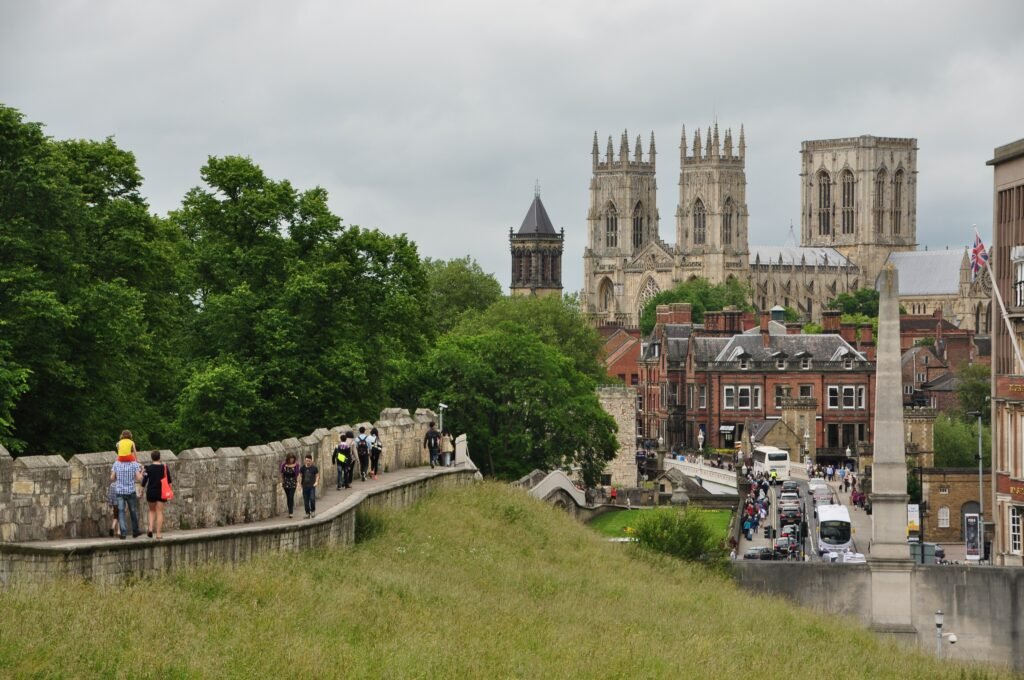

Within York’s walls, major visitor sights sit in a remarkably tight network of medieval streets, river crossings, and pedestrianized lanes. York Minster, the Shambles, Stonegate, Museum Gardens, and the Castle area can be linked without relying on buses. The railway station also sits close enough to join this network on foot, with Museum Gardens about 10–15 minutes away. Compact distances do not remove every obstacle, because historic paving, narrow footways, crowding, and wall access stairs change walking comfort. The River Ouse and surviving walls add memorable routes, but they also channel pedestrians toward specific bridges and gates. Wall access points can also make a scenic circuit less direct than the street below.
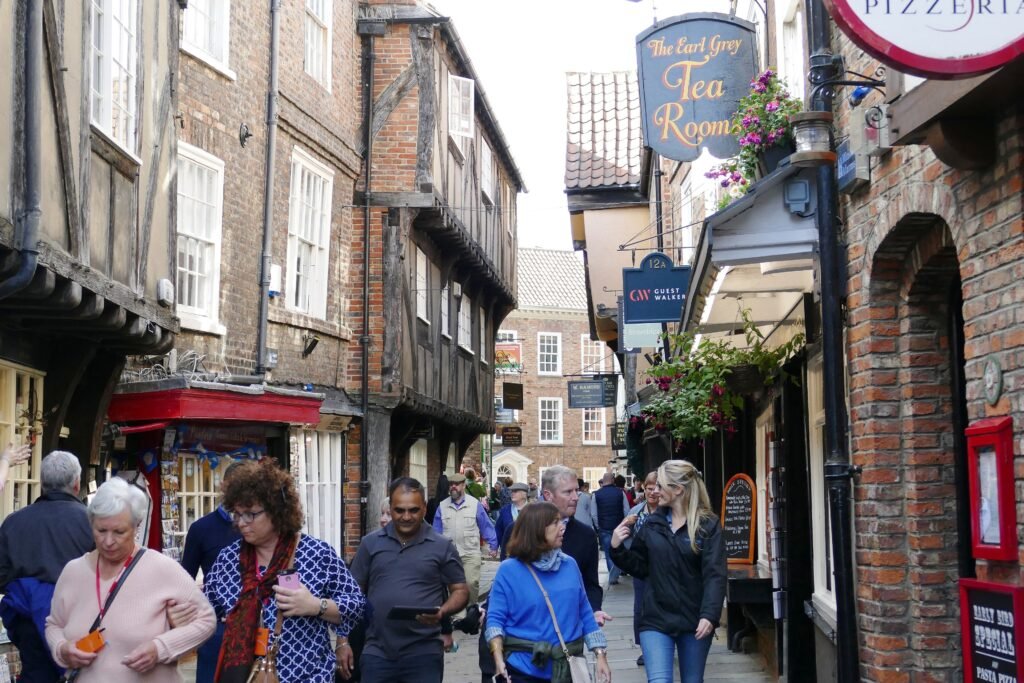
Why York Works So Well on Foot
The historic core is small enough that walking normally beats waiting for a bus between headline sights. York Minster, Stonegate, the Shambles and the Castle area form a tight north-to-south chain. Museum Gardens sits just west of that chain beside Lendal Bridge, making it a natural stop from the station. York’s central pedestrian controls strengthen this pattern by limiting general traffic on many shopping streets. Access and loading rules can change, so check current City of York Council guidance if vehicle access matters to your plans.
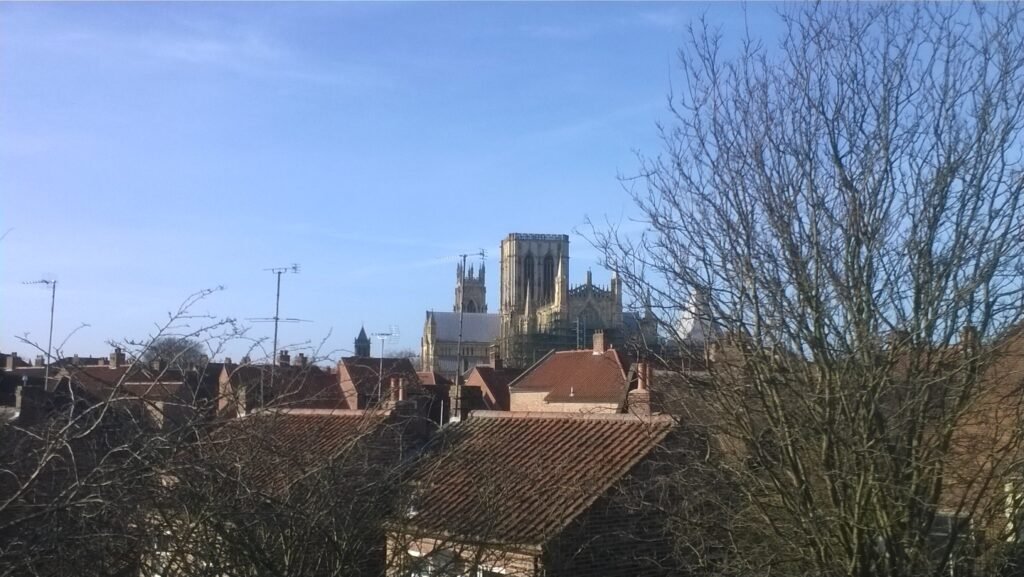
Historic Streets Are Compact, Not Frictionless
York’s strongest walking advantage is distance, but its historic fabric still affects pace and comfort. Narrow medieval lanes can feel crowded quickly, especially around the Shambles and Stonegate. Cobbles, stone paving and uneven footways also make some short routes less comfortable for travelers with limited mobility. The council itself notes that historic stone, blocks and cobbles cannot always remain perfectly level. Those conditions matter when judging York as a walking city rather than simply measuring attraction-to-attraction mileage.
The city walls deserve the same balanced treatment. They are an outstanding scenic route and a memorable way to understand York’s compact shape. However, the elevated walkway requires steps, can narrow substantially, and has some unguarded edges. It is not wheelchair accessible, and pushchairs are not permitted. Opening can vary with daylight, weather, maintenance and conservation work, and a full circuit also uses ground-level connectors where the elevated route stops. Check the current wall status before setting out.
Best Areas to Stay for a Walking Weekend
For the shortest sightseeing walks, the Minster Quarter and streets around Stonegate place you inside the densest visitor cluster. Micklegate is especially practical for rail arrivals because it combines restaurants, historic character and quick station access. Bootham works well for the Minster, Museum Gardens and northern wall sections. The station and Lendal Bridge edge are also convenient, although the streets immediately outside the station feel more traffic-oriented than York’s footstreets.
Walking Times That Matter
- York Station to Museum Gardens: about 10–15 minutes.
- York Station to York Castle Museum: about 20–25 minutes.
- York Station to central Micklegate: about five minutes for some stays.
- York Minster to the Shambles: roughly five minutes.
- The Shambles to Clifford’s Tower: roughly 7–10 minutes.
- Full City Walls Trail: about two hours when walked as a sightseeing circuit.
These are practical planning estimates rather than guaranteed walking times. Crowds, historic surfaces, wall access points, crossings and individual pace can change the actual time.
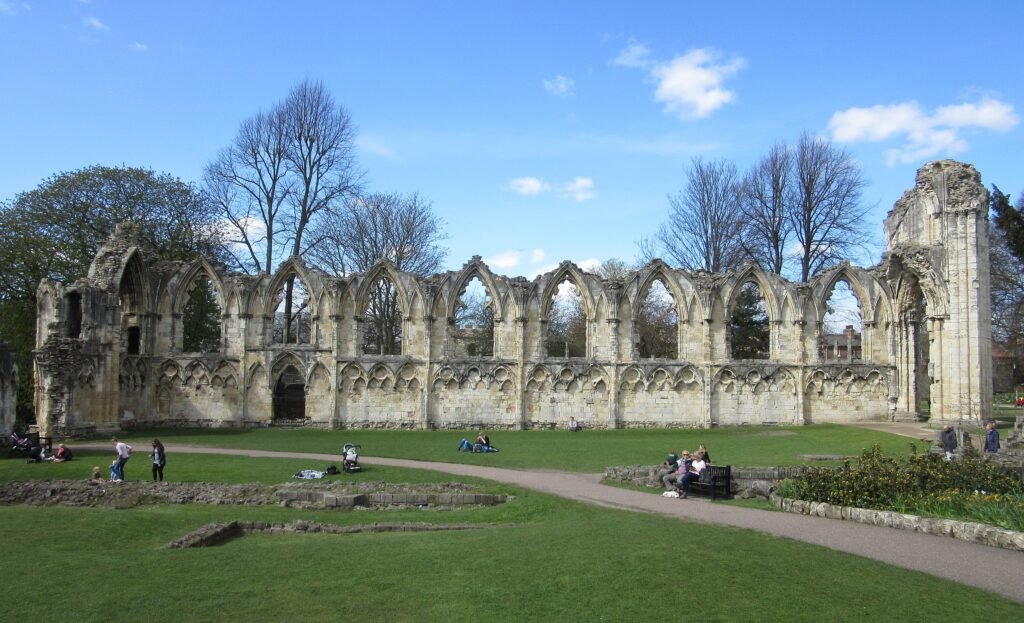
A 2-Day Walking Route
The most efficient weekend uses one compact core day and one walls-focused circuit. This avoids turning the City Walls into a shortcut when street-level routes are faster.
Day 1: Station, Minster, Shambles and Castle Area
Walking route
Day 1: Station to the historic core and Castle area
- York Railway Station
- York Museum Gardens
- Bootham Bar
- York Minster
- Stonegate
- The Shambles
- Clifford’s Tower
- York Castle Museum
- Ouse Bridge
- Micklegate Bar
Start at York Station and cross toward Museum Gardens, then continue through Bootham Bar to York Minster. Walk south through Stonegate and the Shambles before continuing to Clifford’s Tower and York Castle Museum. Finish by crossing Ouse Bridge toward Micklegate. This sequence keeps the major sights in a logical arc and leaves the station within an easy final walk.
Day 2: York City Walls Circuit
Walking route
Day 2: City Walls circuit with river and gatehouse views
- Bootham Bar
- Monk Bar
- Walmgate Bar
- Fishergate Bar
- Micklegate Bar
- York Station City Walls access
- Lendal Bridge
- York Museum Gardens
- Bootham Bar
Begin at Bootham Bar and follow the wall trail clockwise toward Monk Bar, Walmgate Bar and Fishergate. Continue toward Micklegate Bar and the station-side walls, then cross near Lendal Bridge and finish through Museum Gardens. Follow signed ground-level connectors where the elevated walkway ends. Check the council’s wall status first, because ice, high winds or conservation work can close sections.
When Buses Help
Buses are useful in York, but they should not be mistaken for the reason the historic core works. The central sights are close enough that short bus waits can exceed the walking time. Use buses for outer districts, university-side trips, park-and-ride connections, or a tired-leg return after a long wall walk. Local ticketing, payment options and fares can change, so check current operator information before travel.
Arriving Without a Car
York Station is one of the city’s biggest car-free strengths. Museum Gardens is about 10–15 minutes away on foot, while York Castle Museum quotes 20–25 minutes. Direct trains connect York with major cities across Britain. The station-front route includes a controlled road crossing rather than a seamless pedestrian plaza, so follow current signed pedestrian routes if station-area works or layouts have changed.
Air arrivals are less uniform. Manchester Airport can be reached from York by rail, while Leeds Bradford Airport typically requires an onward connection before reaching York. Routes, journey times and connection patterns can change, so check current airport and rail information for your travel date. The advantage is that the final York arrival is exceptionally central.
When a Car Helps
A private car adds little to a standard two-day stay focused on York’s historic centre. Parking, restricted central access and pedestrianized streets can make a car more cumbersome than useful. A car becomes more valuable for countryside extensions, scattered North Yorkshire attractions or trips that do not align well with regional rail and bus routes. For the core itinerary in this guide, arrive by rail and keep walking.
Limitations and Practical Tips
- Expect narrow pavements, cobbles and uneven historic surfaces in parts of the centre.
- Walk the Shambles early or later if you prefer more space than peak sightseeing periods allow.
- Treat the City Walls as a scenic attraction, not the fastest route between every pair of sights.
- Wall sections require steps and can close for ice, wind, maintenance or conservation work.
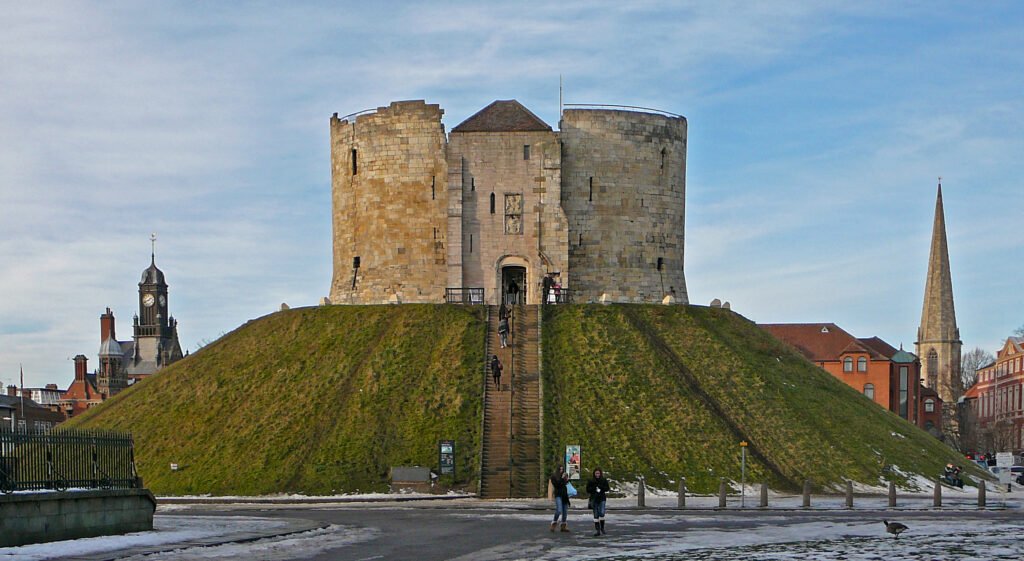
- Clifford’s Tower requires 55 steps to reach the keep, followed by additional internal stairs.
- Use the controlled crossing outside York Station and follow current signs if station-area works are active.
Seasonal Walking Note
York’s core remains compact in every season, but surface conditions change how easy those distances feel. Rain can make stone and cobbled areas slick, while ice, wind or maintenance can close sections of the City Walls. Winter generally means a shorter daylight window for wall walking, while summer offers longer days but busier central streets. Check current wall status when weather is poor.
Bottom Line
York is at its best when a visitor accepts two truths at once. The city is unusually compact, and most major sights connect naturally on foot. Its medieval fabric also adds real walking friction through narrow lanes, uneven surfaces, stairs and constrained access points. Stay near the historic core, use buses selectively, and treat the walls as a scenic circuit rather than a shortcut. For a first-time weekend, a car is unnecessary.