
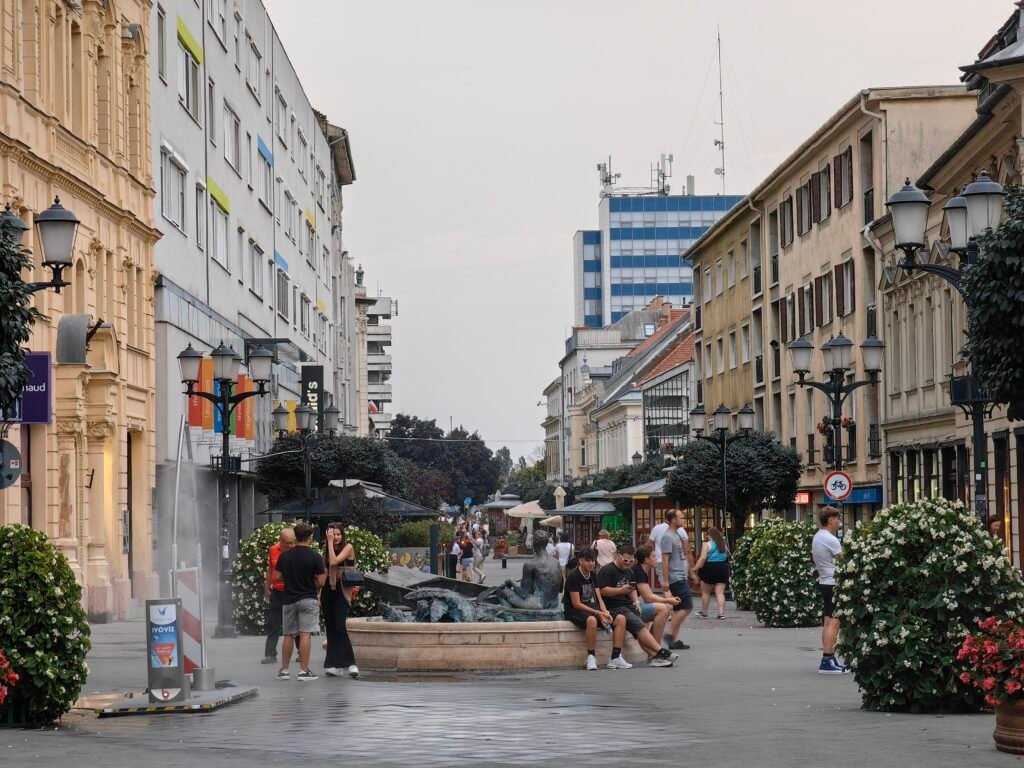

Grand squares do not tell the whole story of walking through Hungary’s cities. In Szeged, the cathedral, shopping spine and riverfront belong to one manageable visitor area. Budapest spreads sightseeing across several districts, with the Danube bridges making some crossings memorable rather than quick. Győr offers a different rhythm: short Baroque lanes and river bridges, while Debrecen’s trams connect two distinct sightseeing clusters. At Pécs and Eger, the old town gives way to hills or outlying sites just as sightseeing expands. These differences matter more than city size alone when planning two days without a car.
The Six Hungarian Cities, Ranked
Szeged and Budapest share first place on their canonical stored assessments. The next rank is third, not second. This comparison covers six independently assessed Hungarian cities, not every city in Hungary.
1 (tie). Szeged — 87/100
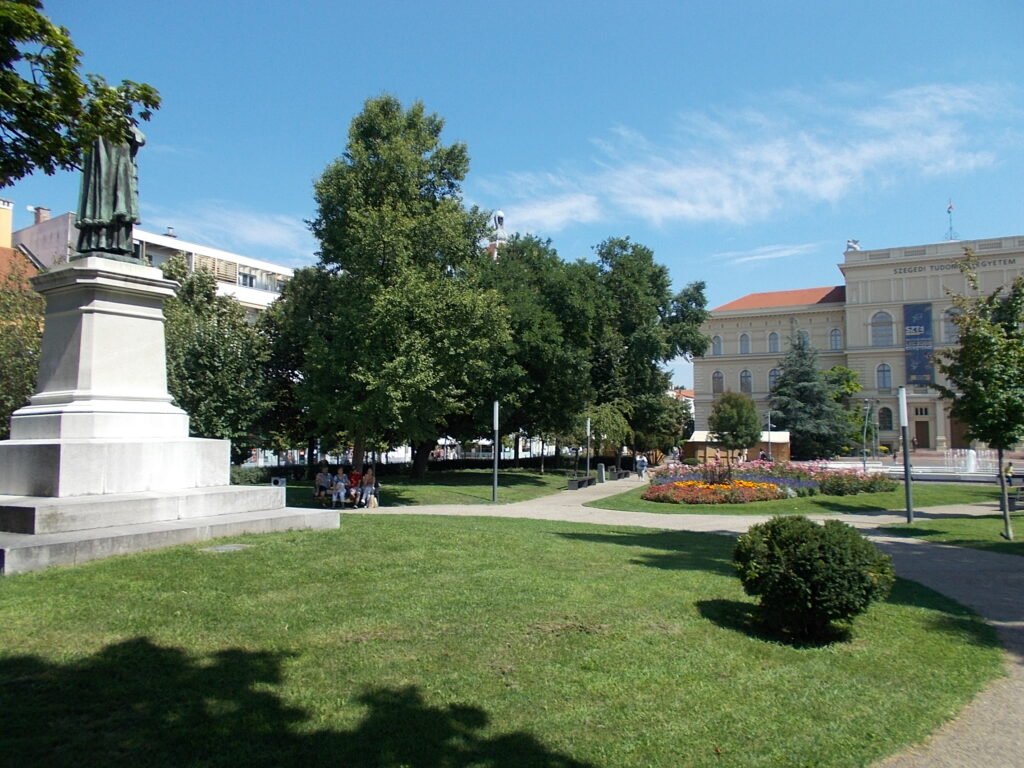
Szeged is the simplest choice for visitors who want the center to do most of the work. Kárász Street joins the civic squares with Dugonics Square, and Dóm Square is close by. The Tisza riverfront and Móra Ferenc Museum add variety without creating another distant sightseeing district. The city’s visitor office publishes a roughly two-hour central loop before indoor visits. Explore the full Szeged walking guide for station access and a two-day route.
1 (tie). Budapest — 87/100
Budapest ties on overall practicality, not pedestrian compactness. Parliament, St. Stephen’s Basilica and the downtown Danube promenade support extended Pest walks. Castle Hill rises across the river, while City Park and other districts invite separate sessions. Bridges are valuable walking experiences, yet they do not erase distance or elevation. BKK makes the two-day visit easier without turning Budapest into one small pedestrian precinct. Read the Budapest walking guide for the realistic district sequence.
3. Győr — 83/100
Győr favors an unhurried weekend with little transport inside its Baroque center. Baross Gábor Street leads into Széchenyi Square; cathedral-area lanes and Dunakapu Square branch toward the water. River bridges bring Radó Island into the walk. Chapter Hill is a modest interruption rather than a citywide climb. The zoo and Mobilis science center are outside this tight circuit, so choose them deliberately. Use the Győr guide to plan the core and optional bus excursions.
4. Debrecen — 82/100
Debrecen is flat and easy to understand around Kossuth Square and Piac Street. The Great Reformed Church, Déri Museum and nearby cultural institutions anchor the first day. Yet the university, Aquaticum and Great Forest lie to the north, outside the historic shopping spine. Tram 1 makes that separation practical rather than burdensome. See the Debrecen guide for a center-first day and a forest-focused second day.
5. Pécs — 81/100
Pécs compresses layered history into a walk from Széchenyi Square toward the cathedral, early Christian burial monuments and Király Street. The Zsolnay Cultural Quarter is a longer eastbound extension. Tettye and northern hillside paths turn an otherwise straightforward weekend into a more demanding one. Historic paving also deserves attention. The Pécs walking guide helps separate the level center, cultural-quarter visit and optional climb.
6. Eger — 77/100
Eger may feel compact at first: Dobó Square, the minaret, basilica and nearby Baroque lanes gather close together. Castle access, however, introduces stone paths, slopes and steps. Szépasszony-völgy, the Valley of the Beautiful Woman, is a separate wine-cellar destination rather than another old-town block. Its lower overall rating reflects the wider car-free weekend, not a poor historic center. Read the Eger walking guide for the castle and wine-valley choices.
Which City Is Best for Your Walking Style?
For the most sightseeing with minimal public transport: Start with Szeged or Győr. Their central landmarks form coherent walking circuits. Budapest delivers more headline sights, but it works best when you accept strategic metro or tram trips.
For level walking: Debrecen and Szeged are comparatively gentle. Debrecen has a separate Great Forest cluster, making a tram ride sensible. Győr is also relatively level apart from local historic elevations.
For architecture and history with some hill effort: Choose Pécs or Eger. Pécs offers Ottoman, Roman and cathedral landmarks around a dense center; Eger adds the dramatic castle approach. Neither should be judged only by the distance between its main square and nearest monument.
For a larger car-free city break: Budapest makes the strongest case. A two-day visitor can walk substantial stretches, then ride between Castle Hill, Pest and outer neighborhoods. The transit network is a useful multiplier, not proof that all attractions are side by side.
Compact Centers Versus Separate Sightseeing Clusters
A walkable historic center is not the same as a whole weekend contained within it. Szeged’s squares, cathedral and riverside stay remarkably close together. Győr’s core follows a similarly compact pattern beside two rivers. In Budapest, crossing between Pest and Buda is straightforward, but the hill, long riverfront and farther parks stretch the day.
Debrecen offers a clearer two-cluster contrast. Its downtown sights belong to one short sequence, while Nagyerdő makes more sense as a separate tram-assisted outing. Pécs connects the center to Zsolnay over a longer eastbound walk, with Tettye uphill. Eger’s castle sits above town, and its wine valley adds another distinct destination.
How to Spend Two Days Without a Car
Szeged: Spend day one between Széchenyi Square, Kárász Street, Dugonics Square, Dóm Square and the river. On day two, add the New Synagogue and smaller central museums, then choose an outer park only if time allows.
Budapest: Keep the first day on central Pest’s connected streets and Danube promenade. Reserve the second for the Chain Bridge and Castle Hill, using transit when adding City Park or distant neighborhoods. Trying to walk everything produces unnecessary mileage.
Győr: Use day one for Baross Gábor Street, Széchenyi Square, the cathedral and riverfront. Spend day two with Radó Island, secondary Baroque lanes and selected museums. A zoo or Mobilis visit replaces part of that walk and may need a bus.
Debrecen: Explore Piac Street, Kossuth Square and central museums on day one. For day two, ride tram 1 to the university and Great Forest area, then walk among its destinations rather than marching north from the center.
Pécs: Cover Széchenyi Square, Király Street, the cathedral and UNESCO sites on day one. Take the longer route toward Zsolnay on day two, or trade that journey for Tettye if you want hillside scenery. The two options create different walking demands.
Eger: Combine the Baroque streets, Dobó Square, minaret and basilica on day one. Give the castle a measured day-two visit, with extra time for its slopes. Add Szépasszony-völgy by a planned transfer or longer walk, rather than assuming it lies downtown.
Trams, Buses and Arriving by Rail or Air
Budapest has the strongest metropolitan backup. Airport Express 100E connects the airport with central Pest, while 200E connects to the wider network. Metro, trams and buses save low-value mileage between dispersed visitor clusters. The Castle Hill Funicular or suitable buses can reduce the climb for travelers who prefer it.
For other cities, rail usually matters more than a car rental. Győr sits on a major westward rail corridor. Szeged, Pécs, Eger and Debrecen are reachable through national rail services, although transfer patterns and journey lengths vary. Check the current MÁV timetable before booking. Budapest Airport often adds an onward rail leg for regional destinations; Debrecen also has its own airport with local transport connections.
Within each destination, the tram or bus should solve a specific spatial problem. Szeged’s trams assist with station and outer-area access. Debrecen’s tram 1 links downtown to Nagyerdő. Buses help with Pécs hillsides, Eger’s outlying wine area and Győr’s noncentral attractions. These services do not make geographically separated landmarks adjacent on foot.
Walking Comfort, Accessibility and Seasonal Considerations
The hilliest choices require the most selective routing. Budapest’s Castle Hill, Eger Castle and Pécs’s Tettye paths introduce grades, older stonework or steps. Travelers using wheelchairs or mobility aids should check accessible entrances and local transport arrangements rather than rely on the words “pedestrianized old town.”
Szeged and Debrecen have flatter central routes, though neither removes every traffic crossing. Győr’s historic surfaces and the bridges around its rivers still require attention. In summer, schedule exposed squares around the hottest hours; in wet or icy conditions, cobbles and fortress paths become less forgiving. Individual attraction opening hours may shape a weekend more than raw walking distance.
The Best Choice for Your Weekend
Pick Szeged when the priority is walking between major sights with few transport decisions. Choose Győr for a slower Baroque-center weekend and short river strolls. Budapest is the broader destination with the strongest transport support, while Debrecen is a practical flat-city option if you accept a tram-based second cluster. Pécs and Eger suit visitors happy to add hill work for historic variety. The six scores compare the overall car-free visitor experience, not the beauty or cultural value of the cities.