
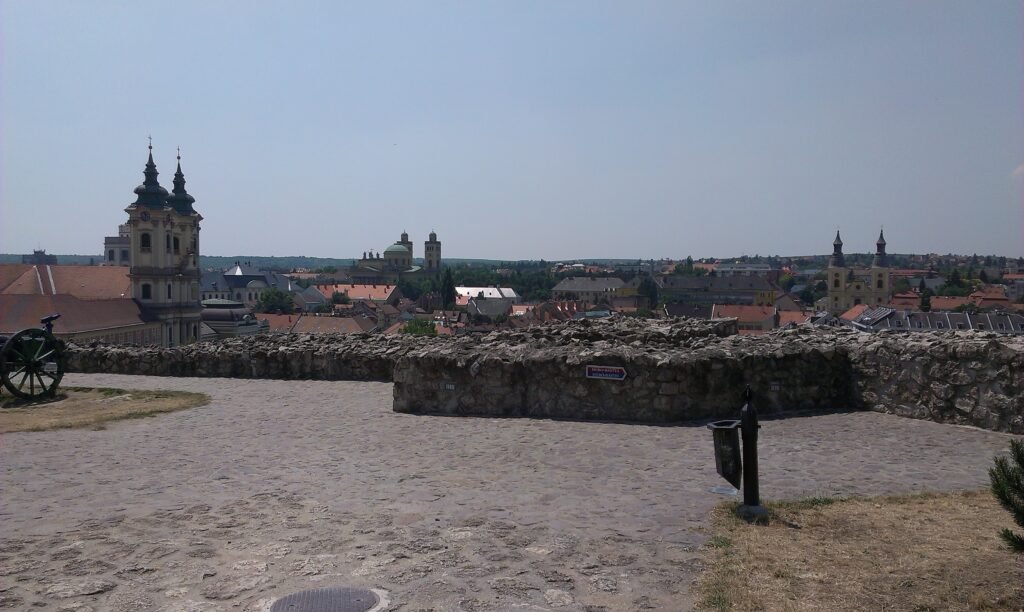

Eger’s castle sits above a compact web of Baroque streets, with Dobó Square at the center of the visitor experience. The minaret stands a few minutes northwest, while Érsek utca links the square with the basilica and Lyceum. Pedestrianized blocks make those connections pleasant, although historic stonework is not consistently smooth. Castle access changes the rhythm: the final approach climbs, and the fortress itself has uneven paths. The thermal baths occupy another reachable cluster south of the center. Farther west, Szépasszony-völgy requires a deliberate outward trip rather than a casual detour between old-town landmarks. That distinction matters when planning two days without a car.
Why Eger’s Historic Center Works on Foot
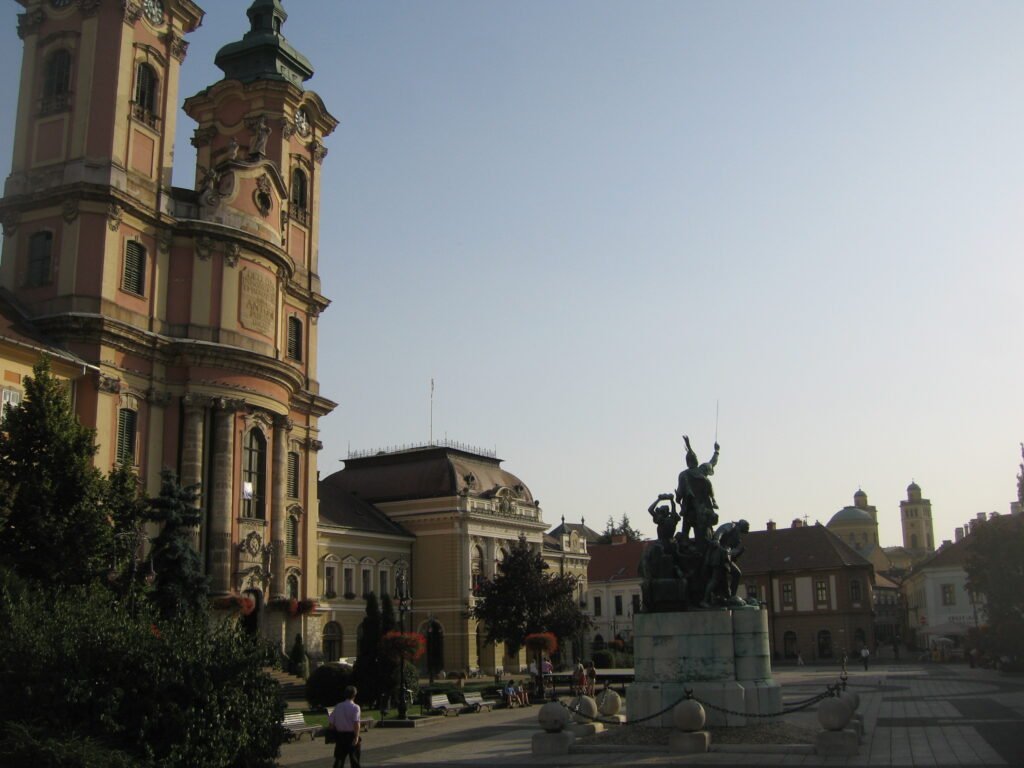
Dobó István Square is the practical anchor for first-time sightseeing. The Minorite Church, surrounding historic façades and pedestrian lanes provide a central meeting point. Eger Castle rises just beyond the square, while the minaret occupies the northwestern edge of the old town. These places are close on a map, but the last stretch to the castle requires climbing.
West of Dobó Square, Érsek utca and the pedestrian stretches of Széchenyi István utca join the main shopping and architectural corridor. The Archbishop’s Palace, Lyceum and basilica fit naturally into that walk. The Lyceum and basilica stand around Eszterházy Square, where the basilica’s broad staircase is an accessibility consideration. Traffic is less intrusive in the pedestrian core, though stone paving can be uncomfortable for wheels or unstable footwear.
Castle Hills, Historic Paving and Accessibility
The castle is not a level extension of Dobó Square. Follow the marked approach to Vár köz and allow time for the uphill finish. Within the museum grounds, uneven pathways and changes in level demand more care than the surrounding pedestrian streets. The castle museum advises wheelchair users to approach through the northern gate; this should not be mistaken for universal step-free access throughout the complex.
The minaret presents a different mobility challenge. Its narrow spiral staircase has 97 steps, so the tower climb is an optional add-on rather than part of an accessible city walk. Elsewhere, sidewalks and crossings are generally more predictable on modern streets than among narrow historic edges. Visitors using mobility aids should check specific attraction entrances and routes directly, not rely solely on walking distances.
Where to Stay Without a Car
Dobó Square and the nearby old-town lanes are the simplest choice for most first visits. Restaurants, landmark streets and the castle approach are close, with the basilica still an easy walk. A hotel around Eszterházy Square or Széchenyi utca also works well, especially for bus arrivals and central shopping streets.
Choose Érsekkert and the bathing district when thermal swimming or the Turkish Bath is a major priority. You will still be near the center, but the castle sits farther uphill. Accommodation in Szépasszony-völgy can suit wine-focused stays, although it makes ordinary old-town sightseeing less convenient.
Realistic Walking Times Between Major Sights
Dobó Square to the minaret: about 4–7 minutes. Dobó Square to the castle entrance: roughly 8–12 minutes, with a climb near the end. Dobó Square to the basilica: approximately 8–12 minutes through the old-town street network. The basilica-to-castle walk is closer to 15–20 minutes, depending on your route and pace.
Dobó Square to the Turkish Bath or Érsekkert: around 12–17 minutes. Dobó Square to the bus station: roughly 7–12 minutes. Dobó Square to the railway station: approximately 20–25 minutes. For the cellar district of Szépasszony-völgy, budget about 30–40 minutes one way and more if your chosen cellar lies farther inside the valley. These are practical estimates, not live-navigation guarantees.
A Two-Day Eger Walking Route
Day 1: Basilica, Old-Town Streets and Eger Castle
Start at Eger Basilica and cross Eszterházy Square to the Lyceum. Continue north past the Archbishop’s Palace along Széchenyi István utca, then turn toward the minaret. Descend through the historic lanes to Dobó Square for the Minorite Church and a rest. Finish by climbing to Eger Castle rather than walking up and down the hill repeatedly. Budget substantial time inside the castle for viewpoints and exhibitions.
Walking route
Day 1: Basilica, pedestrian center, minaret and castle
- Eger Basilica
- Eszterházy Károly Catholic University Lyceum
- Archbishop’s Palace Visitor Centre
- Eger Minaret
- Dobó István Square
- Eger Castle main approach
- Eger Castle Museum
This route keeps the architectural center together and places the steepest section last. The minaret tower climb is optional, and visitors with mobility limitations should review castle access beforehand. Check museum opening hours if the castle is your main paid visit.
Day 2: Thermal Baths and the Separate Wine Valley
Begin in the southern bathing district at the Turkish Bath and neighboring Eger Thermal Bath. Érsekkert provides an easy park stroll between visits. Afterward, treat the journey to Szépasszony-völgy as a separate trip west. Walking the whole route is possible, but the valley approach adds meaningful urban mileage beyond the compact historic circuit.
Walking route
Day 2: Turkish baths, Érsekkert and a separate wine valley walk
- Turkish Bath (Török Fürdő)
- Eger Thermal Bath (Egri Termálfürdő)
- Érsekkert (Archbishop’s Garden)
- Szépasszony-völgy entrance
- Szépasszony-völgy wine-cellar area

The valley’s cellars cluster around their own walking area, where exploration is again convenient after arrival. One-way distances from Dobó Square are typically around 2–3 kilometers, depending on the selected cellar and streets. Plan the return before tasting wine. A checked regional or local bus connection or taxi may be easier than repeating the full walk, especially after dark.
Is Szépasszony-völgy Part of Eger’s Walkable Center?
The wine valley belongs to Eger’s visitor experience but not its immediate old-town walking footprint. Its western location creates a separate outbound leg of roughly half an hour or more from Dobó Square. The approach crosses ordinary streets rather than extending the continuous pedestrian squares and lanes around the basilica, minaret and castle. There are also gradients around parts of the valley approach and cellar area.
Make the valley a dedicated afternoon or evening destination instead of squeezing it between the castle and basilica. The cellars themselves are close enough for relaxed wandering once you reach them. Bus routes may shorten part of the approach, but their stops and weekend return schedules need checking. Seasonal tourist trains should not be treated as reliable all-year public transport.
Using Local Buses and Arriving from Budapest
MÁV lists Eger’s numbered local bus routes and their stop departures. Buses are most useful for station transfers, farther neighborhoods and some outward journeys, not the short links across Dobó Square. The bus station is near the basilica on Barkóczy utca. Eger’s railway station lies farther south, with a reasonable but longer walk into the historic center along the Deák Ferenc corridor.
From Budapest-Keleti, direct Agria InterRégió trains normally run about hourly and take around two hours. That makes a car-free overnight visit straightforward, without requiring the old town itself to have a dense transit network. Check current journeys and any replacement buses through the official MÁV timetable. Service patterns and temporary track work can change.
When a Car Helps—and When It Does Not
A private car adds little for the standard two-day mix of central landmarks and baths. Train or bus arrival is practical, and the city’s main historic sights sit within an easily navigable core. Drivers may gain flexibility for countryside wineries, Bükk Mountains excursions or scattered accommodation. Those outside trips are separate decisions from walking around central Eger.
Practical Limitations and Seasonal Conditions
Wear shoes suited to stone paving, castle slopes and occasionally slippery steps. Summer heat can make exposed castle walls and squares feel demanding, while winter rain or ice adds risk to uneven surfaces. Spring and fall are often more comfortable for long walks. Bath entrances and individual outdoor pools can operate seasonally, so confirm the correct entrance before setting out.
The Eger Thermal Bath lists an Érsekkert entrance operating year-round, while its Petőfi Square entrance is seasonal. The Turkish Bath runs separately at Fürdő utca 3–4. Castle exhibition access and winter hours also differ from the grounds’ opening schedule. These operational details deserve a final check shortly before travel, rather than changing the city’s underlying walking assessment.
Bottom Line
Eger is strongest when the historic center is explored as one short, connected walking circuit. The castle introduces real climbing, while the thermal district remains close enough for a comfortable second-day visit. Reserve a separate window for Szépasszony-völgy and plan the return trip. With central lodging and direct regional trains, a two-day visit works well without a private car.