
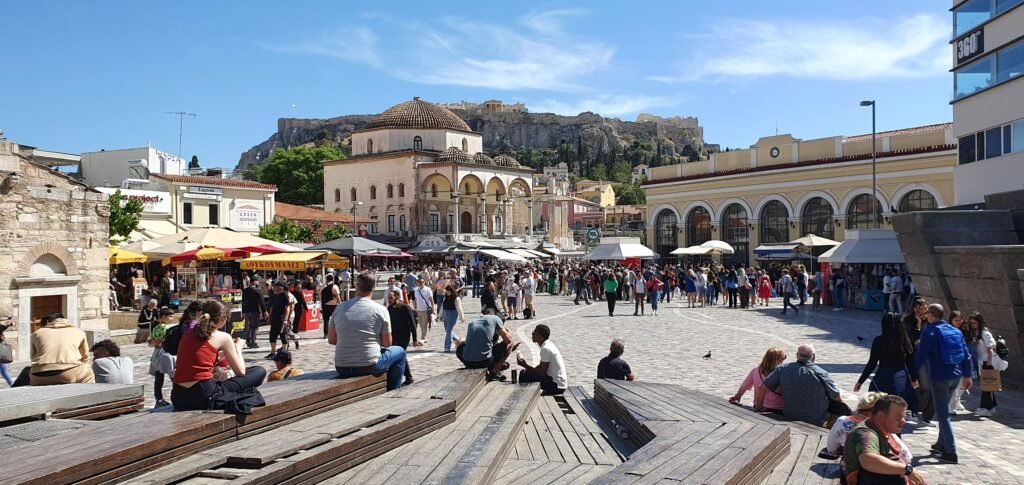

Greek city breaks can be remarkably compact until a hill, airport transfer, or outer neighborhood changes the trip. Athens ties its historic center to a deep transit network, while Corfu Town compresses most sights into a more compact central area. Thessaloniki spreads farther along the waterfront and climbs sharply toward Ano Poli. Rhodes Town and Chania build strong weekends around compact historic and coastal cores, then loosen at Monte Smith and Chalepa. Nafplio creates the sharpest contrast: its lower center needs almost no transport, yet reaching it without a car is harder. Those differences matter more than postcard scale alone.
The Ranking: 6 Most Walkable Cities in Greece
| Rank | City | Overall score | Strongest walking advantage | Main limitation |
|---|---|---|---|---|
| 1 | Athens | 87/100 | Dense historic core backed by the strongest transit network | Hills, uneven stone, crowds and inconsistent sidewalks add friction |
| 2 | Corfu Town | 86/100 | Very compact Corfu Town core plus exceptionally easy airport arrival | Historic paving, fortress climbs and farther southern extensions |
| 2 | Thessaloniki | 86/100 | Strong lower-city walking network with Metro and bus backup | Ano Poli climb and a larger sightseeing area |
| 4 | Rhodes Town | 83/100 | Tight Medieval City, Mandraki, New Town and Elli Beach layout | Historic stone, crowds and the uphill Monte Smith extension |
| 5 | Chania | 82/100 | Compact Old Town and waterfront chain with useful bus support | Chalepa and the Archaeological Museum extend the eastern reach |
| 6 | Nafplio | 75/100 | Exceptionally compact lower-town sightseeing | Shallow local transit and burdensome airport-to-city arrival |
Corfu Town and Thessaloniki share second place, so Rhodes Town follows in fourth.
Why Athens Wins Without Having Greece’s Easiest Walking
Athens wins through a practical sightseeing layout rather than effortless sidewalks. The strongest first-time chain runs from Syntagma along Ermou to Monastiraki, then through Plaka, the Acropolis area, Ancient Agora and Thissio. That sequence is genuinely dense before the Metro enters the picture. The Athens walking guide keeps the National Archaeological Museum and Lycabettus outside this tight core, where they belong.
The tradeoff is physical friction. Acropolis approaches and Plaka add slopes, uneven stone and stairs, while crowds and inconsistent sidewalks slow other central streets. Athens still finishes first because its extensive Metro and bus network makes longer trips unusually easy without a car, especially when the itinerary reaches beyond the tight historic core.
Corfu Town and Thessaloniki Reach 86 in Opposite Ways
The tie at 86 hides two very different weekends. Corfu Town’s walking guide centers on Spianada, Liston, the Old Town and the two fortresses. Those anchors sit inside a compact central area, while Garitsa continues naturally south. Mon Repos is a genuine extension, and Kanoni sits far enough away that a local bus usually makes more sense.
Corfu Town’s standout advantage is arrival. Its airport sits unusually close to the city and has direct public transport toward the center, making a car-free arrival particularly simple. Historic stone and fortress climbs still keep some walks from feeling effortless. This comparison evaluates Corfu Town, not the full island of Corfu.
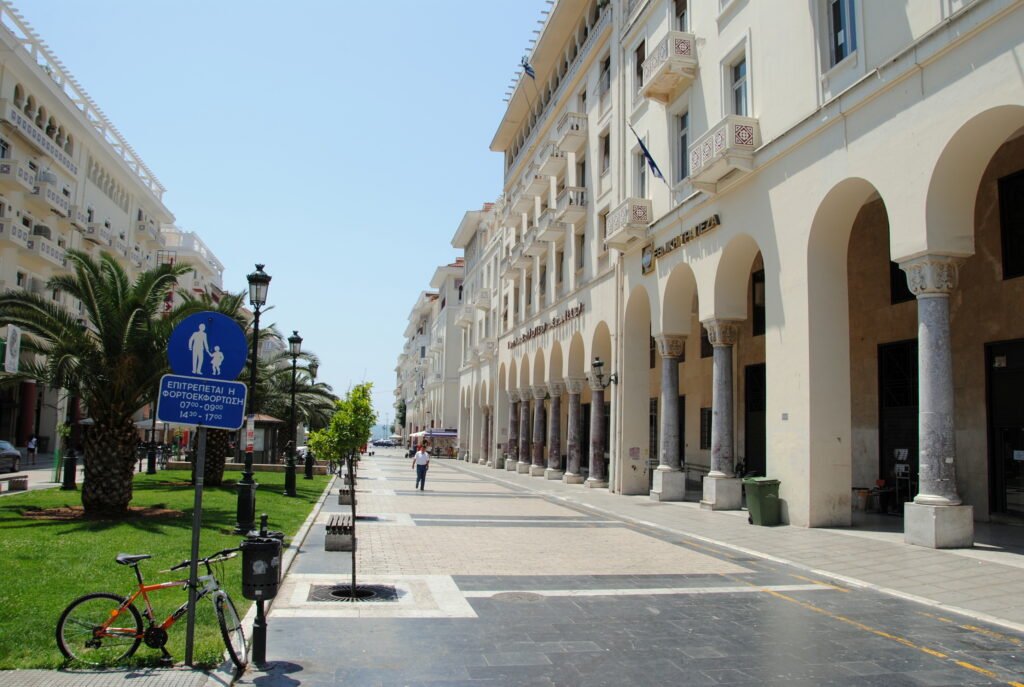
Thessaloniki works at a larger scale. The Thessaloniki guide links Aristotelous, the markets, Ladadika, the waterfront, White Tower and eastern monuments across the lower city. Ano Poli remains close on the map but rises sharply above that network. Metro and buses make longer or steeper trips much easier, particularly between the lower city, railway station and outer districts.
Rhodes Town and Chania Are Closer Than 83 Versus 82 Suggests
Rhodes Town has a slightly tighter concentration of sights. Inside the Rhodes Town walking guide, the Medieval City opens directly toward Mandraki, New Town and Elli Beach. Monte Smith is the main exception, sitting above the central area. Medieval stone, narrow streets and crowds also reduce comfort even when distances stay short.
Chania trades a little compactness for somewhat stronger visitor-useful transit. Its Old Town and harbor walking network runs through the Venetian Harbor, Splantzia and Koum Kapi, with Nea Chora extending naturally west. Chalepa and the Archaeological Museum are the real eastern extension. Buses help there, but they do not make Chalepa part of the historic core.
The one-point gap is small enough that itinerary preference matters more than ranking position. Rhodes Town is slightly tighter around its headline sights, while Chania offers useful bus support for its farther eastern areas. Both work very well without a car for a focused city stay.
Nafplio Is Easiest Once You Arrive—and Hardest to Reach
Nafplio’s sixth-place position does not mean it is difficult to explore on foot. The Nafplio walking guide keeps Syntagma Square, Old Town museums, the waterfront and port within a remarkably small lower-city area, and most routine sightseeing needs no bus at all.
Palamidi is the physical exception. The fortress sits close to town but requires a major climb. Nafplio’s bigger disadvantage comes before the walking weekend begins: local transit is limited, and travelers arriving through Athens normally need an additional intercity transfer to reach the city.
That creates the sharpest traveler insight in the ranking: Nafplio may require the least transport once there while requiring the most effort to reach without a car. Mycenae, Epidaurus and other Peloponnese destinations are better treated as separate regional excursions.
Short Distances Can Still Mean Serious Hills
| City | Where walking stays easier | Where terrain changes the trip |
|---|---|---|
| Athens | Syntagma, Ermou, Monastiraki and much of Thissio | Acropolis and Plaka elevation; optional Lycabettus is a much larger climb |
| Corfu Town | Spianada, Liston and most Old Town lanes | Fortress climbs and higher ground add localized effort |
| Thessaloniki | Waterfront and lower commercial center | Ano Poli requires a sustained climb above the lower city |
| Rhodes Town | Medieval City, Mandraki and New Town | Monte Smith rises above the main core |
| Chania | Old Town, harbor, Koum Kapi and Nea Chora | Chalepa adds more elevation on the eastern extension |
| Nafplio | Old Town and waterfront are mostly level | Palamidi is a major climb; Akronafplia adds smaller localized gradients |
A short map distance can still mean a demanding walk. Fortresses and upper districts such as Palamidi, Ano Poli or Monte Smith may require more time, energy or a well-placed bus or taxi even when they sit close to the center.
Historic Streets Are Not Automatically Easy Streets
The same caution applies to paving. Athens mixes strong pedestrian promenades with stone archaeological approaches and inconsistent sidewalks. Rhodes Town’s medieval lanes can be narrow and uneven. Corfu Town adds polished historic stone and fortress surfaces. Chania’s Venetian Old Town includes cobbles and tight lanes, while Nafplio’s historic paving can slow luggage, wheelchairs and tired walkers.
Heritage importance does not remove those practical differences. The useful question is whether the next ten minutes involve smooth pavement, steps, crowds, vehicle conflict or a clear crossing.
When Public Transport Improves the Weekend
Athens has the strongest public-transport network in this group, making it easier to combine a large city with walking-focused sightseeing. Thessaloniki also benefits from Metro and bus coverage across a broader city area and steeper upper-city trips. Corfu Town buses are particularly useful for the airport and southern extensions, while Chania buses help with Chalepa and other outer areas.
Rhodes Town uses buses mainly for airport access and selected outer-city trips. Nafplio is the opposite case: its compact center requires little local transport, but there is less backup once you move beyond it. In all six destinations, public transport works best when it saves a long, tiring or repetitive walk rather than replacing short central journeys.
Airport Arrival Changes the Whole Weekend
Corfu Town has the easiest airport-city relationship of the six. Athens has direct Metro service into the center, while Thessaloniki, Rhodes Town and Chania have direct public bus connections from their airports. The journey burden differs, but each supports a realistic no-car arrival. Nafplio has no comparable direct airport connection, so arriving through Athens requires more transfer planning than in the five airport-served destinations.
Which Greek City Fits Your Travel Style?
| Traveler priority | Best fit | Why |
|---|---|---|
| Best overall walk-and-transit city break | Athens | Dense central sightseeing plus the strongest transit backup |
| Best compact island-city core | Corfu Town; Rhodes Town | Both compress major sights into tight urban cores; Corfu has the easier airport relationship |
| Strongest transit | Athens; Thessaloniki | Athens leads overall transit depth; Thessaloniki has strong Metro-and-bus support for its larger city |
| Easiest airport arrival | Corfu Town | The airport is unusually close and directly connected by public transport |
| Best for minimizing local transit | Nafplio; Corfu Town | Nafplio’s lower core needs almost none; Corfu Town keeps most headline sights very close |
| Best Old Town walking | Nafplio; Rhodes Town; Corfu Town | Each offers a tightly concentrated historic core, with different surface and terrain caveats |
| Best waterfront-focused weekend | Thessaloniki; Chania; Rhodes Town | All three build major visitor movement around long, legible waterfront sequences |
| Best for travelers who dislike hills | Chania core; Nafplio lower town | Both keep their main lower-city sightseeing comparatively easy if Chalepa or Palamidi is skipped |
| Best for a larger urban weekend | Athens; Thessaloniki | These two offer the broadest city-scale experience with the strongest transit support |
| Easiest once you have arrived | Nafplio | Its lower-town sights are exceptionally concentrated and usually require no internal transport |
Bottom Line
Athens offers the strongest overall balance of central walking and public transport. Corfu Town and Thessaloniki reach the same score through very different experiences: Corfu is smaller and exceptionally easy to reach from the airport, while Thessaloniki combines a larger urban area with strong Metro and bus support. Rhodes Town and Chania are close enough that itinerary preference matters more than their one-point difference. Nafplio ranks sixth overall but remains exceptionally compact once you arrive.