
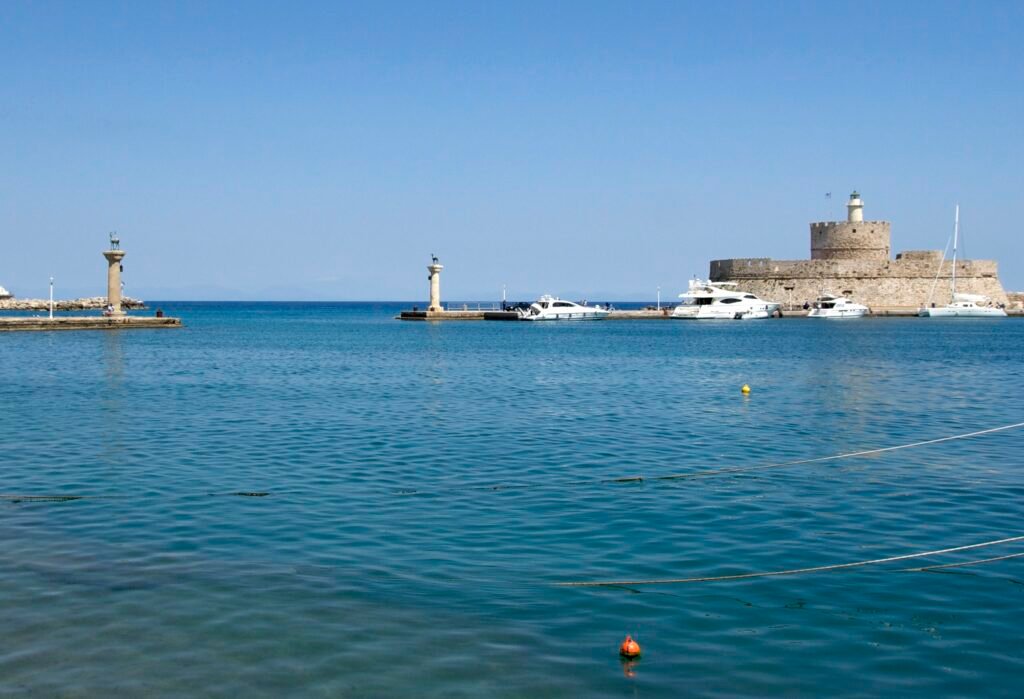
Inside the walls, major sights cluster along a remarkably short chain of lanes, squares, and gates. That compact core then opens directly toward Mandraki, where the waterfront leads into New Town and Elli Beach. These adjoining areas create a practical north–south visitor spine rather than isolated sightseeing pockets. Walking conditions change sharply by surface, however, from polished stone and cobbles to conventional sidewalks and promenades. Monte Smith breaks the pattern to the west, adding both distance and a genuine climb. That extension matters, but it does not undo the compact geography covering most first-time sightseeing.
Why Rhodes Town Works So Well on Foot
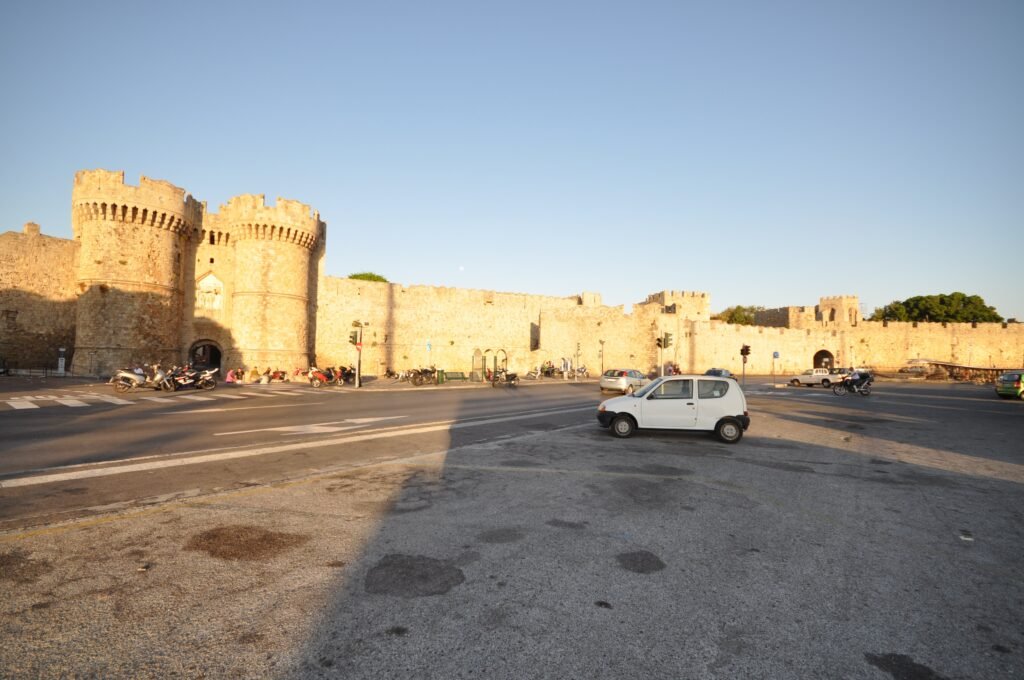
The strongest walking advantage is concentration. The Palace, Street of the Knights, Archaeological Museum, Hippocrates Square, and Jewish Quarter sit inside one compact walled network. Vehicle access is restricted through much of the Medieval City, leaving many central lanes dominated by pedestrians. Permitted vehicles, deliveries and service traffic can still appear, so the historic center should not be treated as completely vehicle-free.
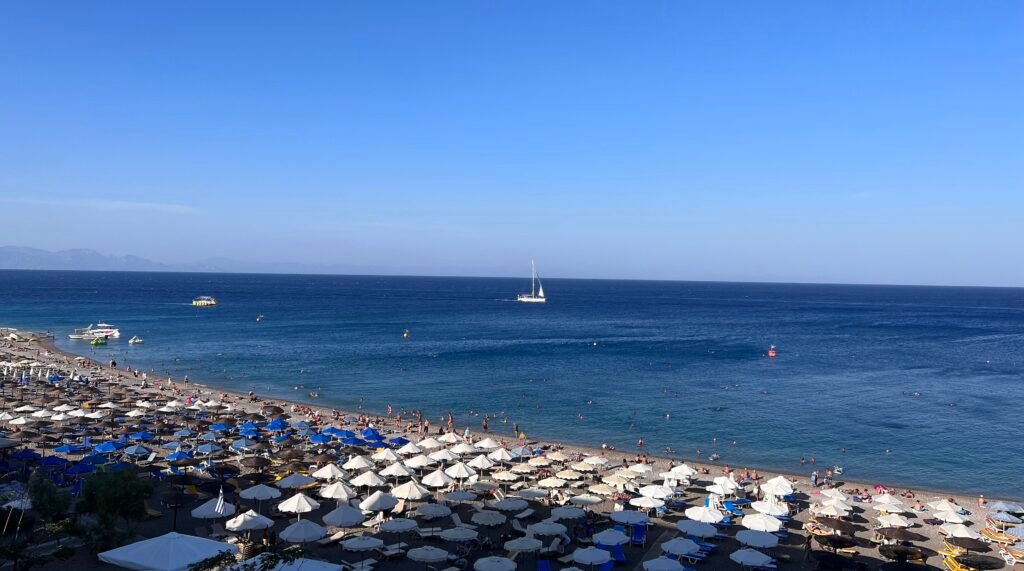
Leaving the walls does not end the useful walking network. Northern gates open toward Nea Agora and Mandraki, where the waterfront continues naturally into New Town. Elli Beach then begins near the northern hotel district, with the Aquarium at the tip. These are adjoining areas, not distant visitor islands requiring transit between each stop.
Where Walking Gets Harder
Historic paving is the Old Town’s main comfort penalty. Stone slabs, cobbles, narrow passages, occasional steps, and crowded commercial lanes can slow an otherwise short route. Those surfaces affect comfort and accessibility more than terrain. The central Medieval City is not meaningfully hilly enough to justify treating every cobbled street as an elevation problem.
New Town generally shifts to conventional sidewalks and road crossings. The Mandraki and Elli corridors are comparatively straightforward, although traffic grows around major junctions and gates. Wayfinding also improves outside the walls because the modern street pattern is easier to read.
Monte Smith Is the Important Exception
The Ancient Stadium and Acropolis of Rhodes sit west of the compact visitor spine. From the Old Town edge, allow roughly 20–30 minutes on foot depending on your starting gate. The approach also climbs, adding genuine effort that the flat waterfront does not prepare you for. Some sections feel more like ordinary urban road walking than sightseeing.
That makes Monte Smith a good place to use transport selectively. A current local bus or short taxi can reduce low-value mileage before exploring the stadium and temple area on foot. A local bus or short taxi can make this western extension easier without requiring a long cross-city walk.
Best Areas to Stay Without a Car
New Town near Mandraki is the most balanced base for many first-time visitors. It sits between Old Town, the bus terminals, restaurants, and the walk toward Elli Beach. Northern New Town works especially well for beach access and hotels. Staying inside the Medieval City maximizes historic-sight access, but luggage over uneven paving can be inconvenient.
Walking Times Between Major Rhodes Town Sights
Marine Gate to Hippocrates Square takes roughly 3–5 minutes. From there, the Archaeological Museum is about five minutes away. Continue through the Street of the Knights for roughly 7–10 minutes to the Palace. Northern Old Town gates reach Mandraki in about 5–10 minutes. Mandraki to Elli Beach is usually another 10–15 minutes. These are practical planning estimates rather than guaranteed walking times. Historic surfaces, crowds, crossings and individual pace can change the actual time.
A 2-Day Walking Route
The two days separate the dense historic core from the northern waterfront and western archaeological extension. This avoids repeating the same Old Town lanes and keeps Monte Smith from becoming a forced cross-city march.
Day 1 — Medieval City, Jewish Quarter and Harbor Edge
Walking route
Day 1 — Medieval City from the Palace to the Jewish Quarter and harbor
- Palace of the Grand Master
- Street of the Knights
- Archaeological Museum of Rhodes
- Hippocrates Square
- Socrates Street
- Kahal Shalom Synagogue
- Marine Gate
- Mandraki Harbor edge
Start at the Palace of the Grand Master, then descend the Street of the Knights toward the Archaeological Museum. Continue through Hippocrates Square and Socrates Street before turning southeast into the Jewish Quarter. Finish through Marine Gate at the harbor edge. The route follows the Old Town’s natural eastward flow with little backtracking.
Day 2 — Mandraki, Elli Beach and Monte Smith
Walking route
Day 2 — Mandraki, New Town, Elli Beach and Monte Smith
- Nea Agora / Mandraki bus area
- Mandraki Harbor
- Church of the Annunciation
- Elli Beach
- Aquarium of Rhodes
- Ancient Stadium of Rhodes
- Acropolis of Rhodes / Temple of Apollo area
Begin around Nea Agora and Mandraki, then follow the harbor north past the Annunciation church into New Town. Continue to Elli Beach and the Aquarium. From there, reposition toward the Ancient Stadium rather than spending limited time on exposed cross-city roads. Explore the stadium and Acropolis zone on foot once you arrive.
Using Local Buses in Rhodes Town
Most sightseeing inside Old Town, Mandraki, New Town and Elli Beach is simpler on foot once you are central. Local buses become more useful for airport arrival, outer-city destinations and reducing the uphill effort toward Monte Smith.
Rhodes Town and the wider island use several bus services, with routes and seasonal frequencies changing through the year. Check current local transport information before travel rather than relying on a fixed route number or timetable in the guide.
Arriving at Rhodes Airport Without a Car
Rhodes International Airport has direct public-bus connections with Rhodes Town. Journey times and frequencies vary by season and time of day, so check current airport and local-bus information before travel.
Central stops place arriving visitors close to New Town, Mandraki and the northern Old Town gates. The remaining walk is straightforward with light luggage, although stone paving inside the walls can make rolling suitcases slower.
Ferry Arrivals Are Even Closer to the Historic Core
Rhodes Town’s ferry and cruise facilities sit unusually close to the Medieval City. Some arrivals are only a short walk from the harbor-facing gates, while other berths sit farther south. This makes ferry arrival particularly convenient for island-hopping travelers, although the exact walking distance depends on the berth used.
When a Car Helps
A private car adds little to a normal Rhodes Town weekend. It becomes more useful when the trip shifts from the city to island destinations such as Lindos or remote beaches. Lindos, remote beaches and other island destinations are better treated as separate excursions from the Rhodes Town city break.
Practical Walking Limitations
Wear shoes with grip for polished stone and cobbles. Expect slower movement around cruise peaks and busy shopping streets. Travelers with limited mobility should check specific monument access before visiting, because historic surfaces and steps vary considerably. In summer, schedule Monte Smith early or late because exposed uphill walking can become tiring in strong sun.
Seasonal Comfort
Summer heat and strong sun can make the exposed waterfront and Monte Smith climb considerably more tiring. Plan uphill sightseeing earlier or later in the day, carry water and allow more time on hot afternoons. Cooler months make the same routes more comfortable, although wet historic paving can become slippery.
Bottom Line
Rhodes Town is strongest when treated as one compact historic-and-waterfront network with one clear western extension. Old Town, Mandraki, New Town, and Elli Beach fit naturally into walking days. Monte Smith deserves separate planning and selective transit. For a two- or three-day city stay, a private car is unnecessary.