
Ancient and modern visitor streets overlap tightly between Syntagma and the Acropolis, but the walking experience changes block by block. Ermou provides a direct pedestrian spine to Monastiraki, while Plaka narrows into stone lanes and occasional stairs. South of the hill, Dionysiou Areopagitou and Apostolou Pavlou create a long pedestrian promenade toward Thissio. The Acropolis itself remains a real climb, with uneven stone on parts of the approach. Eastward, the National Garden, Zappeion, Olympian Zeus, and Panathenaic Stadium form another workable cluster. Omonia and the National Archaeological Museum sit farther north, where transit can save time.
How Athens’s Historic Core Connects on Foot
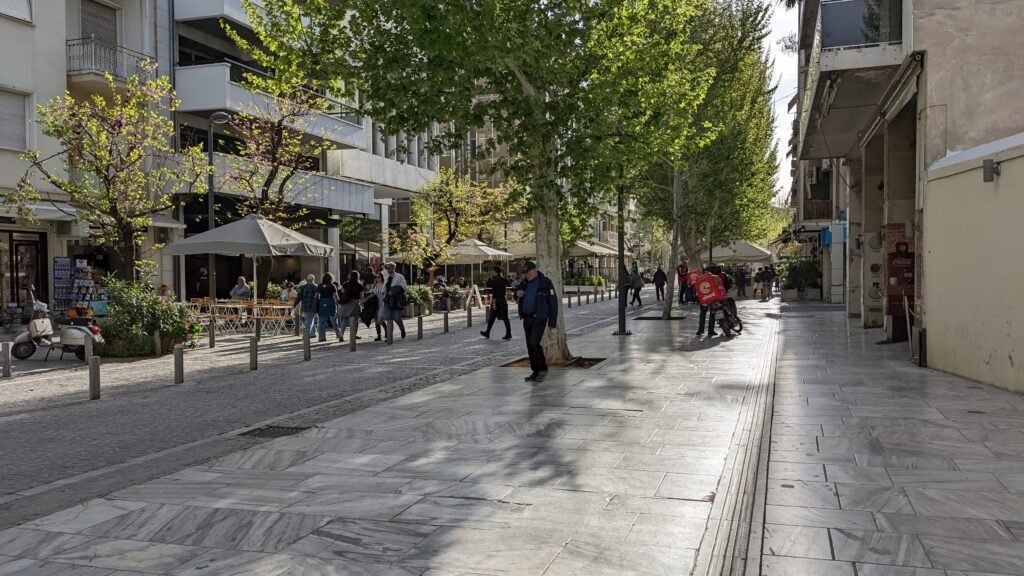
The cleanest walking spine starts at Syntagma and follows pedestrian Ermou to Monastiraki. From there, Plaka, the Roman Agora, and the Ancient Agora sit within a compact network of short historic streets. Crowds can slow this section, especially around Monastiraki and the market lanes. Still, the distances remain genuinely short before transit enters the picture.
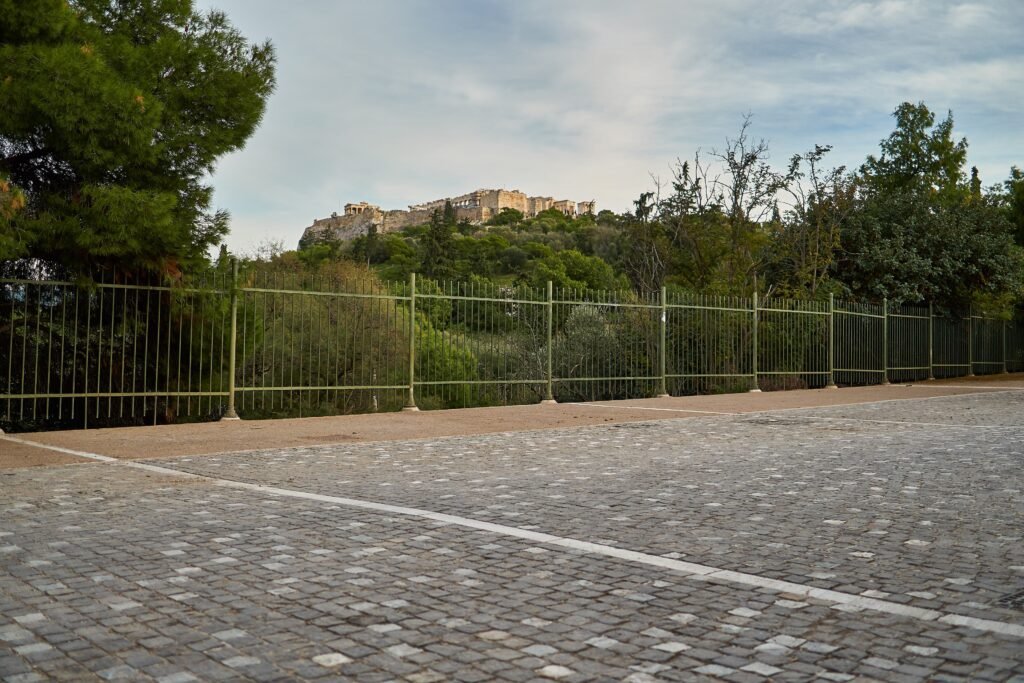
South of Plaka, the walking character changes from dense lanes to broad archaeological promenades. Dionysiou Areopagitou runs for about 700 metres beside the Acropolis on stone paving. Its continuation, Apostolou Pavlou, descends toward Thissio and the Ancient Agora. This museum-to-Thissio route measures about 1.6 kilometres before attraction interiors. Walking it westward avoids turning the final section into another climb.
The Acropolis Is Close, but the Climb Is Real
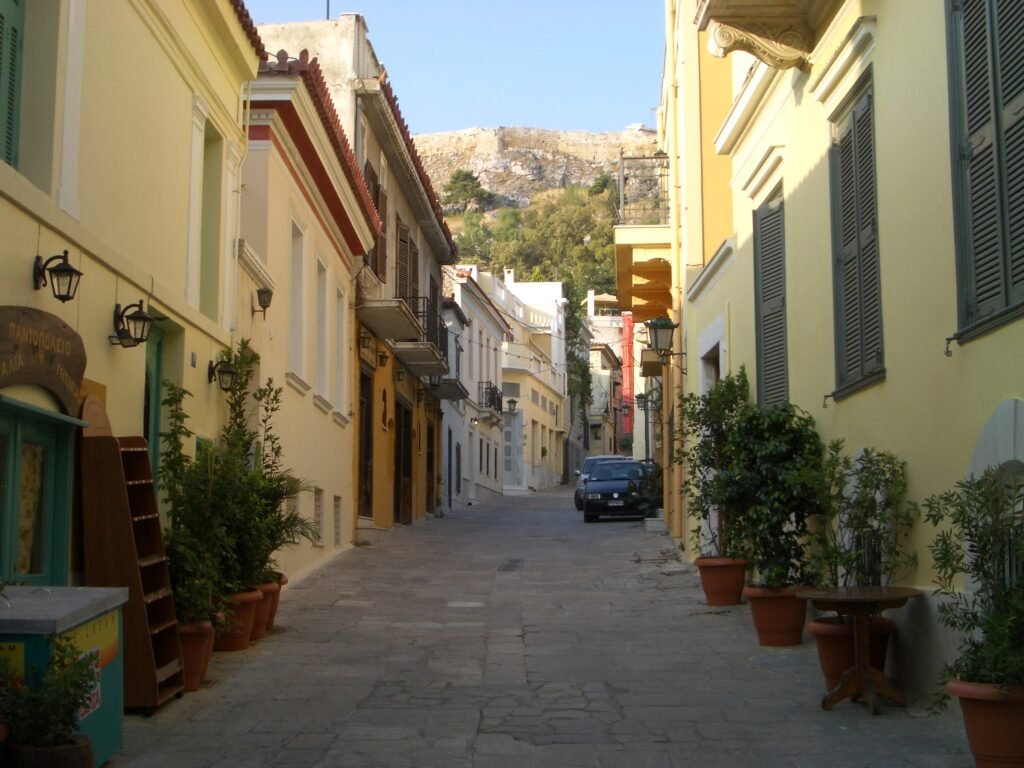
The Acropolis should not look farther away simply because reaching it takes effort. Its approaches rise directly from Plaka and Dionysiou Areopagitou, keeping the site inside the central visitor geography. However, official accessibility guidance documents meaningful gradient, slippery stone, uneven blocks, and gaps on parts of the approach. Those surfaces matter after several hours on foot.
Anafiotika adds another localized challenge above Plaka. Its tiny lanes and stairs are rewarding to explore slowly, but they are not the easiest through-route. Travelers who want gentler footing can stay lower in Plaka and approach the museum from Makrigianni. Lycabettus is a different scale entirely, with a steep path and funicular from Kolonaki.
Syntagma, the National Garden and the Stadium Fit Together
The eastern side of central Athens works better on foot than a map of major roads suggests. Syntagma connects directly with the National Garden, Zappeion, Olympieion, Hadrian’s Arch, and the Panathenaic Stadium. Official accessible routes place this cluster at roughly three to three-and-a-half kilometres. Most of the walking is flat, although crossings and surface quality vary near the major avenues.
The National Garden is particularly useful when temperatures remain high. Its shaded paths soften an otherwise exposed sightseeing day, although some surfaces are soil, gravel, or mixed paving. Around the Panathenaic Stadium, summer-style heat can linger on exposed marble. Morning or late-afternoon timing is more comfortable on warm September days.
Where to Stay for an Easy Walking Weekend
Syntagma is the most balanced base for combining the historic core with the eastern sights. Monastiraki and Psyrri put the agoras, Plaka, and market streets immediately outside your door. Plaka and Acropolis/Koukaki minimize walking to the museum and Acropolis, but introduce more slope and historic paving. Thissio favors the western promenade, while Kolonaki works best for the eastern center and lower Lycabettus slopes.
Useful Walking Times
- Syntagma to Kapnikarea on Ermou: about 6–8 minutes for roughly 450 metres.
- Syntagma to Monastiraki: about 10–12 minutes along the pedestrian Ermou corridor.
- Hadrian’s Library area to Thissio via Adrianou: about 7–10 minutes for roughly 500 metres.
- Acropolis Museum area to Thissio via the pedestrian promenade: about 20–25 minutes before attraction visits.
- Omonia to the National Archaeological Museum: about 10–15 minutes.
- The Syntagma–National Garden–stadium–Olympieion cluster forms roughly a 3–3.5 kilometre sightseeing loop.
These are practical planning estimates rather than guaranteed walking times. Crowds, site entrances, crossings and uphill sections can add time.
A 2-Day Walking Route
Day 1 — Syntagma, the Historic Core and the Acropolis Promenade
Walking route
Day 1: Syntagma, Monastiraki, Plaka, the Acropolis and Thissio
- Syntagma Square
- Ermou Street and Church of Panagia Kapnikarea
- Monastiraki Square
- Ancient Agora of Athens
- Roman Agora
- Plaka and Anafiotika
- Acropolis Museum
- Acropolis of Athens
- Dionysiou Areopagitou
- Apostolou Pavlou
- Thissio Square and Metro Station
Start at Syntagma and follow Ermou west to Monastiraki, stopping at Kapnikarea on the way. Visit the Ancient Agora from Adrianou, then continue toward the Roman Agora and Plaka. Climb selectively through Anafiotika before dropping toward the Acropolis Museum. Visit the Acropolis next, accepting that its central location still comes with real elevation and uneven stone. Finish by following Dionysiou Areopagitou into Apostolou Pavlou and downhill toward Thissio.
Day 2 — Markets, the National Museum and the Eastern Cluster
Walking route
Day 2: Psyrri, Omonia, the National Archaeological Museum and the eastern cluster
- Iroon Square, Psyrri
- Athens Central Market
- Omonia Square
- National Archaeological Museum
- Syntagma Square
- Kolonaki Square
- Panathenaic Stadium
- National Garden
- Zappeion
- Temple of Olympian Zeus
- Hadrian's Arch
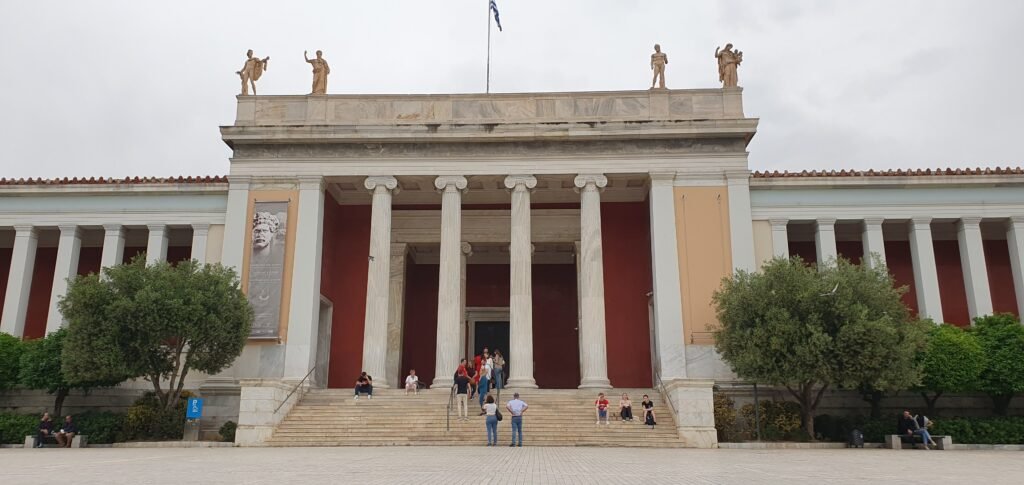
Begin in Psyrri and walk north on Athinas through the Central Market to Omonia. Continue to the National Archaeological Museum, which sits outside the tight historic core. Return to Omonia and use Line 2 to Syntagma instead of repeating low-value central mileage. From there, walk through Kolonaki, then angle south to the Panathenaic Stadium. Finish through the National Garden, Zappeion, Olympieion, and Hadrian’s Arch.
When the Metro and Buses Help
Athens transit is most valuable when it prevents a second long walk between already distinct clusters. Line 1 links Thissio, Monastiraki, Omonia, and Victoria. Line 2 connects Omonia, Syntagma, and Akropoli, making the National Archaeological Museum extension easier to manage. Line 3 is useful for the airport and east-west movement, while buses and trolleybuses fill surface gaps.
Athens has integrated ticketing across Metro, tram, buses and trolleybuses, with contactless payment available for many journeys. Fares, ticket validity and overnight service patterns can change, so check current OASA information before travel, particularly for airport trips or late-night journeys.
Temporary maintenance can occasionally affect individual Metro stations or lines. Check current OASA or STASY service notices when your plans depend on a particular route.
Arriving from Athens International Airport
Metro Line 3 provides a direct public-transport connection between Athens International Airport and central Athens, including Syntagma. Airport trains operate less frequently than the central Metro network, so check the current timetable before travel.
Airport express buses provide another direct option, including overnight service on selected routes. Piraeus is also connected by public transport but works better as a separate port district than as part of the central Athens walking itinerary.
Where Walking Gets Harder
The best pedestrian streets can disguise weaker conditions on ordinary blocks. City accessibility reporting documents sidewalk obstruction and uneven usability, while official routes note missing ramps at selected crossings. Plaka and Anafiotika add historic stone and stairs. Omonia introduces more traffic, and the walk north to the National Archaeological Museum feels more urban than the Acropolis-side promenades.
Kolonaki is still a reasonable central extension, but the streets rise toward Lycabettus. The summit should remain an optional hill outing rather than part of a normal sightseeing loop. Walking there is steep, while the funicular reduces effort without making the hill geographically flat.
Seasonal Walking Conditions
Hot weather can shorten comfortable walking windows, especially around exposed stone and marble sites and on uphill approaches. Start climbing sections earlier when temperatures are high, carry water and use shaded areas such as the National Garden when practical. Cooler parts of the day are better suited to longer archaeological promenades.
When a Car Helps
A private car adds little to a standard two- or three-day stay focused on central Athens. It becomes more relevant for selected regional trips or complex multi-stop excursions outside the city. Cape Sounion, Delphi, Corinth and island trips such as Aegina or Hydra are better treated as separate regional excursions.
Bottom Line
Central Athens packs an unusually large share of first-time sightseeing into a coherent walking network. Ermou, Plaka, Monastiraki, the Acropolis promenades, and the eastern garden-stadium cluster do most of the work. The tradeoff is physical consistency: hills, historic paving, busy roads, and weaker ordinary sidewalks interrupt an otherwise strong pedestrian experience. Use transit for the National Archaeological Museum, outer stays, late returns, and airport arrival rather than for every short central hop.