
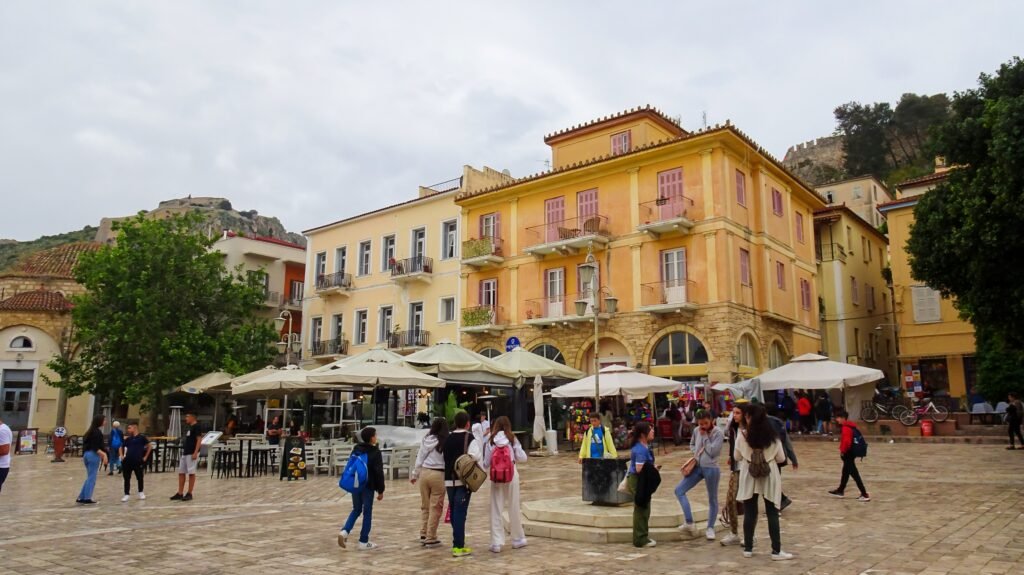

Between Syntagma Square and the harbor, most first-time sightseeing happens within a few tightly connected blocks. Staikopoulou and neighboring lanes lead directly to museums, churches, cafés, shops, and the waterfront. The lower core stays mostly level, while stone paving and narrow historic streets can slow some walkers. Westward, Arvanitia Beach sits close enough to feel like a natural extension of the center. Above it, Akronafplia introduces stairs and gradients rather than major distance. Palamidi changes the effort completely: the fortress stands nearby on the map, yet the hill rises 216 meters. That contrast defines Nafplio better than its compact appearance alone.
Why Nafplio Works So Well on Foot
Syntagma Square is the practical center of the first-time visitor map, not just its ceremonial heart. The Archaeological Museum faces the square, while the War Museum and Agios Spyridon sit only a few short streets away. Staikopoulou and neighboring lanes feed directly toward cafés, shops, the waterfront and port. The Bourtzi departure area sits directly on the waterfront, while visiting the fortress itself requires a boat from shore. Treat Bourtzi as a separate harbor excursion from the walking route through the Old Town.
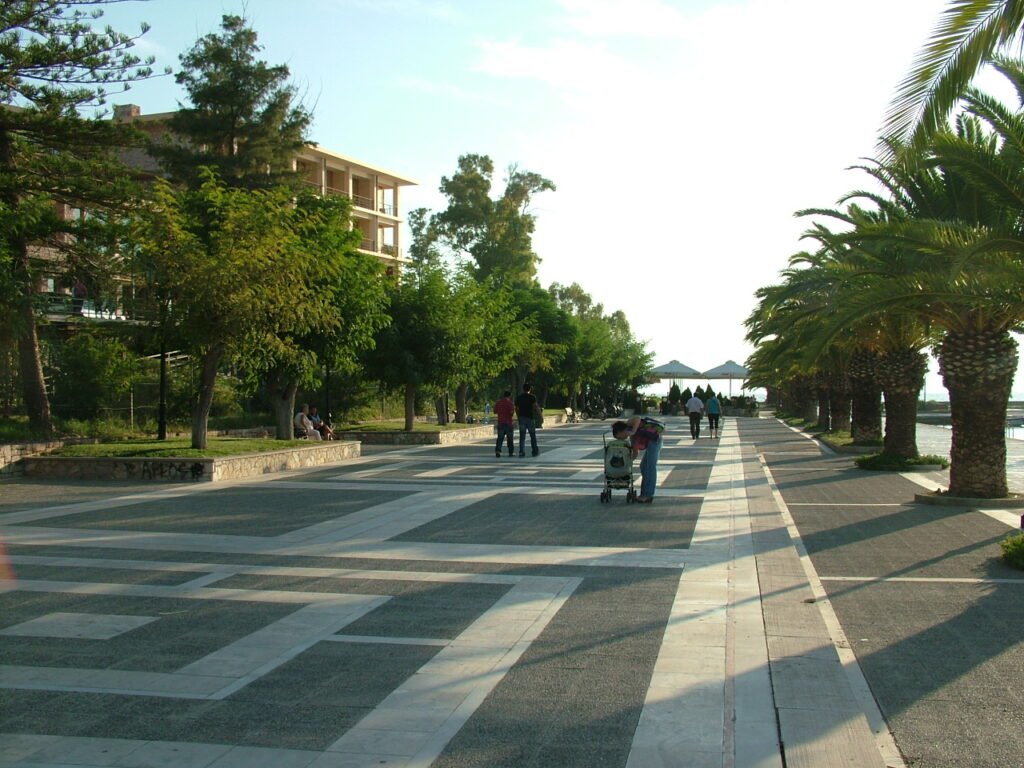
The harbor strengthens the lower-city network because its promenade gives walkers a broad, level alternative to the tighter historic lanes. From the shore, the Old Town remains immediately behind you rather than becoming a separate district. That combination makes repeated short walks practical and keeps most routine visitor amenities inside the same central area.
Where Walking Gets Harder
Akronafplia and Arvanitia are close to the center, but their access introduces slopes, stairs and uneven historic surfaces. Municipal walking routes climb across Akronafplia before descending through steps and narrow Old Town streets. Arvanitia Beach is also reached by a land-side uphill approach followed by steps. These are real extensions of the central itinerary, yet they are less accessible than the flat harbor promenade.
Palamidi is a different category of effort. Hellenic Heritage places the fortress on a 216-meter hill and gives about one hour on foot from Syntagma Square. Its heritage page uses the famous 999-step description. The exact step count matters less than the structure: a long, steep stone ascent separates town from the entrance. A road reaches the eastern gate in about ten minutes by car or taxi.
Best Areas to Stay Without a Car
Old Town is the strongest base for a walking weekend because many hotels sit on or beside Syntagma Square, Othonos and Spiliadou. The waterfront and adjacent modern-center streets also work well, keeping the bus station, harbor and historic center within short walks. Akronafplia accommodation can offer immediate historic access but adds gradients. Outer properties toward Aria can remain practical by KTEL or taxi, although they sacrifice the ability to step directly into the historic center.
Useful Walking Times
| Walk | Typical time |
|---|---|
| Syntagma Square to Archaeological Museum | 1–2 minutes; the museum is on the square |
| Syntagma Square to Agios Spyridon | about 3–5 minutes |
| Syntagma Square to Filellinon Square / Bourtzi departure area | about 4–6 minutes |
| Syntagma Square to Arvanitia Beach by the direct land-side route | about 10–15 minutes, including the short climb and steps |
| Harbor end to Arvanitia Square on the seafront promenade | about 1 km; roughly 15–20 minutes when the path is open |
| Syntagma Square to Akronafplia | about 10–15 minutes, depending on the chosen uphill approach |
| Syntagma Square to Palamidi on foot | about 1 hour according to Hellenic Heritage |
These are practical planning estimates rather than guaranteed walking times. Stairs, gradients, historic surfaces and individual pace can change the actual time, particularly around Akronafplia, Arvanitia and Palamidi.
A 2-Day Walking Route
Two days are enough without unnecessary backtracking. The first day demonstrates how much of Nafplio is genuinely compact, while the second isolates the one major vertical challenge.
Day 1 — Old Town, Akronafplia, Arvanitia and the harbor
Walking route
Day 1 — Old Town, Akronafplia, Arvanitia and the harbor
- Syntagma Square
- Archaeological Museum of Nafplion
- War Museum Annex Nafplio
- Church of Agios Spyridon
- Akronafplia
- Arvanitia Beach
- Land Gate
- Filellinon Square and Bourtzi boat departure area
- Port of Nafplio
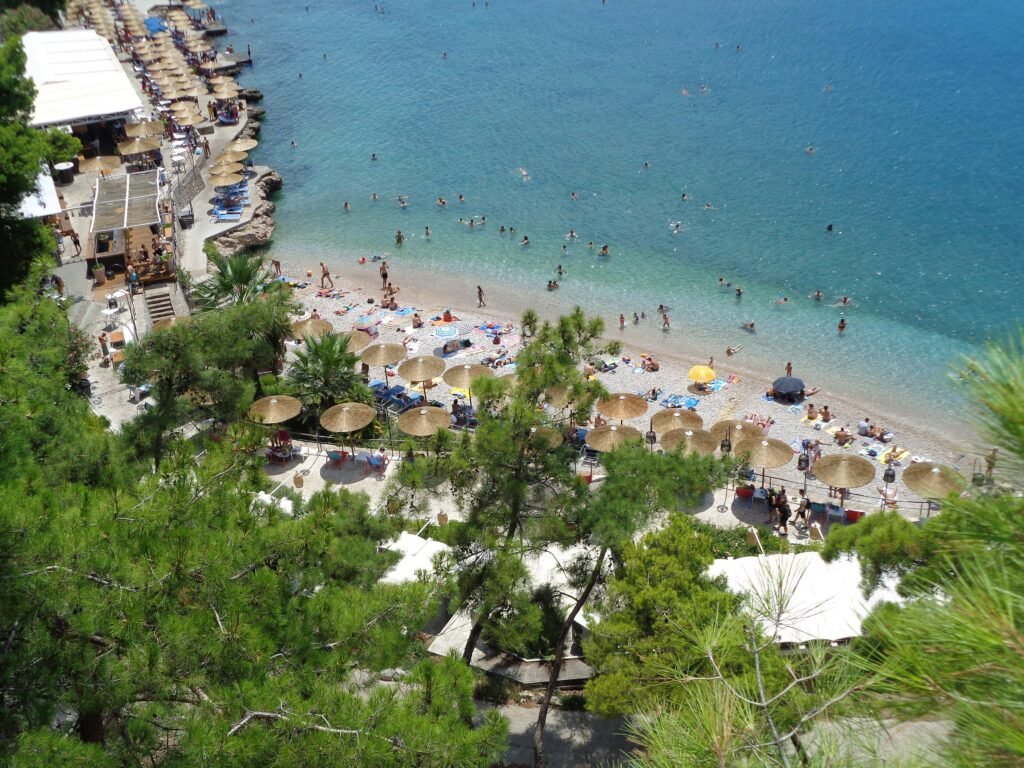
Begin around Syntagma Square, then clear the Archaeological Museum, War Museum and Agios Spyridon before climbing toward Akronafplia. Continue to Arvanitia Beach, return downhill through the Land Gate, and finish around Filellinon Square and the port. This sequence keeps the climb concentrated instead of repeatedly crossing the same streets. It also avoids depending on the cliffside Arvanitia promenade, whose access can occasionally be restricted after maintenance work or unstable conditions.
If the Arvanitia seafront path is open during your visit, it can provide a scenic alternative for the return toward the harbor. Check current municipal information before relying on it as part of the route.
Day 2 — Palamidi without wasting the rest of the day
Walking route
Day 2 — Palamidi descent and the lower-city parks
- Palamidi Fortress
- Palamidi western staircase
- Staikopoulos Park
- Land Gate
- Three Admirals Square
- Nafplio waterfront promenade
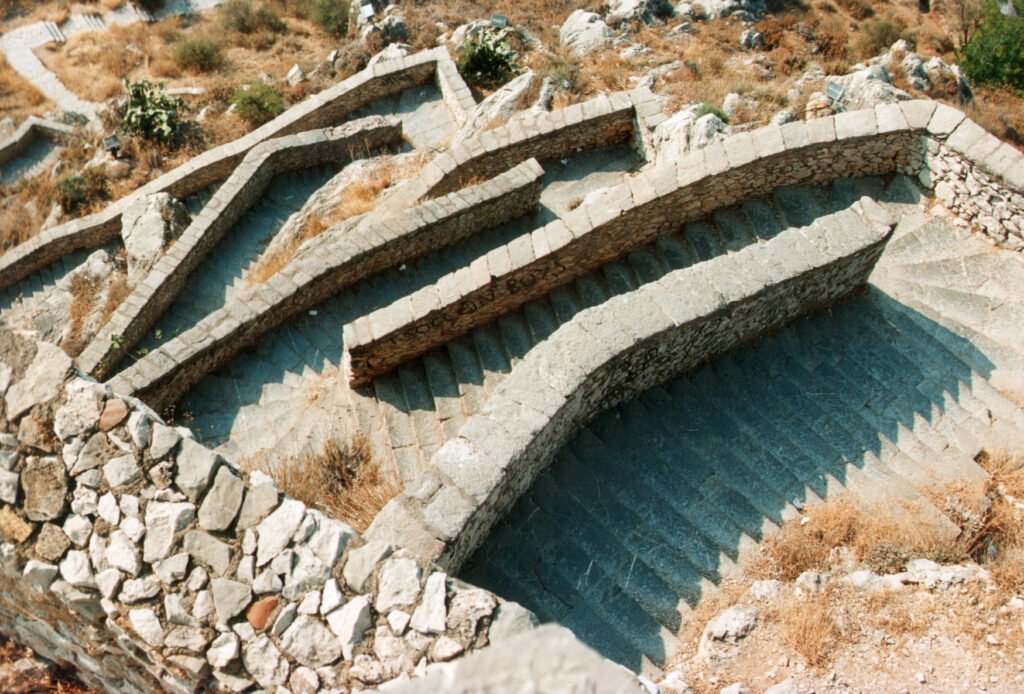
For most weekend visitors, a taxi to Palamidi’s eastern road entrance is an efficient choice. Explore the fortress, then descend the western staircase toward Staikopoulos Park if your knees and conditions allow. Finish through the lower parks and waterfront rather than climbing back uphill. Strong walkers can reverse the staircase segment for the full ascent, but the official walking estimate is about one hour from Syntagma Square.
How Useful Is Transit in Nafplio?
Local public transport plays a secondary role because Nafplio’s main visitor area is already compact. Regional buses are useful for some outer accommodation and nearby destinations, while taxis can save effort for places such as the Palamidi road entrance.
Bus services to beaches, archaeological sites and nearby towns can vary seasonally. Check current KTEL Argolida information before planning those trips rather than relying on a fixed seasonal schedule in the city guide.
Arriving in Nafplio Without a Car
Most international visitors reach Nafplio through Athens. Public transport typically requires an airport-to-Athens transfer followed by an intercity coach toward Nafplio, making the arrival less direct than in Greek cities with their own airport or rail station.
Intercity coaches connect Athens with Nafplio throughout the week, but the transfer and luggage handling require more planning than a direct rail or airport connection. Nafplio does not have an operational passenger railway station, so check current KTEL Argolida and Athens transport information before travel.
When a Car Helps
A private car adds little inside the standard Old Town and waterfront weekend. It becomes more useful for separate regional excursions such as Mycenae, Epidaurus, Tiryns, Tolo and wider Peloponnese trips when public schedules do not match your plans.
Walking Limitations and Practical Tips
Historic paving is the most common comfort issue in the lower core, while stairs reduce step-free access around Akronafplia and Arvanitia. The Palamidi staircase is the main sustained physical challenge and can be exposed to strong sun outside the coolest hours. Use the road entrance when mobility, heat or limited time makes the full climb a poor trade.
Check the current status of the Arvanitia cliffside path before relying on it. Rockfall, stabilization work or weather-related closures can occasionally affect access, so the Old Town and land-side routes are safer assumptions when planning the weekend in advance.
Seasonal Walking Note
Summer heat and sun exposure can shorten the comfortable walking window, especially on the Palamidi ascent and exposed waterfront. Start the fortress climb early, carry water and consider the road entrance when conditions make the staircase uncomfortable. Cooler weather makes longer walks easier, while rain can make historic stone and steps more slippery.
Bottom Line
Nafplio works best as a very compact lower-city weekend with one deliberately separate hilltop effort. Syntagma Square, Old Town museums, Agios Spyridon, the port and waterfront require little transport planning. Akronafplia and Arvanitia add manageable vertical variety. Palamidi deserves its own time-and-energy decision, while regional buses and taxis are useful for the few destinations that fall beyond an easy central walk.