
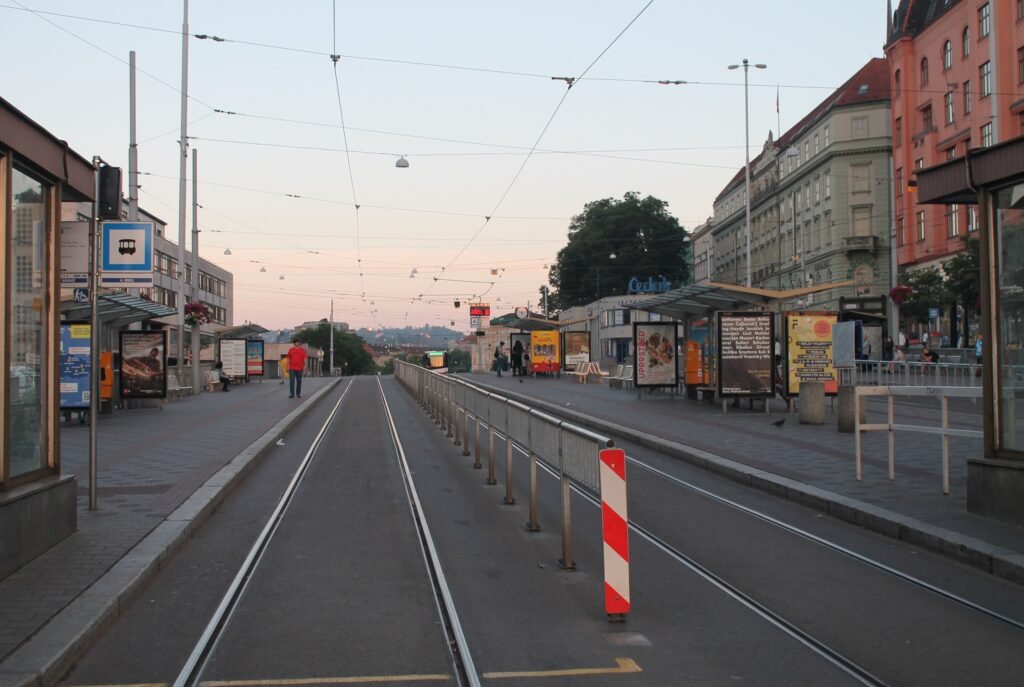
Step off a train in Brno and sightseeing begins immediately; Prague asks you to manage a denser, larger historic city. Olomouc compresses its main sights into a tiny flat core beyond the station, while Plzeň organizes around Republic Square. Karlovy Vary stretches along the Teplá valley, where hillside turns can change an easy promenade into a climb. Český Krumlov shrinks the map further, wrapping its old town around Vltava bends beneath the castle. Those contrasts explain why size alone predicts little. The best Czech walking weekend depends on sight clusters, surface comfort, slopes, and whether transit solves real gaps.
Six Czech Cities, Six Different Walking Weekends
The ranking is close at the top, but the trips are not interchangeable. Brno and Prague share first place, while Olomouc and Plzeň share third. Karlovy Vary and Český Krumlov follow with very different strengths.
| Rank | City | Overall score | Strongest advantage | Main limitation |
|---|---|---|---|---|
| 1 | Brno | 92/100 | Direct station-to-center geography with excellent transit backup | Localized climbs around Špilberk and higher streets |
| 1 | Prague | 92/100 | Extraordinary first-time sight density across both Vltava banks | Historic paving, crowds, larger scale, and Castle Hill elevation |
| 3 | Olomouc | 90/100 | Tiny, flat historic core where walking is the default | Main railway station sits outside the compact squares |
| 3 | Plzeň | 90/100 | Flat, direct, square-based walking with easy orientation | Brewery edge, railway approaches, and a few wider crossings |
| 5 | Karlovy Vary | 83/100 | Clear Teplá valley promenade with strong car-free arrival | Hillside hotels, Diana, Westend, and viewpoints add vertical effort |
| 6 | Český Krumlov | 82/100 | Exceptional micro-compactness across old town, Latrán, and lower castle | Cobbles, castle elevation, thinner local transit, and a distant rail station |
Brno and Prague are tied at 92/100, while Olomouc and Plzeň are tied at 90/100. The shared positions explain why the displayed ranking moves from first to third and then from third to fifth.
Brno and Prague: Two Ways to Share First Place
Brno: the cleanest station-to-center handoff
Brno’s strength is balance rather than one spectacular walking feature. Brno hlavní nádraží sits immediately beside the streets visitors actually want to use. From the station, Masarykova leads naturally toward Zelný trh, Petrov, náměstí Svobody, and the Old Town. There is little low-value approach walking before sightseeing begins.
Špilberk and higher central streets introduce real climbing, but they are localized rather than citywide. Most ordinary center-to-center walking remains direct and manageable. Trams become useful for Villa Tugendhat, longer extensions, or tired returns, not for every short central trip. That combination is why our Brno station-to-center walking guide works so well without a car.
Prague: denser sightseeing, with more friction underfoot
Prague reaches the same 92/100 through a very different experience. Old Town, Josefov, Charles Bridge, Malá Strana, and central New Town hold an exceptional share of first-time sights. Several bridges keep the Vltava from splitting that core, and Charles Bridge is itself part of the sightseeing route.
The important exception is vertical. Malá Strana remains geographically close to Prague Castle, but the approach climbs decisively. Trams can spare your legs without making Castle Hill flat. Cobbles, crowds, narrow historic streets, and the larger overall footprint add friction that Brno avoids more often. The Prague walking and transit guide is best used by travelers who want a major-capital weekend without renting a car.
The equal score comes from different strengths. Prague offers denser headline sightseeing across a larger historic core, while Brno provides a simpler rail arrival and more straightforward everyday walking. Both have strong public transport, but visitors are likely to use it differently.
Olomouc and Plzeň: Tiny-Core Compactness Versus Simple Orientation
Olomouc: walk-first once you reach the squares
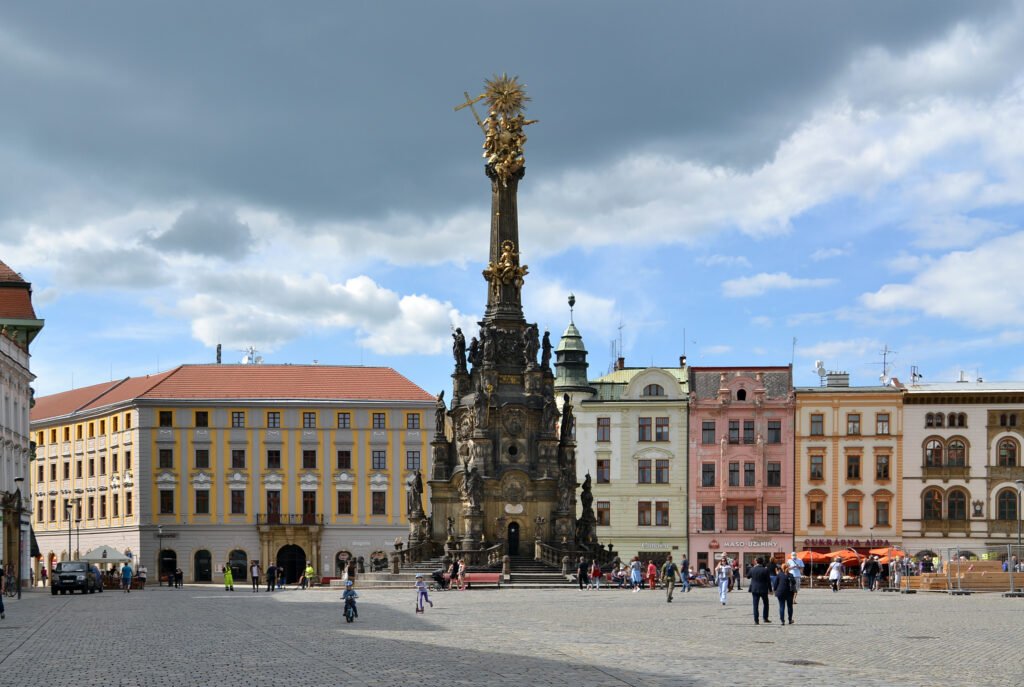
Olomouc feels almost purpose-built for a short walking weekend once you reach Horní náměstí. Dolní náměstí, the astronomical clock, Holy Trinity Column, central churches, university streets, and the cathedral quarter sit close together. The central visitor geography is also generally flat, so distance and effort stay low.
The catch is the gateway. Olomouc hlavní nádraží sits roughly two kilometers east of the historic squares. Frequent trams solve that gap efficiently, but they do not make the station part of the tiny core. See the Olomouc historic-center walking guide if you want a trip where transit mostly disappears after arrival.
Plzeň: a square-based city that is hard to misread
Plzeň is slightly less compressed, yet its layout is exceptionally easy to understand. Náměstí Republiky anchors the central grid, with the cathedral, Great Synagogue, museums, and garden-belt streets close around it. The main station is near the core, and Pilsner Urquell sits nearby as a separate attraction complex.
Flat streets and direct routes make the station–brewery–center relationship feel straightforward. The brewery boundary, rail edge, and major crossings add local friction without disrupting the whole weekend. Our Plzeň car-free weekend guide suits travelers who value simple orientation more than absolute micro-compactness.
Their equal score reflects two different walking experiences. Olomouc offers the tighter historic core, while Plzeň creates a simpler sequence between the station, brewery area and Republic Square.
Karlovy Vary and Český Krumlov: Small Does Not Mean Simple
Karlovy Vary: follow the valley, then choose your climb
Karlovy Vary works lengthwise. The Teplá guides visitors past colonnades, Hot Spring, central spa streets, and Grandhotel Pupp in one readable corridor. Frequent bridges let you switch banks without breaking the route. Much of this valley-floor walking is close to level.
Elevation changes the experience once you leave the river. Westend, Diana, hillside hotels, forest paths, and viewpoints can sit nearby horizontally but far above. Grouping those sights into one climb is smarter than repeatedly dropping back to the valley. Buses and vertical transport can reduce effort, but the hills remain real.
Karlovy Vary also works well for visitors arriving without a car. Direct coaches can connect Prague Airport with the city, while rail provides another option from Prague and other Czech destinations. The railway station sits outside the main colonnade corridor, so local transport can be useful with luggage. Our Karlovy Vary valley-and-hills guide explains how to manage the steeper parts of the stay.
Český Krumlov: almost everything is close, but not everything is easy
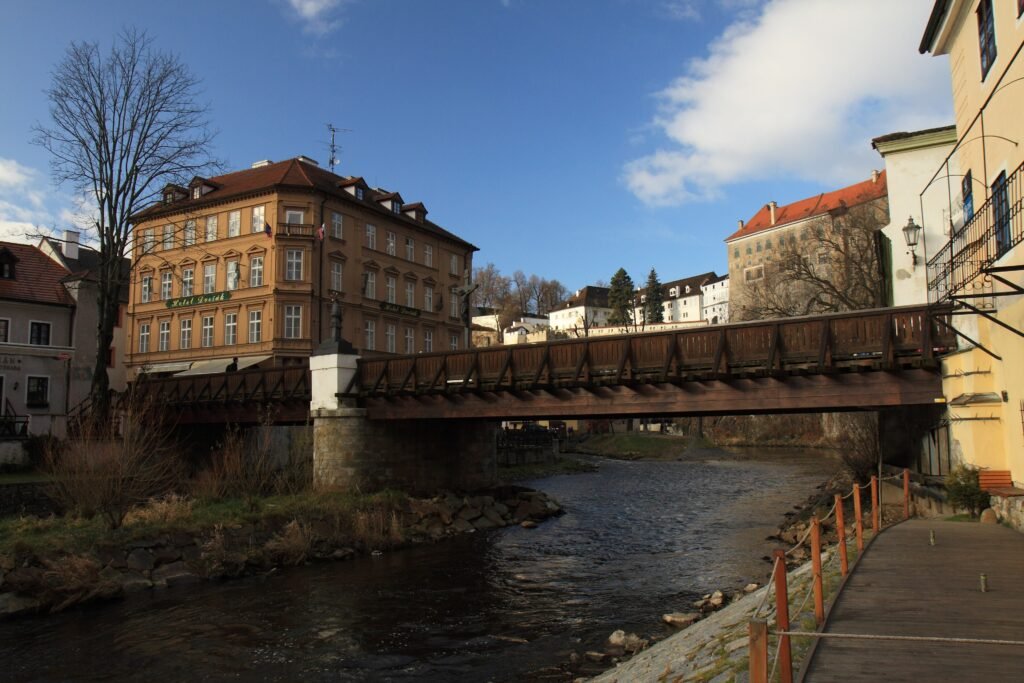
Český Krumlov is the clearest warning against equating tiny size with the highest overall result. Náměstí Svornosti, St. Vitus Church, Egon Schiele Art Centrum, Latrán, and the lower castle fit into a remarkably small footprint. Short bridges keep the Vltava bends from seriously fragmenting that network.
The friction is underfoot and uphill. Cobbles, uneven stone, narrow passages, castle ramps, and the climb toward the gardens make short distances more demanding. Local transit is modest because the center itself rarely needs it. The bus station is much closer to the old town than the railway station, so coach arrival from Prague is often the easier choice. Use the Český Krumlov car-free arrival guide to compare those gateways.
Karlovy Vary and Český Krumlov are only one point apart, but the trips feel nothing alike. Karlovy Vary is longer, more linear, and better supported by local transport. Český Krumlov is dramatically smaller, with rougher surfaces and less useful urban transit.
Flat Centers, Castle Climbs, and Spa Hills
Olomouc and Plzeň are the easiest choices if you want to minimize climbing. Brno adds short, localized rises around Petrov and Špilberk without turning the whole center into a hill workout. Prague is similarly mixed: Old Town and river-level routes are manageable, while Castle Hill and Petřín change the effort quickly.
Karlovy Vary creates the sharpest valley-to-hillside contrast. Český Krumlov compresses its climbs into a much smaller area, especially around the castle and gardens. In both places, a short map distance can still mean meaningful vertical work.
Rivers That Connect Instead of Divide
A river does not automatically make a Czech city harder to walk. Prague’s central Vltava crossings connect Old Town and Malá Strana repeatedly, with Charles Bridge embedded in the sightseeing route. Český Krumlov uses short bridges to stitch its river bends together, while Karlovy Vary uses frequent Teplá crossings along the spa corridor.
The practical question is always where the crossings actually sit. In these three cities, bridge placement generally supports the visitor walking pattern instead of forcing large detours.
Where the Station Changes the Weekend
Brno has the cleanest rail arrival: the main station sits immediately beside the central sightseeing streets. Plzeň also performs well because the station, Republic Square, and brewery sit in a practical short sequence. Olomouc is different; its station is excellent for long-distance trains but clearly outside the tiny historic core.
Prague rail arrivals are central, yet airport arrivals usually involve more friction before the walking weekend begins. Karlovy Vary benefits from direct airport coaches, though local onward transport may still help with luggage. Český Krumlov reverses the usual rail-first assumption because its bus station is substantially handier for the old town.
When Trams or Buses Actually Improve the Trip
In Brno, transit is excellent backup for a center that already works on foot. Prague uses trams and Metro more actively because a larger city creates genuine gaps between visitor districts. Olomouc uses trams mainly to solve the station-to-center gap, while Plzeň needs less central repositioning.
Karlovy Vary buses become valuable when luggage or hills enter the day. Český Krumlov uses local buses mostly around gateways because the historic center is too small to need a deep urban network. That distinction matters more than the raw size of each transport system.
Which Czech City Fits Your Trip?
The same overall score can suit different travel styles, so these categories focus on the kind of weekend each city offers.
| Traveler priority | Best fit | Why it fits |
|---|---|---|
| Best overall balance with a central rail gateway | Brno | Direct station-to-center walking, manageable effort, and top-tier transit backup |
| Densest major-capital sightseeing | Prague | Old Town, Josefov, Charles Bridge, Malá Strana, and New Town form an unusually rich walking chain |
| Tiny, flat historic center | Olomouc | Most core sights sit close together, with little terrain effort after the station transfer |
| Easiest square-based walking | Plzeň | Republic Square anchors flat, direct streets with the station and brewery nearby |
| Spa-valley promenade walking | Karlovy Vary | The Teplá gives the weekend a clear linear route before hillside extensions begin |
| Micro-compact medieval walking | Český Krumlov | Old town, Latrán, and the lower castle are minutes apart despite rough surfaces |
| Strongest transit support | Brno and Prague | Both provide strong public transport for outer sights, longer trips and tired returns |
| Easiest station-to-center rail arrival | Brno | The main station opens directly beside the central visitor streets |
| Easiest terrain | Olomouc and Plzeň | Their normal first-time central itineraries are the flattest in this six-city set |
| Comfortable with climbs and vertical sightseeing | Prague, Karlovy Vary, and Český Krumlov | Each rewards visitors who can manage a castle or hillside extension without treating the whole city as steep |
Do You Need a Car for These Czech City Breaks?
A private car is unnecessary for the standard two-to-three-day weekends compared here. Walking covers the strongest central visitor geography, while public transport handles genuine extensions and gateway gaps. A car becomes more useful when the trip expands into countryside stops, rural attractions, or a multi-city road itinerary.
Bottom Line
Brno and Prague reach the same score through very different weekends: Brno offers a compact station-to-center experience, while Prague combines a much larger concentration of major sights with more crowds, cobbles and climbing. Olomouc and Plzeň also tie despite contrasting layouts, one built around a tiny historic core and the other around a clear central square. Karlovy Vary works best as a valley walk with selective help for the hills, while Český Krumlov keeps almost everything close but adds rough surfaces and castle elevation. The most practical choice depends on how much climbing, transit and arrival planning you want in a two- or three-day stay.