
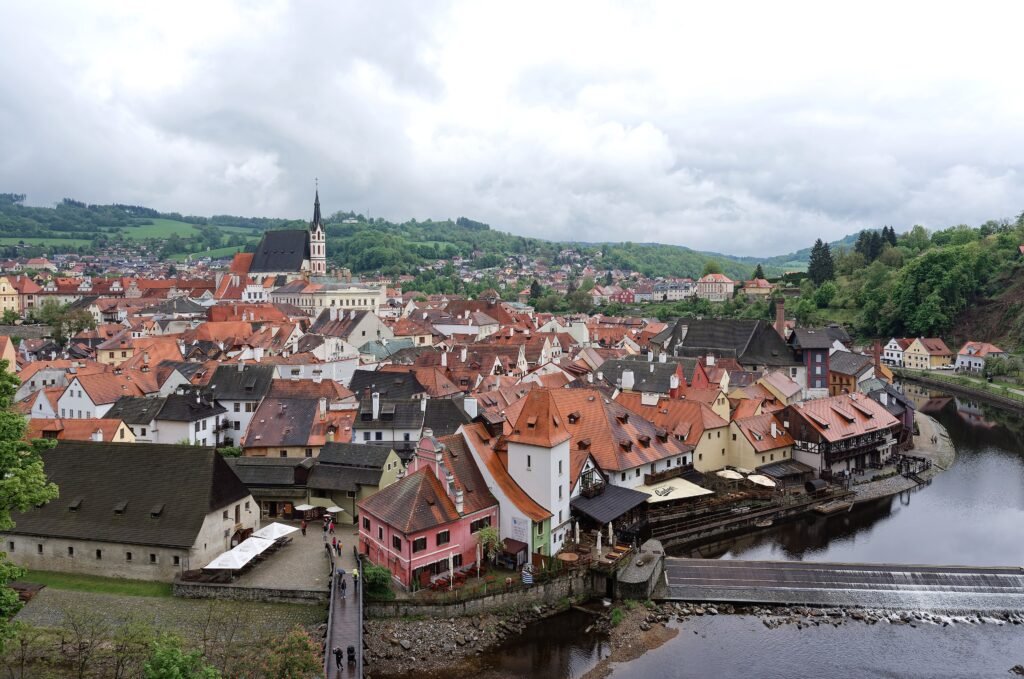
The Vltava folds Český Krumlov into tight loops, yet short bridges keep its historic quarters closely stitched together. Náměstí Svornosti, St. Vitus, Egon Schiele Art Centrum, and Lazebnický Bridge sit within a remarkably small walking field. Across the river, Latrán continues naturally toward the castle rather than feeling like a separate sightseeing district. The castle then changes the experience, stretching uphill through courtyards, the Cloak Bridge, and the upper garden. Cobbles and stone paving slow some otherwise tiny distances, especially with luggage or reduced mobility. Arrival is less seamless, because the railway station lies well beyond the old town and buses stop closer.
Why Český Krumlov Works So Well on Foot
Most first-time anchors sit inside a walking circuit that official tourism routes measure at about two kilometers. From Náměstí Svornosti, St. Vitus and Egon Schiele Art Centrum are only a few minutes away. Lazebnický Bridge crosses the Vltava directly into Latrán, where cafés, shops, monasteries and the castle approach continue north. The river bends shape the experience without seriously breaking it, because bridges land on short, useful lanes. Castle access begins beside Latrán, so its elevation belongs to walking effort rather than destination separation. Only the gardens form a major upper extension, reached after the castle courtyards and Cloak Bridge.
Where Walking Gets Harder
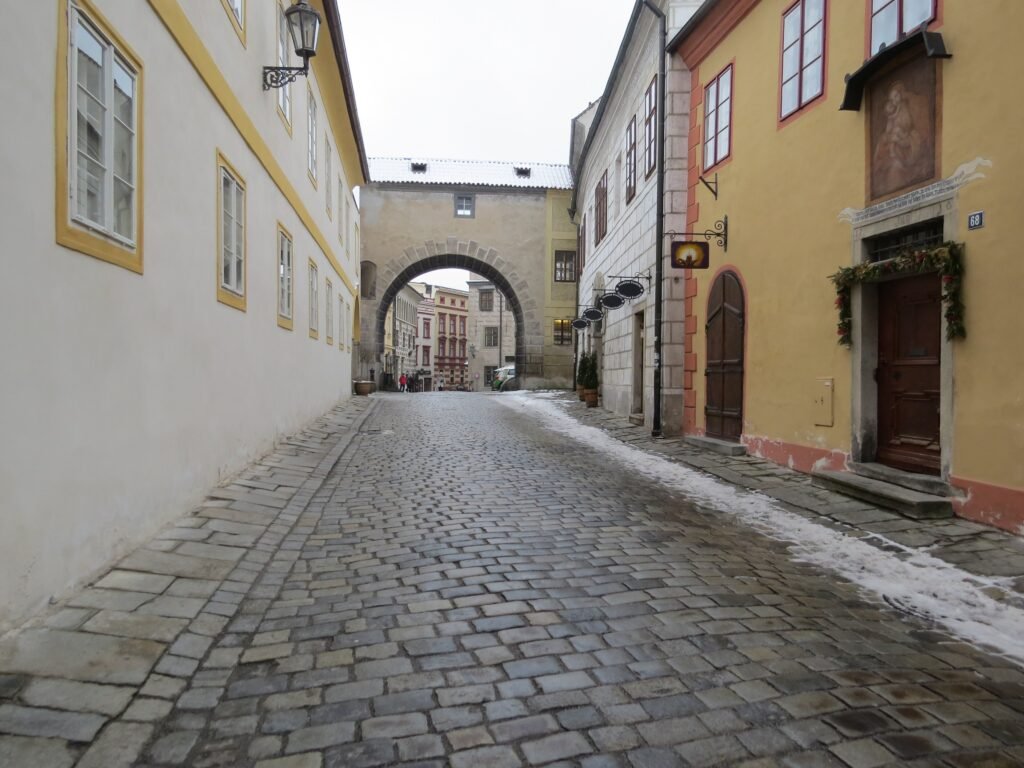
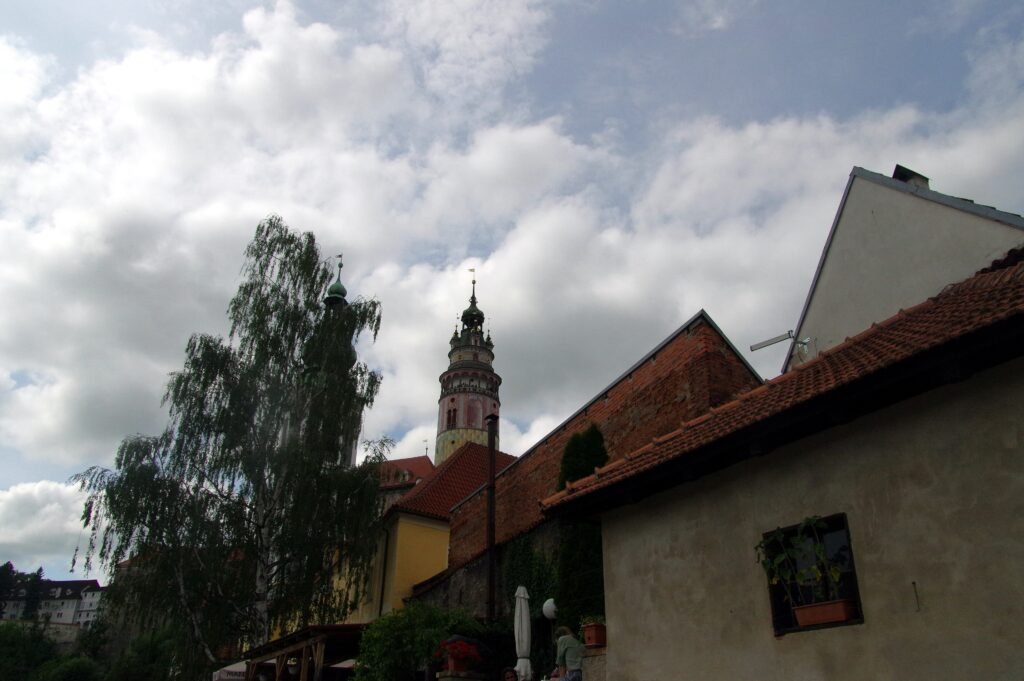
Historic preservation does not make every step effortless. The center has a regulated pedestrian zone, and visitors cannot drive into it under the current access regime. Yet cobbles, uneven stone, narrow shared surfaces, curb changes and service access still affect comfort. Castle movement adds ramps, stairs, courtyards and sustained elevation, while the heritage authority describes the complex as difficult for disabled visitors. Peak-season crowds can slow narrow approaches, but that is a comfort issue rather than permanent sidewalk loss. Optional climbs such as Křížová hora are not necessary for a standard first visit.
Best Areas to Stay for a Walking Weekend
Stay in Vnitřní Město, Latrán or immediately beside the castle approach for the strongest walking weekend. Official lodging listings include hotels next to Náměstí Svornosti and properties under 500 meters from the square on Latrán. These bases keep nearly every first-day stop within a short walk and avoid unnecessary gateway trips. Plešivec can work for quieter lodging, but it sits outside the tightest historic circuit and may make local buses more useful.
Useful Walking Times
- Náměstí Svornosti to Church of St. Vitus: about 3–4 minutes, with historic paving and a slight rise.
- Náměstí Svornosti to Egon Schiele Art Centrum: about 4–5 minutes through compact old-town lanes.
- Náměstí Svornosti to Lazebnický Bridge: about 5–7 minutes; narrow lanes can slow movement at busy times.
- Lazebnický Bridge to the Red Gate: about 4–6 minutes up Latrán on historic paving.
- Castle Museum and Tower to Cloak Bridge: about 7–10 minutes through the castle courtyards.
- Cloak Bridge to Castle Garden: about 8–10 minutes, continuing through the elevated upper complex.
- Náměstí Svornosti to the main bus station: 13 minutes and 650 meters, according to official visitor information.
- Náměstí Svornosti to Špičák: 15 minutes and 800 meters, according to official visitor information.
- Náměstí Svornosti to the railway station: 35 minutes and 1.7 kilometers; a local bus is useful with luggage.
These are practical planning estimates rather than guaranteed walking times.
A 2-Day Walking Route
The first route stays inside the compact old town and Latrán before reaching the castle edge. The second follows the castle uphill in one direction, avoiding an unnecessary descent before the gardens.
Day 1: Old Town, River Crossing and Latrán
Walking route
Day 1: Old Town, river crossing and Latrán
- Náměstí Svornosti
- Church of St. Vitus
- Egon Schiele Art Centrum
- Lazebnický Bridge
- Latrán Street
- Český Krumlov Monasteries
- Red Gate and First Castle Courtyard
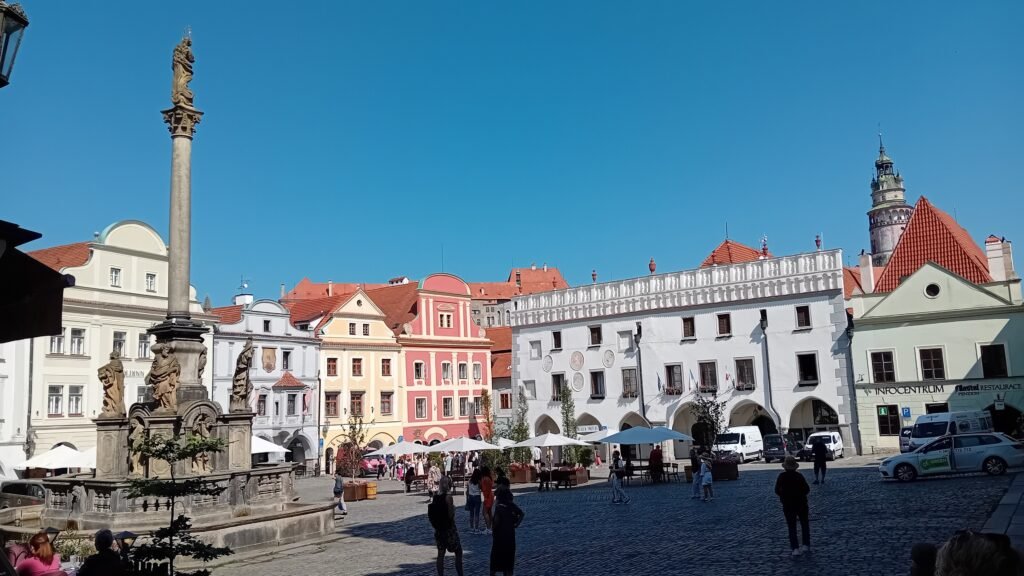
Start on Náměstí Svornosti, then move uphill only slightly to St. Vitus before looping through Široká Street. Egon Schiele Art Centrum leads naturally toward Dlouhá Street and Lazebnický Bridge. Cross once into Latrán, follow the historic street, then make a short side step to the monastery complex. Continue toward the Red Gate and finish in the first castle courtyard. The route is intentionally short, leaving time for interiors, cafés and slower walking on cobbles.
Day 2: Castle Courtyards, Cloak Bridge and Gardens
Walking route
Day 2: Castle courtyards, Cloak Bridge and gardens
- Red Gate and First Castle Courtyard
- Castle Museum and Castle Tower
- Upper Castle — Third and Fourth Courtyards
- Cloak Bridge
- Castle Garden
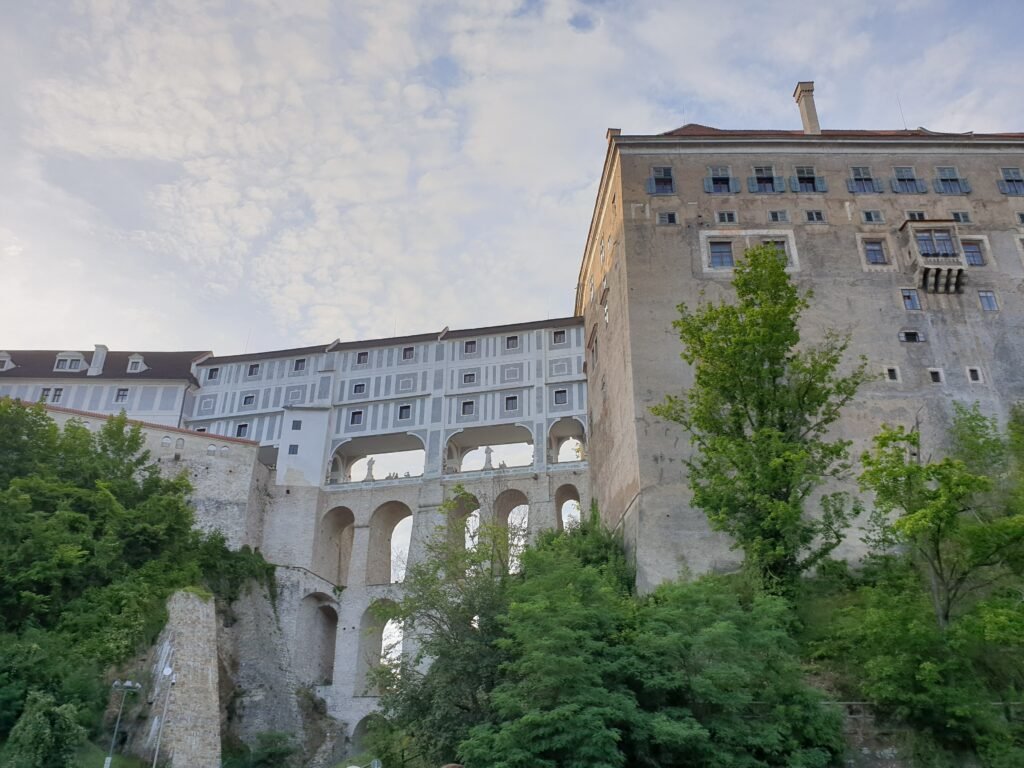
Begin at the Red Gate and climb through the first courtyard to the Castle Museum and Tower. Continue through the upper courtyards toward the Cloak Bridge without returning to Latrán. From there, keep moving west through the upper complex toward the castle garden. This sequence concentrates the main elevation into one continuous progression. The garden is a genuine upper extension, not another stop beside the old town.
How Useful Is Public Transit?
Local transit is most useful for the railway station, bus gateways and outer accommodation rather than sightseeing inside the historic core. Municipal buses connect the main arrival points with local neighborhoods, while an on-demand service supplements some weekday journeys. Check current routes, fares and booking requirements before travel, especially outside normal daytime periods.
Arriving Without a Car
From Prague, direct coaches are often the simplest no-car option because they stop closer to the historic center than the railway station. The main bus station and Špičák are both within walking distance of Náměstí Svornosti. Rail is also viable, usually via České Budějovice or on selected direct services. Český Krumlov railway station sits farther from the old town, so a local bus can be useful with luggage.
Český Krumlov has no commercial airport. Prague Airport is a common international gateway, with onward coach or rail connections available through Prague. The final journey requires additional ground transport, so check current airport, coach and railway schedules before travel.
When a Car Helps
A private car adds little inside the historic core, where visitor vehicle access is restricted and parking sits outside the pedestrian zone. It becomes useful for regional excursions such as Hluboká nad Vltavou, Lipno, Rožmberk or parts of Šumava. Those places are separate destinations and do not affect Český Krumlov’s city compactness. If the weekend stays focused on the town and castle, parking a car usually creates more friction than benefit.
Walking Limitations and Practical Tips
- Expect cobbles and uneven historic stone in the old town, Latrán and castle approaches, especially when carrying luggage.
- Treat the castle as one continuous climb instead of descending to town between courtyards and the garden.
- The heritage authority describes the castle area as difficult for disabled visitors; barrier-free entrances are limited to the gardens.
- Peak-season crowding can slow narrow lanes. Early mornings and evenings are often easier, but crowd levels vary by date.
- Use the local bus for the railway station when luggage, mobility or weather makes the 1.7-kilometer walk unattractive.
- Check current castle hours and live transport notices before travel, because seasonal opening and temporary disruptions can change trip logistics.
Seasonal Walking Context
Rain, snow, ice and summer crowds can change how comfortable the same short distances feel. Wet or icy historic stone deserves extra care, especially on sloped castle approaches. Castle gardens also operate seasonally, while the courtyards remain accessible year-round. These conditions change comfort and trip planning rather than the distances between the main sights.
Bottom Line
For a Walkable Weekend, Český Krumlov needs little transport after arrival. The old town, Latrán, river crossings and lower castle form an unusually tight first-visit network. The main planning choice is energy: save the castle and gardens for one continuous uphill sequence. Use local buses for the railway station or outer lodging, not to connect attractions that are already minutes apart.