
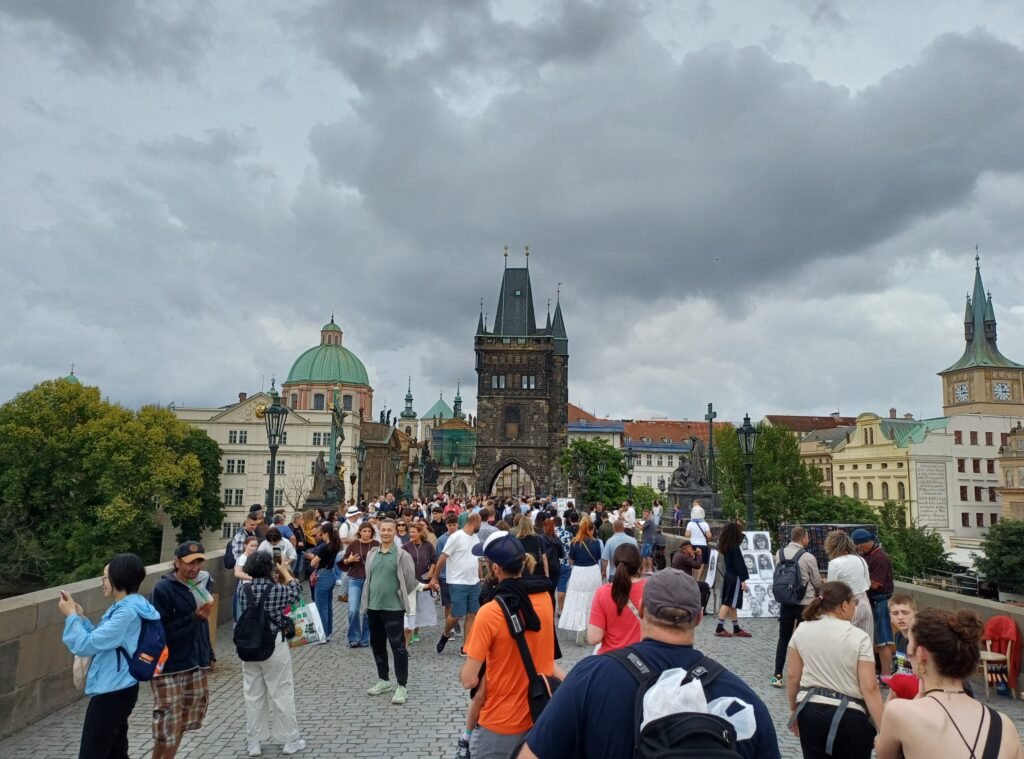
Prague packs its defining first-visit sights into a tight chain on both sides of the Vltava. Wenceslas Square feeds into Old Town, Josefov, Charles Bridge, Kampa, and Malá Strana with little dead mileage. Multiple central bridges keep the river from splitting that pedestrian network. The change comes on the west bank, where streets rise sharply toward Prague Castle and Petřín. Castle elevation adds effort without making the sights geographically distant. Farther districts such as Holešovice, outer Žižkov, and Vyšehrad work better as transit-supported extensions. Historic cobbles, tram tracks, narrow lanes, and heavy crowds make comfort less uniform than the compact map suggests.
Why Prague Works So Well on Foot
The strongest walking network begins around Wenceslas Square and continues through Old Town without a meaningful break. Powder Tower, Celetná, Old Town Square, the Astronomical Clock, and Josefov sit close enough for continuous sightseeing. Prague City Tourism even links Old Town Square and the Jewish Quarter on a short official walking route.
The Vltava does not split this core as sharply as a map might suggest. Charles Bridge carries the main visitor flow directly into Malá Strana, while Mánes and Legion bridges add useful alternatives. Charles Bridge has no ordinary car traffic, making the crossing unusually strong for walking. Its main drawback is comfort: dense crowds can turn a short crossing into a slow one.
Old Town and Malá Strana should not be treated as identical pedestrian environments. Central pedestrian zones and squares provide strong continuity, but historic paving can be rough. Malá Strana adds narrow walkways, tram tracks, angled kerbs, vehicle access, and more obvious gradients. These differences matter more for comfort and accessibility than for basic route connectivity.
Best Areas to Stay for a Walking Weekend
Old Town is the simplest base for Old Town Square, Josefov, Charles Bridge, and river crossings. It minimizes transit use but comes with the most tourist pressure and some rough paving.
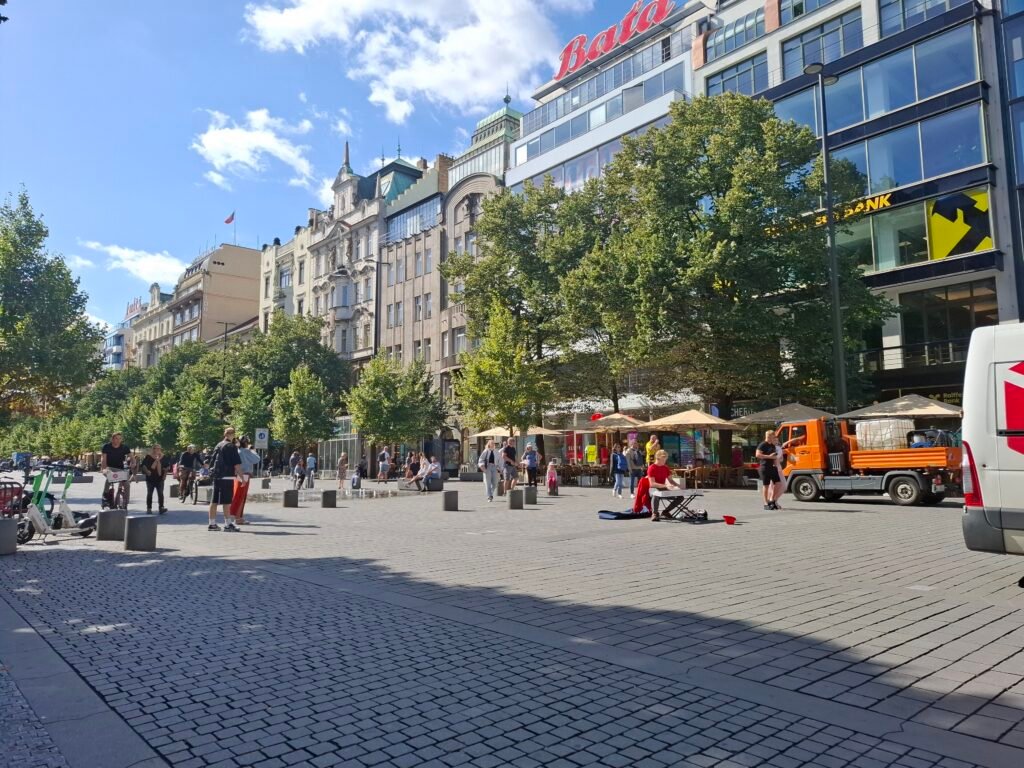
New Town and Wenceslas Square work especially well for rail arrivals and a broader hotel choice. Prague Main Station sits near Wenceslas Square, and Old Town is still an easy walk away. Temporary works can occasionally alter pedestrian routing around major central streets, so follow local signs when necessary.
Malá Strana puts Charles Bridge, Kampa, and castle approaches close at hand. The tradeoff is terrain, cobbles, and narrower streets. Vinohrady near Muzeum or Náměstí Míru can offer a calmer base, but it sits outside the tightest sightseeing core.
Practical Walking Times
| Walk | Typical time | What changes the pace |
|---|---|---|
| Prague Main Station → Wenceslas Square | 8–10 minutes | Short, mostly straightforward city-center approach. |
| Wenceslas Square → Old Town Square | 12–15 minutes | Allow extra time around current upper-square construction. |
| Old Town Square → Old-New Synagogue | 5–8 minutes | Dense pedestrian streets through Josefov. |
| Josefov → Charles Bridge | 10–12 minutes | Crowds can slow the approach near Karlova. |
| Across Charles Bridge | 10–15 minutes | Distance is short; crowd density often matters more. |
| Lesser Town Square → Prague Castle | 20–30 minutes | Uphill streets, stairs, and cobbles increase effort. |
| Pohořelec → Hradčany Square | about 10 minutes | Official castle guidance describes this as a downhill approach. |
| Pražský hrad stop → Prague Castle courtyard | about 5 minutes | Officially identified as the easiest tram-supported approach. |
| Kampa → Újezd | 8–10 minutes | Mostly level west-bank walking. |
A 2-Day Walking Route
The first route demonstrates how much of Prague’s classic core fits into one continuous walk. For the second day, a tram handles the low-value uphill repositioning before a mostly descending castle-to-river route. This keeps the two days coherent without repeating the same crossings.
Day 1: Main Station, Old Town, Josefov and Charles Bridge
Walking route
Day 1: Main Station, Old Town, Josefov and Charles Bridge
- Prague Main Railway Station
- Wenceslas Square
- Powder Tower
- Old Town Square
- Prague Astronomical Clock
- Old-New Synagogue
- Rudolfinum
- Charles Bridge
- Lesser Town Square
Begin at Prague Main Station and walk into Wenceslas Square, then continue by Na Příkopě to Powder Tower. Celetná leads directly into Old Town Square and the Astronomical Clock. From there, loop north through Josefov before reaching the river at Rudolfinum. Cross Charles Bridge on foot and finish at Lesser Town Square. The route stays inside Prague’s strongest pedestrian geography and avoids an unnecessary late-day castle climb.
Day 2: Prague Castle Downhill to Kampa and Národní
Walking route
Day 2: Prague Castle downhill to Kampa and Národní
- Pohořelec
- Hradčany Square
- Prague Castle
- St. Vitus Cathedral
- Golden Lane
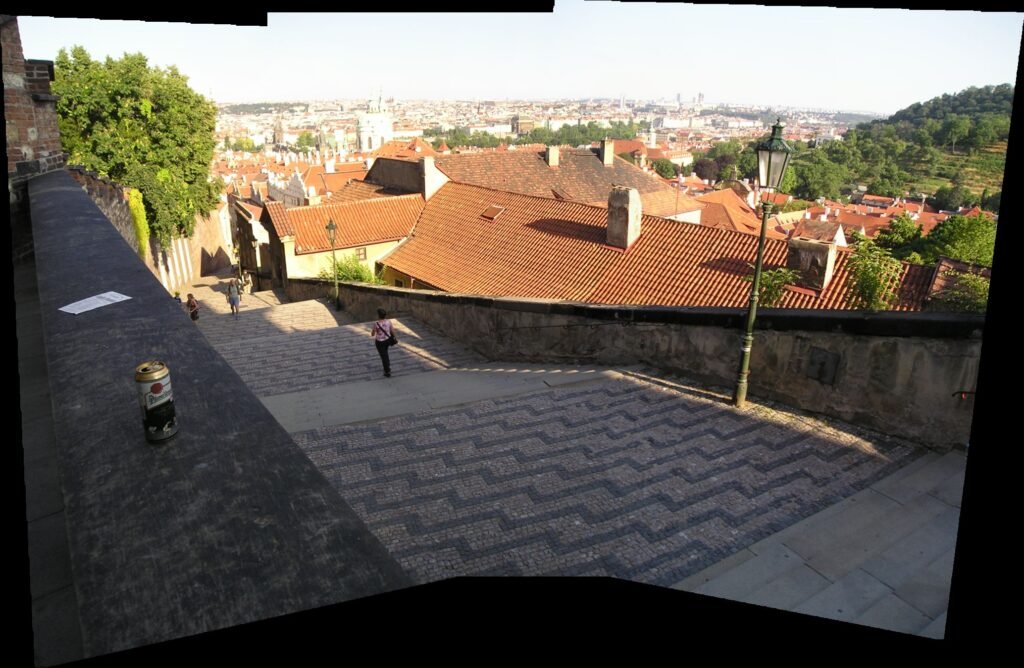
- Old Castle Stairs
- Malostranská
- Kampa Island
- Újezd
- Legion Bridge
- Národní třída
Take tram 22 or 23 to Pohořelec, then walk downhill toward Hradčany Square and Prague Castle. Visit St. Vitus Cathedral and continue through the complex toward Golden Lane. Descend Old Castle Stairs to Malostranská, then continue south through Kampa to Újezd. Cross Legion Bridge and finish near Národní třída instead of retracing Charles Bridge. Petřín remains optional; check the current funicular status before relying on it, since maintenance or reconstruction can temporarily change access.
Using Transit Without Losing the Walking Experience
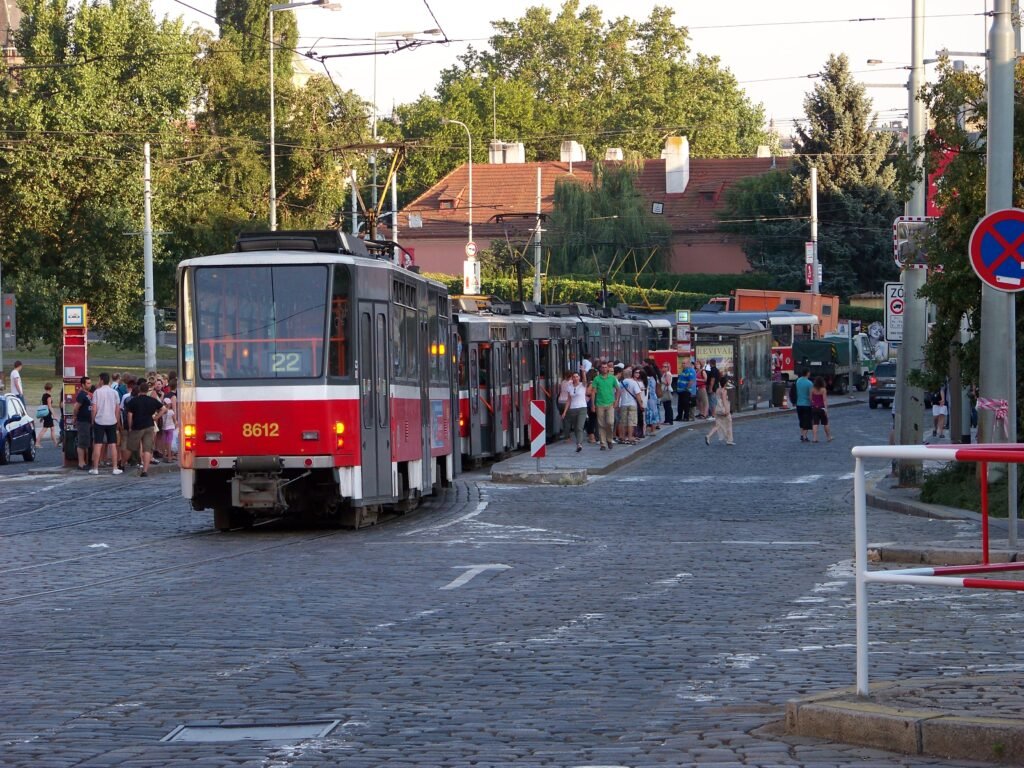
Prague’s operating Metro network has three lines: A, B, and C. The system is excellent for reaching farther districts, but most central first-visit sights do not require it. Trams are often more useful for visitors, especially route 22 around Malá Strana and Prague Castle.
Daytime trams generally run from about 5 a.m. to midnight, with frequent service on core routes. After midnight, night trams and buses maintain useful coverage, including stronger Friday and Saturday night tram frequencies. Metro D is still under construction and should not appear in current trip planning.
PID Lítačka, ticket machines and onboard validators make occasional public-transport use straightforward. Prague uses time-based tickets across its integrated network, but fares and validation rules can change, so check current PID information before travel.
The Petřín funicular is a specialized hill connection rather than essential city transit. Check current DPP operating information before including it in your itinerary, and use trams or walking as alternatives when it is unavailable.
Arriving in Prague Without a Car
Public transport from Václav Havel Airport typically combines trolleybus 59 with Metro A, while Airport Express provides another option toward Prague Main Station. The best choice depends on your hotel location and luggage, so check current airport and PID information before travel.
Airport services use different ticket products depending on the route. Check current fare and validation rules before boarding rather than relying on fixed prices or journey times in the guide.
Rail arrivals are much easier. Praha hlavní nádraží sits near Wenceslas Square and connects directly to Metro C and several tram routes. Direct international trains link Prague with Berlin, Dresden, Bratislava, Budapest, Vienna, and other major cities. That central station advantage reduces rail-arrival burden without removing the transfer required from the airport.
When a Car Helps
A private car adds little to a normal Prague weekend. Parking, central restrictions, dense transit, and compact sightseeing make walking plus public transport the simpler combination. A car becomes more useful for specific regional trips where road access is the point. Kutná Hora, Karlštejn, Český Krumlov, and other destinations remain separate excursions and do not affect Prague’s city compactness.
Limitations and Practical Tips
Historic surfaces are the main walking-quality compromise. Cobbles, granite blocks, stairs, and uneven kerbs can be tiring even when distances are short. Supportive footwear matters more here than the compact map initially suggests.
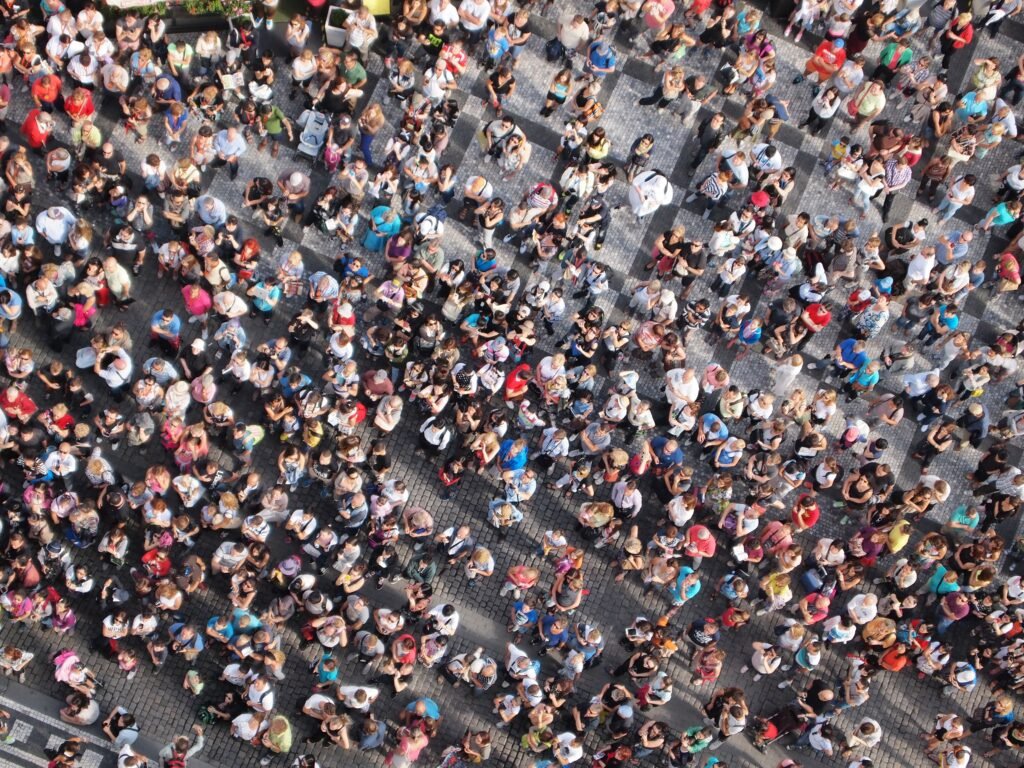
Crowds are concentrated around Old Town Square, Karlova, and Charles Bridge. They reduce comfort and pace without turning these routes into disconnected pedestrian corridors. Early mornings can make the same streets feel dramatically easier to walk.
Wenceslas Square is also a special September 2026 case. The upper-square tram and public-realm project remains under construction through June 2027. Treat current fences and local detours as temporary conditions, not as Prague’s finished pedestrian design.
Seasonal Walking Note
Summer heat can make exposed castle climbs harder, while winter cold and wet weather make cobbles less forgiving. Rain can also make stairs and polished historic paving slippery. These conditions change walking comfort rather than the distances and connections between Prague’s main sights.
Bottom Line
Prague’s defining advantage is how quickly one major first-visit sight leads into the next. Old Town, Josefov, Charles Bridge, Kampa, and Malá Strana form an unusually coherent cross-river walking network. The castle hill introduces real effort, while transit makes separated districts and airport arrival manageable. For a two- or three-day city break, a car is unnecessary.