

Trying to cover New York end to end is the wrong measure of its walkability. A short visit works better when each part of the day has a compact geographic focus. Long stretches on foot make sense once you reach a major visitor cluster. Bigger moves should happen by subway before the next walking stretch begins. Staying in a sensible central area makes that rhythm easier and reduces low-value cross-city mileage. This matters because the visitor experience spans Manhattan and the Brooklyn waterfront, not one compact historic center. Walking can dominate the day without forcing every landmark into one continuous route.

Why New York Works So Well on Foot
The visitor core has several advantages at once. Midtown’s numbered streets and avenues make direction-finding unusually legible. Broadway creates diagonal connections and pedestrian plazas through high-demand areas such as Times Square and the Flatiron district. Lower Manhattan has shorter, older streets but compensates with extremely dense attractions and subway entrances. NYC DOT’s pedestrian planning framework explicitly treats transit, tourist attractions, parks and business districts as major generators of walking demand.
Distances also tend to be productive rather than empty. A walk from Grand Central to Times Square passes the New York Public Library and Bryant Park. The continuation toward Rockefeller Center leads naturally to Fifth Avenue and Central Park. Downtown, the Battery, Wall Street, Trinity Church, the 9/11 Memorial, City Hall and the Brooklyn Bridge can be assembled into a coherent day instead of separate out-and-back trips.
Best Neighborhoods to Stay Without a Car
Bryant Park / Grand Central: This is the most balanced first-time base. You can walk to Times Square, Rockefeller Center and Fifth Avenue, while Grand Central gives you immediate subway access and regional rail. It is especially efficient if you want a central hotel without making Times Square itself your front door.
Times Square / Theater District: Choose this for Broadway, very late evenings and maximum subway choice. The tradeoff is crowding: the area is pedestrian-friendly in a technical sense, but it can be slow and visually overwhelming at peak times.
Flatiron / NoMad: This is a strong compromise between Midtown and downtown. It gives you easy walks to Madison Square, Union Square, Chelsea and the lower edge of Midtown, with straightforward subway access in both directions.
Greenwich Village / SoHo: These neighborhoods are excellent if you value street-level wandering, restaurants and smaller-scale blocks more than being next to every headline attraction. Use the subway for Central Park and the upper Midtown sights.
Lower Manhattan / Financial District: This is the most efficient base for the 9/11 Memorial, the Battery, Wall Street, ferries and the Brooklyn Bridge. Midtown is still easy by subway, but it is too far to make walking there the default several times a day.
Brooklyn Heights / DUMBO: A beautiful car-free alternative with the Brooklyn Bridge, waterfront and skyline at your door. It works best for travelers comfortable using the subway or ferry for most Midtown sightseeing.
Useful Walking Times
Useful reference points are: Grand Central to Times Square about 11 minutes; Times Square to Rockefeller Center about 12 minutes; Rockefeller Center to the southern Central Park visitor area about 17 minutes; the 9/11 Memorial to City Hall Park about 8 minutes; the 9/11 Memorial to the Battery about 12 minutes; and Penn Station to Times Square about 13 minutes. These are practical planning estimates rather than guaranteed walking times. Crowds, traffic lights, luggage, station exits and individual pace can change the actual time.
A 2-Day Walking Route
Day 1: Midtown Icons, Rockefeller Center & Central Park
Walking route
Midtown Icons, Rockefeller Center & Central Park
- Grand Central Terminal
- New York Public Library - Stephen A. Schwarzman Building
- Bryant Park
- Times Square
- Rockefeller Center
- St. Patrick's Cathedral
- Grand Army Plaza - Central Park
- Gapstow Bridge and The Pond
- Bethesda Terrace and Fountain
Start at Grand Central Terminal, then follow 42nd Street to the New York Public Library and Bryant Park. Continue west to Times Square before turning northeast toward Rockefeller Center and St. Patrick’s Cathedral. From there, Fifth Avenue carries you to Grand Army Plaza and the southeast corner of Central Park. Finish with The Pond and Gapstow Bridge, then continue to Bethesda Terrace if your legs still feel good.
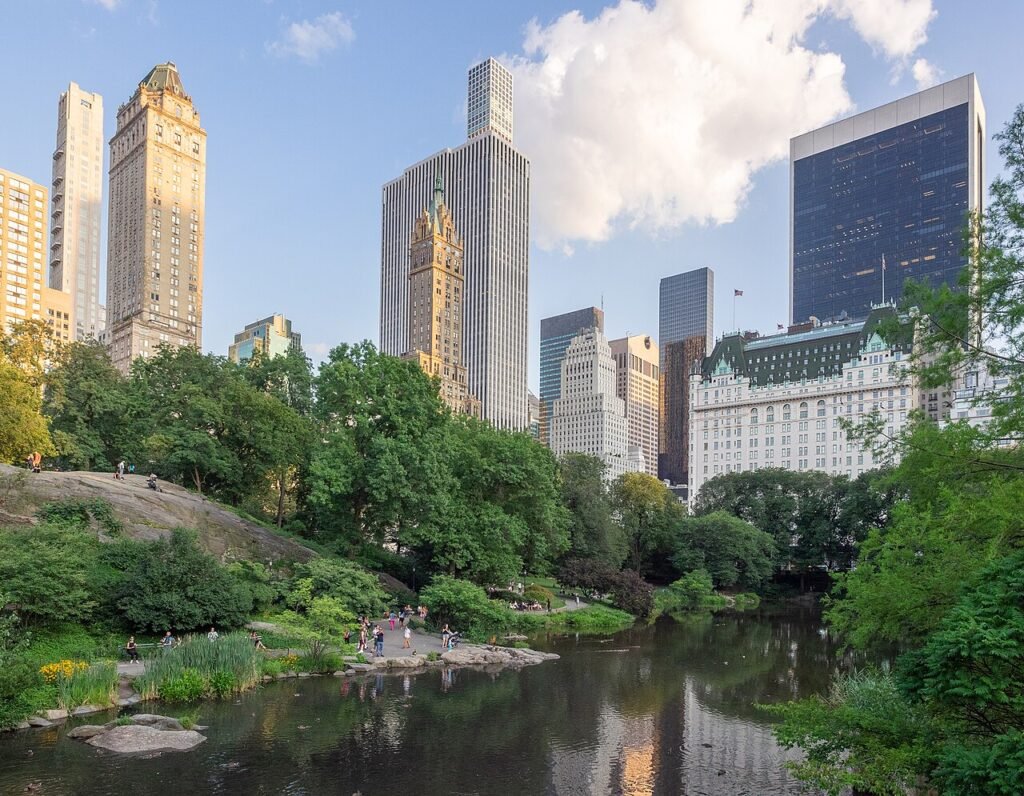
This route is intentionally subway-light. Almost every transition exposes another major sight, so riding between stops would save little time. The exception is the end: once you reach Bethesda Terrace, choose the nearest east- or west-side subway for the return to your hotel instead of retracing the entire park walk.
Day 2: Lower Manhattan, Brooklyn Bridge & DUMBO
Walking route
Lower Manhattan, Brooklyn Bridge & DUMBO
- The Battery
- Stone Street Historic District
- Federal Hall National Memorial
- Trinity Church
- 9/11 Memorial & Museum
- City Hall Park
- Brooklyn Bridge - Manhattan Pedestrian Entrance
- Jane's Carousel
- Brooklyn Bridge Park - Pier 1
- Brooklyn Heights Promenade
Begin at the Battery and move through the historic Financial District via Stone Street, Federal Hall and Trinity Church. Continue to the 9/11 Memorial, then walk to City Hall Park for the Manhattan entrance to the Brooklyn Bridge. Cross the pedestrian promenade into DUMBO, stop at Jane’s Carousel, follow Brooklyn Bridge Park to Pier 1 and finish on the Brooklyn Heights Promenade.
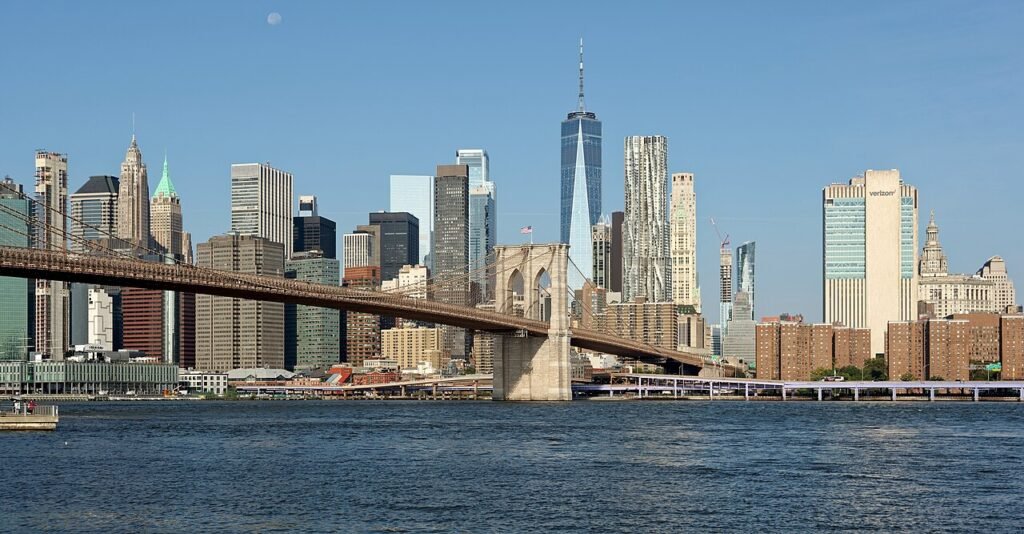
The bridge crossing is the effort peak of Day 2. It is not steep by hiking standards, but the gradual ramp, exposure and crowds can turn a simple distance into a slow segment. Once in Brooklyn, the waterfront is easy walking. For the return, use a nearby subway or NYC Ferry rather than automatically walking back across the bridge.
Getting Around New York Without a Car
The subway is what turns New York from a collection of walkable neighborhoods into a genuinely car-free visitor city. New York City Transit operates around the clock, making it easy to move between sightseeing clusters without a private car. Contactless OMNY payment keeps occasional rides straightforward; check current MTA fare and fare-cap information before travel.
For a weekend, the most efficient pattern is simple: walk until the next destination would require a long, low-value transfer on foot, then take the subway once and start another walking cluster. Do not over-optimize one- or two-stop rides when the surface walk itself contains the sights you came to see.
One operational caveat matters: 24/7 service does not mean every line follows its normal route every weekend. Planned maintenance can reroute trains, skip stations or require transfers. Check live MTA service information before a fixed-time attraction, airport trip or late-night return.
Arriving in New York Without a Car
From JFK Airport
AirTrain connects JFK terminals with Jamaica and Howard Beach. Jamaica provides access to LIRR and subway services toward Midtown, while Howard Beach connects with the A train. Fares, frequencies and redevelopment-related access arrangements can change, so check current airport and MTA information shortly before travel.
From LaGuardia Airport
LaGuardia does not have a direct rail station, so its arrival is slightly less elegant. The free Q70 LaGuardia Link connects Terminals B and C with Jackson Heights-Roosevelt Avenue and 74 St-Broadway, where several subway lines continue toward Manhattan. Other MTA buses serve additional terminal and rail connections.
From Newark Liberty International Airport
AirTrain connects the terminals with Newark Airport Rail Station, where NJ Transit and Amtrak provide onward rail connections toward New York. The trip remains practical without a car but involves more transfers than arriving directly at a central Manhattan station. Check current airport and rail information for fares and service patterns.
By Intercity or Regional Train
Rail arrivals are a major strength. Penn Station and Moynihan Train Hall place you in Midtown, roughly a 13-minute representative walk from Times Square. Grand Central and Grand Central Madison put Metro-North and LIRR travelers directly on 42nd Street with the 4, 5, 6, 7 and S subway lines at the same complex.
When a Car Becomes Useful
A car is normally unnecessary for a first-time New York sightseeing trip. Manhattan’s major visitor neighborhoods and the Brooklyn waterfront route are better handled by walking and transit. A car becomes useful mainly when New York is the starting point for a regional itinerary that includes places poorly served by rail, or when your trip revolves around multiple remote suburban stops rather than city sightseeing.
Practical Walking Tips
Build each day around geographic clusters, not a checklist scattered across the map. In Manhattan, verify whether a subway exit leaves you on the east or west side of a wide avenue before climbing to street level. Allow extra time for Times Square and the Brooklyn Bridge because pedestrian density can matter more than distance. Carry water on hot days, use park or attraction restroom stops strategically, and choose comfortable shoes that can handle several hours of pavement rather than only the mileage shown on a map.
Where New York Is Less Effortless on Foot
The main weakness is not basic sidewalk availability; it is the mismatch between a visitor’s ambition and the city’s scale. A first-time traveler can easily plan too many neighborhoods in one day. Midtown’s crowded crosswalks, Lower Manhattan’s irregular street pattern, bridge ramps, and the internal distances of Central Park also add friction. These are reasons to pace the itinerary and use transit strategically, not reasons to rent a car.
Seasonal Walking Note
Walking conditions change noticeably through the year. Summer heat and humidity can make long avenues and the exposed Brooklyn Bridge tiring. Winter wind, snow, or slush can slow sidewalks and park paths. Spring and fall usually support the longest walking days. Seasonal conditions mainly change comfort and walking pace, so adjust the length of outdoor routes accordingly.
Bottom Line
New York City works exceptionally well for a walk-first trip when you treat it as a series of connected sightseeing clusters. A first-time visitor can comfortably build a two- or three-day stay around walking without relying on a private car, provided the subway handles the longer jumps. Stay centrally, explore each neighborhood intensively on foot, and let 24-hour transit cover the distances that are not worth spending limited weekend time walking.