
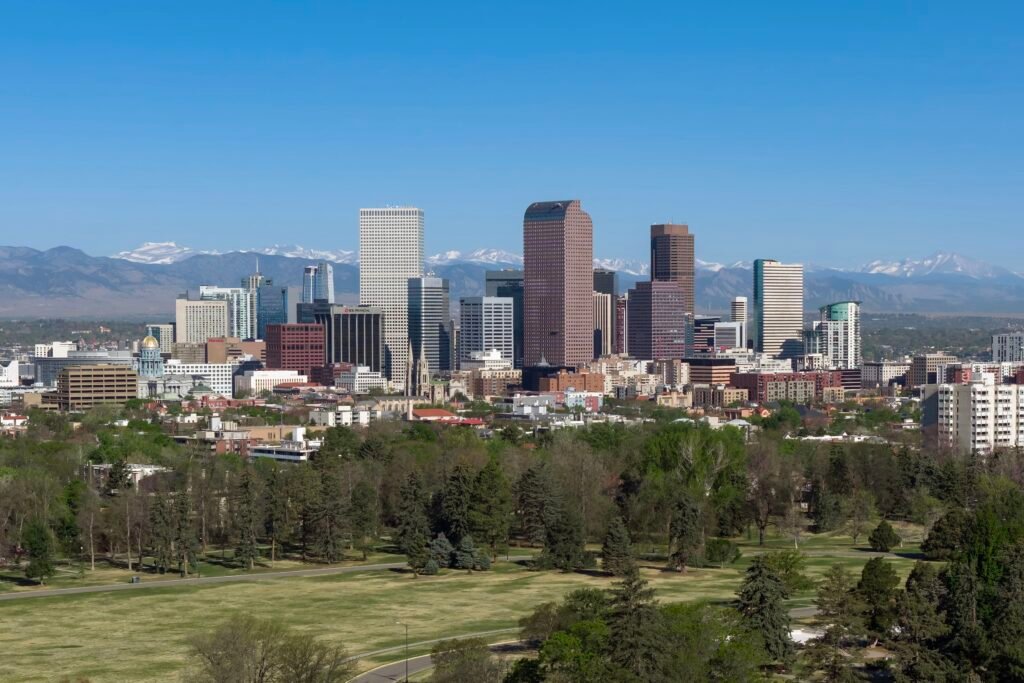
A long central chain, rather than one tiny sightseeing district, defines how Denver works on foot. Union Station and LoDo lead naturally into the reopened 16th Street corridor, then toward Civic Center and the Golden Triangle. The terrain stays mostly flat, so distance matters more than climbing during a central walking day. RiNo extends that pattern northward, but the city becomes less continuous beyond the core. City Park and Cherry Creek sit far enough away to function better as separate outings. This structure favors focused walking within connected districts, with transit handling the wider gaps.
Why Denver Works Well on Foot
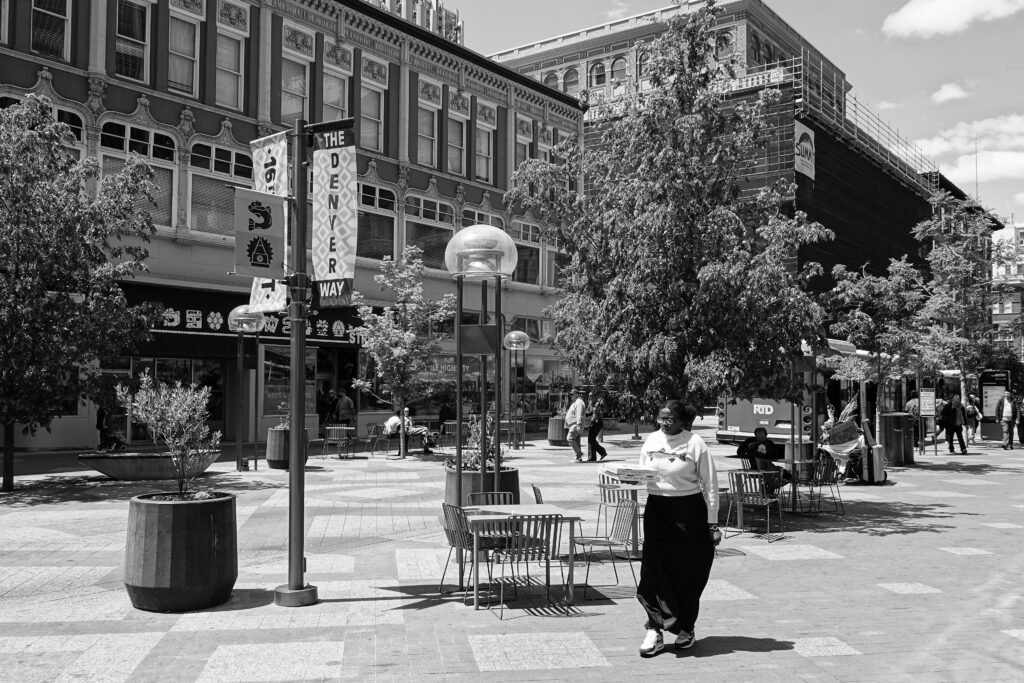
Denver’s strongest walking axis runs from Union Station through LoDo and 16th Street toward Civic Center and the Golden Triangle. The full 16th Street corridor reopened in October 2025 after a multi-year rebuild. It restored a roughly 1.2-mile pedestrian-and-transit spine through downtown. For a visitor, that spine is more important than Denver’s overall metro size: it links the arrival hub with hotels, restaurants, the convention area and the Civic Center end of downtown, while the no-cost FreeRide can replace part of the walk whenever your feet need a break.
The central terrain is generally forgiving. Blocks are regular, routes are easy to understand and most of the Day 1 visitor circuit has only modest grade changes. Sidewalk coverage is strong in the central districts, although wide streets and major corridors such as Colfax Avenue and Speer Boulevard can create longer signal waits and less pleasant crossings. The result is an easy central walking environment with a few noticeable interruptions at larger roads.
Where to Stay for a Walkable Denver Weekend
Union Station and LoDo: Best Overall
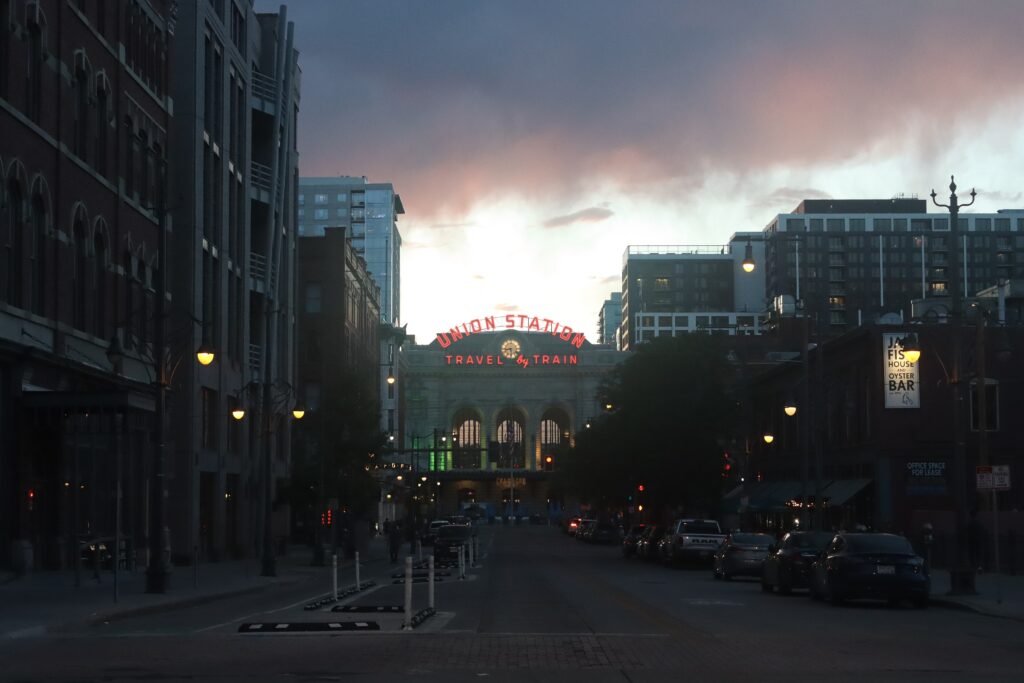
For a first Denver weekend without a car, Union Station/LoDo is the most efficient base. You can step off the airport train close to your hotel, walk to Coors Field, Larimer Square, the riverfront and 16th Street, and use Union Station for regional rail and bus connections. It minimizes luggage transfers on arrival and gives the two-day itinerary the cleanest start and finish.
Downtown and 16th Street: Best for Maximum Convenience
Hotels along or near the central 16th Street corridor put you between Union Station and Civic Center. This is a practical choice if you want downtown attractions, the Colorado Convention Center and the Denver Performing Arts Complex close by while keeping the FreeRide at hand. You lose a little of Union Station’s arrival convenience, but gain a more balanced position between LoDo and the Golden Triangle.
Golden Triangle: Best for Museums
The Golden Triangle is one of Denver’s strongest self-contained walking districts. Denver Art Museum, Clyfford Still Museum, History Colorado Center and Civic Center sit close together, and the official destination organization specifically describes the neighborhood as a good place to explore on foot. It is an excellent base for museum-heavy weekends, though Union Station and RiNo will require longer walks or transit.
RiNo: Walkable Inside the District, Less Central Overall
RiNo is a good alternative if murals, galleries, food halls and evening activity matter more than being centered on the classic first-time sights. The Larimer Street art corridor is naturally explored on foot, and 38th & Blake Station gives the neighborhood A Line access. For a first visit, however, RiNo is slightly less efficient because the Golden Triangle and Civic Center are on the opposite side of downtown.
Cherry Creek is different. Its shopping and dining district is walkable once you are there, but it is not part of the same continuous visitor core. If your priority is to experience Denver mostly on foot, staying in Union Station/LoDo, central downtown or the Golden Triangle produces a more coherent weekend.
Representative Walking Times
For planning purposes, allow roughly 10 minutes from Union Station to Coors Field, 12–15 minutes to Larimer Square, about 10–12 minutes from Larimer Square to the Colorado Convention Center, and about 15 minutes from the convention center to Civic Center Park. Denver Art Museum is then only about 5–7 minutes from Civic Center. The jump to RiNo is larger: Union Station to Denver Central Market is roughly 25–30 minutes on foot.
The limits become clearer farther out. Union Station to City Park is roughly an hour on foot, and Cherry Creek North is commonly a 70–80 minute walk from the Union Station area. These are practical planning estimates rather than guaranteed walking times. Traffic lights, construction, weather and your exact hotel can change them. The practical lesson matters more than the minute count: downtown sights combine naturally; City Park and Cherry Creek are separate outings.
A 2-Day Denver Route Without a Car
These routes deliberately keep the longest cross-city transfers out of the walking day. Day 1 follows Denver’s strongest continuous visitor corridor. On the second day, a short A Line ride gets you to RiNo. The route then returns toward downtown through the art district, Ballpark area and riverfront.
Day 1: Union Station to the Golden Triangle
Walking route
Day 1: Union Station, LoDo, 16th Street and the Golden Triangle
- Denver Union Station
- Coors Field
- Larimer Square
- 16th Street at Arapahoe Street
- Colorado Convention Center
- Civic Center Park
- Colorado State Capitol
- Denver Art Museum
Begin at Denver Union Station, then walk to the exterior of Coors Field before turning back through LoDo toward Larimer Square. From there, join the 16th Street corridor and continue toward the Colorado Convention Center. The FreeRide runs along the same downtown spine, so this section is easy to shorten without breaking the itinerary.
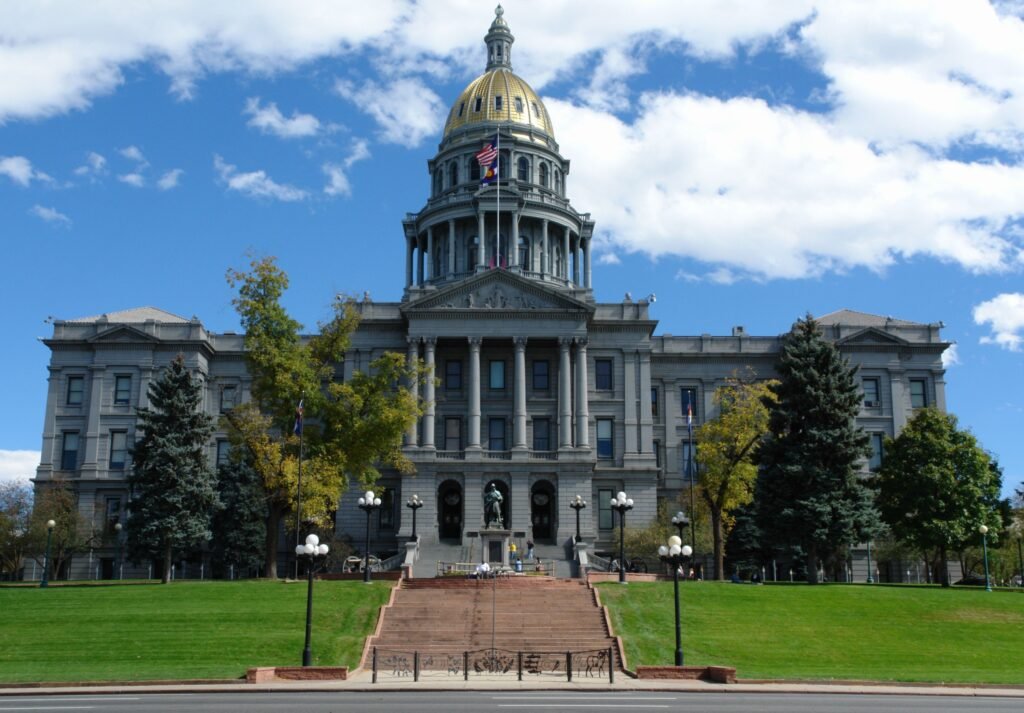
Continue toward Civic Center Park, make the short detour to the Colorado State Capitol, and finish at Denver Art Museum in the Golden Triangle. The between-stop walking is only a few miles, but museum visits, meals and small downtown detours can easily fill the day. That is exactly why Denver’s core works: the itinerary spends more time at attractions than transferring between them.
Day 2: RiNo, Ballpark and the Riverfront
Walking route
Day 2: RiNo to the riverfront and Union Station
- 38th & Blake Station
- Denver Central Market
- RiNo mural corridor at 27th & Larimer
- Coors Field
- Commons Park
- Confluence Park
- Denver Union Station
From Union Station, take the A Line one stop to 38th & Blake. The mapped walking route starts there, avoiding an unnecessary first stretch on foot. Walk southwest toward Denver Central Market and the Larimer Street mural corridor around 25th–27th streets. Street art changes, so treat individual murals as discoveries rather than permanent landmarks.
Continue toward Coors Field, then angle west to Commons Park and Confluence Park before finishing back at Union Station. This route shows Denver’s second walkability pattern: individual neighborhoods such as RiNo are enjoyable on foot, but a small amount of transit makes the connection between districts much more efficient.
Getting Around Denver Without a Car
RTD is useful enough that a central visitor does not need to rent a car simply to avoid longer walks. In 2026, the standard three-hour fare is $2.75, a standard day pass is $5.50, and the Airport Day Pass is $10. Tap-n-Ride allows contactless bank cards and mobile wallets, reducing the friction of learning a local ticketing system for a short stay.
The 16th Street FreeRide is especially valuable for visitors because it follows the same downtown axis that most first-time itineraries use. During the current downtown rail reconstruction, RTD increased FreeRide frequency to approximately every three minutes, seven days a week. That makes it a practical walking backup rather than a separate transit expedition.
Temporary construction can change downtown light-rail service and routing. RTD’s Downtown Rail Reconstruction Project affects several central lines, so visitors should check the current trip planner and service alerts before travel. These temporary changes do not alter Denver’s underlying walking geography or long-term transit usefulness.
Arrival Without a Car: DEN to Downtown
Denver performs exceptionally well here. The A Line runs directly between Denver International Airport and Denver Union Station in about 37 minutes. RTD lists 15-minute service from 6 a.m. to 8 p.m. and 30-minute service in the early morning and late evening. At the airport, trains use the Level 1 Transit Center, so the transfer does not require a shuttle to an off-site rail station.
The current Airport Day Pass costs $10 and covers the airport trip plus RTD travel across the system for that service day. For a visitor staying near Union Station, this is close to the ideal car-free arrival pattern: one train from the terminal area to the neighborhood where the weekend route begins.
When a Car Becomes Useful
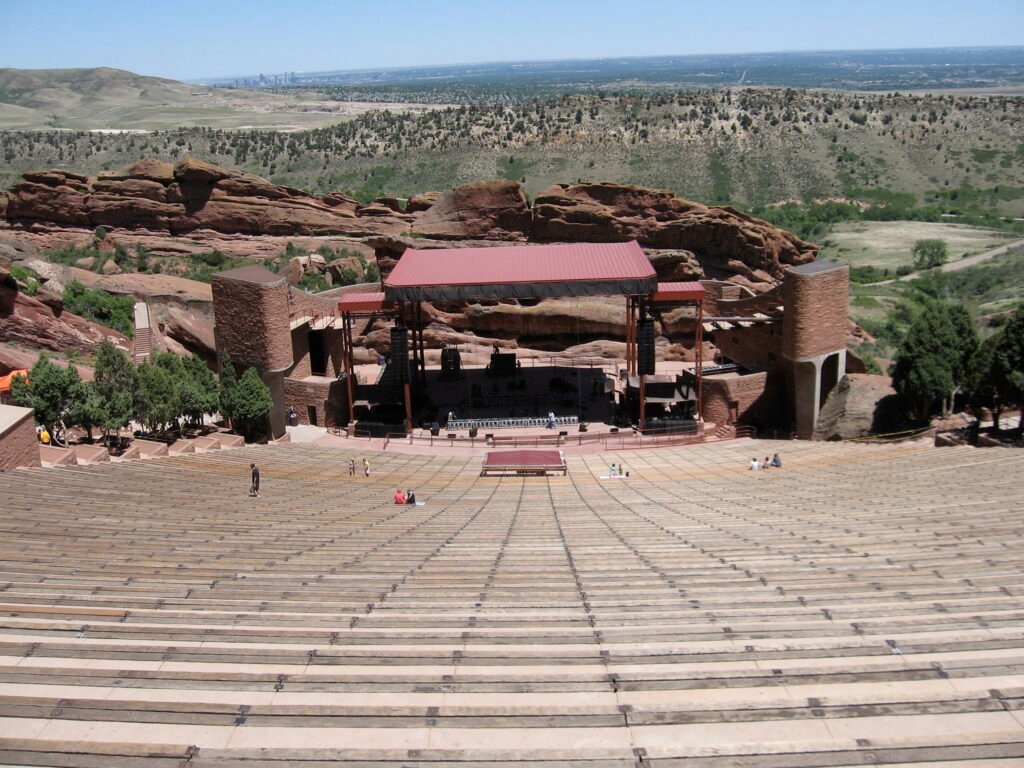
A car is not necessary for the central two-day itinerary. It becomes useful when the trip changes from a Denver city break into a Front Range or mountain trip. Red Rocks Amphitheatre is about 15 miles from downtown, and the foothills and mountain destinations beyond it create the clearest case for a rental car, although concert shuttles and other dedicated transportation can be better than driving for some events.
Inside the city, places such as Cherry Creek and City Park do not automatically justify renting a car; they simply require more deliberate transit or a rideshare than the downtown core. If your weekend is Union Station, LoDo, 16th Street, Civic Center, the Golden Triangle and RiNo, a car is more likely to add parking friction than to solve a meaningful mobility problem.
Practical Walking Tips for Denver
Stay close to Union Station, central 16th Street or the Golden Triangle if walking is the priority. Use the FreeRide strategically instead of treating every downtown block as mandatory mileage, and use the A Line to start the RiNo day at 38th & Blake. At larger intersections, follow signals rather than assuming the grid makes every crossing equally quick.
Also remember that Denver sits at 5,280 feet above sea level. The central terrain is not especially hilly, but visitors who are not acclimated may notice the elevation during a long walking day. A slightly slower pace, regular water breaks and a transit shortcut when needed are more useful than trying to maximize step count.
Seasonal Walking Note
Denver can support a walking-focused weekend in every season, but conditions can change quickly. VISIT DENVER advises travelers to dress in layers, and that is sensible for an itinerary with long periods outdoors. In warmer weather, high-altitude sun and dry air can make exposed walks feel stronger than the mileage suggests; in winter, snow or ice can temporarily slow sidewalks and crossings.
Bottom Line
Denver is walkable where a short-stay visitor most needs it to be. Its best sights do not all sit within one tiny district, but Union Station, LoDo, 16th Street, Civic Center, and the Golden Triangle form a strong pedestrian core. The A Line and FreeRide fill two of the most useful gaps, while RiNo remains easy to add with a short rail trip. City Park, Cherry Creek, and especially Red Rocks require more deliberate transport. Choose a central hotel and you can comfortably spend a Denver weekend without a car; add one only when the itinerary turns toward the foothills or mountains.