
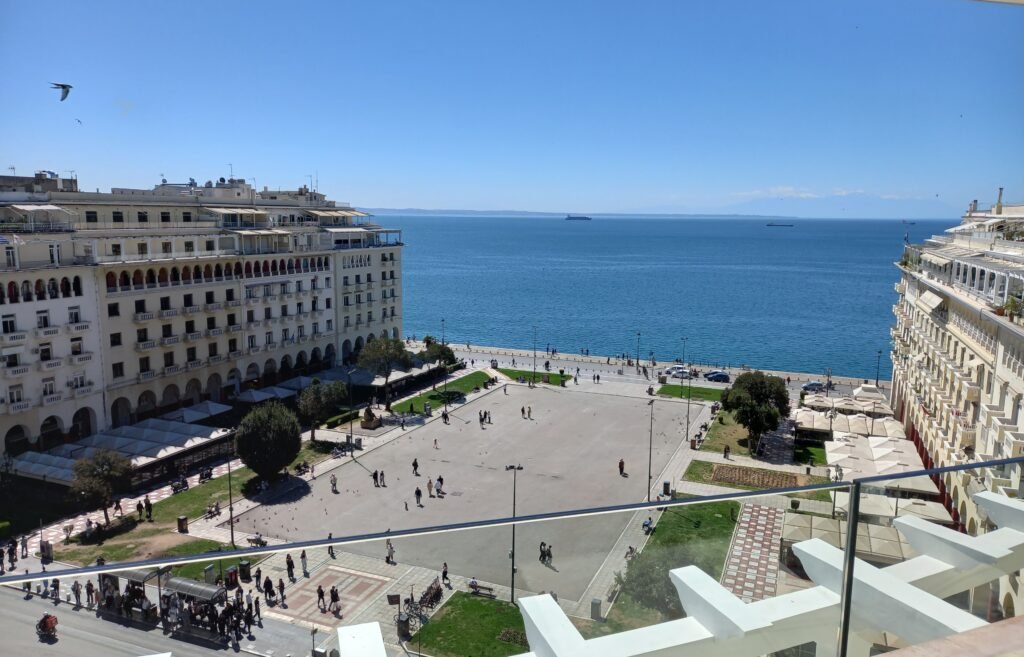
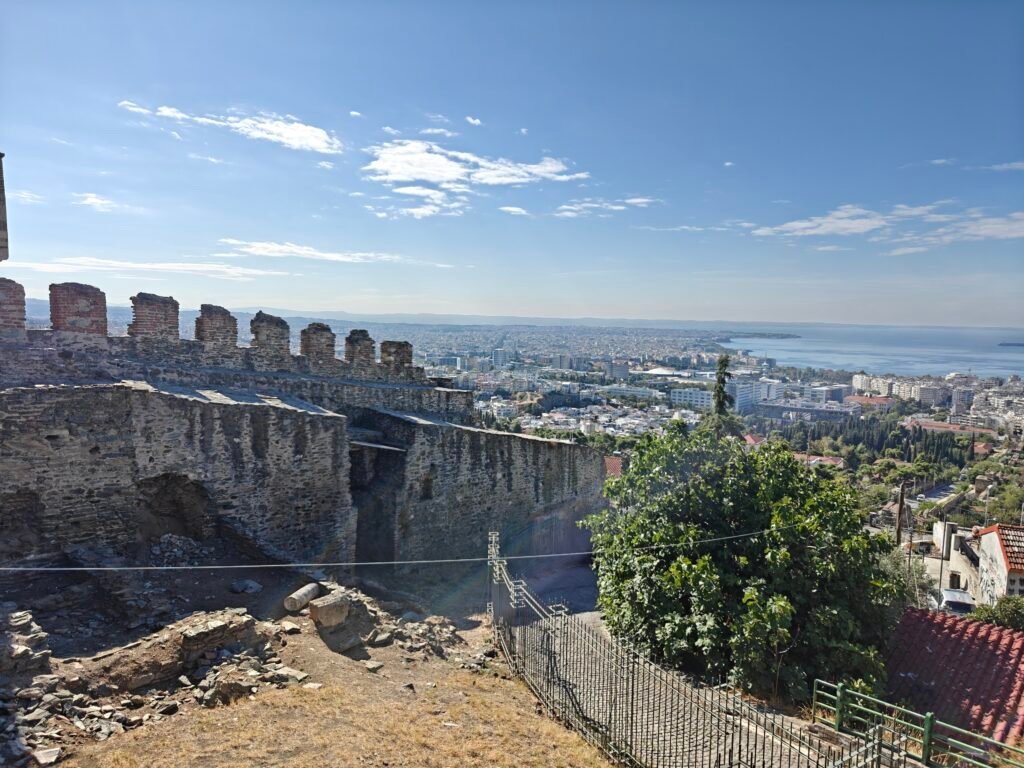
From the waterfront, most headline sights spread across a surprisingly compact lower-city strip before the streets rise sharply north. Aristotelous Square reaches the White Tower in about 13 minutes, while the Roman Forum sits roughly eight minutes inland. Navarinou and the Galerian monuments extend the same network east, with the Rotunda about 18 minutes from Aristotelous. The museum district continues beyond the White Tower without breaking the walking sequence. Ano Poli changes the equation. Its walls and Trigonion Tower remain geographically close, yet the climb makes them a separate effort from the flat center.
How the Lower City Connects on Foot
Ladadika, Aristotelous Square, Modiano, Kapani and Tsimiski form the tightest western-central cluster. Ladadika contributes pedestrian streets, while the markets sit only a few blocks inland from Aristotelous. Agora Modiano provides an indoor market stop within the same compact central cluster. Tsimiski and nearby parallel streets then carry the route east toward Hagia Sophia and Navarinou. The waterfront works as a second, simpler east-west spine toward the White Tower. This compact geography is the city’s strongest walking advantage.
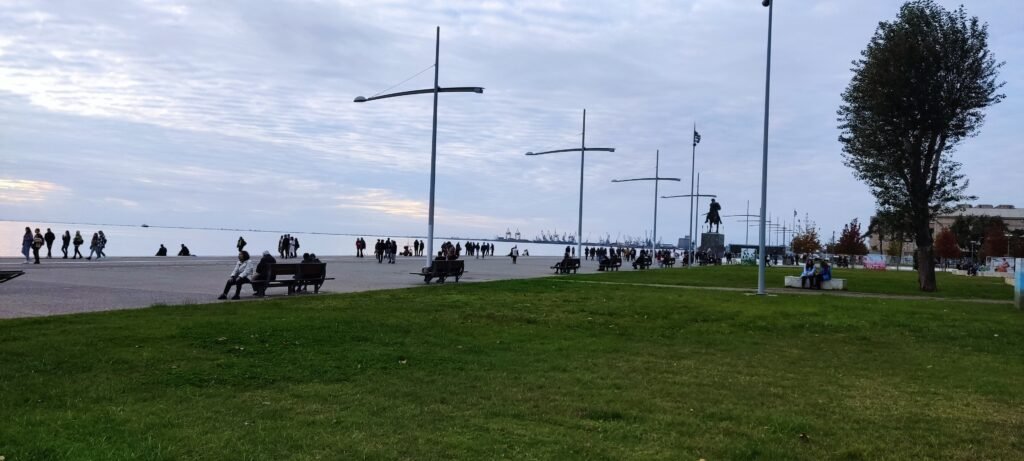
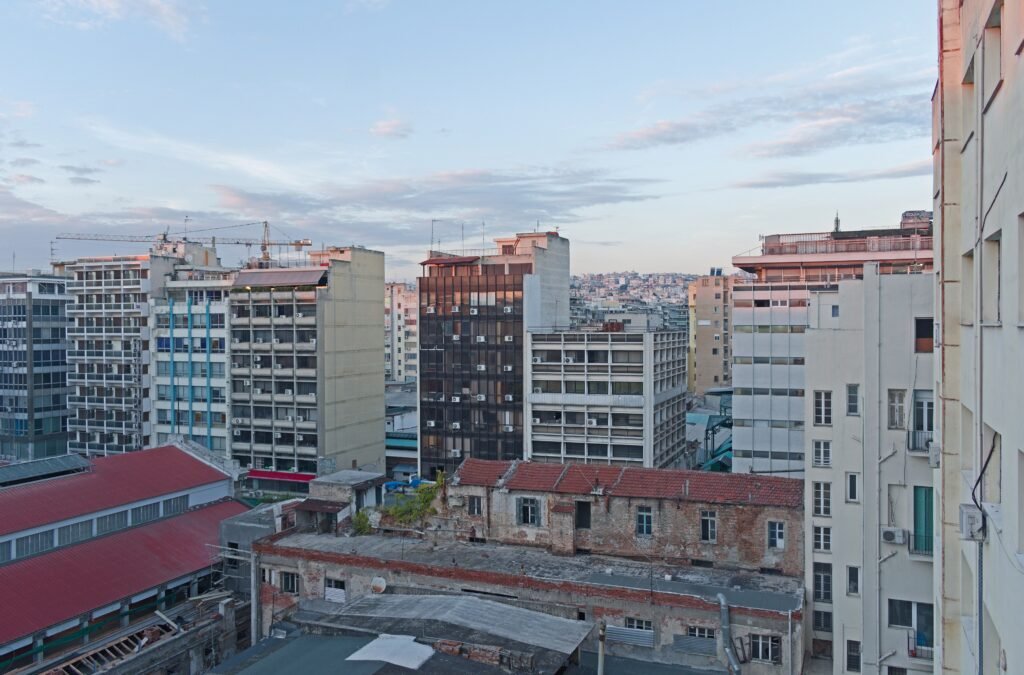
Street quality is less uniform than the map suggests. Agias Sofias includes a pedestrian section, and the waterfront provides broad uninterrupted walking space. Busy intersections on major commercial axes, narrower older sidewalks and market crowds can slow progress elsewhere. Pedestrian conditions continue to vary between broad promenades and ordinary commercial streets, so major junctions may feel less comfortable than the waterfront or dedicated pedestrian areas.
The Galerius and Museum District Extension
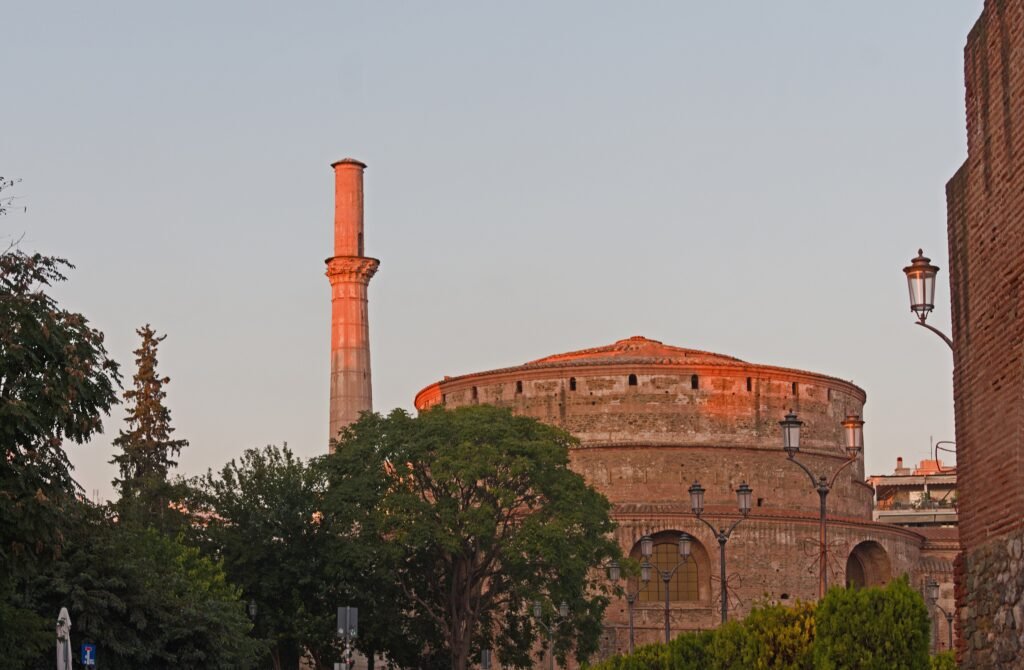
From Aristotelous, the Galerian Complex at Navarinou is about 15 minutes and the Rotunda about 18. The White Tower is about 13 minutes from Aristotelous, while the Archaeological Museum is roughly five minutes beyond it. The Museum of Byzantine Culture extends the same eastern footprint to about 25 minutes from Aristotelous. These places form a natural walking extension rather than a separate district requiring transit.
The White Tower also marks the start of Nea Paralia. The official waterfront walk continues all the way to Thessaloniki Concert Hall. For a short first visit, the early stretch around Alexander the Great and the Umbrellas fits naturally after the museums. Farther eastern sections are better treated as an optional promenade rather than necessary sightseeing mileage.
Where to Stay for the Easiest Walking
An Aristotelous, Tsimiski or Agias Sofias base minimizes almost every first-time walk. Ladadika works nearly as well and favors the western market and port side. Navarinou and the White Tower area suit travelers prioritizing Galerian monuments, museums and the waterfront. Ano Poli is better visited than used as the default short-stay base because repeated climbs add effort.
Useful Walking Times
Aristotelous Square to the Roman Forum takes about eight minutes. The White Tower is about 13 minutes away, while Navarinou and the Archaeological Museum are about 15. The Rotunda is roughly 18 minutes from Aristotelous, and the Museum of Byzantine Culture about 25. By contrast, Heptapyrgion and Trigonion Tower require about 45 minutes on foot from the center, including substantial climbing.
These are practical planning estimates rather than guaranteed walking times. The Ano Poli climb, crossings, crowds and individual pace can change the actual time.
A 2-Day Walking Route
The two days separate the compact lower city from the upper-city climb. Day 1 moves west to east through the main flat visitor chain. Day 2 starts high by bus, then walks predominantly downhill through Ano Poli instead of spending valuable time climbing and retracing streets.
Day 1 — Ladadika, markets, Galerius and the waterfront
Walking route
Day 1: Ladadika, markets, Galerius and the eastern waterfront
- Ladadika
- Aristotelous Square
- Modiano Market
- Kapani Market
- Church of Hagia Sophia
- Navarinou Square and Galerian Complex
- Arch of Galerius
- Rotunda
- White Tower
- Archaeological Museum of Thessaloniki
- Museum of Byzantine Culture
- The Umbrellas by Zongolopoulos
Begin in Ladadika, cross to Aristotelous, then move through Modiano and Kapani before continuing to Hagia Sophia. Navarinou, the Arch of Galerius and the Rotunda follow in a direct eastern sequence. Descend to the White Tower, continue through the two major museums, and finish on Nea Paralia near the Umbrellas. This route keeps the lower-city day coherent while leaving public transport for genuinely longer or more tiring trips.
Day 2 — Ano Poli downhill to the Roman Forum
Walking route
Day 2: Ano Poli downhill to Saint Demetrius and the Roman Forum
- Heptapyrgion
- Trigonion Tower
- Vlatadon Monastery
- Tsinari
- Church of Saint Demetrius
- Roman Forum of Thessaloniki
- Aristotelous Square
Take a local bus toward the upper city and begin the walking route near Heptapyrgion. Continue along the upper fortifications to Trigonion Tower, then descend through Vlatadon and Tsinari. Saint Demetrius marks the transition back toward the lower center. Finish at the Roman Forum and Aristotelous Square instead of climbing the same hill twice.
When Metro and Buses Help
Thessaloniki’s Metro connects the railway-station side of the city with central stops such as Venizelou and Agias Sofias and continues toward eastern districts. It is most useful for longer movements, railway arrival, outer accommodation and tired returns rather than for trips between already close central sights.
Local buses remain especially useful for Ano Poli because they can remove the sustained uphill approach. Metro and bus ticketing, service hours and frequencies can change, so check current OSETH, TheTA and Metro information before travel.
Arriving Without a Car
Thessaloniki Airport has direct bus connections toward the city center and railway-station area, with additional public-transport options available through eastern transfer points. Check current airport and OSETH information for the simplest route on your travel date.
New Railway Station sits west of the tight sightseeing core, but Metro and local transport make the final central connection straightforward. Walking with luggage is possible, although most visitors will find public transport more comfortable for the final segment.
When a Car Helps
A private car adds little to a normal two- or three-day Thessaloniki city break. It becomes more useful for regional plans such as Aigai or Vergina, Pella, Halkidiki, Mount Olympus or more independent northern-Greece touring. Aigai/Vergina, Pella, Halkidiki, Mount Olympus and other regional destinations are better treated as separate excursions.
Walking Limitations and Practical Tips
Thessaloniki mixes excellent pedestrian spaces with ordinary urban friction. The waterfront and Ladadika’s pedestrian streets are easy, while central commercial roads can feel tighter and busier. Large crossings, older paving, curb obstruction and market crowds can reduce pace. Accessibility is strongest on the Metro and principal promenades, not on every older sidewalk or Ano Poli lane.
Treat Ano Poli as a deliberate upper-city excursion rather than part of the flat central loop. A bus-to-the-top strategy preserves the experience while removing the least rewarding climb. On the waterfront, stop around the museums or early Nea Paralia if time is tight. Continuing to the Concert Hall is a longer leisure walk.
Seasonal Walking Note
Summer heat can shorten comfortable walking windows, especially along exposed waterfront sections and on the Ano Poli climb. Start earlier, use shaded inland streets when practical and save longer waterfront walks for cooler parts of the day.
Bottom Line
The most efficient first visit is built around the lower-city network, with one deliberate upper-city excursion. Walk the markets, Galerius monuments, White Tower and museums as connected clusters. Use a local bus to remove the hardest Ano Poli climb, and use Metro for the railway station or longer east-west trips. That keeps the two-day itinerary efficient without forcing unnecessary cross-city walking.