
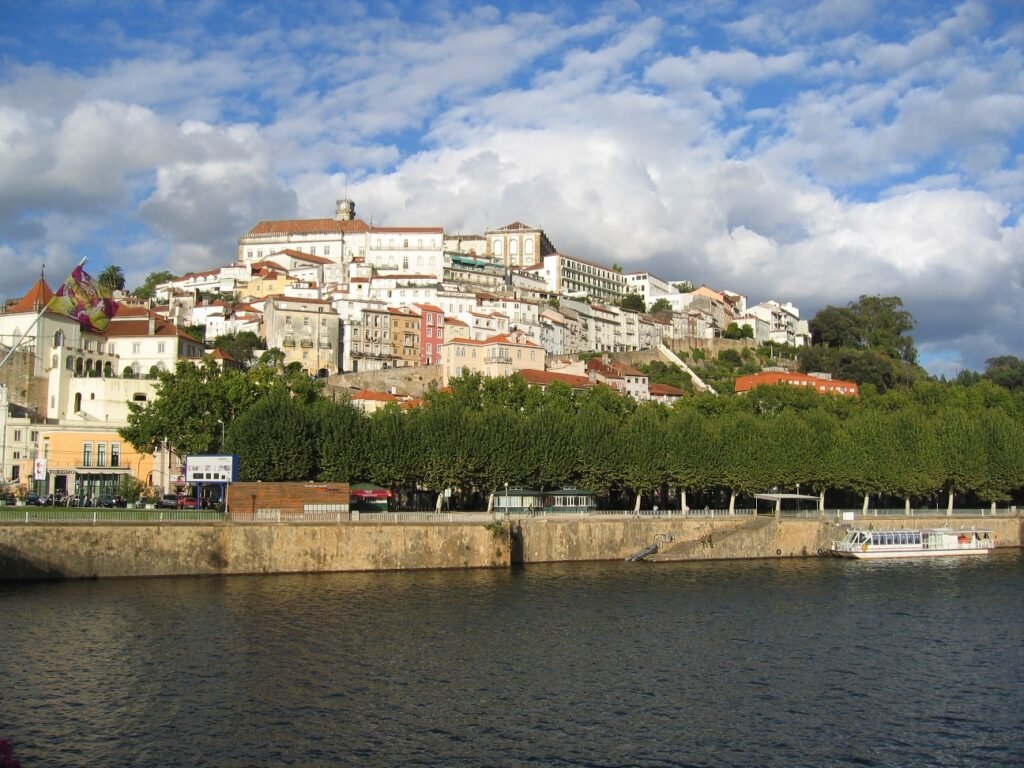
Coimbra compresses much of its first-time sightseeing into a small footprint, then turns that compactness vertically. Baixa runs beside the lower city, with Santa Cruz, Praça do Comércio, and Rua Ferreira Borges close together. Above it, Sé Velha and the university occupy Alta, reached through steep lanes and stairways. The distances remain short, but a normal sightseeing day can include a serious climb before lunch. The riverfront changes the rhythm completely, offering long, level promenades and easy bridge crossings. That contrast makes route order more important here than raw mileage.
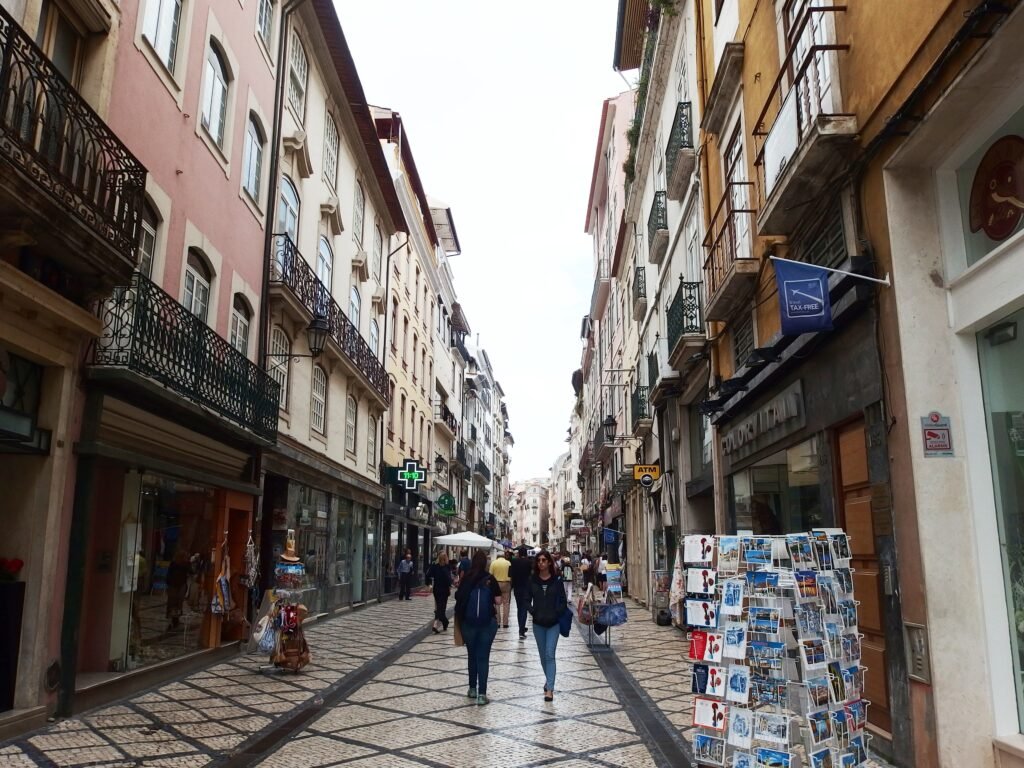
Why Coimbra Works Well on Foot
The strongest sightseeing chain starts around Praça 8 de Maio and Santa Cruz, then follows Rua Ferreira Borges toward Praça do Comércio. Arco de Almedina leads directly into the medieval ascent, with Sé Velha, the university and Paço das Escolas packed above. Those anchors are close enough to experience as one continuous walking day. Jardim Botânico extends the upper cluster naturally rather than forming a distant sightseeing zone. Across the river, Santa Clara adds a second cluster that remains walkable but is less tightly integrated.
Where the Walking Gets Hard
Coimbra’s difficulty comes from elevation, not long distances. The classic climb through Almedina and Quebra-Costas is direct, but much of Quebra-Costas is steep stairway. Historic stone surfaces and narrow lanes add comfort and accessibility challenges without making the route geographically inefficient. The Market Elevator provides a useful alternative between Baixa and Alta during operating hours. It helps visitors conserve energy, but it does not make the historic hill disappear. By contrast, Baixa and the Mondego riverfront are comparatively easy and level.
Best Areas to Stay
Baixa is the easiest all-round base for a short visit, especially around Praça 8 de Maio and Avenida Fernão de Magalhães. You stay close to restaurants, shops and the main pedestrian spine while starting the university climb from below. Riverfront and Portagem stays favor level walking and easy access toward Santa Clara. Lodging on the university or Alta edge shortens upper-city sightseeing, but steep approaches can become tiring with luggage. Central marketing alone does not guarantee an effortless arrival on foot.
Practical Walking Times
Praça 8 de Maio to Praça do Comércio takes roughly 5–7 minutes. Praça do Comércio to Sé Velha is about 8–12 minutes, but the direct route is steep and stair-heavy. Sé Velha to Paço das Escolas is another 5–7 minutes. Paço das Escolas to the Botanical Garden’s upper entrance is roughly 10–12 minutes. From Portagem, Santa Clara-a-Velha is about 12–15 minutes across the river. These are practical planning estimates rather than guaranteed walking times.
A 2-Day Walking Route
Day 1 — Baixa to the University in One Climb
Walking route
Day 1 — Baixa to the University in One Climb
- Praça 8 de Maio
- Igreja de Santa Cruz
- Rua Ferreira Borges
- Praça do Comércio
- Arco de Almedina
- Quebra-Costas
- Sé Velha de Coimbra
- Museu Nacional de Machado de Castro
- Sé Nova de Coimbra
- Paço das Escolas — Universidade de Coimbra
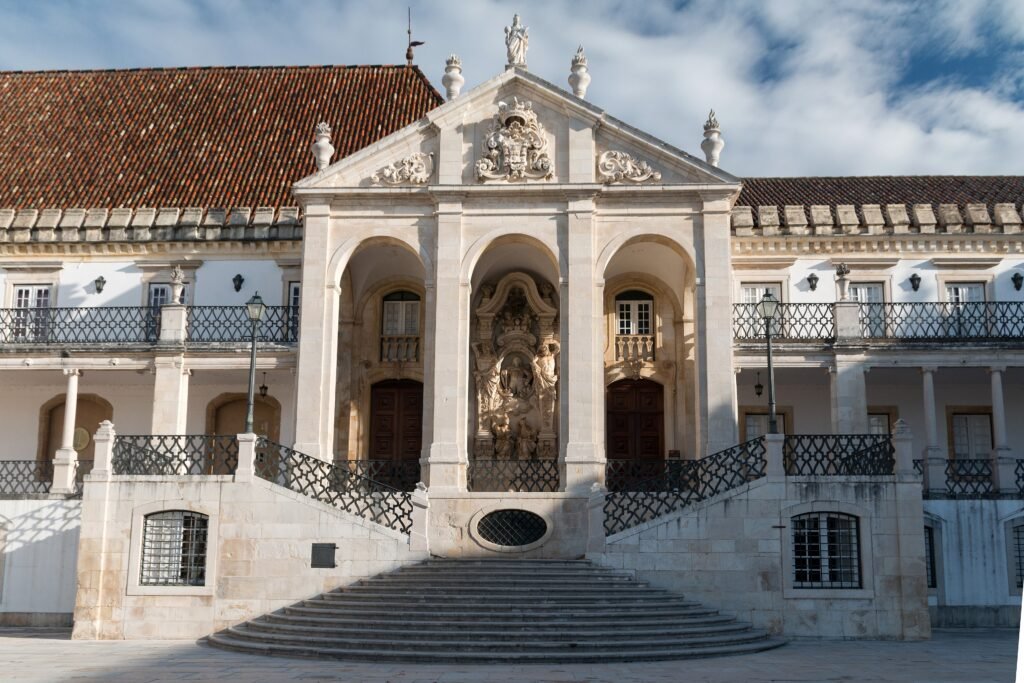
Begin at Praça 8 de Maio and Santa Cruz, then walk south through the lower pedestrian axis toward Praça do Comércio. Turn uphill only once, passing Arco de Almedina and taking the Quebra-Costas route to Sé Velha. After reaching Alta, stay there. Continue through the Machado de Castro museum area, Sé Nova and Paço das Escolas. Biblioteca Joanina belongs inside the university visit rather than requiring another mapped city leg. This order avoids the most wasteful mistake: descending to Baixa and climbing back to the university later.
Day 2 — Botanical Garden, Riverfront and Santa Clara
Walking route
Day 2 — Botanical Garden, Riverfront and Santa Clara
- Jardim Botânico da Universidade de Coimbra
- Arcos do Jardim
- Parque Verde do Mondego
- Ponte Pedro e Inês
- Mosteiro de Santa Clara-a-Velha
- Portugal dos Pequenitos
- Quinta das Lágrimas
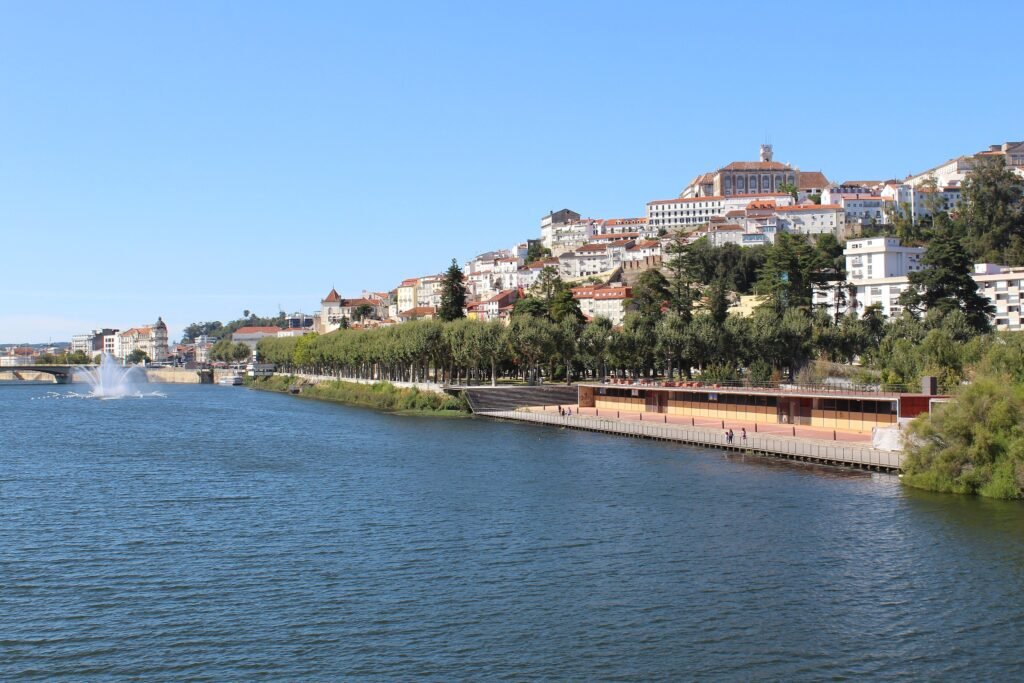
Start near the Botanical Garden’s upper entrance and descend once toward Parque Verde do Mondego. The riverfront then becomes broad, level and comfortable compared with the historic hill. Cross the Mondego using Ponte Pedro e Inês and remain on the Santa Clara side. Group Santa Clara-a-Velha, Portugal dos Pequenitos and Quinta das Lágrimas before finishing. This day shows Coimbra’s geographic limit clearly: Santa Clara is walkable from the center, but it is not part of the same ultra-tight historic cluster.
Using Transit Without Losing the Walk
Public transport becomes most useful when the hills matter more than the mileage. SMTUC buses can save effort between the lower city, university area, Botanical Garden and outer stops, while the Market Elevator provides a targeted alternative to part of the Baixa–Alta climb. Coimbra’s transport network has been changing with the rollout of Metro Mondego services, so check current routes, fares and operating information before travel.
Arriving in Coimbra Without a Car
Coimbra-B is the main long-distance rail gateway for services from Lisbon, Porto and other Portuguese cities. The former central Coimbra station stopped handling passenger rail services in 2025, so reaching the historic center from Coimbra-B requires an onward local connection. Check current CP and local transport information for the simplest transfer on your travel date. International visitors commonly arrive through Lisbon or Porto before continuing by rail, since Coimbra has no major commercial airport.
When a Car Helps
A car is unnecessary for the standard two- or three-day city visit. It becomes more useful when Coimbra is a base for regional excursions with weaker or slower public connections. Conímbriga, Bussaco, Aveiro and Figueira da Foz are separate trips, not extensions of Coimbra’s walking core. Their accessibility does not make Coimbra’s city attractions closer together.
Limitations and Practical Tips
Plan the historic center by elevation. Group Baixa stops before climbing, then remain around Sé Velha and the university until you are finished there. Travelers with limited mobility should study accessible alternatives rather than assuming every medieval shortcut works for them. Rain can make stone surfaces less comfortable, while summer heat magnifies the effort of the ascent. Local transport routes and street arrangements can change as the network develops, so check current service information before travel.
Seasonal Walking
Spring and autumn usually make long outdoor days easier, while summer midday heat can amplify the university climb. Winter rain changes comfort more than distance, especially on stone and stair routes. The Mondego riverfront offers the easiest place to reduce effort in almost any season. Weather changes the effort and comfort of the walk, while the underlying distances between the main sights remain the same.
Bottom Line
Coimbra delivers an unusually dense historic weekend on foot, provided you respect the vertical split between Baixa and Alta. The best strategy is simple: walk the lower core, climb once, stay high, then save the flatter riverfront and Santa Clara for another day. Buses and the Market Elevator are useful energy savers rather than substitutes for a coherent walking plan. For the usual first visit, renting a car adds little inside the city.