
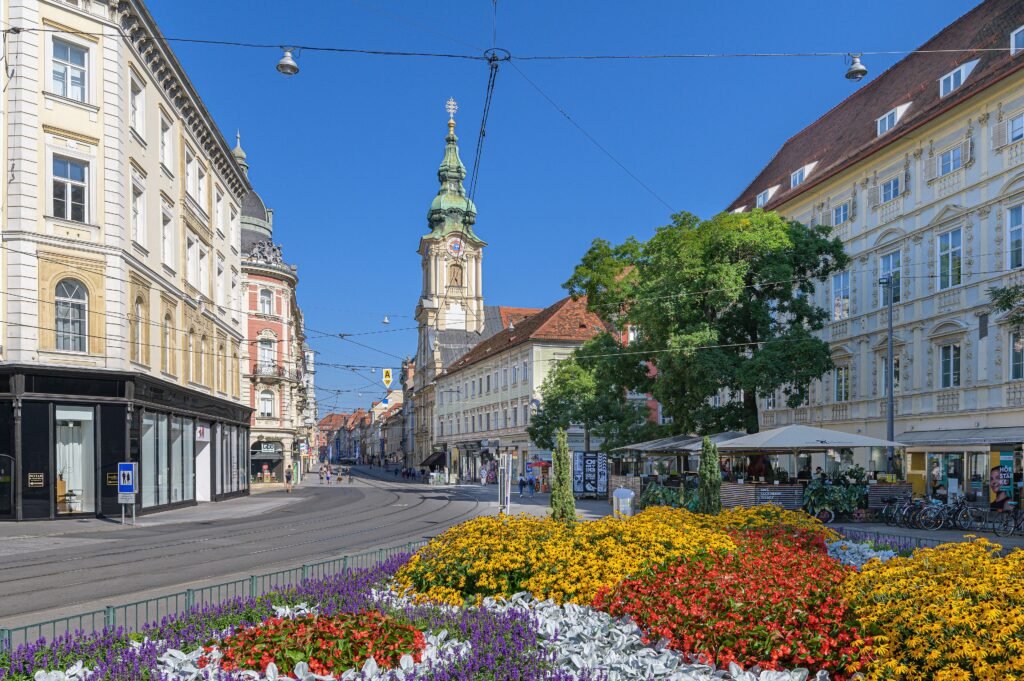
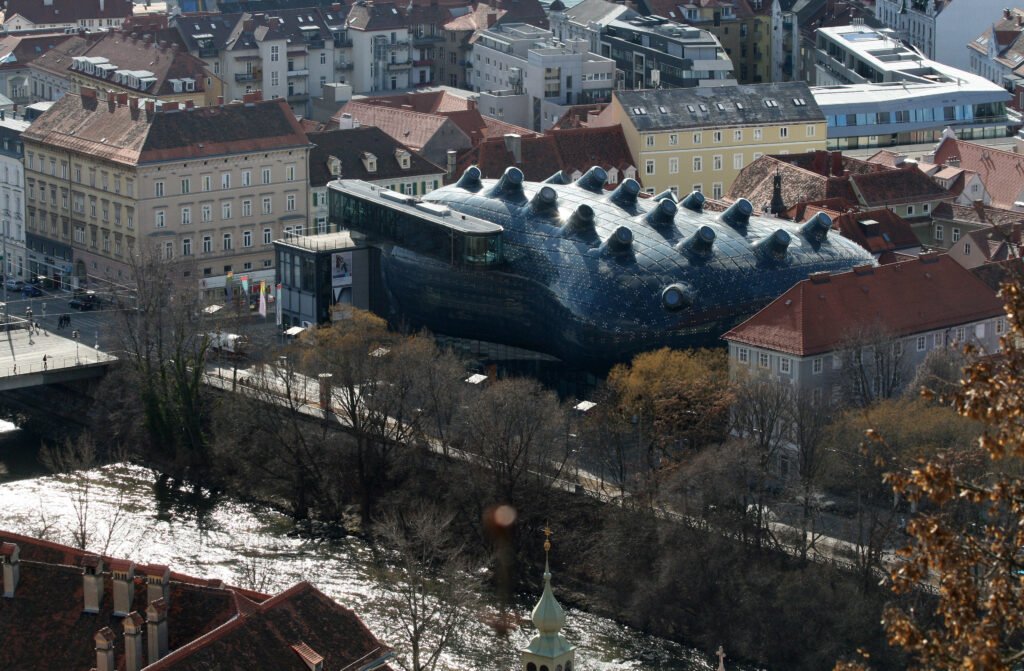
Graz compresses its first-visit landmarks into a small center on both sides of the Mur. Herrengasse leads directly to Hauptplatz, while Sporgasse, the cathedral, and Glockenspielplatz sit only a few blocks away. Short bridges make Kunsthaus and the western riverbank feel like extensions of the Old Town, not separate excursions. The spatial contrast appears at Schlossberg, which rises abruptly beside the same compact streets. Its Clock Tower is geographically central, yet reaching it on foot means a serious climb. Eggenberg Palace creates the other clear break, sitting well beyond the core despite an easy tram connection.
Why Graz Works So Well on Foot
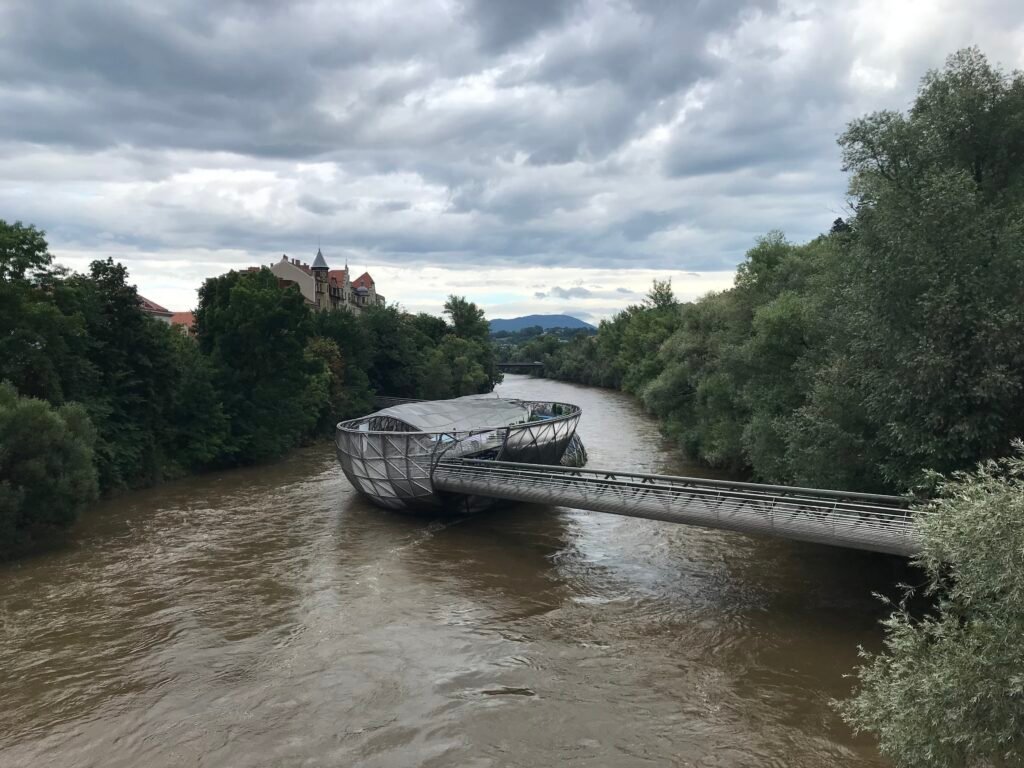
The historic center is genuinely compact rather than merely easy because trams exist. Graz Tourismus publishes a 2.59-kilometer central walking circuit linking Landhaus, Herrengasse, Hauptplatz and Sporgasse. The river also creates less separation than the map suggests. An official 1.81-kilometer cross-Mur circuit runs from Franziskanerviertel over Erzherzog-Johann-Brücke to Kunsthaus, Murinsel and Schlossbergplatz. Those distances let a first-time visitor move between major anchors without turning the weekend into a sequence of transport hops.
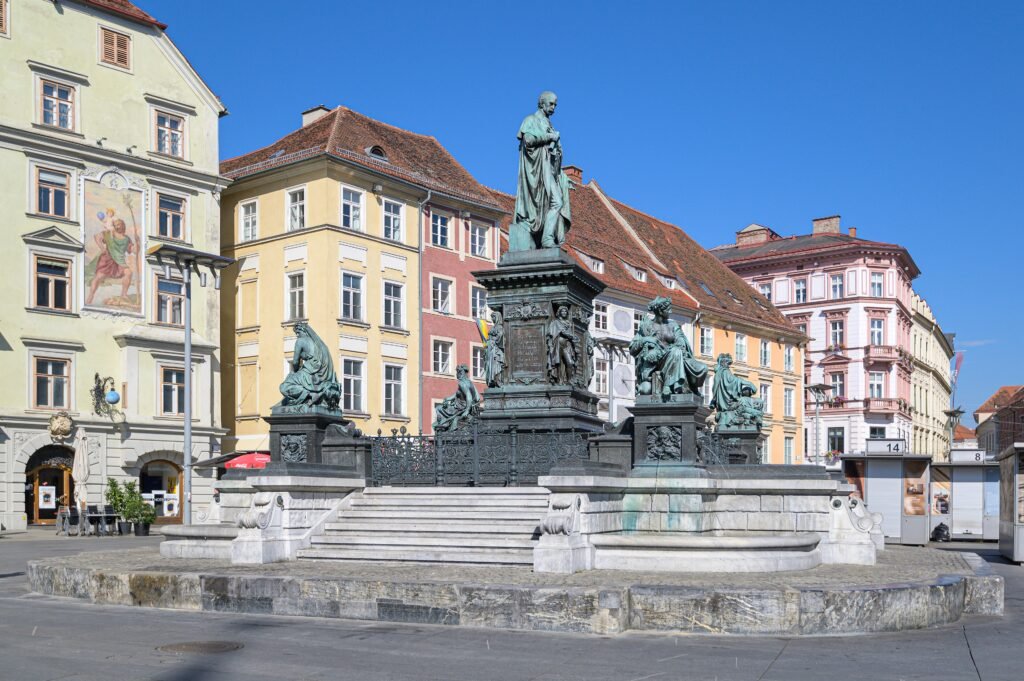
Pedestrian priority is strongest around the central squares and shopping streets. Permanent pedestrian zones exist on both sides of the Mur, while much of Schmiedgasse and Sporgasse favors walking. Hauptplatz and Herrengasse remain tram corridors, so pedestrian space is not identical to a fully vehicle-free plaza. Historic paving, tracks and occasional bicycle interaction are the main street-level compromises.
Where the Walking Core Starts to Spread
Eggenberg Palace is the clearest outer attraction. It belongs in a short Graz stay, but not inside the Old Town walking cluster. Tram 1 makes the trip straightforward, followed by an approximately 600-meter walk. Graz Hauptbahnhof is another practical edge rather than part of the historic core. Stadtpark is close enough for an easy extension, while the university district, Hilmteich and Botanical Garden work better as optional additions when time allows.
Best Areas to Stay for a Walking Weekend
Altstadt is the strongest base for maximizing walking, especially around Hauptplatz, Herrengasse and the Mur. Franziskanerviertel gives similar access with a quieter western edge. Lend works well for Kunsthaus, Murinsel and market access while remaining close to the center. Jakomini is useful for visitors who value tram connections without moving far from the core. Hotels around Hauptbahnhof are excellent for rail convenience, but they trade immediate Old Town access for a roughly 20–25 minute walk.
Useful Walking Times
These are practical planning estimates rather than guaranteed walking times. Schlossberg times separate the walk to its base from the vertical ascent.
| Walk | Typical time | What to expect |
|---|---|---|
| Hauptplatz → Landhaus Courtyard | 3–4 min | Short Herrengasse walk |
| Hauptplatz → Glockenspielplatz | 5–7 min | Easy central side streets |
| Hauptplatz → Cathedral and Mausoleum | 8–10 min | Gentle rise through the Old Town |
| Hauptplatz → Schlossbergplatz | 5–7 min | Easy street-level walk to the base |
| Hauptplatz → Kunsthaus | 5–7 min | Short cross-Mur connection |
| Kunsthaus → Murinsel | 6–8 min | Simple riverfront link |
| Hauptplatz → Lendplatz | 12–15 min | Cross-river neighborhood extension |
| Graz Hauptbahnhof → Hauptplatz | 20–25 min | Mostly level; tram is easier with luggage |
| Schlossbergplatz → Uhrturm on foot | 10–15 min | Steep; the Felsensteig has 260 steps |
A 2-Day Walking Route
Day 1: Herrengasse, Cathedral and the Old Town
Walking route
Day 1: Herrengasse, Cathedral and the Old Town
- Jakominiplatz
- Landhaus Courtyard
- Glockenspielplatz
- Graz Cathedral
- Mausoleum of Emperor Ferdinand II
- Sporgasse
- Hauptplatz
- Franziskanerplatz
Start at Jakominiplatz and walk north through Herrengasse to the Landhaus courtyard. Turn east for Glockenspielplatz, then continue to Graz Cathedral and the neighboring Mausoleum. Sporgasse provides a logical return toward Hauptplatz without retracing Herrengasse. Finish in Franziskanerviertel near the Mur. The route stays deliberately compact, showing how many headline sights fit into one central walking loop.
Day 2: Kunsthaus, Murinsel and Schlossberg
Walking route
Day 2: Kunsthaus, Murinsel and Schlossberg
- Kunsthaus Graz
- Mariahilferplatz
- Murinsel Graz
- Schlossbergplatz
- Uhrturm
- Karmeliterplatz
- Stadtpark Graz
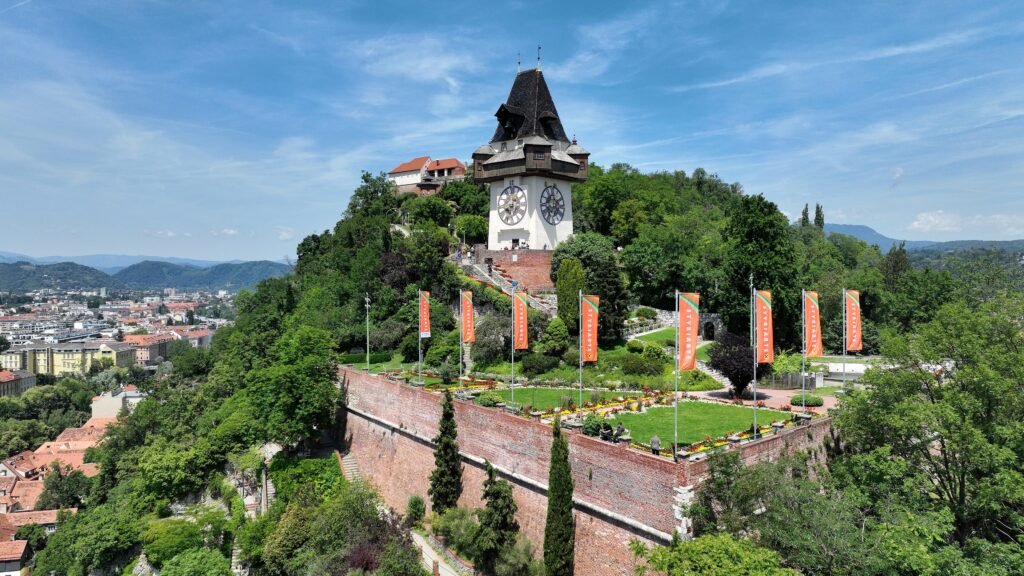
Begin at Kunsthaus on the west bank, then move through Mariahilferplatz to Murinsel. Cross once toward Schlossbergplatz and make the day’s main ascent there. The lift is a sensible choice when preserving energy; the 260-step Felsensteig remains the walking alternative. After Uhrturm, descend toward Karmeliterplatz and finish in Stadtpark. This sequence avoids repeated river crossings and repeated climbing.
Using Trams and Buses
Transit is most valuable for Hauptbahnhof, Eggenberg and longer neighborhood extensions. GrazMobil and ticket machines provide convenient ways to buy local transport tickets, while the Altstadtbim allows free tram travel within the defined central area. Service continues into the evening, with additional night connections on weekend nights. Check current fares and operating times before travel.
Schlossberg: Walk, Funicular, or Lift?
Schlossberg is where Graz stops feeling nearly level. The Felsensteig rises from Schlossbergplatz through 260 steps, with alternative sloped paths also available. The Schlossbergbahn and lift provide low-effort alternatives to the climb. Check current operating hours and fares before visiting, especially if you plan to rely on one of them for the ascent or descent. Both connectors improve convenience without changing the hill’s underlying physical separation.
Arriving Without a Car
Graz Airport has useful public transport, but its rail stop is not terminal-integrated. The airport places the railway station about 300 meters from the passenger terminal. S-Bahn trains reach Graz Hauptbahnhof, while airport buses stop directly outside the terminal area. Hauptbahnhof is a major intercity rail gateway with frequent Austrian connections. From there, trams make the final trip to Hauptplatz simple; walking takes roughly 20–25 minutes.
When a Car Helps
A private car adds little to a normal central Graz weekend. It becomes more useful for regional excursions such as South Styrian Wine Country, Riegersburg or other rural destinations. Those trips sit outside Graz’s city walking geography and are not part of either mapped day. Eggenberg Palace remains a city attraction and is easy enough to reach by tram.
Limitations and Practical Tips
- Schlossberg is central but steep. Use the lift or funicular when stairs would consume too much energy.
- Historic cobbles and tram tracks can slow rolling luggage, wheelchairs and anyone who prefers smoother surfaces.
- Eggenberg Palace is an outer attraction. Treat it as a separate tram trip instead of extending an Old Town walk.
- Hauptbahnhof is practical but outside the historic core. Use the tram when arriving with bags.
- Check live Graz Linien and ÖBB alerts before travel because construction and diversions can temporarily change routes.
Seasonal Walking Note
Summer heat can make exposed Schlossberg paths more tiring, while winter rain, cold or snow can reduce traction on historic surfaces. Shade, trees and covered passages help in selected areas. These conditions change walking comfort rather than the underlying distances and connections between Graz’s main sights.
Bottom Line
Graz works best as a compact Old Town weekend with selective transit rather than constant transport use. Most headline central sights connect through short walks on both sides of the Mur. Schlossberg adds one meaningful climb, and Eggenberg creates one clear outer trip. Choose a central base, walk the historic core, and use trams only when the geography genuinely spreads.