
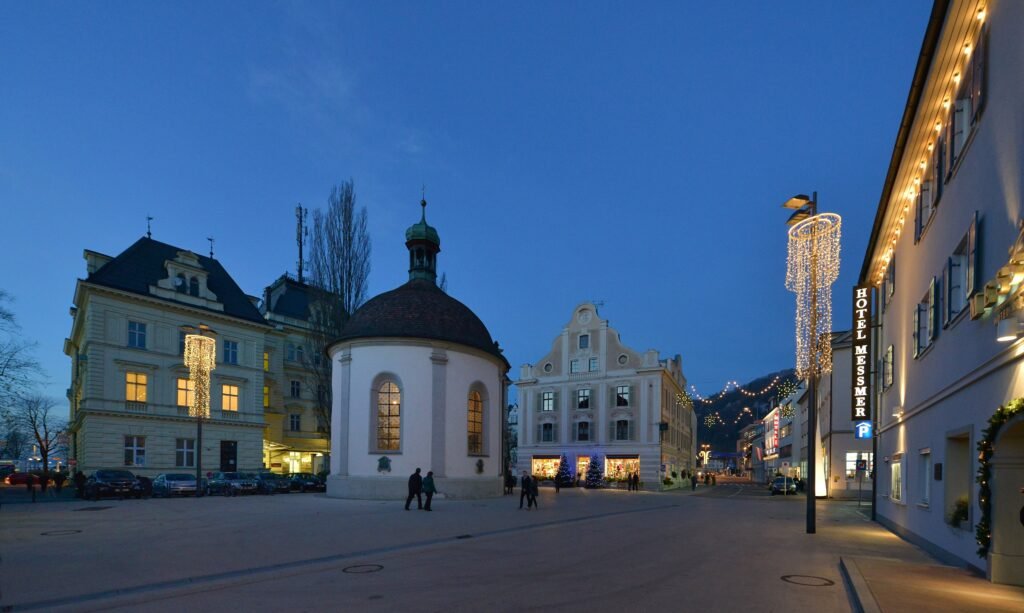
Bregenz compresses its strongest visitor geography into a narrow band between the railway and the Lower Town’s cultural streets. From the station, the lakefront, Kunsthaus, vorarlberg museum, Kornmarkt, harbor, Festspielhaus, and Seebühne sit within short walking distances. The rail line creates a seam, but upgraded underpasses and nearby crossings keep the lake connected to the center. Above this level core, Oberstadt changes the walking experience quickly with cobbles, steps, and sustained gradients. Pfänder sits even higher, despite its cable-car base being close to Kornmarkt. That contrast makes Bregenz easy to explore on foot, yet not uniformly effortless.
Why Bregenz’s Core Feels So Compact
Bregenz’s main visitor sights sit unusually close together. Kunsthaus Bregenz is about five minutes from both the main station and harbor. The vorarlberg museum faces the harbor from Kornmarktplatz, while the festival grounds are about ten minutes from the station. The city’s expanded pedestrian zone strengthens this pattern around Kornmarkt, Rathausstraße, Leutbühel, Maurachgasse, and adjoining streets.
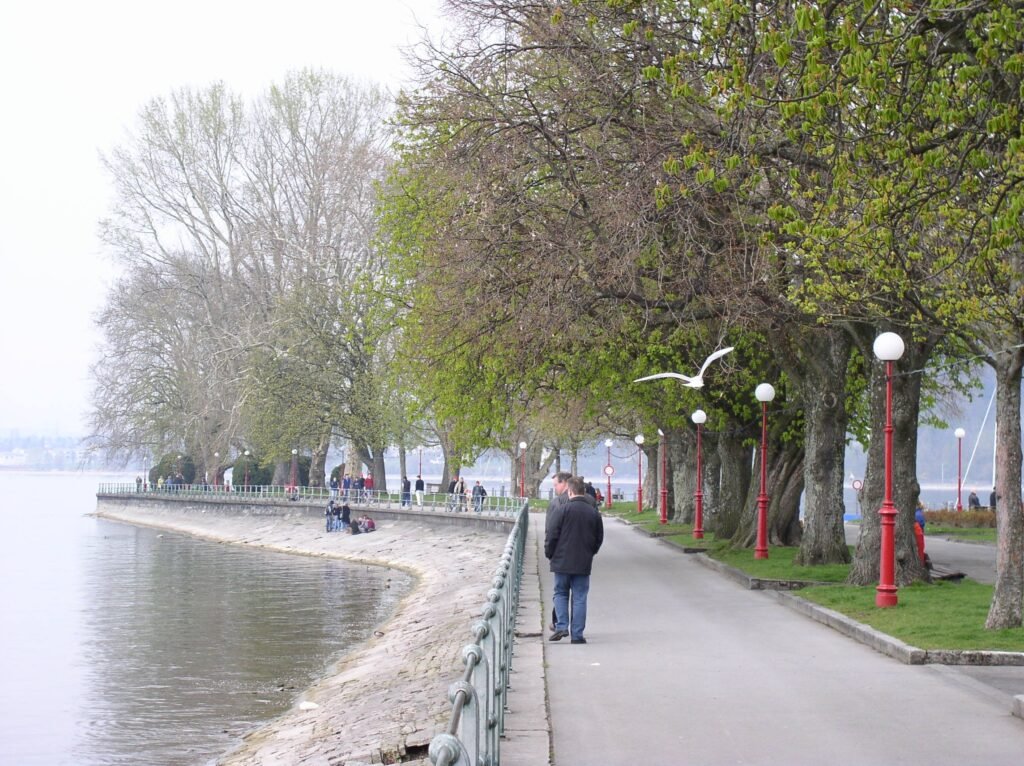
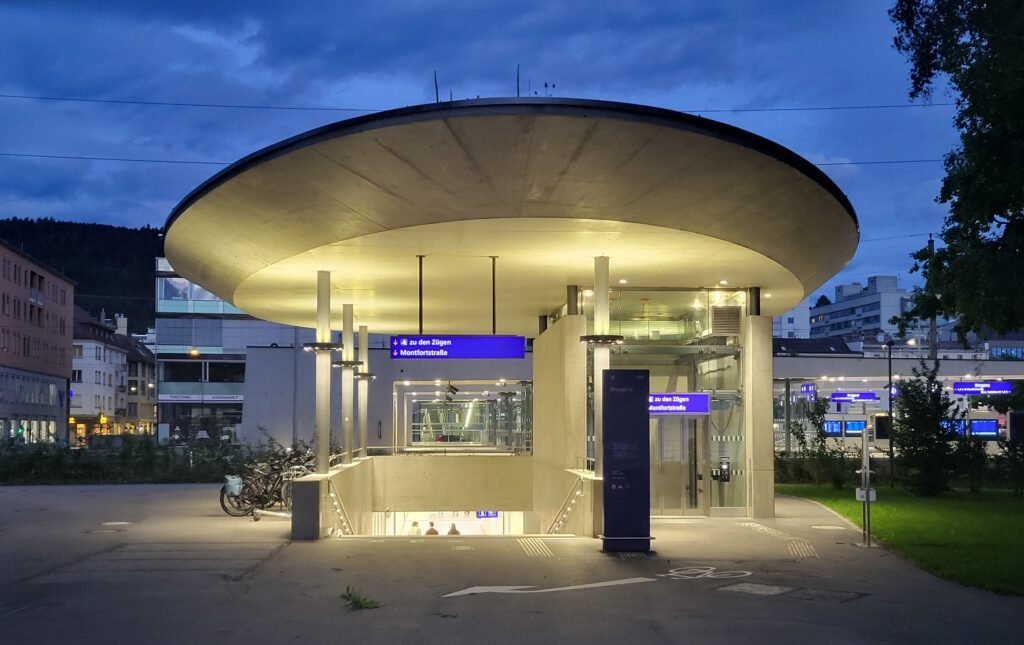
The railway is visible beside the lake, but it does not sever the visitor core. The rebuilt Hypo underpass provides a modern, barrier-free connection between the city side and the promenade. Once lakeside, the Seepromenade continues naturally between the harbor and Festspielhaus. That makes the tracks a seam to cross deliberately, not a reason to use transit for central sightseeing.
Best Areas to Stay for Walking
Kornmarkt and the surrounding Lower Town streets are the strongest all-purpose base for walking. They place the museums, harbor, pedestrian zone, restaurants, and Pfänderbahn approach within short distances. The station and Festspielhaus area is equally practical for rail arrivals and lakefront events, while remaining close to Kornmarkt.
Bregenz lodging is not limited to this compact zone. Official listings also extend along Mehrerauerstraße, Landstraße, and Rheinstraße. Those addresses can still work without a car, but buses become more useful for repeated trips into the center. Choose the exact property location rather than assuming every Bregenz hotel offers the same walking convenience.
Useful Walking Times
- Bregenz Bahnhof to Kunsthaus, vorarlberg museum, or Kornmarkt: about 5–7 minutes, mostly level.
- Bregenz Bahnhof to Festspielhaus and Seebühne: about 10 minutes on the normal lakefront approach.
- Kornmarktplatz to Bregenz Harbor: about 2–4 minutes across the compact cultural district.
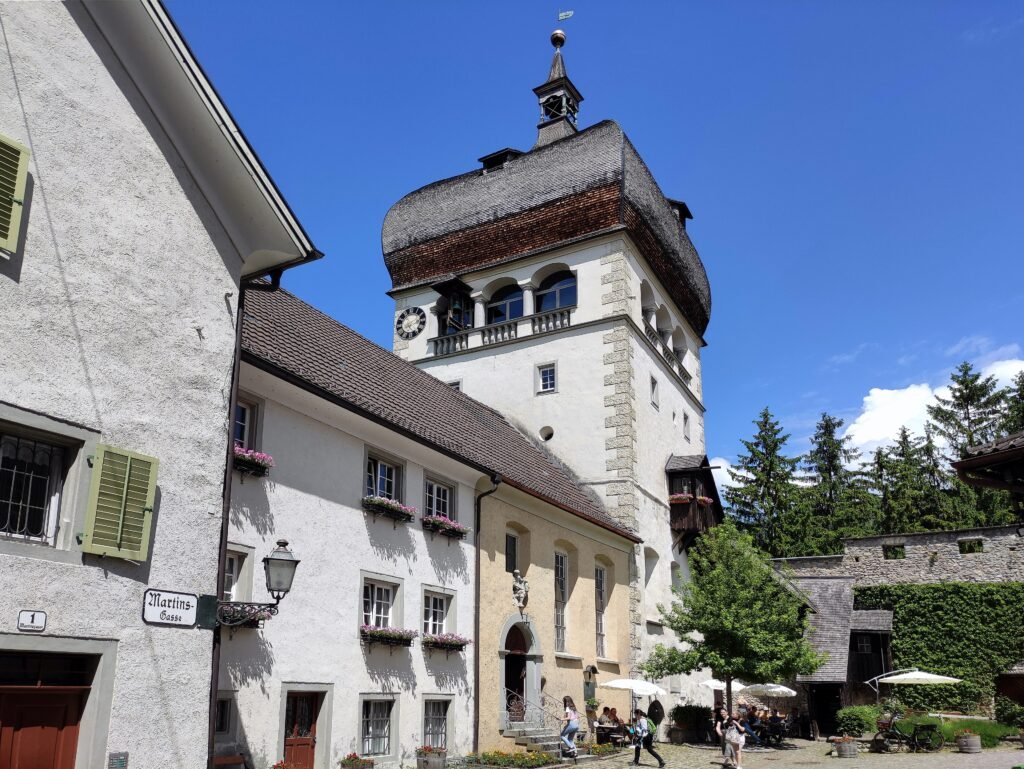
- Kornmarktplatz to Martinsturm: about 10–12 minutes, with a noticeable uphill approach and historic surfaces.
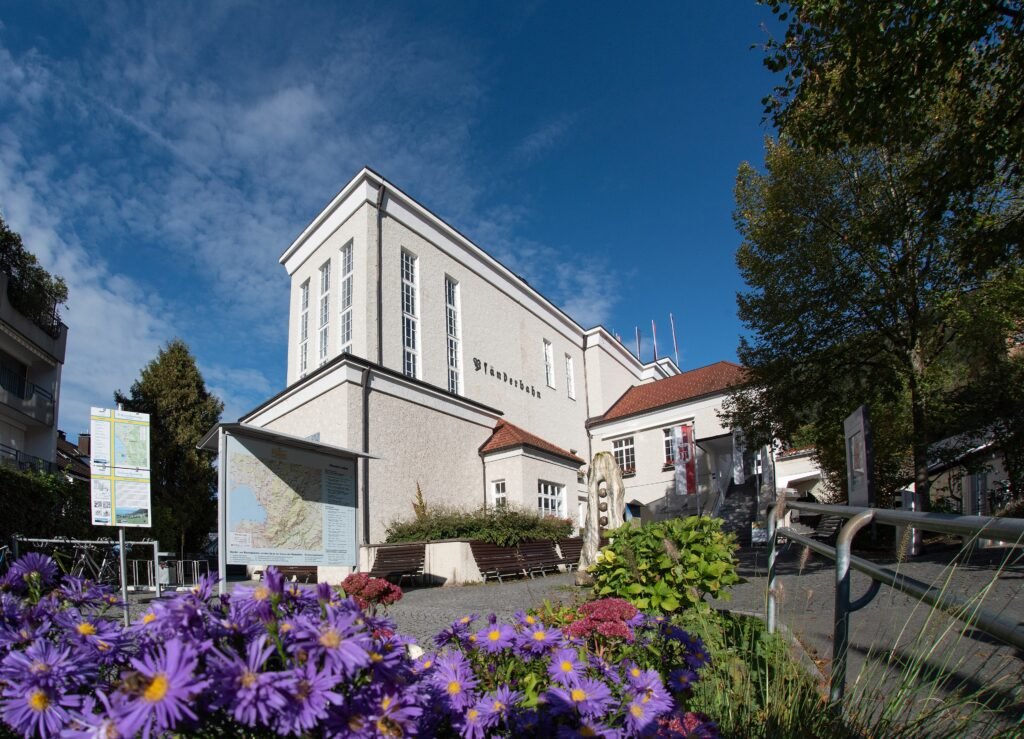
- Bregenz Harbor to the Pfänderbahn valley station: about 7 minutes on foot.
- Bregenz Bahnhof to the Pfänderbahn valley station: about 15 minutes on foot.
These are practical planning estimates rather than guaranteed walking times. Oberstadt minutes can feel longer because cobbles, stairs, and gradients matter more than the short map distance.
A 2-Day Walking-Focused Route
Day 1 stays in the level lakefront system and shows how little repositioning Bregenz requires. Day 2 adds one deliberate Oberstadt climb before continuing toward the Pfänderbahn valley station.
Day 1 — Station, Lakefront and Cultural Core
Walking route
Day 1 — Station, lakefront and cultural core
- Bregenz Bahnhof
- Festspielhaus Bregenz and Seebühne
- Seepromenade Bregenz
- Bregenz Harbor
- vorarlberg museum
- Kunsthaus Bregenz
- Kornmarktplatz
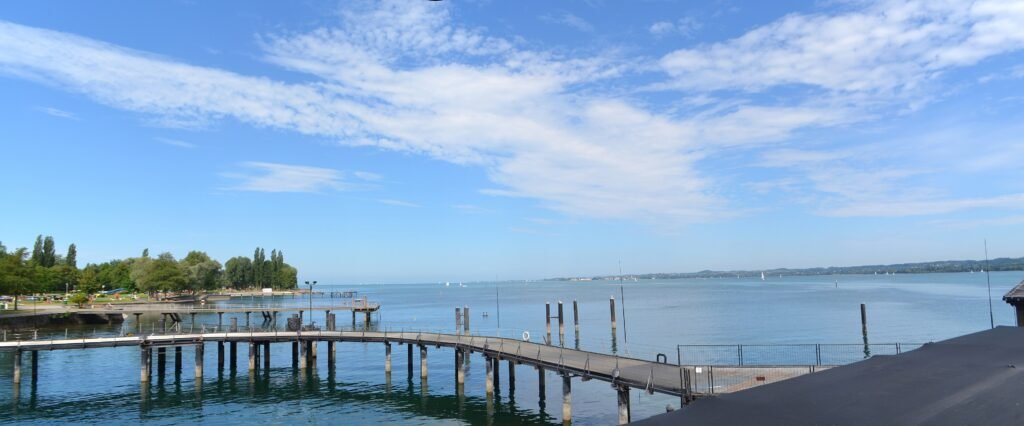
Start at Bregenz Bahnhof and walk first to Festspielhaus and the Seebühne area. From there, follow the Seepromenade east toward Bregenz Harbor instead of returning inland. Continue across the harbor edge to the vorarlberg museum and Kunsthaus Bregenz. Finish at Kornmarktplatz, where the cultural district and pedestrianized center overlap.
The route is intentionally short. It demonstrates the value of Bregenz’s concentrated visitor geography rather than manufacturing extra mileage. Museum visits, harbor detours, and time beside the lake will occupy far more of the day than the transfers between anchors.
Day 2 — Oberstadt and Pfänder
Walking route
Day 2 — Oberstadt climb and Pfänderbahn approach
- Leutbühel
- Maurachgasse
- Martinsturm
- Ehre-Guta-Platz
- Pfarrkirche St. Gallus
- Kirchstraße
- Pfänderbahn Talstation
Begin at Leutbühel and climb through Maurachgasse into Oberstadt. Visit Martinsturm, continue through the historic lanes toward Ehre-Guta-Platz, then reach St. Gallus. Descend once toward Kirchstraße and continue across the lower center to the Pfänderbahn valley station. This sequence avoids repeatedly climbing and descending the same hill.
Use the Pfänderbahn for the mountain ascent if Pfänder is part of your day. The cable car takes about six minutes, but that ride is not part of the mapped walking distance. Herz-Jesu-Kirche is a worthwhile optional uphill detour from the center, especially for visitors interested in church architecture.
When Buses, Trains and the Pfänderbahn Help
Transit is most valuable once you leave the tight central walking area. City bus 101 links Bahnhof, Kornmarkt, Hafen, and Pfänderbahn. Line 102 serves Kloster Mehrerau, while Line 119 offers an alternative to walking uphill into Oberstadt. Regional trains are useful for separate excursions, not for making central Bregenz feel more compact.
Local buses and trains are easy to use for occasional trips beyond the compact center. Tickets can be purchased through the regional transport system, while FAIRTIQ offers smartphone check-in and check-out for visitors who prefer not to study the fare structure in advance. Check current fares before travel rather than relying on fixed prices in the guide.
Fixed-route buses remain useful on weekends, although evening service is thinner than during the day. On-demand night services may supplement the regular network on selected nights, so check current VMOBIL information if you expect to travel late.
Pfänderbahn is a specialized mountain connector rather than ordinary city transit. It provides a quick alternative to climbing from Bregenz toward Pfänder and normally operates frequently during visitor hours. Check current operating times and fares before including it in your itinerary.
Arriving in Bregenz Without a Car
Zurich Airport is a practical international gateway for Bregenz because direct rail connections are available on parts of the timetable. Other routes may require a transfer, so check the current journey before travel. For many overseas visitors, this rail connection is more useful than choosing a smaller nearby airport simply because it is geographically closer.
The final rail arrival is unusually convenient. Bregenz Bahnhof sits beside the lakefront visitor area, with Kornmarkt only a few minutes away. Long-distance trains also connect Bregenz with major Austrian and cross-border rail corridors. Seasonal Lake Constance ferries provide another attractive arrival or excursion option, but they are not a year-round substitute for rail.
When a Car Helps
A private car adds little to a normal two- or three-day Bregenz city break. It becomes more useful for rural or mountain trips where public transport does not match your itinerary. Lindau, Dornbirn, Feldkirch, and St. Gallen are separate regional outings even though trains, buses, or boats make them easy to reach.
Limitations and Practical Tips
- Oberstadt is close, but cobbles, stairs, and sustained gradients make it more demanding than the level lakefront.
- Cross the railway at formal connections such as the accessible Hypo underpass rather than treating the tracks as an unrestricted crossing.
- Festival crowds, bag checks, and extra transport are event-period conditions. Allow more time around Seebühne on performance days.
- Mehrerau and outer residential lodging are better treated as bus-assisted extensions than part of the core sightseeing walk.
- Bregenz Bahnhof is being rebuilt. Check current ÖBB and VMOBIL access information because temporary routing can change during construction.
Seasonal Walking Note
Lake wind, summer sun, rain, and winter snow can change how comfortable the same routes feel. Oberstadt’s historic surfaces deserve extra care when wet or icy. Layers and suitable shoes matter more here than adding extra transport to the compact central itinerary.
Bottom Line
Bregenz works best as a level cultural core with two distinct vertical extensions. Walk the station, Kornmarkt, museums, harbor, promenade, and festival district as one compact system. Treat Oberstadt as the weekend’s meaningful climb and Pfänder as a cable-car-supported mountain outing. With a central base, most visitors can leave the car out of the city plan.