
A weekend in Vienna can begin with hours of uninterrupted central walking, then jump quickly to Schönbrunn by U-Bahn. Salzburg feels smaller, with Mirabell and the Old Town joined by frequent Salzach crossings. Innsbruck keeps its main sightseeing surprisingly level until the route starts climbing above the valley floor. Graz packs its center tightly around Hauptplatz and the Mur, then Schlossberg suddenly changes the effort. Bregenz compresses museums, station and lakefront into minutes of walking. Linz stretches the experience farther, following Landstraße from Hauptbahnhof toward Hauptplatz and the Danube.
Austria’s Six-City Ranking
| Rank | City | Overall score | Strongest advantage | Main limitation |
|---|---|---|---|---|
| 1 | Vienna | 93/100 | Dense central walking with exceptional U-Bahn and tram support | Schönbrunn and Prater remain genuine outer visitor clusters |
| 2 | Salzburg | 92/100 | Exceptionally compact classic sightseeing around both Salzach banks | Fortress, Mönchsberg and Nonnberg add real vertical effort |
| 3 | Innsbruck | 90/100 | Tight, mostly level valley-floor core with excellent car-free arrival | Bergisel, Hungerburg and Nordkette create vertical extensions |
| 4 | Graz | 89/100 | Extremely compact Old Town and Mur riverfront geography | Schlossberg adds a sharp climb and airport arrival is less seamless |
| 5 (tie) | Bregenz | 87/100 | Tiny station-to-Kornmarkt-to-lakefront walking footprint | Lighter urban transit and localized climbs toward Oberstadt and Pfänder |
| 5 (tie) | Linz | 87/100 | Clear station-to-Danube spine backed by strong trams | Pöstlingberg and industrial attractions sit beyond the compact center |
Bregenz and Linz share fifth at 87/100. Bregenz is tighter and easier on arrival, while Linz spreads farther but offers stronger urban transit support.
Why Vienna Edges Salzburg by One Point
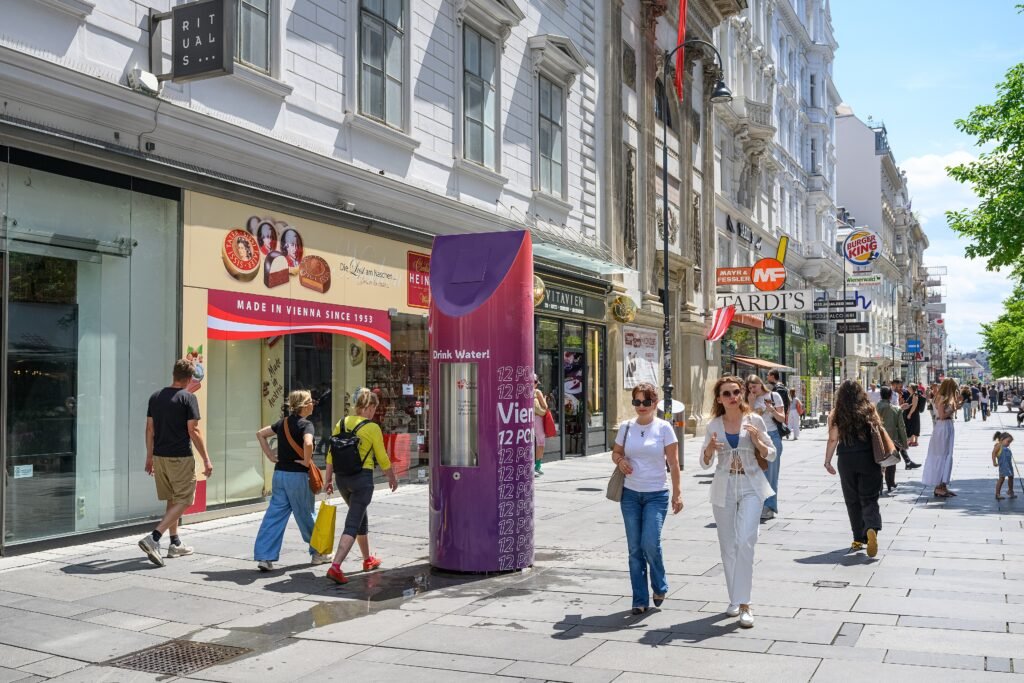
Vienna’s advantage is not that every headline sight sits inside one giant walking loop. Stephansplatz, Hofburg, the Opera, MuseumsQuartier, Parliament and Rathaus form a powerful central network around the Innere Stadt and western Ringstrasse. Belvedere feels like a longer extension, while Schönbrunn and Prater remain separate visitor clusters. The Vienna walking guide shows why those outer areas still belong to a car-free weekend rather than the pedestrian core.
What keeps Vienna ahead is how easily the U-Bahn and trams stitch those separate areas into a short trip. That transport strength improves the weekend without pretending Schönbrunn or Prater became geographically closer. Vienna International Airport and Hauptbahnhof also make car-free arrival especially straightforward.
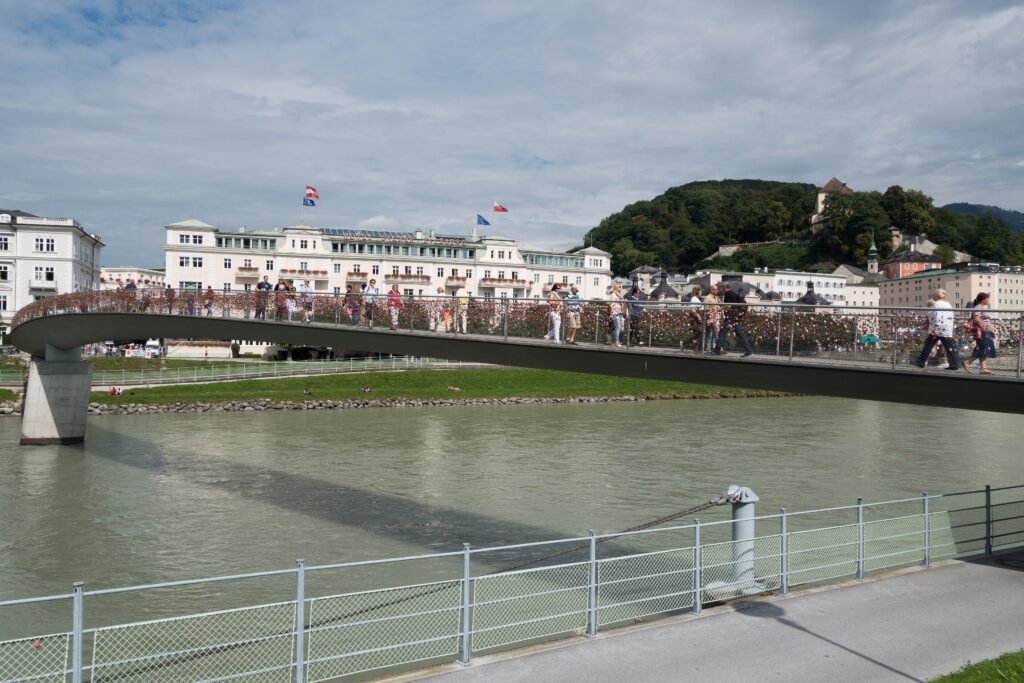
Salzburg feels more compact almost immediately. Mirabell, Getreidegasse, the cathedral quarter, St. Peter’s and lower fortress access sit within a remarkably small area. Frequent bridges keep both Salzach banks working as one walking system rather than two separated sightseeing zones. The Salzburg car-free guide is especially useful for deciding how much climbing to include.
The difference comes when the route turns upward. Hohensalzburg, Mönchsberg and Nonnberg are close on the map but demand noticeably more effort. Funiculars and lifts make those visits easier, yet the underlying terrain remains real. Salzburg therefore gives visitors tighter horizontal sightseeing, while Vienna offers the stronger all-day combination of walking, transit and arrival.
Innsbruck and Graz: Easy Cores, Different Climbs
Innsbruck is the clearest reminder that an Alpine setting does not automatically make ordinary city walking steep. Hauptbahnhof, Maria-Theresien-Straße, the Golden Roof, Old Town and the Inn sit in a compact valley-floor sequence. A rail arrival can begin sightseeing almost immediately because the station is only a short walk from the center. The Innsbruck weekend guide separates that easy core from the mountain extensions.
The walking character changes at Bergisel, Hungerburg and Nordkette. Those destinations introduce elevation rather than a failure of the central street network. Mountain railways and cable cars make them practical, but they remain vertical extensions instead of becoming part of the pedestrian core.
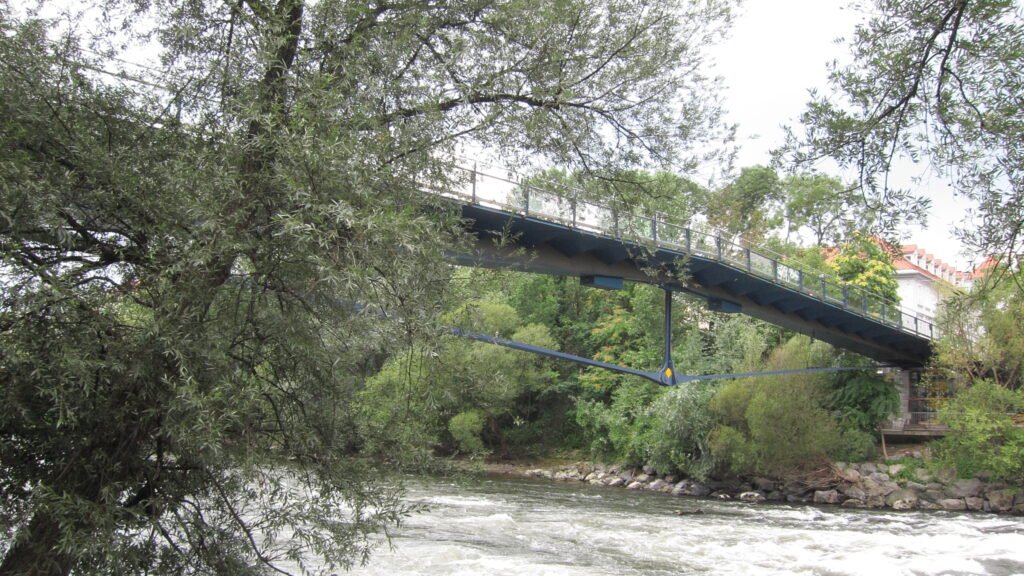
Graz is different because the major vertical interruption sits directly beside one of the tightest historic centers in the comparison. Hauptplatz, Herrengasse, the cathedral area, Franziskanerviertel, Kunsthaus, Murinsel and the Lend edge connect through short walks. Short Mur crossings keep both banks integrated, so the river does not meaningfully split the central visitor experience.
Schlossberg is the exception. It is geographically central, yet its steps and steep approaches add substantial effort to a normal first visit. The Schlossbergbahn and lift reduce that effort without making the hill flat. Graz’s lower position is therefore not evidence of a looser center; arrival and the Schlossberg climb matter more. See the Graz walking guide for the city-level routes.
Bregenz and Linz: Same Score, Opposite Shapes
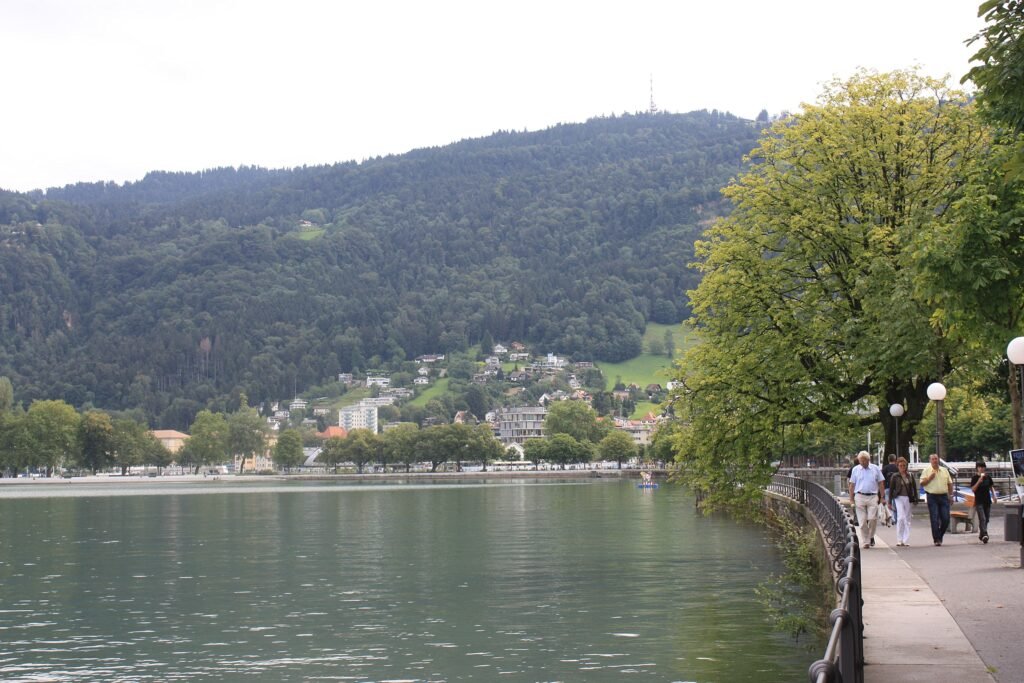
Bregenz feels almost compressed into the edge of Lake Constance. Bahnhof, Kornmarkt, Kunsthaus, vorarlberg museum, the harbor and Festspielhaus sit within a remarkably small walking footprint. The railway runs beside the lake, but formal crossings and the improved underpass preserve strong pedestrian continuity. The Bregenz lakefront guide shows how little transit the central weekend normally needs.
Oberstadt introduces a short climb, while Pfänder remains a separate vertical attraction even though the cable-car base is close to town. Bregenz’s urban buses are useful rather than intensive, but the station’s position beside the core makes arrival unusually easy.
Linz reaches the same total through a longer urban shape. Hauptbahnhof leads naturally into Landstraße, then Hauptplatz, Altstadt and the Danube cultural corridor. Nibelungenbrücke keeps Ars Electronica closely connected with Hauptplatz and Lentos, so crossing the Danube remains a normal central movement.
Pöstlingberg, Mural Harbor and voestalpine Stahlwelt sit beyond that compact spine and make transit more useful. Linz answers with stronger tram support than Bregenz, while Bregenz answers with shorter central distances and easier arrival. The tie reflects those different strengths rather than a meaningful practical gap. The Linz walking-and-trams guide explains where the tram becomes worth using.
Where the Walk Stays Compact—and Where It Turns Vertical
Salzburg and Graz prove that compactness and effort are different questions. Both keep many first-time sights close together, yet Hohensalzburg and Schlossberg can change the day quickly. Innsbruck reverses the expectation: its ordinary central itinerary is mostly level, with the steeper work appearing only on extensions.
Bregenz keeps most lakefront sightseeing flat before Oberstadt rises above the lower city. Linz stays manageable along Landstraße and the Danube, then changes character toward Pöstlingberg. Vertical transport helps in every case, but it saves energy rather than rewriting the geography underneath.
The Salzach, Mur, Danube and Lakefront Don’t Break the Walk
Water looks more disruptive on a map than it feels on the ground in several of these cities. Salzburg’s frequent central bridges keep Mirabell and Altstadt closely connected. Graz uses short Mur crossings to join Old Town with Kunsthaus, Murinsel and the Lend edge.
In Linz, Nibelungenbrücke keeps Ars Electronica within the central cultural circuit instead of isolating the north bank. Bregenz is different because Lake Constance defines an edge rather than a crossing problem. Its promenade strengthens the walking experience, while formal railway crossings preserve access between the center and waterfront.
When Transit Changes the Weekend
Vienna benefits most from selective transit because its strongest outer attractions are genuinely separated from the Innere Stadt. U-Bahn and trams let visitors combine those districts efficiently without turning them into one pedestrian cluster. Linz also gains considerably from trams once the itinerary moves beyond the Hauptplatz and Danube core.
Salzburg needs less transit for classic central sightseeing, though buses matter for arrival and outer destinations. Innsbruck uses transit mainly when the trip becomes vertical or reaches farther attractions. Graz trams are valuable from Hauptbahnhof and toward outer sights, while Bregenz often needs little transit inside its tiny central footprint.
Arrival changes the practical feel too. Vienna, Salzburg and Innsbruck offer especially straightforward public-transport starts, with central rail stations playing a major role. Bregenz also benefits from a station directly beside its visitor core. Graz and Linz remain easy without a car, although their arrival patterns require slightly more planning.
Which Austrian City Fits Your Weekend?
| Traveler priority | Best fit | Why |
|---|---|---|
| Strongest overall walking-plus-transit combination | Vienna | Central walking is excellent, and transit makes genuine outer clusters easy to combine. |
| Most compact classic sightseeing core | Salzburg | Mirabell and the Old Town work as one tight visitor geography across frequent Salzach bridges. |
| Compact Alpine city with mountain access | Innsbruck | The city center stays mostly level, while mountain transport handles separate vertical extensions. |
| Historic-center walking with creative riverfront extensions | Graz | Old Town and the west-bank cultural edge connect closely across short Mur crossings. |
| Tiny lakefront walking footprint | Bregenz | Station, museums, Kornmarkt and festival district sit within minutes of one another. |
| Linear city-center walking with strong transit backup | Linz | Landstraße creates a clear station-to-Danube spine, reinforced by frequent tram corridors. |
| Easiest car-free arrival | Vienna, Salzburg and Innsbruck | All three combine straightforward airport or rail access with easy onward travel into the visitor core. |
| Visitors who want to minimize transit use | Bregenz or Salzburg | Bregenz has the tiniest central footprint; Salzburg concentrates more classic headline sights in one walkable core. |
When a Car Starts to Make Sense
A private car adds little to the standard central weekend in any of these six cities. It becomes more useful when the trip shifts toward remote trailheads, rural routes, scattered Alpine destinations or multi-stop regional travel. Those extensions do not make the city centers more or less walkable.
Bottom Line
Vienna leads because it combines a strong central walking network with the best support for separated visitor districts. Salzburg feels tighter but asks more from your legs once the route climbs. Innsbruck keeps normal sightseeing surprisingly level, while Graz concentrates almost everything until Schlossberg interrupts the pattern. Bregenz and Linz finish tied because one is tighter and the other is better supported by transit. All six work very well without a car, but they reward different walking styles.