
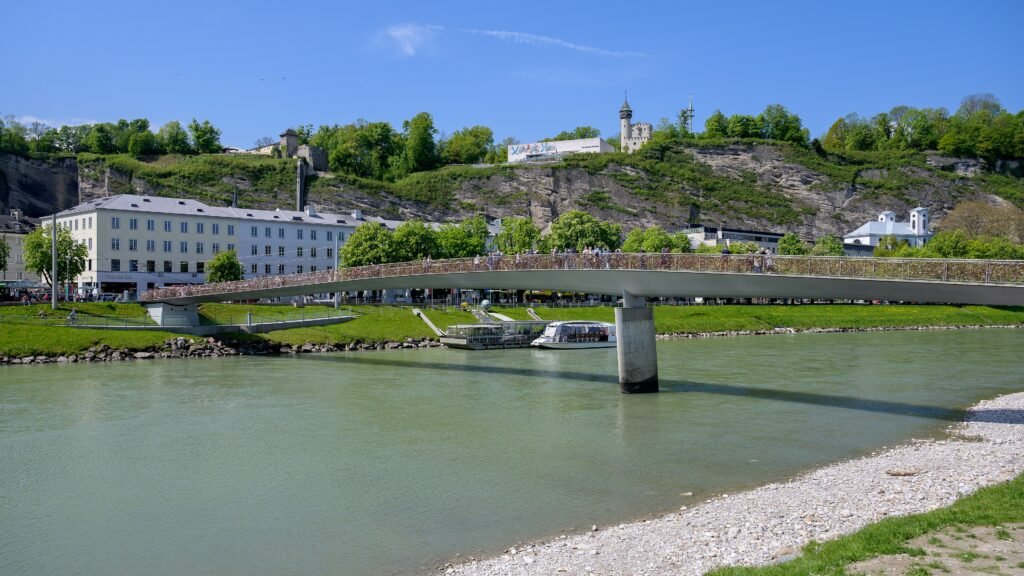
Salzburg compresses its classic first-visit sights into a narrow river corridor beneath two steep urban hills. Mirabell and the right-bank Neustadt sit only a bridge crossing from Getreidegasse and the cathedral quarter. Inside the Altstadt, pedestrian zones, passages, squares, and short blocks keep river-level sightseeing remarkably efficient. The geography changes abruptly at Festungsberg and Mönchsberg, where short map distances can hide serious climbing. Hohensalzburg remains close to the historic core, yet its footpath gains about 100 vertical meters. That contrast defines the weekend: easy horizontal movement below, followed by deliberate vertical extensions above.
Why Salzburg Works So Well on Foot
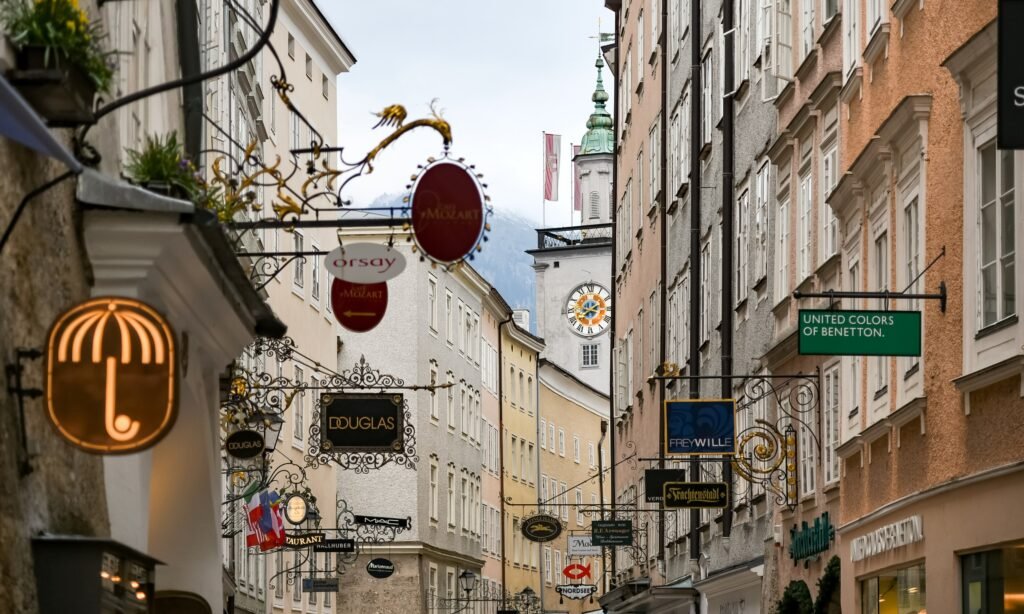
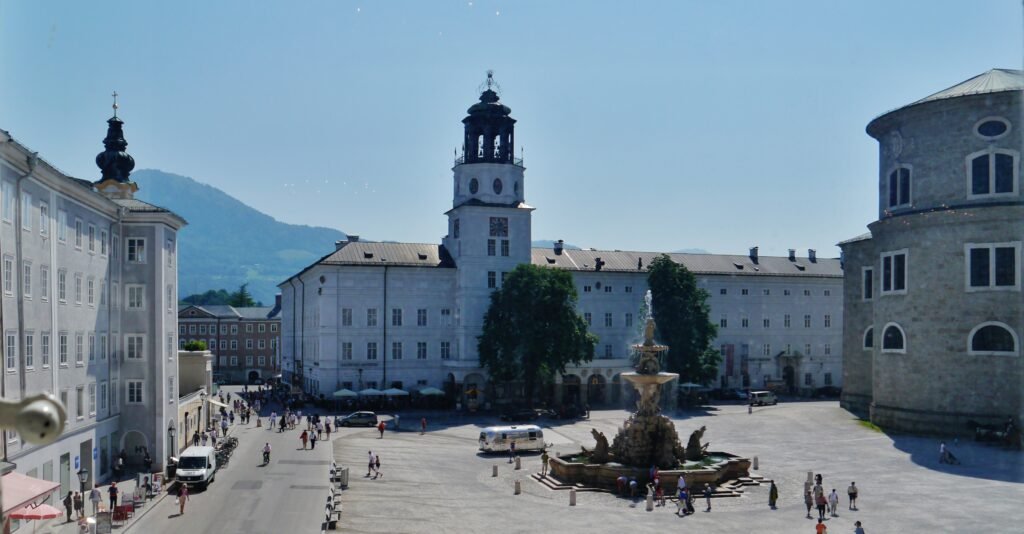
Salzburg’s strongest advantage is not simply that the Old Town is small. The main first-visit anchors are arranged in a coherent sequence. Mirabell sits on the right bank, while the Marko-Feingold-Steg and Staatsbrücke put the Altstadt within minutes. Once across the Salzach, Getreidegasse, Alter Markt, Residenzplatz, Salzburg Cathedral, Kapitelplatz and Saint Peter’s sit inside a very tight pedestrian network. You spend little time walking through low-value gaps between major sights.
The river behaves more like a seam than a barrier in the center. Salzburg has numerous bridges, including the pedestrian-and-cycle Marko-Feingold-Steg and Mozartsteg. That bridge spacing lets Mirabell, Linzer Gasse and the left-bank Altstadt operate as one visitor system. Crossing the Salzach rarely requires a long detour.
Pedestrian priority is long-established rather than simply a festival or event condition. Salzburg created its first pedestrian zone in 1975. Since 1983, large areas of both sides of the historic center have been reserved for pedestrians and, in places, cyclists. Delivery and authorized vehicle access still exists during limited periods, so the entire Altstadt should not be imagined as traffic-free.
Where the Walking Gets Harder
The difficulty appears vertically rather than through long central distances. Hohensalzburg sits directly above the Old Town, but the footpath gains about 100 meters. The fortress estimates 15–20 minutes for the ascent and describes sections as steep and partly gravelled. Nonnberg Abbey also requires either the Nonnbergstiege stairs or a narrow uphill lane from Nonntal.
Mönchsberg is another elevated extension, not a reason to call the entire city hilly. The Mönchsberg Lift rises 60 meters in 30 seconds from Gstättengasse to the Museum der Moderne. Its paths can then support a one-direction elevated walk. This is a useful way to experience the hill without repeating a major climb.
Best Areas to Stay for a Walking Weekend
Altstadt is the strongest choice for immediate access to Getreidegasse, the cathedral quarter, Saint Peter’s and fortress approaches. Neustadt and Mirabell are nearly as practical, especially for visitors arriving by train. The river crossings keep the right bank closely connected to the Old Town. Linzer Gasse offers another central base with a strong pedestrian relationship to both banks.
Elisabeth-Vorstadt near Hauptbahnhof favors rail convenience over absolute sightseeing proximity. The station is about 20 minutes on foot from the center. Trolleybuses reach the Old Town in roughly 10 minutes. That is still easy without a car, but it is not the same as stepping directly into the Altstadt.
Realistic Walking Times in Salzburg
These are practical planning estimates rather than guaranteed walking times. Hauptbahnhof to Mirabell is about 12–15 minutes, while the station to central Old Town is about 20 minutes. Mirabell to Marko-Feingold-Steg takes roughly 5–7 minutes. The bridge to Mozart’s Birthplace is another 5–7 minutes. Mozart’s Birthplace to Residenzplatz is about 5–7 minutes, and Residenzplatz to Kapitelplatz takes only a few minutes.
The short distances become deceptive on the hills. Kapitelplatz to the FestungsBahn valley station is about 3–5 minutes. Walking from the Old Town to Hohensalzburg then takes about 15–20 steep minutes with roughly 100 meters of vertical gain. Kaigasse to Nonnberg Abbey is around 10–15 minutes with stairs or uphill walking.
A 2-Day Walking-Focused Route
Day 1 stays almost entirely at river level and uses one meaningful Salzach crossing. Day 2 adds elevation deliberately, using vertical transport to avoid a wasteful down-up-down sequence.
Day 1 — Mirabell, Getreidegasse and the Cathedral Quarter
Walking route
Day 1 — Mirabell, Salzach and the Old Town core
- Mirabell Palace and Gardens
- Marko-Feingold-Steg (Makartsteg)
- Getreidegasse
- Mozart's Birthplace
- Alter Markt
- Residenzplatz
- Salzburg Cathedral
- Kapitelplatz
- Saint Peter's Abbey and Cemetery
Begin at Mirabell Palace and Gardens, then walk toward the Salzach and cross the Marko-Feingold-Steg. Enter Getreidegasse and stop at Mozart’s Birthplace before continuing to Alter Markt. From there, move through Residenzplatz to Salzburg Cathedral and Kapitelplatz. Finish at Saint Peter’s Abbey and Cemetery. The route keeps moving through the Old Town instead of repeatedly returning to the river.
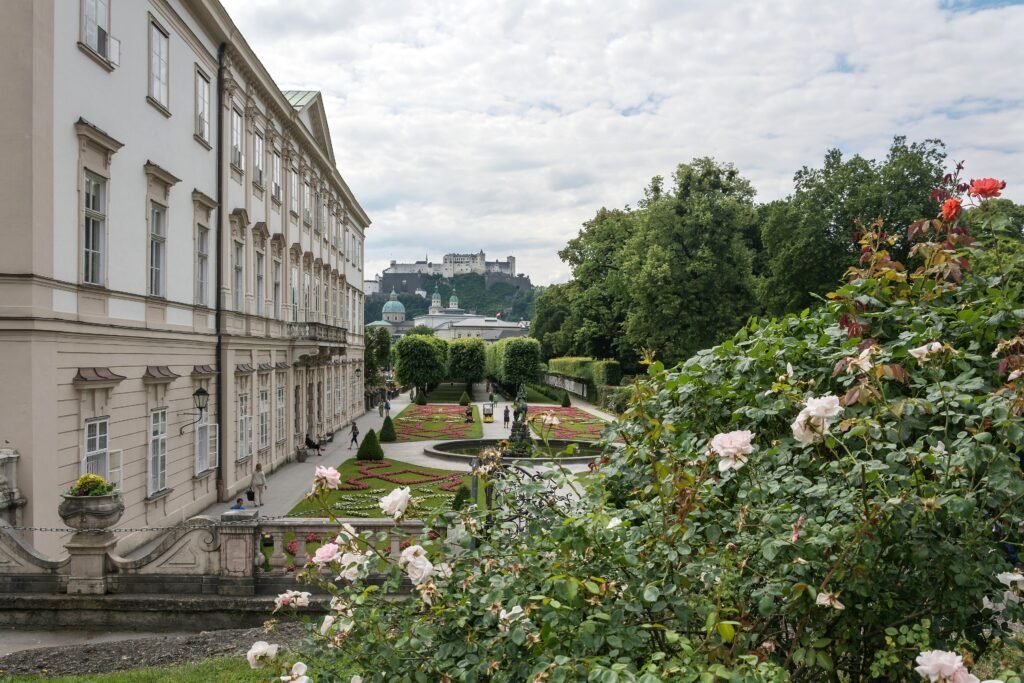
This day demonstrates Salzburg’s genuine compactness. Most transfers between sights take only a few minutes, and the route remains inside worthwhile pedestrian streets and squares. Linzer Gasse can be added before crossing the river if you want more right-bank walking, but it is not necessary for route logic.
Day 2 — Hohensalzburg and Mönchsberg
Walking route
Day 2 — Hohensalzburg and a one-way Mönchsberg extension
- FestungsBahn valley station
- Hohensalzburg Fortress
- Museum der Moderne Salzburg Mönchsberg
- Mönchsberg Lift valley station
Start at the FestungsBahn valley station and ride the funicular to Hohensalzburg. This keeps the major ascent to one deliberate vertical transfer. After visiting the fortress, continue west across the elevated Mönchsberg paths toward the Museum der Moderne. Salzburg’s official city-mountain route confirms this ridge as a real walking corridor. Finish by taking the Mönchsberg Lift down to Gstättengasse rather than retracing the hill.
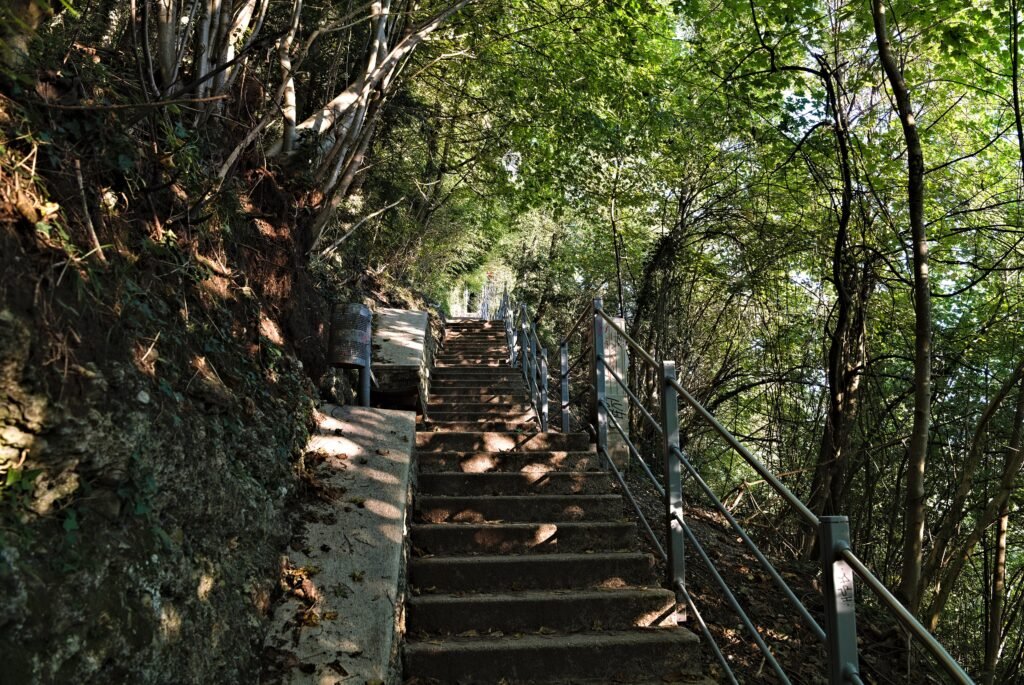
The funicular and lift improve convenience without changing the underlying terrain. Visitors who prefer more climbing can walk the fortress path instead. Nonnberg Abbey is a worthwhile alternative elevated extension from Kaigasse, especially if its stairs are part of the experience you want.
When Trolleybuses and Buses Help
Transit is most valuable outside the tight historic core. Salzburg’s trolleybuses, buses and S-Bahn services connect Hauptbahnhof, the center, airport corridors and outer districts. Line 25 is particularly useful for reaching Hellbrunn.
Hellbrunn should be treated as a separate destination rather than part of central Salzburg’s walking footprint. The palace publishes about 25 minutes by Line 25 from the city center. Walking there continuously is possible, but it consumes time that a two-day visitor can use better inside the core.
Single-journey and time-based tickets are available through Salzburg Verkehr, with digital purchase through the 2GO app and ticket machines at major stops. Buy or activate the appropriate ticket before travel and check current fares rather than relying on a fixed price in the guide.
Registered overnight guests receive the Guest Mobility Ticket for regular public transport across Salzburg state during their stay. It does not make every tourist connector free. The Mönchsberg Lift, for example, uses a separate fare and is not included in that ticket.
Weekend evenings remain practical. The regular NachtStern runs Friday, Saturday and before public holidays until 1 a.m. Salzburg also runs temporary seasonal expansions at times, but those should be checked for your travel dates rather than assumed year-round.
Arriving in Salzburg Without a Car
Salzburg Airport is close enough for straightforward public-transport access. Bus 2 connects the airport with Hauptbahnhof, while other services can provide useful access toward the city center depending on the current timetable. Check Salzburg Verkehr or the airport’s official transport information before travel.
Salzburg Hauptbahnhof is an equally important car-free gateway, with frequent long-distance rail connections toward Vienna, Munich, Innsbruck and other Austrian and European destinations. From the station, the historic center is walkable or reachable by a short trolleybus ride.
When a Car Helps
A private car adds little to a standard Salzburg weekend. Old Town access is heavily restricted, central parking is paid, and the strongest sightseeing geography is better handled on foot. Regional excursions change the calculation. A car can help with multi-stop rural itineraries, but Hallstatt, Untersberg, Berchtesgaden and Salzkammergut trips are separate from Salzburg city walkability.
Limitations and Practical Tips
Historic surfaces deserve more attention than the postcard views suggest. Large pedestrian zones provide strong priority, but stone paving, occasional cobbles, delivery access and shared cycling areas can affect comfort. The Marko-Feingold-Steg is shared with cyclists, so remain aware of faster movement across the bridge.
Do not underestimate the fortress because it looks close on the map. The walking ascent is short but steep. The same principle applies to Nonnberg and Mönchsberg. Use the FestungsBahn or Mönchsberg Lift when conserving energy matters, then walk the elevated areas where the route itself adds value.
Crowds can also slow narrow streets such as Getreidegasse and the cathedral quarter. They are a comfort issue rather than a distance problem. Early starts make the central route calmer, while later evenings often make the main squares feel less compressed.
Seasonal Walking Context
Snow, ice, rain and summer heat can change how the same distances feel, especially on steep or stone-paved routes. Mirabell Gardens also has partial winter closures. Festival periods can bring heavy pedestrian volumes and temporary traffic arrangements. Check current notices close to travel, since weather, festivals and temporary traffic arrangements can change the comfort of individual routes without changing Salzburg’s underlying walking geography.
Bottom Line
Salzburg is built for a walking-first weekend as long as you respect its vertical edges. Mirabell, the Salzach crossings, Getreidegasse, the cathedral quarter and Saint Peter’s form an unusually efficient river-level sightseeing system. Hohensalzburg and Mönchsberg add real effort, but funicular and lift options let you manage that effort intelligently. Use trolleybuses for the station, airport, Hellbrunn and outer stays. Leave the car for regional extensions.