
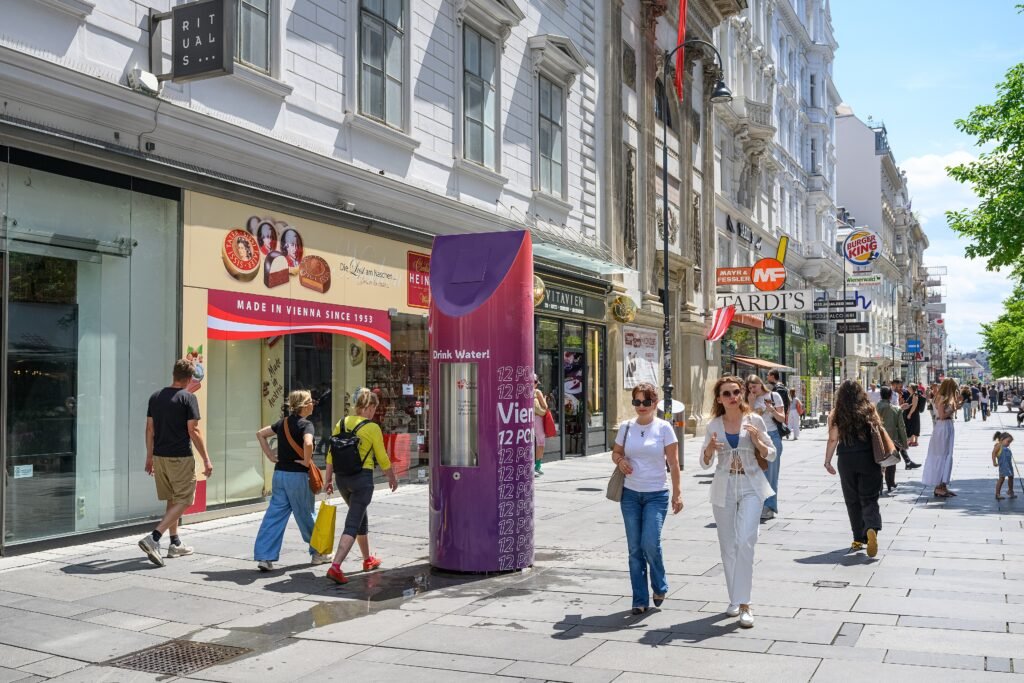
Vienna concentrates an unusual share of first-visit sights inside a compact arc from Stephansplatz to the western Ringstrasse. Graben, Kohlmarkt, Hofburg, Albertina, and the Opera sit within short walks, often on pedestrian-focused streets or palace spaces. MuseumsQuartier, Maria-Theresien-Platz, Parliament, and Rathaus extend that web across the Ring, where crossings become more deliberate. Karlsplatz and Naschmarkt remain practical on foot but feel less seamless than the Inner City. Belvedere stretches the center farther southeast. Schönbrunn and Prater clearly sit outside the tight sightseeing core, yet fast transit keeps them easy to add.
Why Vienna Works So Well on Foot
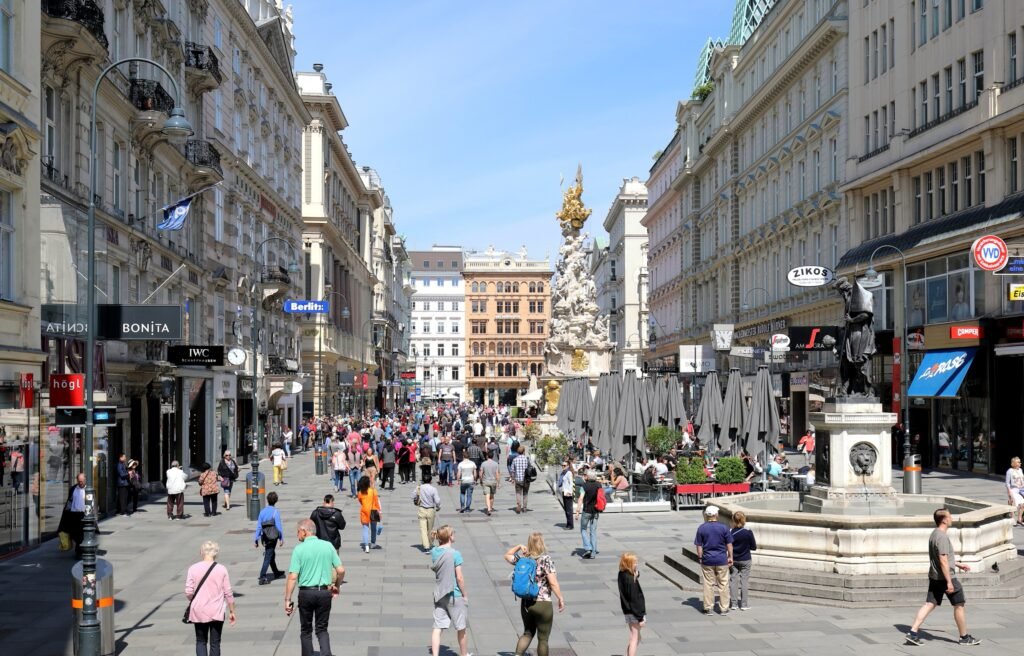
The strongest walking experience sits inside the Innere Stadt. Stephansplatz, Graben, Kohlmarkt, Michaelerplatz, Hofburg, Albertina, and the Opera occupy a remarkably small visitor footprint. Graben and Kärntner Straße are established pedestrian zones, and their large-format granite paving supports comfortable movement. Stephansplatz ties these streets together as a natural orientation point.
The central system continues west rather than ending at the old-city edge. Heldenplatz opens toward Maria-Theresien-Platz, the Kunsthistorisches Museum, MuseumsQuartier, Parliament, and Rathaus. These sights remain close enough for one coherent walking day. The experience changes at the Ringstrasse, where tram tracks, traffic lanes, and larger crossings require more attention.
Where Vienna’s Compact Core Ends
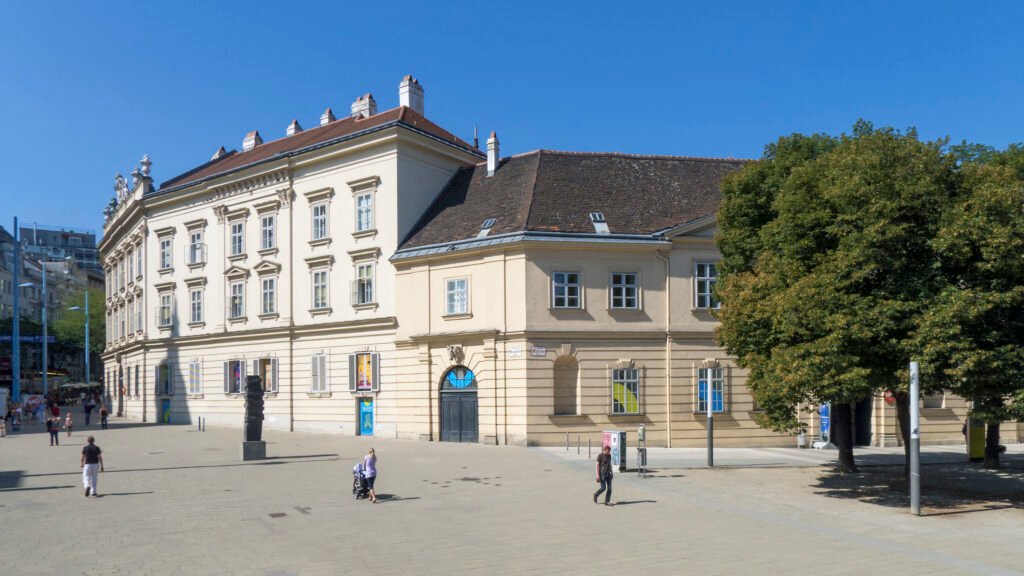
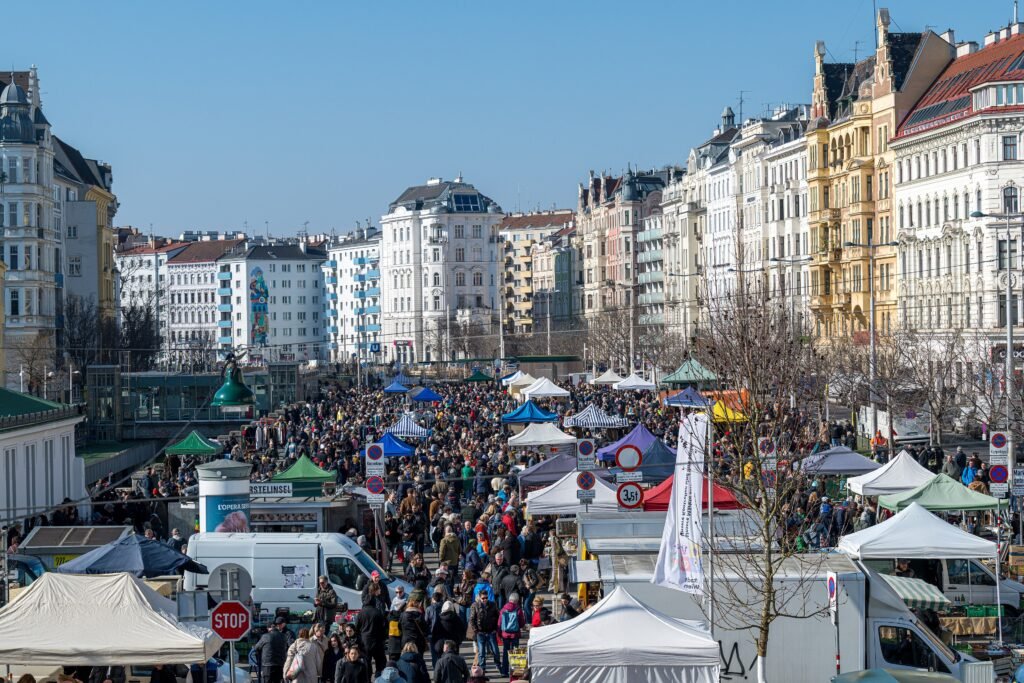
Karlsplatz and Naschmarkt still belong to a practical central walking geography, but they feel less seamless than Graben or Kärntner Straße. Station entrances, wider roads, and larger open spaces break the pedestrian rhythm. Belvedere is another step outward: it is walkable from Karlsplatz, yet tram D makes the connection more efficient.
Schönbrunn should be treated as a separate western cluster. Prater and Praterstern form another distinct eastern cluster. Both are easy without a car because of U-Bahn service, but that transit strength does not make them centrally compact. Hundertwasserhaus and Zentralfriedhof are also better treated as optional extensions rather than core weekend walking anchors.
Best Areas to Stay for Walking
Innere Stadt is the simplest base for minimizing daily transit, especially around Stephansplatz, Hofburg, and the Opera. MuseumsQuartier and Spittelberg place you beside the western museum and civic cluster. Neubau and Mariahilf add dining and shopping while remaining close to MuseumsQuartier and Naschmarkt. Karlsplatz and Wieden work well for travelers balancing the center, Belvedere, and Hauptbahnhof. These are practical planning estimates rather than guaranteed walking times.
Practical Walking Times
Opera to Stephansplatz is roughly 10–12 minutes via Kärntner Straße. Stephansplatz to Michaelerplatz is about 10–12 minutes through Graben and Kohlmarkt. Hofburg to Maria-Theresien-Platz takes about 5–7 minutes, including a more deliberate Ring crossing. MuseumsQuartier to Parliament is roughly 8–10 minutes, then Rathaus is another 5–7 minutes. Karlsplatz to Upper Belvedere is about 20–25 minutes; tram D is often the better energy-saving choice.
A 2-Day Walking and Transit Plan
Day 1: Innere Stadt to Rathaus
Walking route
Day 1 — Innere Stadt to the western Ring
- Vienna State Opera
- Kärntner Straße
- St. Stephen's Cathedral / Stephansplatz
- Graben
- Kohlmarkt
- Michaelerplatz
- Hofburg
- Heldenplatz
- Maria-Theresien-Platz
- Kunsthistorisches Museum Vienna
- MuseumsQuartier Wien
- Austrian Parliament Building
- Vienna City Hall (Rathaus)
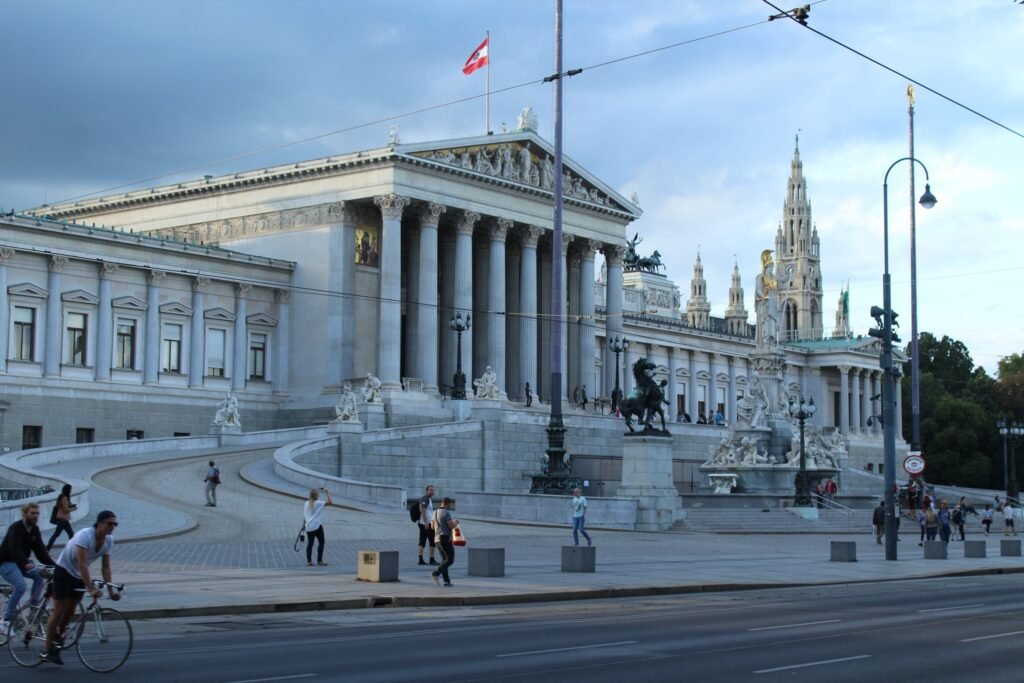
Begin at the Vienna State Opera and follow Kärntner Straße to Stephansplatz and St. Stephen’s Cathedral. Continue through Graben and Kohlmarkt to Michaelerplatz, then enter the Hofburg and cross Heldenplatz. Albertina is an easy short spur near the Opera if you want it before the main route. Continue west to Maria-Theresien-Platz, the Kunsthistorisches Museum, MuseumsQuartier, Parliament, and Rathaus. This day shows how much of Vienna’s highest-value sightseeing fits inside one pedestrian system.
Day 2: Schönbrunn to Belvedere
Walking route
Day 2 — Schönbrunn, Naschmarkt, Karlsplatz and Belvedere
- Schönbrunn Palace
- Naschmarkt
- Vienna Secession
- Karlskirche
- Upper Belvedere
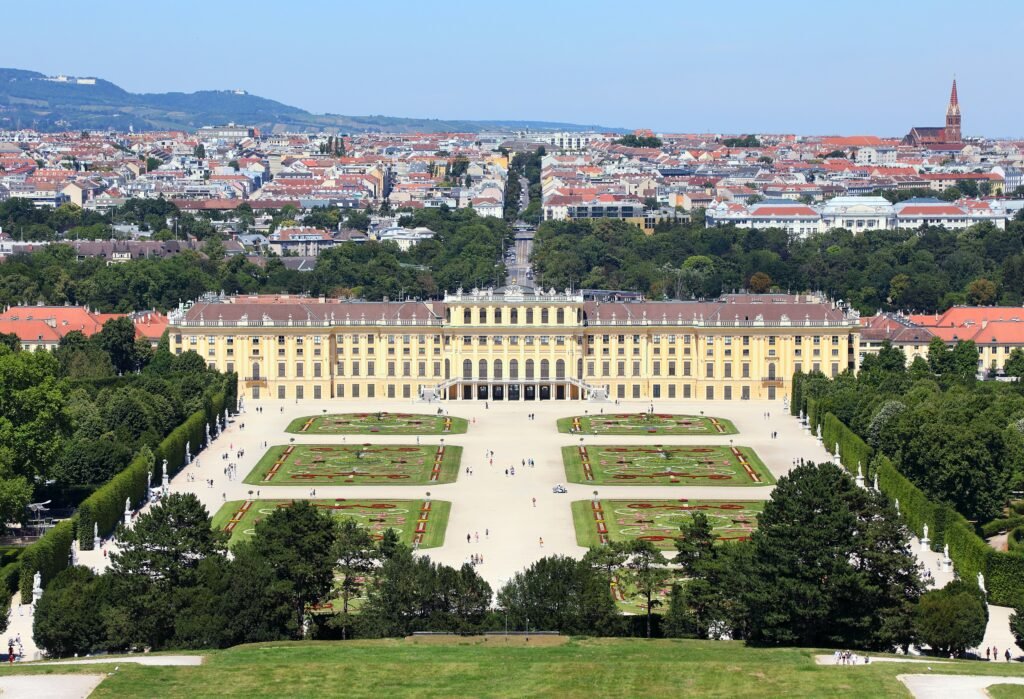
Use U4 from central Vienna to Schönbrunn rather than spending an hour on low-value cross-city walking. After the palace and grounds, ride U4 back to Kettenbrückengasse and walk through Naschmarkt toward the Secession and Karlsplatz. Karlskirche sits naturally on this eastbound route. Finish at Upper Belvedere, walking from Karlsplatz if energy allows or using tram D to shorten the final leg.
Using Vienna’s U-Bahn and Trams
Vienna currently operates five U-Bahn lines: U1, U2, U3, U4, and U6. U4 is especially useful for Schönbrunn, while U1 and U2 serve Praterstern. U1 also links the center with Wien Hauptbahnhof. Tram D connects Hauptbahnhof and Belvedere with the Opera area, while routes 1 and 2 trace useful parts of the Ringstrasse.
U-Bahn service normally runs from about 5 a.m. until midnight, with daytime trains commonly every two to five minutes. Trains run overnight every 15 minutes on Friday and Saturday nights and before public holidays. NightLine buses operate every night. Future U5 service is not part of the current network and is not treated as operational.
Vienna offers single-journey and time-based public-transport tickets through Wiener Linien. WienMobil and multilingual ticket machines make purchase straightforward, while paper tickets may require validation depending on the product. Check current fares and payment options before travel rather than relying on fixed prices in the guide.
Arriving in Vienna Without a Car
Vienna International Airport has a strong ordinary public-rail connection. Railjet and InterCity trains run twice hourly to Wien Hauptbahnhof, taking about 15 minutes. U1 then continues directly toward Stephansplatz and other central areas. The airport lies outside the Wiener Linien core zone, so airport rail uses an additional fare component.
Airport rail service can change during modernization and engineering works. Railjet and InterCity services to Wien Hauptbahnhof provide a straightforward ordinary public-transport option, while the S7 can also be useful depending on the current timetable. Check ÖBB or Wiener Linien before travel for the best connection on your arrival date.
CAT provides a premium nonstop option to Wien Mitte, but it is not necessary for a low-burden arrival. Wien Hauptbahnhof is also a major intercity gateway with U1 access. These advantages describe the same car-free arrival system rather than separate bonuses.
When a Car Helps
A private car is unnecessary for the standard Vienna weekend. It adds little inside the pedestrian-heavy center and is inefficient for most headline attractions. A car becomes more useful for rural Lower Austria, wine-country drives, remote trailheads, or multi-stop regional trips that do not follow strong rail corridors.
Walking Limitations and Practical Tips
Do not read a short map distance across the Ring as identical to a pedestrian-zone walk. Major crossings and tram tracks can slow the transition between Innere Stadt and the western museums. Historic stone surfaces also vary, although the principal central pedestrian streets have high-quality paving. Palace complexes can create small detours because entrances and courtyards do not always align with the shortest map line.
Seasonal Walking Note
Summer heat can shorten comfortable midday walks, while winter cold, snow, or ice may slow exposed routes. Rain and wind are most noticeable around broad Ringstrasse spaces and palace grounds. These conditions affect comfort rather than Vienna’s underlying walking geography.
Bottom Line
Vienna’s best first-day sightseeing is concentrated enough to feel genuinely pedestrian, not merely transit-accessible. The second-day strategy should use U-Bahn and trams to add Schönbrunn, Belvedere, Prater, or other outer priorities without wasting energy. Staying in or beside the central core lets most visitors enjoy the city without renting a car.