
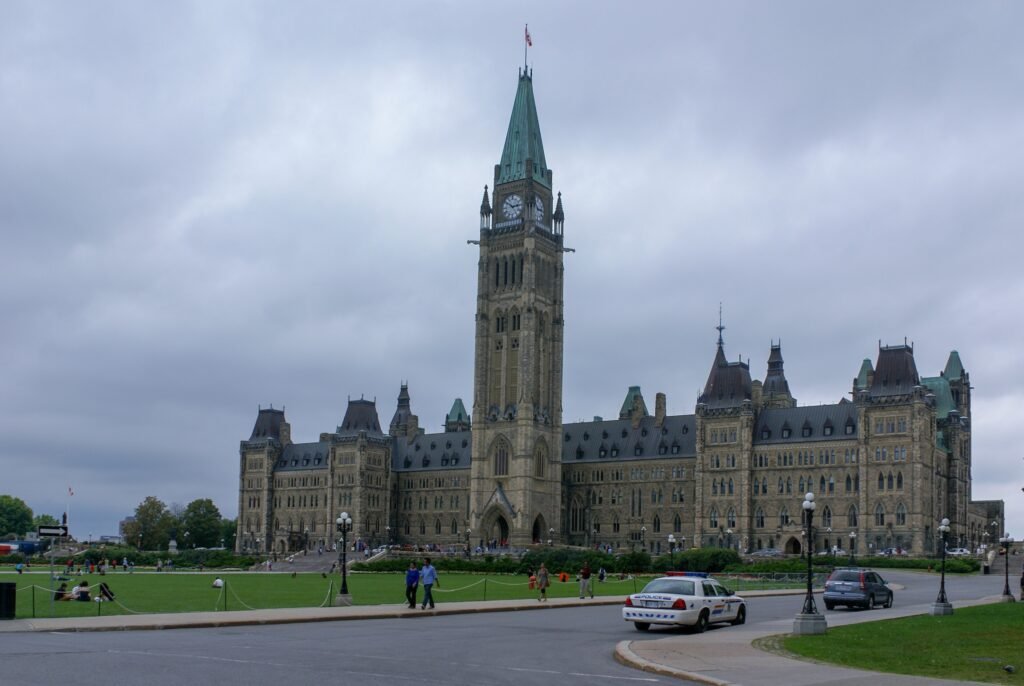
Between Parliament Hill, the Rideau Canal and ByWard Market, Ottawa’s strongest visitor walking fits into a compact downtown core. Sparks Street removes traffic from one important east-west corridor, while Major’s Hill Park bridges museums, viewpoints, and the market. The canal also divides streets, so bridges matter more than the map’s simple grid suggests. Across the Ottawa River, the Canadian Museum of History is walkable but clearly sits outside the central Ottawa cluster. Westward, the Canadian War Museum extends the sightseeing footprint again. This pattern favors long central walks, then selective transit for southbound neighborhoods and outer cultural stops.
How Ottawa’s Visitor Core Connects on Foot
The strongest walking zone runs from Parliament Hill east through Sparks Street and Confederation Square toward the canal. Major’s Hill Park then connects the locks, National Gallery and ByWard Market with less traffic exposure. These anchors are close enough to form one high-value sightseeing day without transit.
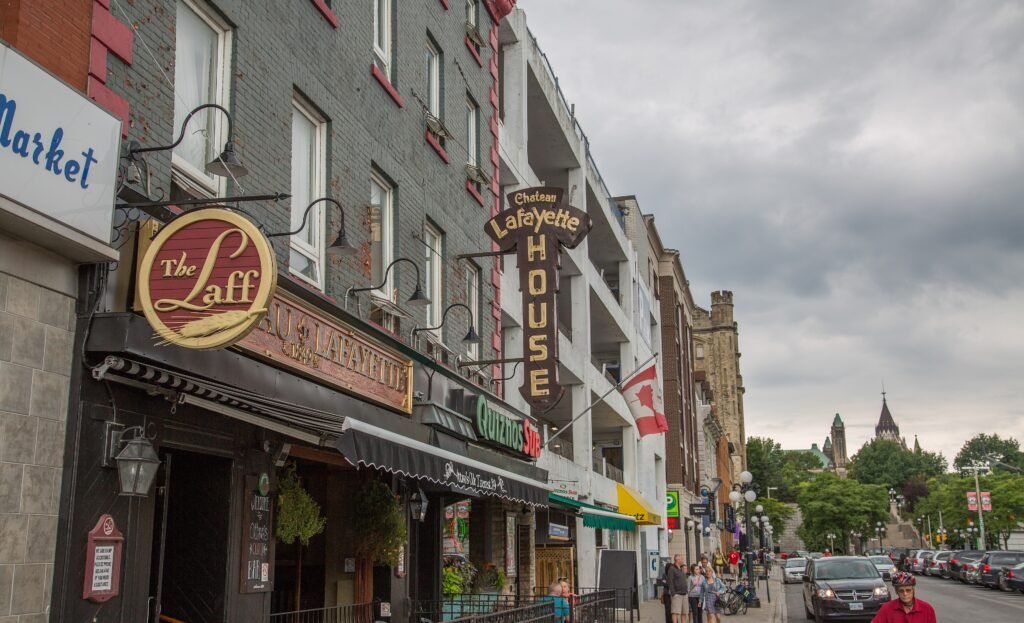
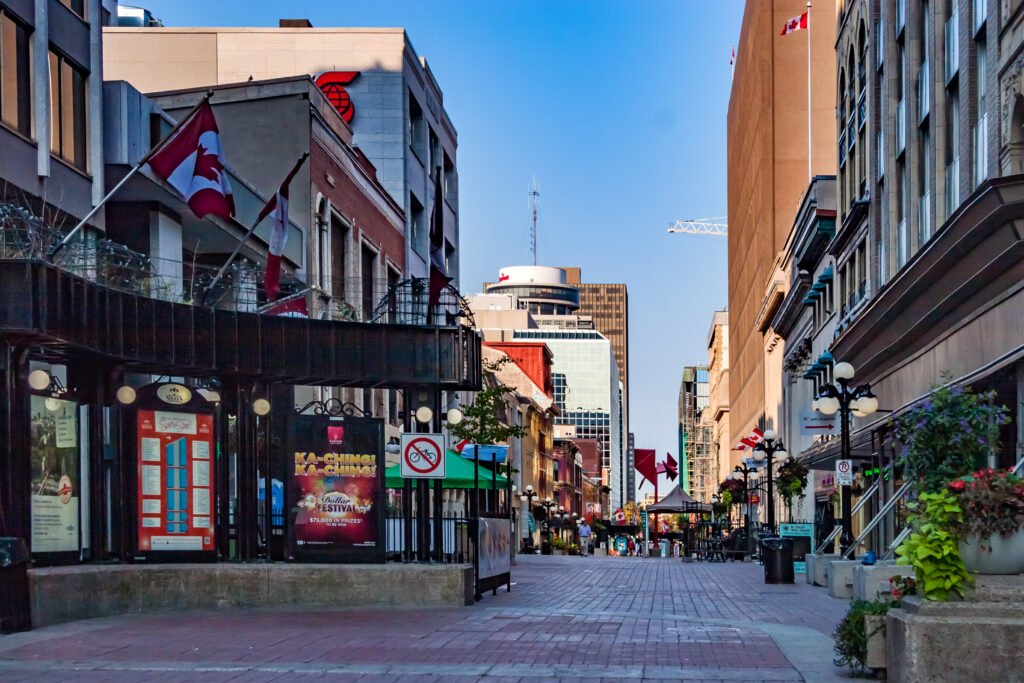
Sparks Street is the clearest pedestrian advantage because it permanently removes general traffic from a central east-west corridor. ByWard Market works differently. Its short blocks and dense amenities invite wandering, but vehicles and curb activity remain part of the street environment.
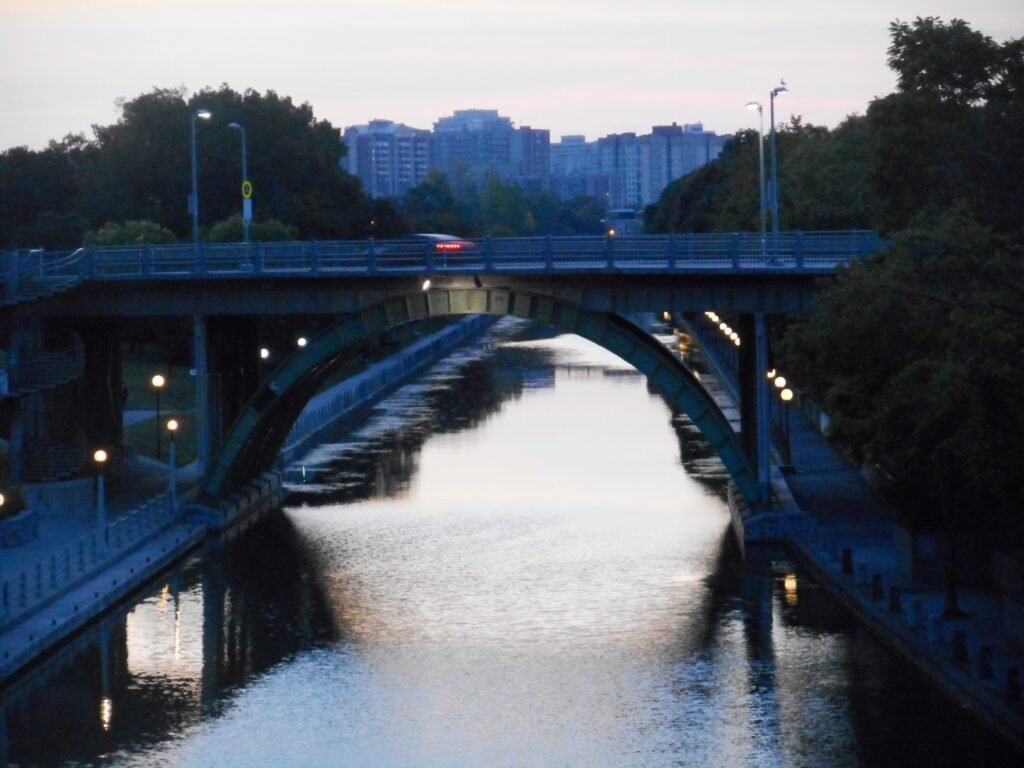
The Rideau Canal improves walking quality while also dividing the street network. Bridge choices matter, especially when moving between downtown, the Golden Triangle and southbound routes. The Ottawa River creates a larger separation: Gatineau is reachable on foot, but it remains a distinct cross-river extension.
Best Areas to Stay for a Walking Weekend
Downtown around Parliament, Sparks Street and Lyon is the strongest first-time base. It keeps the governmental core, canal, War Memorial and ByWard within practical walking range. Line 1 also runs beneath the downtown spine for low-effort repositioning.
ByWard Market and Rideau Street suit travelers who want restaurants and evening activity beside major sights. Centretown and Elgin offer another useful compromise, especially if the Museum of Nature or the canal southward is important. The Glebe is appealing, but it sits beyond the tightest first-visit cluster.
Realistic Walking Times
Parliament Hill to the National War Memorial takes roughly 7–10 minutes. ByWard Market is about 12–15 minutes from Parliament, while the National Gallery sits about 7–10 minutes from the market. From Parliament, the Canadian Museum of Nature is a published 15–20 minute walk.
Reaching the Canadian War Museum requires a longer westward walk of roughly 25–30 minutes from Parliament. A practical bridge route to the Canadian Museum of History also takes about 25–30 minutes. Treat both figures as practical planning estimates rather than guaranteed walking times.
A 2-Day Walking Route
Day 1 — Parliament, Sparks Street, Canal and ByWard
Walking route
Day 1: Parliament, Sparks Street, canal and ByWard
- Parliament Hill
- Sparks Street
- National War Memorial and Confederation Square
- Ottawa Locks, Rideau Canal
- Major’s Hill Park
- Kìwekì Point
- National Gallery of Canada
- ByWard Market Square
Start at Parliament Hill, then move east along pedestrian-only Sparks Street toward the National War Memorial. Drop to the Rideau Canal locks before entering Major’s Hill Park. Continue through Kìwekì Point and the National Gallery, then finish in ByWard Market for food and evening activity.
This sequence keeps the highest-value central sights together and avoids repeatedly crossing downtown. Parliament-area construction can change internal walking routes, so check current access notices before visiting.
Day 2 — Centretown, Glebe and Dow’s Lake
Walking route
Day 2: Centretown, the canal, Glebe and Dow’s Lake
- Canadian Museum of Nature
- Patterson Creek Park
- Lansdowne Park
- Commissioners Park
- Dow’s Lake Pavilion
Begin at the Canadian Museum of Nature, then move southeast toward Patterson Creek and the Rideau Canal. Follow the corridor through the Glebe to Lansdowne, then continue west to Commissioners Park and Dow’s Lake. The route shows Ottawa’s longer southbound visitor geography without circling back through Parliament.
Finish near Dow’s Lake O-Train station and return on Line 2 to Bayview, then Line 1 toward downtown. This saves a low-value retracing walk after a full sightseeing day.
Using Transit Without Overcomplicating the Trip
Line 1 is the most useful rail spine for central visitors, serving Lyon, Parliament, Rideau and Tremblay for VIA Rail. Southbound Line 2 now runs from Bayview through Dow’s Lake to Limebank. Airport trips use Line 4 between South Keys and Ottawa International Airport.
OC Transpo accepts contactless debit, credit and mobile wallets on buses and O-Train fare gates. The adult O-Payment fare is CAD 4.10, while a one-day pass costs CAD 12.25. Use the same payment method to preserve eligible transfers.
Cross-river trips need a little more attention because STO is a separate agency. Valid transfers and many passes work across both systems, but pay-per-ride methods depend on which network starts the trip. Check current details before heading to Gatineau.
Arriving in Ottawa Without a Car
YOW now has rail at the terminal through O-Train Line 4. The airport-to-downtown rail chain is not one-seat: transfer at South Keys to Line 2, then at Bayview to Line 1. Route 105 offers a 24-hour alternative to St-Laurent, where Line 1 continues downtown.
VIA Rail travelers arrive at Ottawa Station, 200 Tremblay Road, about four kilometres from downtown. Tremblay station sits on Line 1, making the onward ride easy. The rail terminal’s off-core location still matters, especially with luggage.
When a Car Helps
A private car adds little value for Parliament, ByWard, the canal, central museums, the Glebe or Dow’s Lake. Transit and walking already handle those areas well. A car becomes more useful for Gatineau Park, rural attractions or multi-stop regional excursions beyond the urban network.
Limitations and Practical Walking Tips
Plan around bridges rather than straight-line distances. The canal and river are major walking assets, yet both can force detours when the next crossing is not aligned with your destination. Wide ceremonial corridors also make some central intersections feel longer than the compact map suggests.
ByWard Market is compact but not uniformly pedestrian-only, so expect traffic and curb activity outside dedicated pedestrian spaces. Check same-day notices for Parliament access, bridge work and transit changes. Check same-day notices for Parliament access, bridge work and transit changes because these can alter the most convenient route.
Seasonal Walking Context
Ottawa remains practical for walking throughout the year, but weather can change the pace considerably. Snow, ice and cold slow winter walking, while summer heat and humidity can shorten comfortable ranges. In difficult weather, transit is useful for shortening exposed sections.
Bottom Line
Ottawa works best as a compact national-capital core plus carefully chosen extensions. Walk Parliament, Sparks Street, the canal edge, Major’s Hill and ByWard together. Use transit for the airport, rail station, Dow’s Lake or other longer jumps, and treat Gatineau as a separate cross-river layer.