
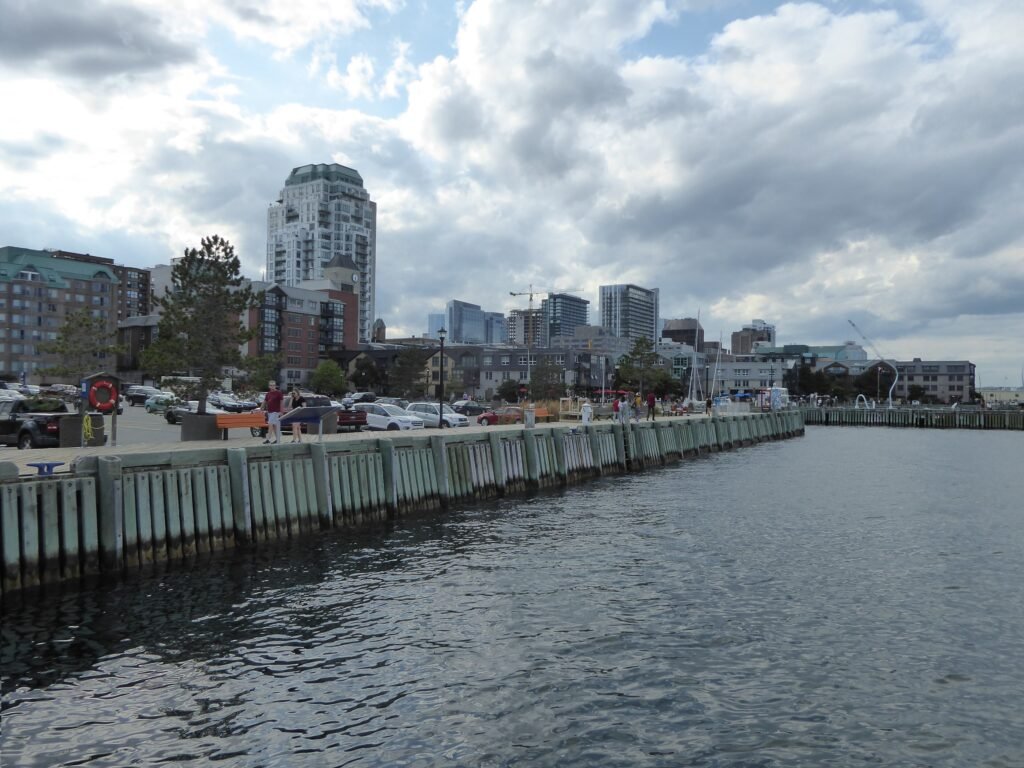
Between the harbor and Citadel Hill, much of Halifax’s first-time sightseeing fits into a compact downtown strip. The waterfront offers the easiest walking, with a long boardwalk linking museums, restaurants, wharves, and Pier 21. Several civic sights sit only a few blocks inland, including Province House and Grand Parade. Those short blocks can be deceptive because the street grid rises quickly from Lower Water Street. Spring Garden Road and the Public Gardens extend the visitor core across the upper downtown. This creates a compact weekend geography, but walking effort changes noticeably whenever a route turns uphill.

Why Halifax Works Well on Foot
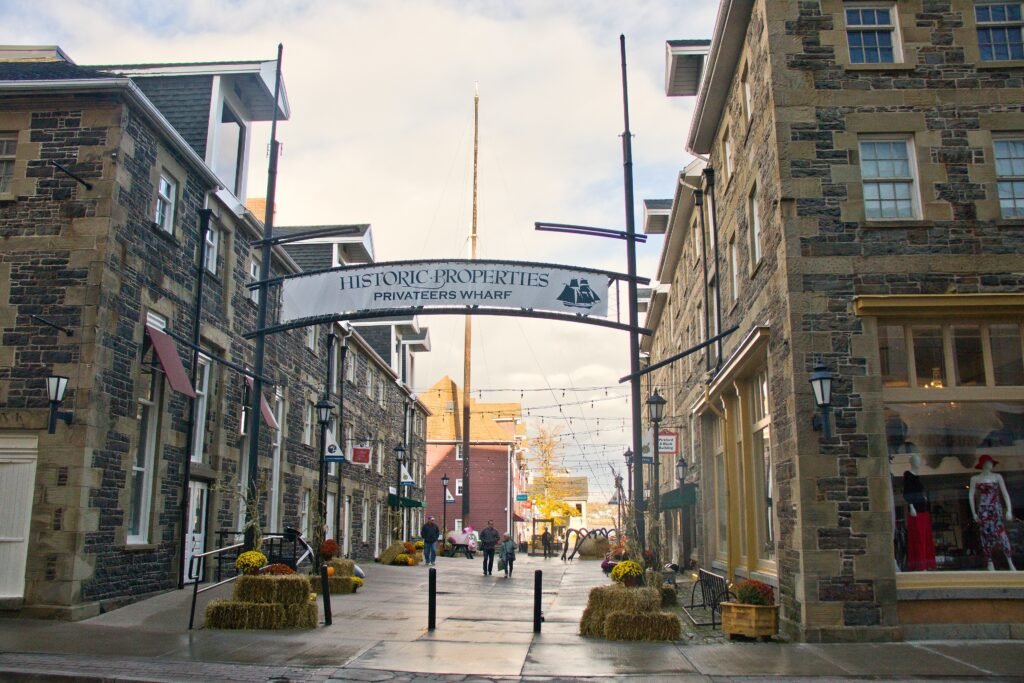
Halifax’s central advantage is proximity. Historic Properties and the Maritime Museum sit directly on the waterfront, with Province House and Grand Parade just inland. Citadel Hill rises immediately behind them rather than sitting in a separate district. Public Gardens, Spring Garden Road, and Central Library extend the same visitor footprint west and south. Pier 21 adds length along the harbor, but it follows a coherent waterfront line instead of creating a disconnected sightseeing zone.
The waterfront boardwalk is the city’s strongest pedestrian corridor. Discover Halifax describes nearly four kilometres of waterfront walking, with food, museums, public spaces, and seating along the route. That continuity makes the waterfront exceptionally easy to explore, but inland downtown streets feel different. Inland routes add traffic crossings, steeper gradients, and occasional stairs. Spring Garden Road performs better than many ordinary streets because its recent redesign widened sidewalks and added bump-outs, seating, trees, and pavers.
Best Areas to Stay for a Walking Weekend
The waterfront and Lower Water Street are the easiest bases for harbor attractions, Historic Properties, the ferry, and the Maritime Museum. Central downtown around Argyle, Barrington, and Brunswick balances the waterfront with Grand Parade and Citadel Hill. The Spring Garden and Public Gardens edge works especially well for the library, shopping, and upper-downtown sights. All three areas keep first-time visitors within practical walking distance of the main downtown sights.
A waterfront hotel reduces distance to the boardwalk, but it increases the uphill effort toward Citadel Hill and Spring Garden Road. An upper-downtown stay reverses that tradeoff. The best location therefore depends less on total distance than on whether you prefer beginning or ending the day with the climb.
Practical Walking Times
Historic Properties to the Maritime Museum takes about 6–8 minutes, with little elevation change. The Maritime Museum to Grand Parade takes roughly 7–10 minutes and begins the inland climb. Grand Parade to the Citadel entrance is about 8–10 minutes, with a steep final approach. Parks Canada identifies the Old Town Clock stairs as the direct climb and Sackville Street as the gentler accessible approach.
Citadel Hill to the Public Gardens is roughly 10–12 minutes, generally easing downhill after the fort. Public Gardens to Central Library is about 7–9 minutes along Spring Garden Road. The Maritime Museum to Pier 21 takes around 18–22 minutes along the waterfront. These are practical planning estimates rather than guaranteed walking times.
A 2-Day Walking Route
Day 1 — Waterfront history to Citadel Hill
Walking route
Day 1 — Waterfront history to Citadel Hill
- Historic Properties
- Maritime Museum of the Atlantic
- Province House
- Grand Parade
- Halifax Citadel National Historic Site
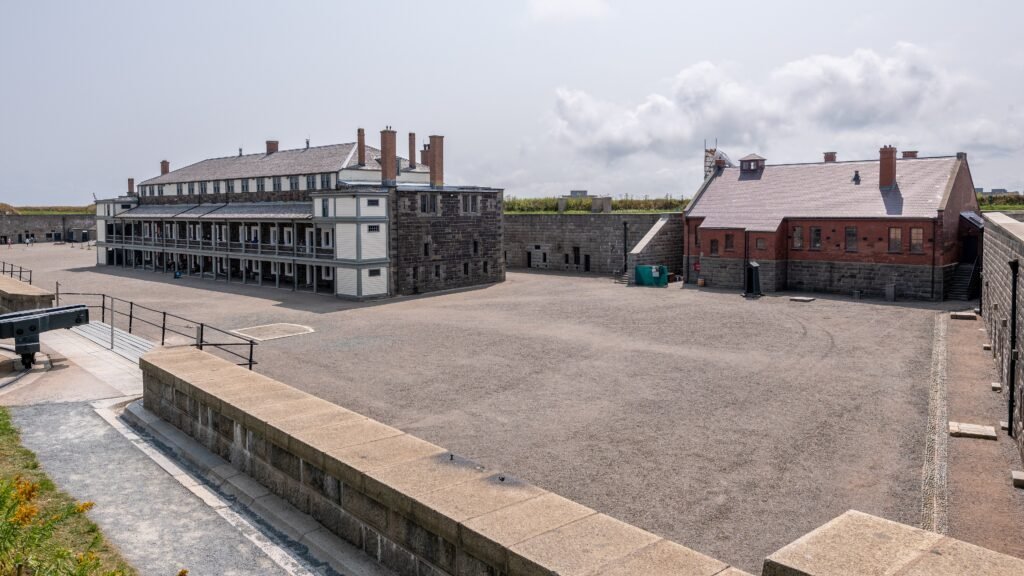
Start at Historic Properties, then follow the waterfront south to the Maritime Museum. Turn inland for Province House and Grand Parade before making the day’s main climb to Citadel Hill. This sequence uses the compact geography efficiently and avoids repeated waterfront-to-upper-city ascents. The direct Old Town Clock stairs are steep. Travelers wanting a gentler approach can continue toward the Sackville Street entrance, as Parks Canada recommends.
Day 2 — Public Gardens to the South Waterfront
Walking route
Day 2 — Public Gardens to the South Waterfront
- Halifax Public Gardens
- Halifax Central Library
- Bishop's Landing
- Canadian Museum of Immigration at Pier 21
- Halifax Seaport Farmers' Market
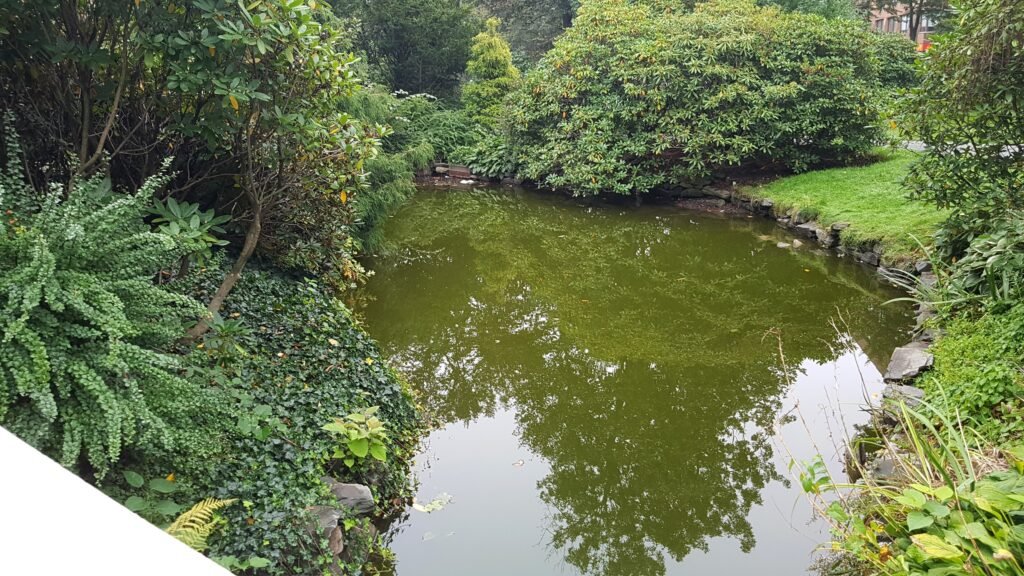
Begin at the Public Gardens, then walk east along Spring Garden Road to Halifax Central Library. From there, descend once toward Bishop’s Landing and continue south beside the harbor. Pier 21 and the Seaport Farmers’ Market finish the route inside the same waterfront extension. The sequence keeps the day mostly downhill after the gardens and avoids retracing the previous day’s Citadel climb.
How Transit Helps
Halifax Transit is most useful when the itinerary leaves the compact core. Conventional adult bus and ferry fare is C$3, with exact cash and HFXGO accepted. HFXGO also sells short-duration passes, which is convenient for occasional weekend use. Payment is straightforward, but it still requires more setup than systems offering universal contactless bank-card tapping.
The Alderney ferry makes Downtown Dartmouth a practical extension without changing Halifax’s central compactness. The crossing takes about 12 minutes, and weekend service runs every 30 minutes. Dartmouth’s waterfront, cafés, and shops are easy to explore after landing. Point Pleasant Park is another separate extension; Route 29 links downtown with the park’s Tower Road turning loop.
Arriving Without a Car
Halifax Stanfield International Airport sits well beyond the city core, but Regional Express Route 320 provides a one-seat public trip downtown. The adult fare is C$4.75, baggage is allowed, and the downtown terminus is Scotia Square. The published schedule gives roughly 48–50 minutes from the airport to central Halifax. Weekends and holidays run hourly, while weekday frequency varies between half-hourly and hourly periods.
VIA Rail passengers arrive at 1161 Hollis Street, beside the southern downtown and close to the waterfront. That makes rail arrival unusually convenient for the waterfront and southern downtown. The Ocean operates on a limited weekly schedule, so check VIA Rail before planning around it.
When a Car Helps
A private car adds little to the standard waterfront, Citadel, Spring Garden, and Seaport weekend. Parking also creates unnecessary friction inside the compact core. A car becomes more useful for coastal or regional trips beyond Halifax. Peggy’s Cove is the clearest example, sitting far outside the urban walking and transit pattern. Guided excursions can replace a rental for travelers planning only one regional day trip.
Walking Limitations and Practical Tips
Plan the hill rather than fighting it repeatedly. A single waterfront-to-Citadel climb works better than alternating between harbor and upper downtown several times. The Citadel’s internal elevators improve access to upper fort levels, but they do not remove the city climb itself. The waterfront remains the easiest place for long, nearly level walking.
Temporary waterfront construction, cruise activity, festivals, and street closures can alter individual routes. Check current advisories on travel days, especially around major events. Check current advisories on travel days because construction, cruise activity, festivals and street closures can alter individual routes.
Seasonal Walking Context
Halifax remains practical for walking throughout the year, but weather strongly affects comfort on its exposed waterfront and steeper streets. Harbor wind can make the boardwalk feel colder than expected, while winter snow and ice make uphill routes more demanding. Summer brings busier boardwalk conditions. Footwear with good grip is especially useful in colder weather.
Bottom Line
Halifax works best when the waterfront and upper downtown are treated as one compact system with a real vertical divide. Keep the harbor walks long and level, schedule the Citadel climb once, and use transit for outer extensions. A central stay puts the main first-visit attractions within realistic walking range. The result is a strong car-free weekend, provided the hills are part of the plan rather than a surprise.