
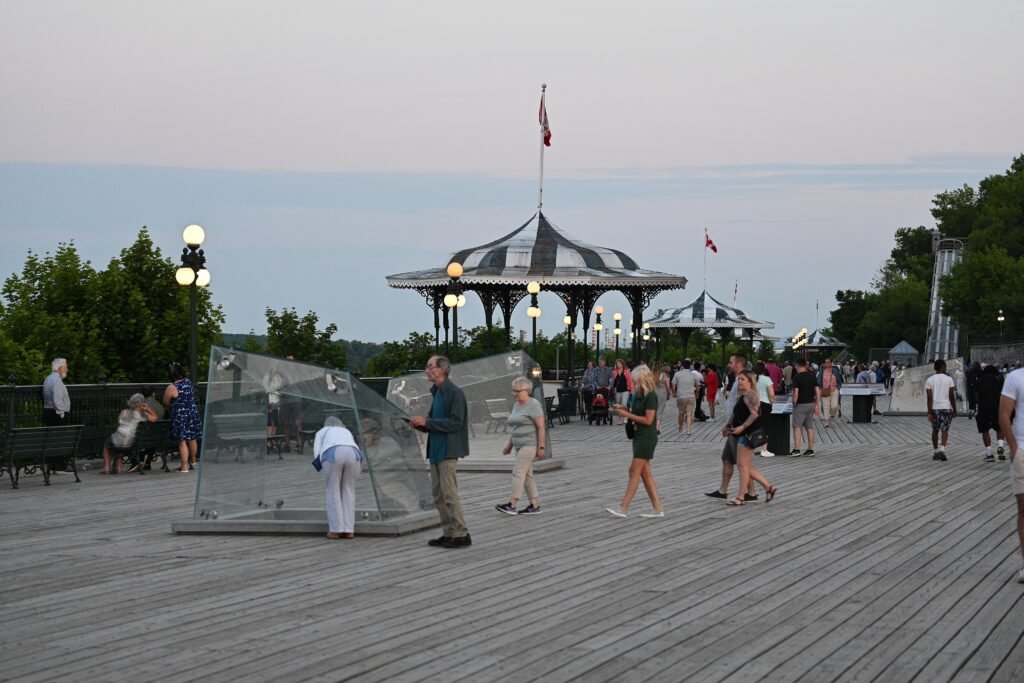
Across Upper Town and Lower Town, many of Quebec City’s signature sights fit into a remarkably compact visitor area. Lower Town gathers Place Royale, Petit-Champlain, the Old Port, and Musée de la civilisation beneath the Cap Diamant escarpment. Above, Dufferin Terrace, Château Frontenac, Upper Town, Parliament Hill, and the Plains of Abraham form another connected walking zone. Distances between headline attractions are often modest, yet the vertical transition can involve steep streets or substantial stairs. Planning each level as a sequence keeps the weekend efficient. Once the main climb is finished, long stretches of sightseeing become considerably easier.
Why Quebec City Works So Well on Foot
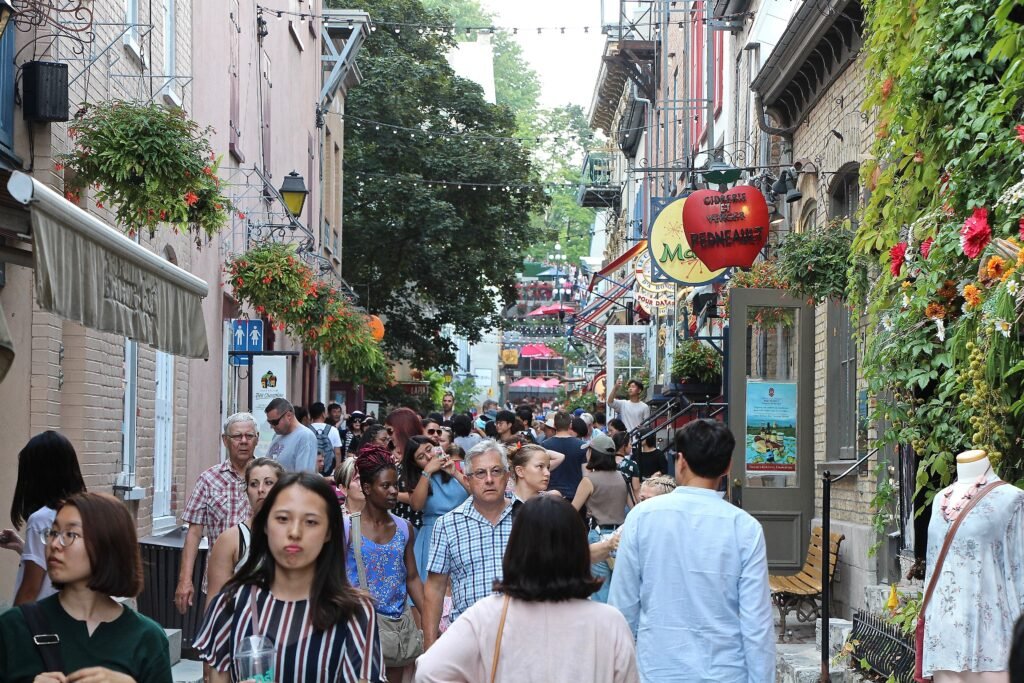
Quebec City’s headline sights cluster more tightly than its reputation for hills might suggest. Gare du Palais sits on the Lower Town edge, with the Old Port, Musée de la civilisation, Place Royale and Petit-Champlain nearby. Dufferin Terrace and Château Frontenac sit directly above that cluster. Parliament Hill and the eastern Plains of Abraham continue the walk just beyond the walls. The compactness is real; most extra effort comes from changing levels rather than crossing large gaps.
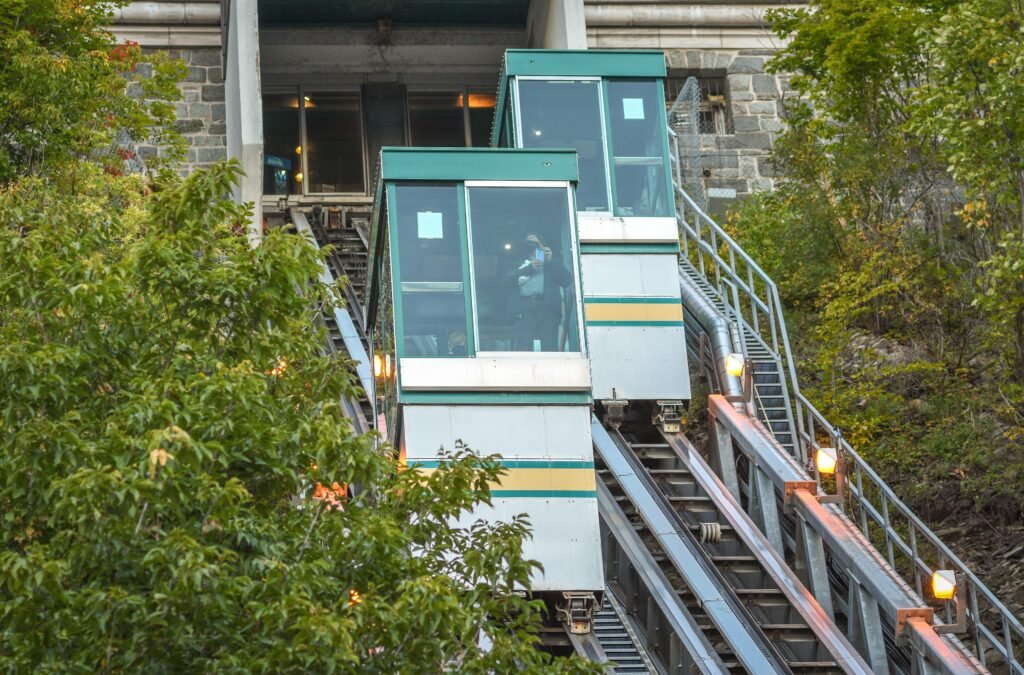
Upper Town stands about 50 metres above Lower Town. The transition can use steep streets, one of many staircases, or the funicular. Breakneck Steps has 59 steps, but it is only one connection and should not define the entire terrain story. Once you stay on one level, many central walks become much easier. Parks Canada’s 4.6-kilometre fortification system also gives Upper Town a clear physical frame.
Best Areas to Stay for a Walking Weekend
Upper Town inside or beside the walls is the easiest all-purpose base for Château Frontenac, Dufferin Terrace, the fortifications and Parliament Hill. Lower Town and the Old Port put Gare du Palais, Place Royale, Petit-Champlain and Musée de la civilisation close at hand, but most Upper Town sightseeing begins with a climb. Parliament Hill and Grande Allée work especially well for the Plains and MNBAQ while remaining near Old Québec. Saint-Roch is a useful secondary base, though it expands the normal first-time walking footprint.
Useful Walking Times
These are practical planning estimates rather than guaranteed walking times. Gare du Palais to Place Royale is roughly 15–18 minutes. Place Royale to Petit-Champlain takes about 3–5 minutes. Petit-Champlain to Dufferin Terrace is only around 7–10 minutes on foot, but that short trip is steep and may involve stairs. Dufferin Terrace to Parliament Hill is about 10–12 minutes. Parliament Hill to the eastern Plains is around 8–10 minutes, while continuing across the park toward MNBAQ takes roughly 18–22 minutes.
A 2-Day Walking Route
The most efficient approach is to respect the city’s two levels rather than bouncing between them. Day 1 starts low, makes one deliberate ascent, then stays in Upper Town. The second day remains almost entirely on the higher level.
Day 1 — Gare du Palais, Lower Town and Old Québec
Walking route
Day 1: Gare du Palais, Lower Town and Old Québec
- Gare du Palais
- Place des Canotiers
- Musée de la civilisation
- Place Royale
- Rue du Petit-Champlain
- Breakneck Steps (Escalier Casse-Cou)
- Dufferin Terrace
- Fairmont Le Château Frontenac
- Notre-Dame de Québec Basilica-Cathedral
- Place D'Youville
Begin at Gare du Palais and move toward Place des Canotiers and Musée de la civilisation. Continue through Place Royale and Petit-Champlain before making the day’s main climb. Walking via Breakneck Steps shows the terrain honestly; the funicular is a sensible alternative when stairs are undesirable. Once on Dufferin Terrace, continue past Château Frontenac, Notre-Dame de Québec and through Upper Town to Place D’Youville without descending again.
Day 2 — Fortifications, Parliament Hill and the Plains
Walking route
Day 2: Fortifications, Parliament Hill, Plains and MNBAQ
- Place D'Youville
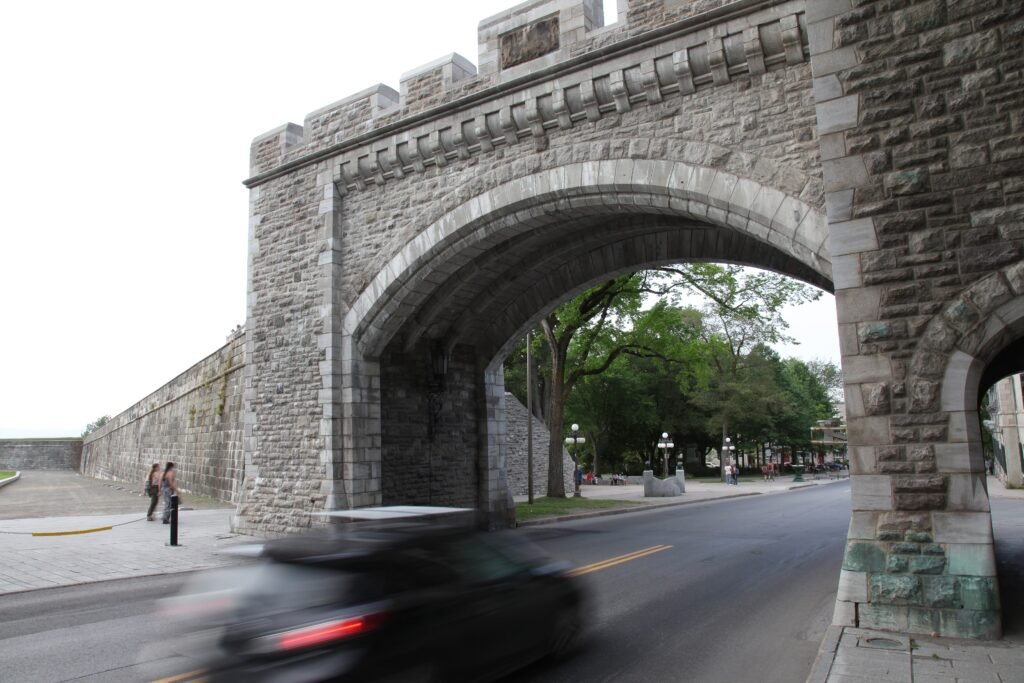
- Porte Saint-Jean
- Parc de l'Esplanade
- Porte Saint-Louis
- Hôtel du Parlement
- Plains of Abraham Museum
- Jardin Jeanne-d'Arc
- Musée national des beaux-arts du Québec
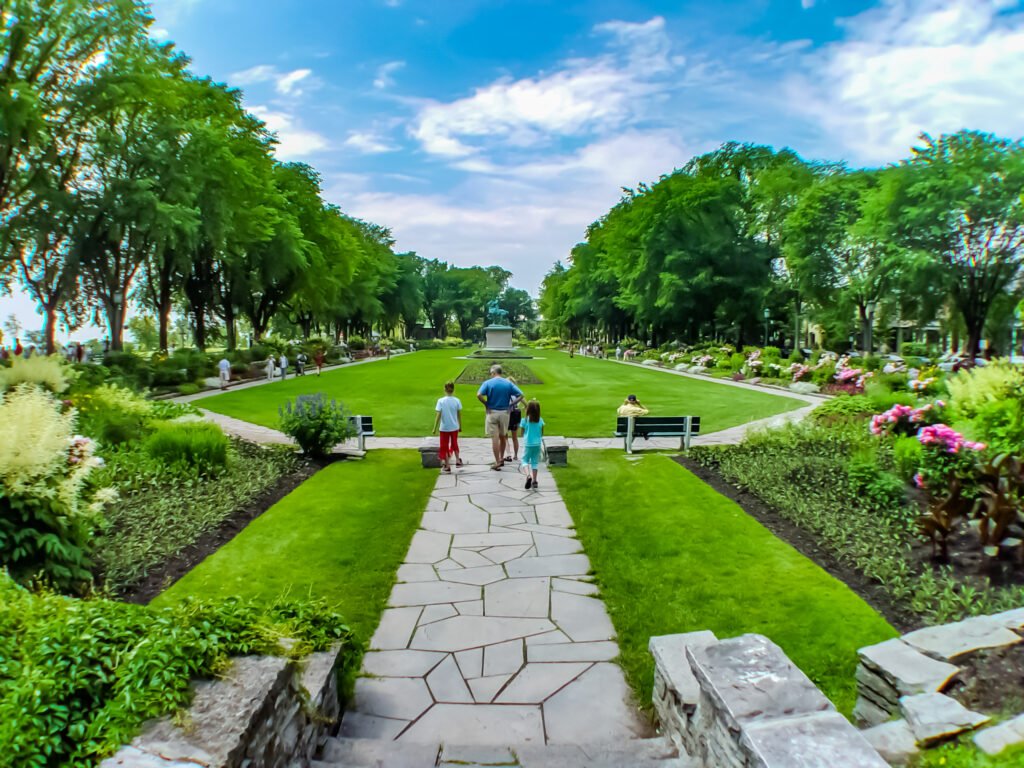
Start at Place D’Youville and follow the fortifications through Porte Saint-Jean, Parc de l’Esplanade and Porte Saint-Louis. Continue to the Hôtel du Parlement, then move west into the Plains of Abraham. An optional Citadelle visit adds a side detour rather than forcing the whole route to double back. Finish across the park at MNBAQ, whose Pierre Lassonde Pavilion fronts Grande Allée. This day is longer horizontally but avoids the repeated cliff climbs that make Quebec City tiring.
Where Transit Helps
RTC buses matter most for airport arrival, Saint-Roch, Sainte-Foy and longer extensions beyond Old Québec. Within the historic core, walking usually beats waiting unless terrain or mobility makes the climb the deciding factor. The Old Québec funicular is valuable for that specific vertical problem, but it is a short connector rather than a citywide transit system.
RTC buses are useful for longer city trips, while the funicular handles the specific Upper Town–Lower Town elevation change. Fares and route patterns can change, so check the RTC planner before relying on a particular bus or transfer.
Arriving in Quebec City Without a Car
Québec City Jean Lesage International Airport is connected to the city by RTC buses, but reaching the historic core may require an onward transfer depending on the route and current construction. Check the RTC journey planner before travel.
Rail arrival is easier. Gare du Palais is directly beside the Lower Town and Old Port visitor geography, so many hotels and sights are walkable after arrival. Direct VIA Rail service connects Montréal and Québec City, with journeys taking roughly three and a half hours. Travelers staying in Upper Town should still expect a final uphill walk with luggage or use a short local connection.
When a Car Actually Helps
A private car adds little to the standard Old Québec, Parliament Hill and Plains weekend. It becomes more useful when the trip expands into multiple regional stops, especially Montmorency Falls, Île d’Orléans or Sainte-Anne-de-Beaupré. Those destinations are separate excursions, not extensions of Quebec City’s central walking core. The Québec–Lévis ferry can add a car-free river crossing, but Lévis should be treated as its own walking zone.
Walking Limitations and Practical Tips
The main challenge is not mileage; it is vertical repetition. Group Lower Town stops together, make one planned ascent, then keep the rest of that day on Upper Town streets. Cobblestones are common around Petit-Champlain and Place Royale, and some sidewalks elsewhere are uneven. Wide wheels, rolling luggage and limited mobility make those surfaces more noticeable.
Seasonal Walking Context
Quebec City remains highly rewarding on foot throughout the year, but seasonal conditions can significantly change the effort required. Snow and ice make steep streets and stairs more demanding in winter, while warmer months and longer daylight make it easier to explore Upper Town and Lower Town at a relaxed pace.
Bottom Line
Quebec City gives a first-time visitor an unusually concentrated sightseeing weekend, provided the route respects its vertical structure. Lower Town and Upper Town are close enough to feel connected, yet different enough to require deliberate energy management. Stay central, group attractions by level, and use the funicular or RTC selectively. A car is unnecessary for the core weekend and becomes useful mainly when regional excursions enter the plan.