
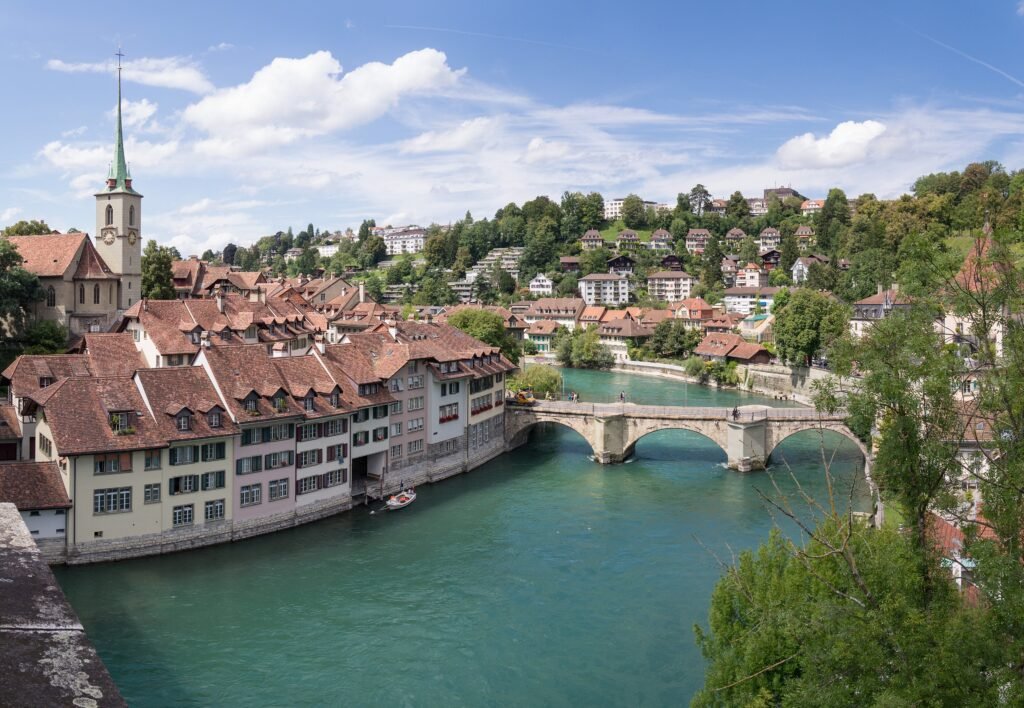

Bern unfolds along one unusually clear sightseeing axis, running east from the railway station through the UNESCO-listed Old Town. Spitalgasse, Marktgasse and Kramgasse link political landmarks, fountains, arcades and the Zytglogge without forcing complicated route choices. The Aare peninsula keeps the core visually coherent, while bridges and river-level drops create sharper changes near Nydegg and Matte. Six kilometres of arcades shelter long stretches from rain and bypass much cobbled paving, but shared streets still require attention. Beyond BärenPark, the climb to Rosengarten and the trip to Zentrum Paul Klee mark the weekend’s clearest extensions.
Why Bern Works So Well on Foot
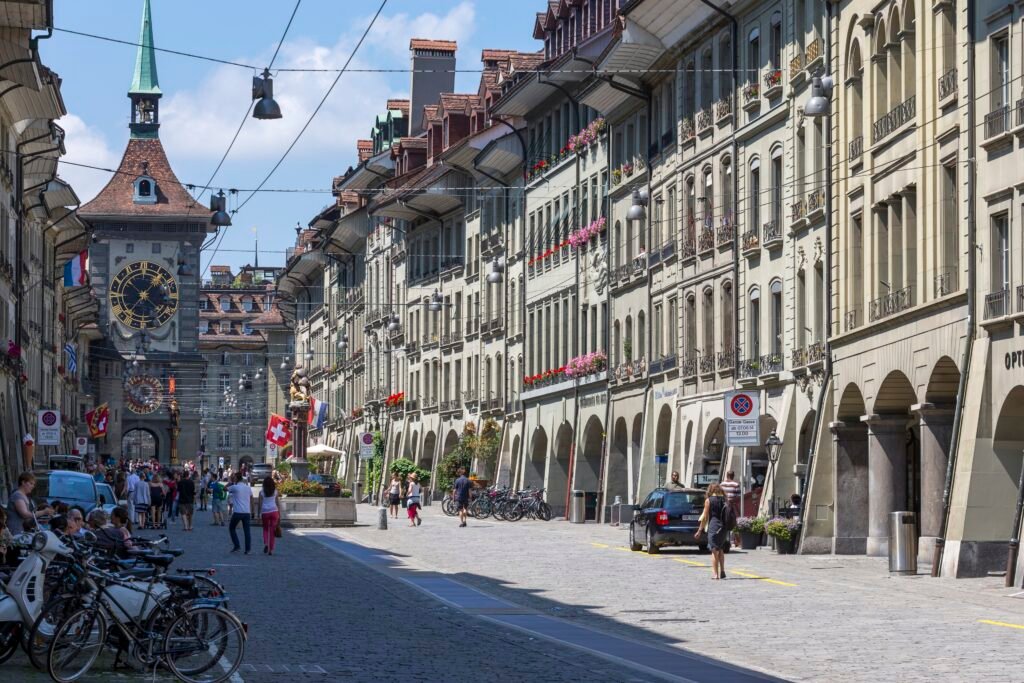
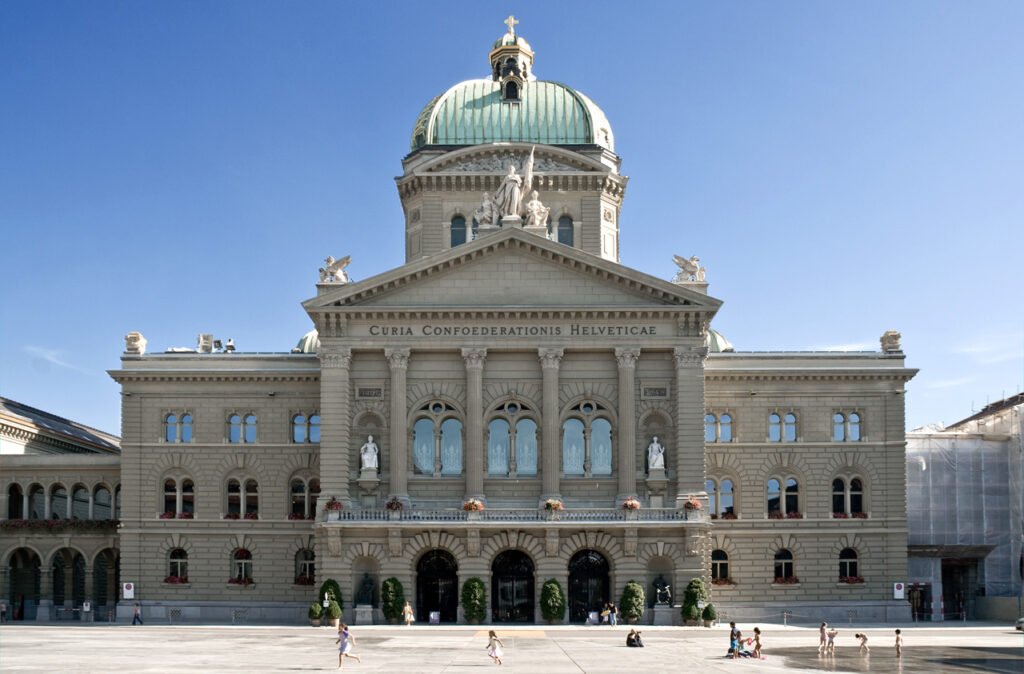
Bern’s central sightseeing area is unusually concentrated. An official Bern Welcome walking route links the railway station with BärenPark over roughly 2.5 kilometres. That line captures the practical weekend core: Bahnhofplatz feeds directly into Spitalgasse, then Marktgasse and Kramgasse continue east toward Nydegg. Bundesplatz, the Federal Palace, Zytglogge, the Einstein House area and Bern Minster all sit on, or just off, that same progression. You can therefore spend much of a first day moving forward rather than repeatedly crossing the city.
The arcades improve walking comfort while leaving Bern’s street layout easy to understand. Bern Welcome documents almost six kilometres of Lauben and weather-protected walking nearly from the station to Nydegg Bridge. They also let many pedestrians avoid the roughest cobbled surfaces. Street conditions are not uniformly pedestrian-only, however. Lower Old Town includes shared streets where pedestrians have priority while buses, servicing vehicles and bicycles still use parts of the historic network.
Best Areas to Stay for Walking
Station and Bubenbergplatz: the easiest choice for rail arrivals, with the Old Town beginning immediately east of the station. Upper Old Town around Bundesplatz and Marktgasse: the strongest all-round base for short walks to the main landmarks. Lower Old Town near Kramgasse and Nydegg: atmospheric and still central, but farther from the station and closer to hillier river approaches. Official tourism listings place hotels in each of these central positions, including properties five minutes from the station and beside Bundesplatz.
Useful Walking Times
Bern station to Bundesplatz: about 5–7 minutes. Bern station to Zytglogge: about 10–12 minutes along the main Old Town spine. Zytglogge to Bern Minster: about 6–8 minutes. Bern Minster to BärenPark: about 12–15 minutes via Nydegg. BärenPark to Rosengarten: about 10 minutes uphill. These are practical planning estimates rather than guaranteed walking times. Crowds, crossings, cobbles and the climb toward Rosengarten can change the actual time.
A 2-Day Walking Route
These routes avoid unnecessary backtracking. The first day follows Bern’s natural west-to-east sightseeing spine. The second starts higher near Rosengarten, then descends through the eastern edge and river-level Old Town.
Day 1 — Station, Federal Bern and the Old Town Spine
Walking route
Day 1 — Station, Federal Bern and the Old Town Spine
- Bern railway station
- Bundesplatz
- Zytglogge
- Einstein House
- Bern Minster
- Münsterplattform
- Nydegg Bridge
- BärenPark
Begin at Bern railway station and step onto Bahnhofplatz, then continue east through Spitalgasse toward the political centre. Pause at Bundesplatz and the Federal Palace before rejoining Marktgasse. Continue to the Zytglogge, then follow Kramgasse past the Einstein House area. Turn briefly south for Bern Minster and Münsterplattform, where the Aare and Matte become visible below. Return to the eastward line through the Lower Old Town, cross Nydeggbrücke and finish at BärenPark. The route is compact, coherent and mostly level until its eastern end.
Day 2 — Rosengarten, BärenPark, the Aare and Matte
Walking route
Day 2 — Rosengarten, BärenPark, the Aare and Matte
- Rosengarten
- BärenPark
- Untertorbrücke
- Matte district
- Mattelift lower station
- Münsterplattform
Use a local bus from the station to Rosengarten if you want to save the climb before the day begins. Walk downhill from the viewpoint to BärenPark, then continue toward Untertorbrücke for a lower Aare perspective. Cross toward the Matte district and follow the river-level streets without trying to force every upper and lower lane into one loop. Finish by using the Mattelift or the steep walking approaches back toward Münsterplattform. This direction turns Bern’s strongest terrain challenge into a mostly descending sequence. Check current BERNMOBIL service before travel.
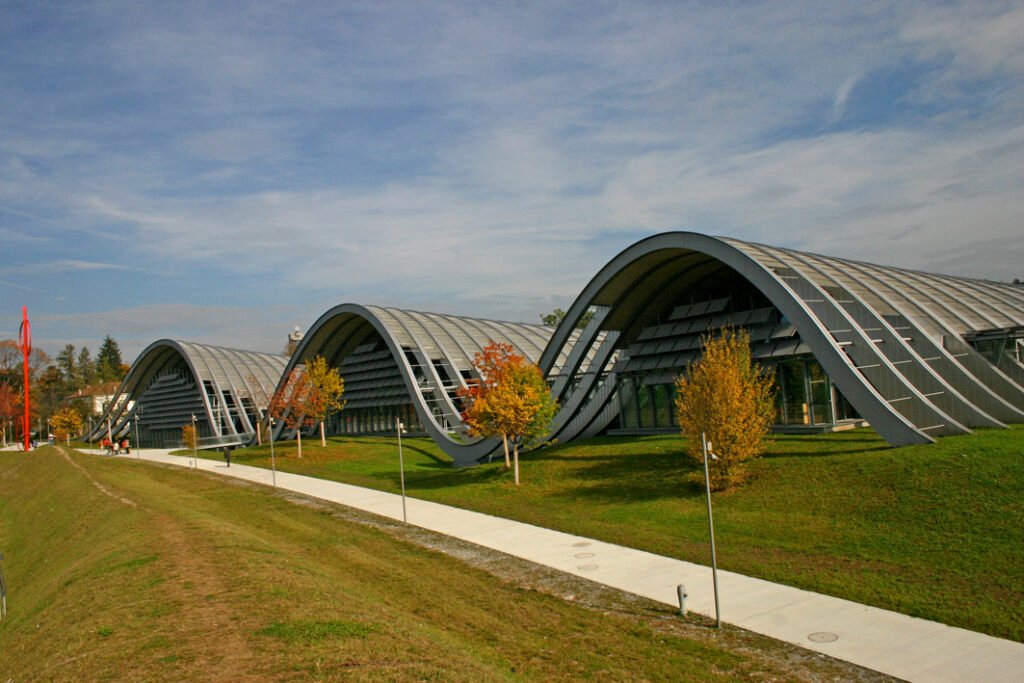
Zentrum Paul Klee works best as a separate extension rather than another central walking stop. A direct public-transport connection from central Bern makes the museum easy to reach without a car. Check the current BERNMOBIL journey planner for the best route and travel time.
When Bern Transit Helps
Walking should remain the default inside the historic core, because many tram or bus hops merely duplicate short sightseeing distances. Transit becomes valuable for Rosengarten, Zentrum Paul Klee and tired-leg returns from the eastern Old Town. Frequent daytime services cover these extensions, with later-night options on selected routes. Check current BERNMOBIL and night-service information before travel.
Visitors can use Libero tickets for local public transport, with single and day products available through ticket machines and digital channels. Payment methods, zone rules and product validity can change, so check current Libero or BERNMOBIL information before travel. Eligible accommodation guests may also receive a Bern Ticket with local transport benefits during their stay; verify current eligibility and coverage with the accommodation or Bern Welcome.
Arriving in Bern Without a Car
Bern railway station is one of the city’s biggest car-free advantages. It sits directly beside the western edge of the Old Town, with Tourist Information inside the station and the main walking spine outside. International flyers will more often use a larger Swiss gateway than Bern Airport. Zurich Airport has straightforward rail connections to Bern, but journey times and departure patterns vary, so check the current SBB timetable for the travel date.
Bern Airport is closer to the city and connects with Bern by public transport, but its flight network is much smaller than Switzerland’s major international airports. Many overseas visitors therefore arrive through another Swiss gateway. Check current airport and BERNMOBIL information for the best connection, especially when temporary rail works, tram diversions or event closures affect individual trips.
Where Walking Gets Harder
The central shopping streets can make Bern feel flatter than the full visitor experience. Matte lies below the main Old Town plateau, and river approaches introduce stairs or steep streets. Bern Welcome describes the Aargauerstalden climb toward Rosengarten as steep. BärenPark itself sits on the Aare slope, although an inclined lift improves accessibility inside the park. Historic cobbles also remain uneven in places, even where the arcades offer a smoother alternative.
When a Car Helps
A private car adds little to the standard Bern weekend and can be more nuisance than benefit inside the historic centre. It becomes more useful for rural itineraries that combine multiple small Emmental stops, remote trailheads or other places poorly matched to a simple rail-and-bus day trip. Gurten is not a reason to rent one: public transport and the funicular make Bern’s local mountain a straightforward car-free extension.
Seasonal Walking Note
Bern’s arcades make rain less disruptive than in many historic centres, but exposed river paths and viewpoints still depend on conditions. Winter ice can make cobbles, steps and steeper approaches more demanding. In warmer months, the Aare setting encourages longer riverside detours, although swimming conditions require separate safety judgment. Seasonal conditions change comfort and pacing, while the main central walking pattern remains the same.
Bottom Line
Bern’s station, Old Town spine and eastern landmarks fit together unusually well for a short city break. Walk the historic plateau, use the arcades when they improve comfort, and treat the Aare slopes as real terrain. Transit is best saved for Rosengarten, Zentrum Paul Klee and energy-saving returns. Regional excursions are optional extensions rather than a reason to rent a car for the central city weekend.