
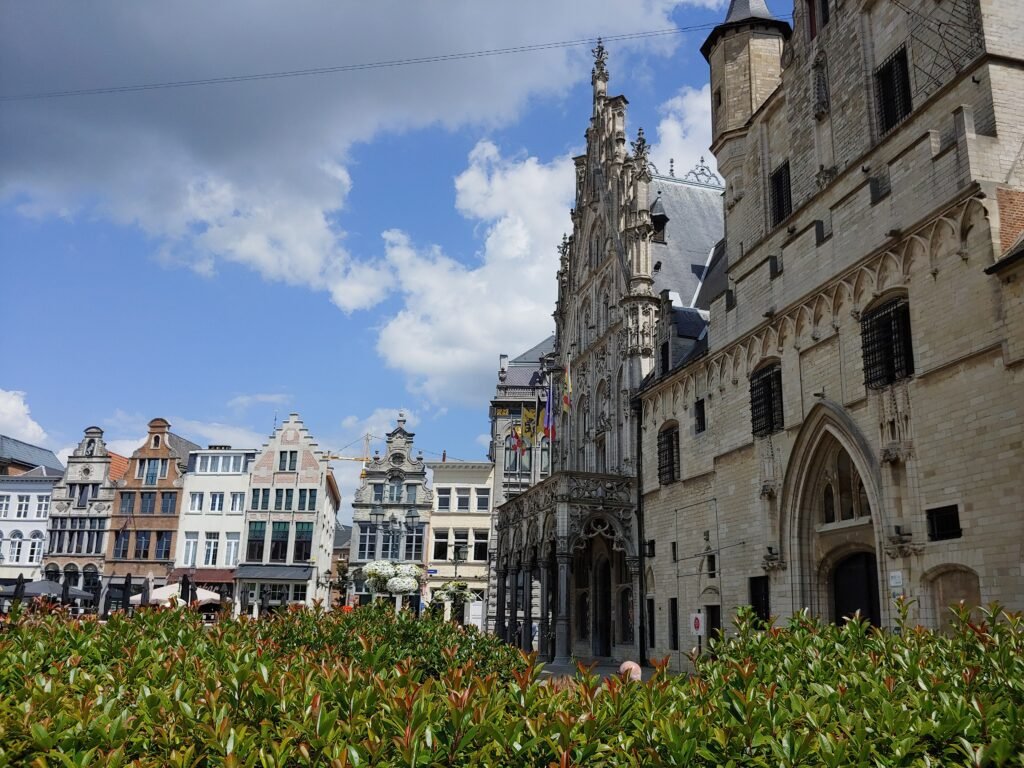
From the railway approach to Grote Markt, Mechelen follows a tight north–south visitor spine before bending around the Dijle. Bruul links the railway approach with the historic center, while Grote Markt anchors the densest cluster of major sights. Vismarkt, Haverwerf, IJzerenleen, and Hof van Busleyden sit close enough to connect without transport. The river adds atmosphere but also channels walkers toward specific crossings. Flat terrain keeps daily effort low, yet cobbles and shared bicycle space still demand attention. This combination makes Mechelen easy to explore slowly, without needing to turn every day into a mileage challenge.
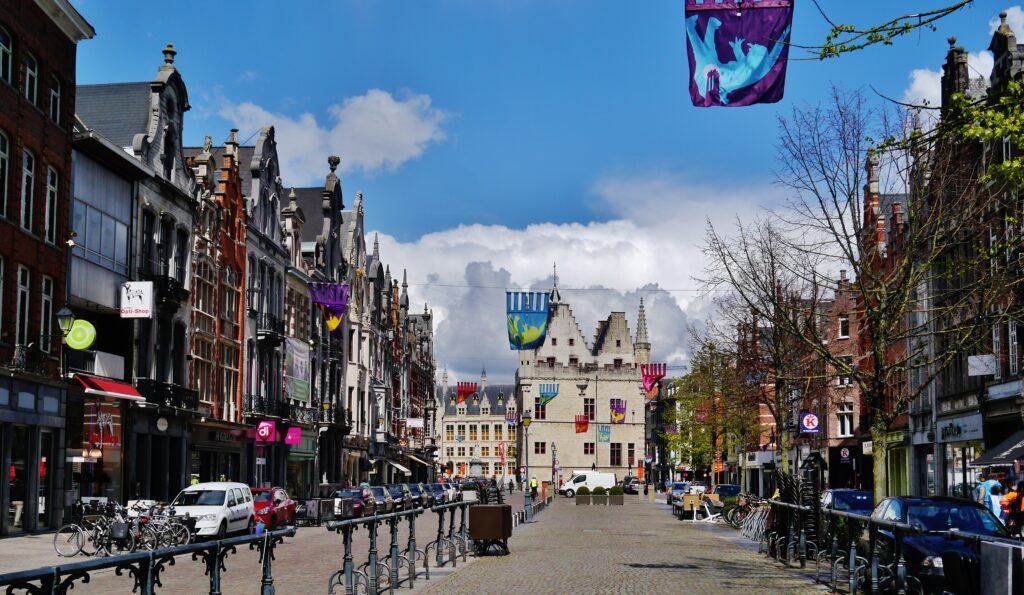
Why Mechelen Works So Well on Foot
Mechelen’s central visitor geography is unusually tight. The official accessible heritage walk reaches major court, cathedral, market, and riverfront sights within a 2.3-kilometer core route. Grote Markt, IJzerenleen, Vismarkt, Haverwerf, and St. Rumbold’s cluster within a few central blocks. Hof van Busleyden and the Begijnhof extend that pattern rather than breaking it.
The railway station is close, but it should be treated as an arrival advantage rather than part of the historic cluster. Visit Mechelen gives about fifteen minutes on foot from Mechelen Central to Grote Markt. Bruul and Kruidtuin make that approach useful sightseeing territory instead of dead transfer mileage.
Pedestrian Streets, Cobbles and the Dijle
Central Mechelen gives pedestrians substantial priority. The historic center is largely car-free during core daytime hours, and several spaces add stricter walking rules. The Dijlepad and Van Beethovenbrug are walking-only, while Bruul becomes cycle-free on Saturdays between 11 a.m. and 6 p.m. Vleeshouwersstraat is also reserved for walking.
Bicycles still shape the everyday walking environment because the entire inner city functions as a large bicycle zone. Shared movement is generally orderly, but visitors should check behind them before changing direction. Historic cobbles create a second caveat. IJzerenleen is relatively flat, while Grootbrug and the Begijnhof include rougher sections.
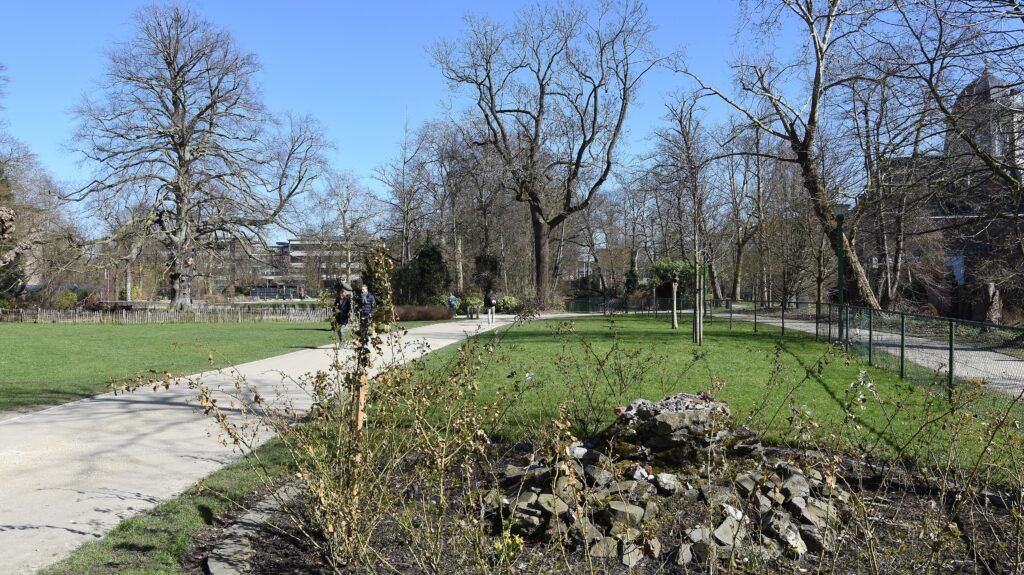
The Dijle is both an attraction and a routing constraint. Its riverside path runs between Haverwerf and Kruidtuin, partly alongside and over the water. Bridge locations determine where walkers can cross, and some ramps are steep. The scenic route is worthwhile, but it is not always the shortest route.
Where to Stay for the Easiest Walking
The historic core around Grote Markt, IJzerenleen, and Vismarkt is the simplest first-time base. Most headline sights, restaurants, and evening streets are only minutes away. Staying near Vismarkt adds riverfront atmosphere, while Grote Markt keeps the cathedral, tower, and central shopping streets closest.
Bruul and the southern center work well for travelers balancing station access with sightseeing. The Begijnhof and northern center are quieter, with Hof van Busleyden and Kazerne Dossin nearby. A station-side hotel is practical for early trains, but it sacrifices some evening centrality for luggage convenience.
Useful Walking Times
| Walk | Typical time |
|---|---|
| Mechelen Railway Station to Grote Markt | about 15 minutes |
| Grote Markt to Vismarkt | about 5 minutes |
| Vismarkt to Haverwerf | about 2–3 minutes |
| Grote Markt to Hof van Busleyden | about 5–7 minutes |
| Grote Markt to Groot Begijnhof | about 8–10 minutes |
| Grote Markt to Kazerne Dossin | about 10–12 minutes |
Only the station-to-Grote Markt time is published directly by Visit Mechelen. The shorter central estimates reflect the official visitor map and a normal walking pace. Crowds, cobbles, bridge approaches, and mobility needs can change the practical time.
A 2-Day Walking Route
The two days use different parts of Mechelen’s compact visitor map. Day 1 follows the station-to-core spine and finishes at the Dijle. The second day loops through the court quarter, beguinages, and northern museum area before returning toward Wollemarkt.
Day 1 — Station, Bruul, Historic Core and the Dijle
Walking route
Day 1 — Station, Bruul, Historic Core and the Dijle
- Mechelen Railway Station
- Kruidtuin
- Bruul
- IJzerenleen
- Grote Markt
- St Rumbold's Cathedral
- Vismarkt
- Haverwerf
Start at Mechelen Station and walk toward Kruidtuin before continuing along Bruul. Cross into IJzerenleen, then reach Grote Markt for St. Rumbold’s Cathedral and tower. Continue west to Vismarkt and finish at Haverwerf beside the Dijle. This order keeps moving toward the river instead of returning to the station.
Day 2 — Court Quarter, Begijnhof and Northern Heritage
Walking route
Day 2 — Court Quarter, Begijnhof and Northern Heritage
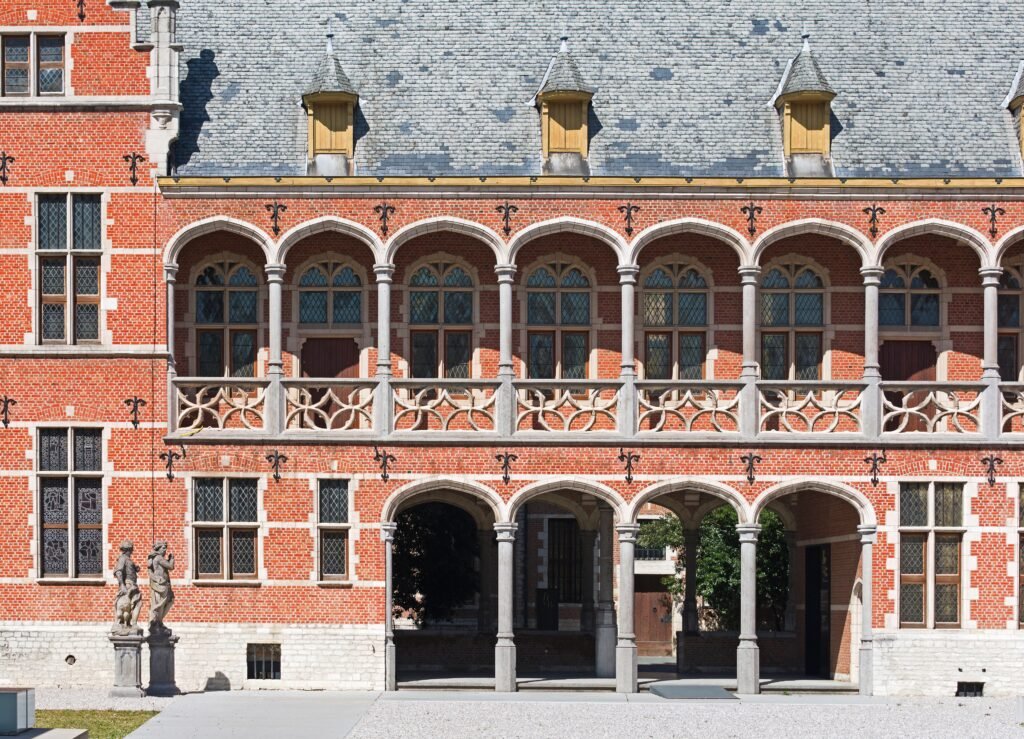
- Palace of Margaret of Austria
- Museum Hof van Busleyden
- Klein Begijnhof
- Groot Begijnhof
- Begijnhofkerk
- Kazerne Dossin
- Tinelpark
- Wollemarkt
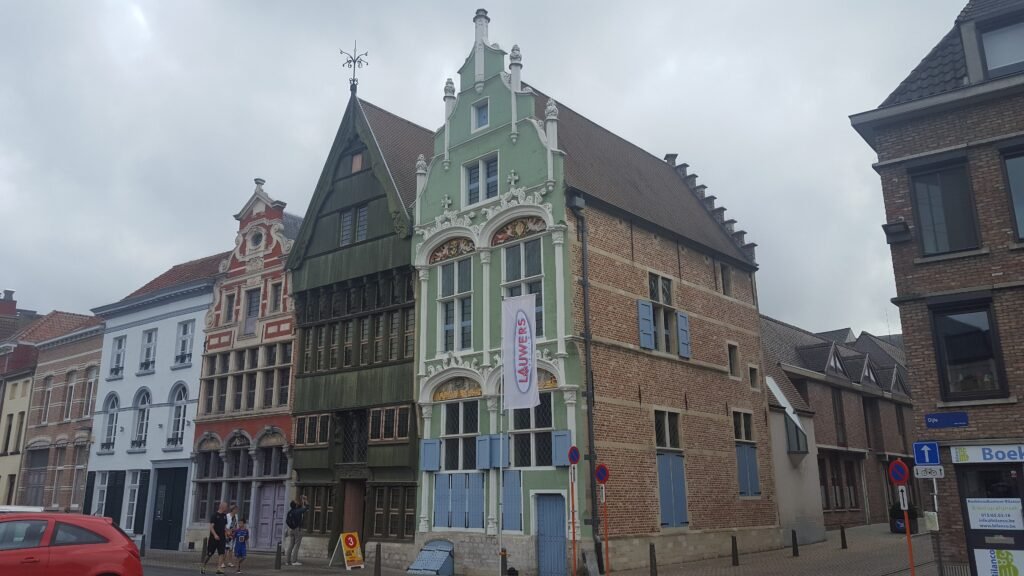
Begin at the Palace of Margaret of Austria, then move to Hof van Busleyden. Continue north through the Klein Begijnhof and Groot Begijnhof before reaching the Begijnhofkerk. Kazerne Dossin is the farthest major stop. Tinelpark then provides a green return toward Wollemarkt without repeating Day 1’s riverfront line.
When to Use De Lijn
Central sightseeing rarely requires a bus, but De Lijn is useful when luggage, fatigue, or an outer attraction changes the calculation. Lines 1a and 1b combine for frequent daytime service between Mechelen Station and Grote Markt. Line 1b continues through Veemarkt toward Nekkerspoel.
Occasional use is simple. A standard ride costs €3, and contactless bank cards, phones, and compatible wearables work onboard. Transfers within 60 minutes are free when the same payment method is used. Weekend service is thinner, so check the live planner before relying on a precise departure.
Arriving in Mechelen Without a Car
Mechelen Station is a strong gateway because it sits close to the visitor core and on Belgium’s busy intercity network. Visit Mechelen gives roughly twenty minutes by train from Brussels, Antwerp, and Leuven. The station has luggage lockers, taxis, connecting buses, lifts, and escalators.
Brussels Airport is especially easy. Visit Mechelen states that a direct express train reaches Mechelen Central in about eleven minutes. The rail link removes the need for an airport road transfer, while the fifteen-minute final walk still keeps arrival separate from sightseeing compactness.
Walking Limitations and Practical Tips
Do not confuse short distances with completely smooth surfaces. Large cobbles make the Groot Begijnhof difficult for some wheelchairs and strollers. Smaller cobbles around Grootbrug can also be uneven. Stable shoes matter more than hill fitness for most central routes.
Treat the Dijle as a sequence of crossings rather than a straight waterfront highway. The walking-only path is attractive, but some ramps are steep and can become slippery when wet. At busy squares and shopping streets, bicycle awareness and terrace crowds can slow an otherwise short walk.
St. Rumbold’s Tower is the major exception to Mechelen’s low-effort terrain. Its 538-step climb is an optional attraction, not a citywide walking requirement. The tower is not wheelchair accessible, while the cathedral below is partly accessible.
When a Car Helps
A private car adds little to a standard two- or three-day Mechelen city break. The station, compact center, and bus network cover the usual visitor needs. A car becomes more useful for dispersed countryside stops or a wider road trip that is poorly aligned with Belgium’s rail network.
Seasonal Walking Note
Mechelen remains easy to explore on foot throughout the year, but seasonal conditions change comfort and operations. Wet weather can make cobbles and river-path ramps more slippery. Summer festivals can crowd central squares and alter bus routes, while short winter daylight compresses longer sightseeing days.
Bottom Line
Mechelen works best when you stop treating a compact city as a challenge to cover maximum mileage. Stay central, walk the historic core deeply, and use buses only when they save useful energy. The station and airport rail links make the same strategy practical from arrival to departure.