
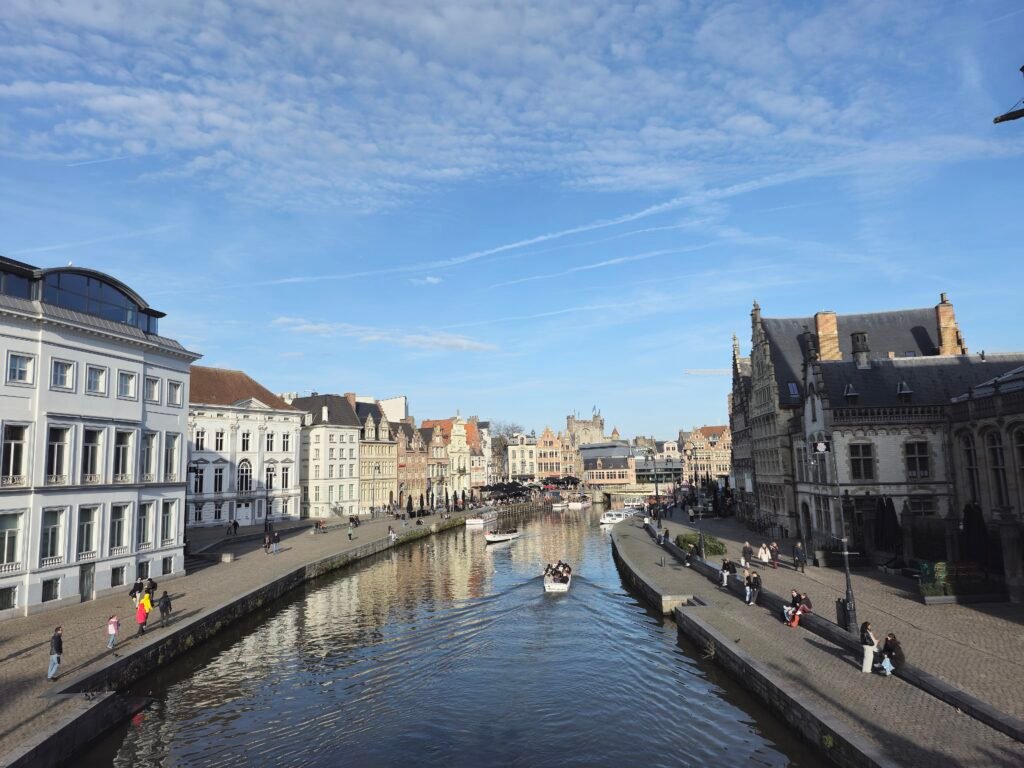
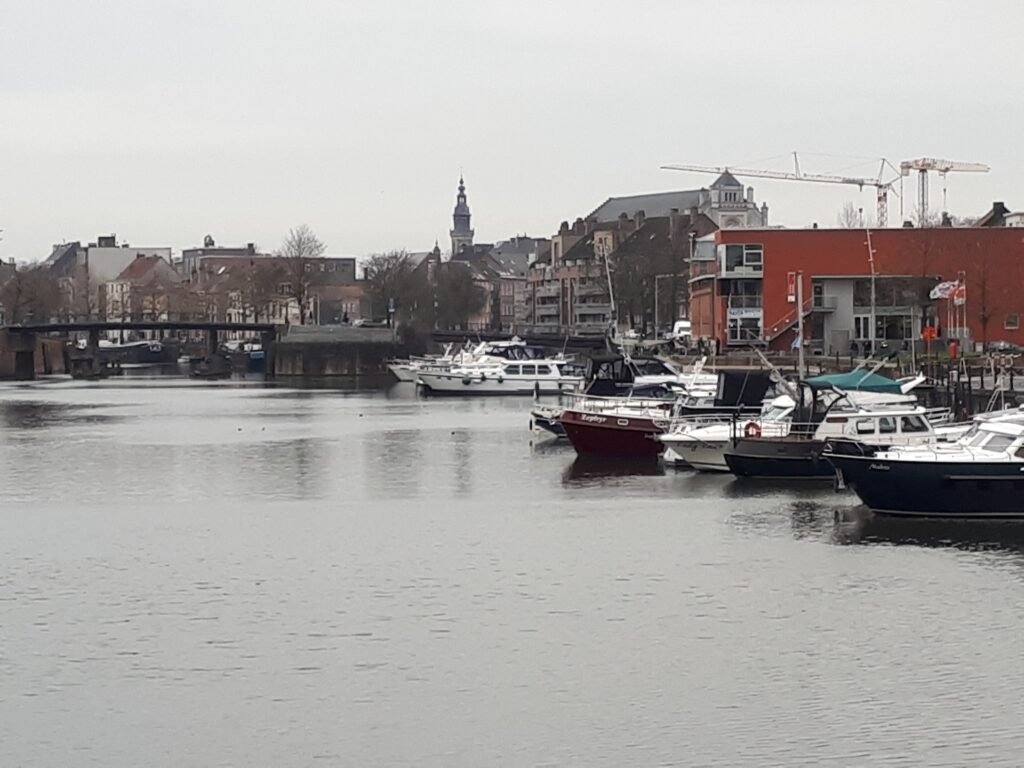
Around a knot of rivers, canals, medieval streets and closely spaced public squares, Ghent concentrates most of its headline sights. Korenmarkt sits beside Saint Nicholas’ Church, minutes from Graslei, Korenlei, the Belfry, and Saint Bavo’s Cathedral. Gravensteen, Patershol, and Vrijdagmarkt extend that core northward without breaking the walking pattern. Waterways add beauty but also shape routes, because bridges determine where pedestrians can cross. The streets are generally flat and increasingly low-traffic, although cobbles, tram tracks, bicycles, and busy shared spaces require attention. Gent-Sint-Pieters is the major exception to the compact picture, sitting beyond the historic sightseeing core.
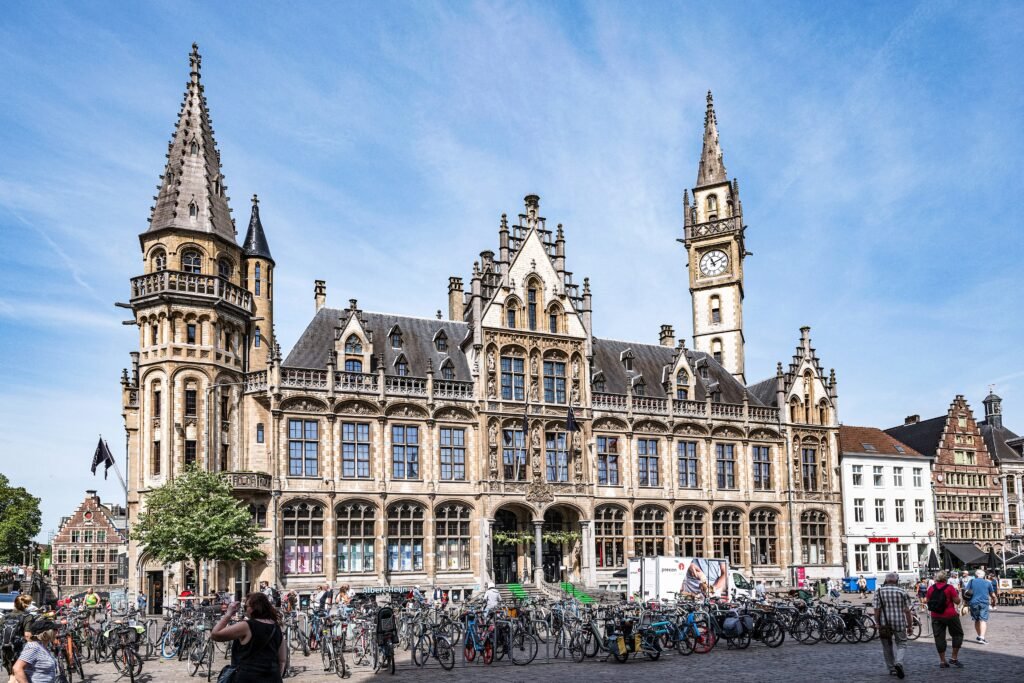
Why Ghent Works So Well on Foot
The strongest walking advantage is concentration. Visit Gent’s introductory highlights walk covers the historic centre in 4.2 kilometres. Korenmarkt, Saint Nicholas’ Church, the Belfry and Saint Bavo’s Cathedral sit within a few adjoining blocks. Saint Michael’s Bridge then opens directly onto Graslei and Korenlei, while Gravensteen, Patershol and Vrijdagmarkt continue the route north.
Compactness does not make every step effortless. Ghent’s circulation plan has removed much through traffic and created extensive car-free space. However, medieval cobbles, tram tracks, bicycles and shared streets require more attention than a modern pedestrian plaza. The canal setting also means the nearest bridge can matter more than straight-line distance.
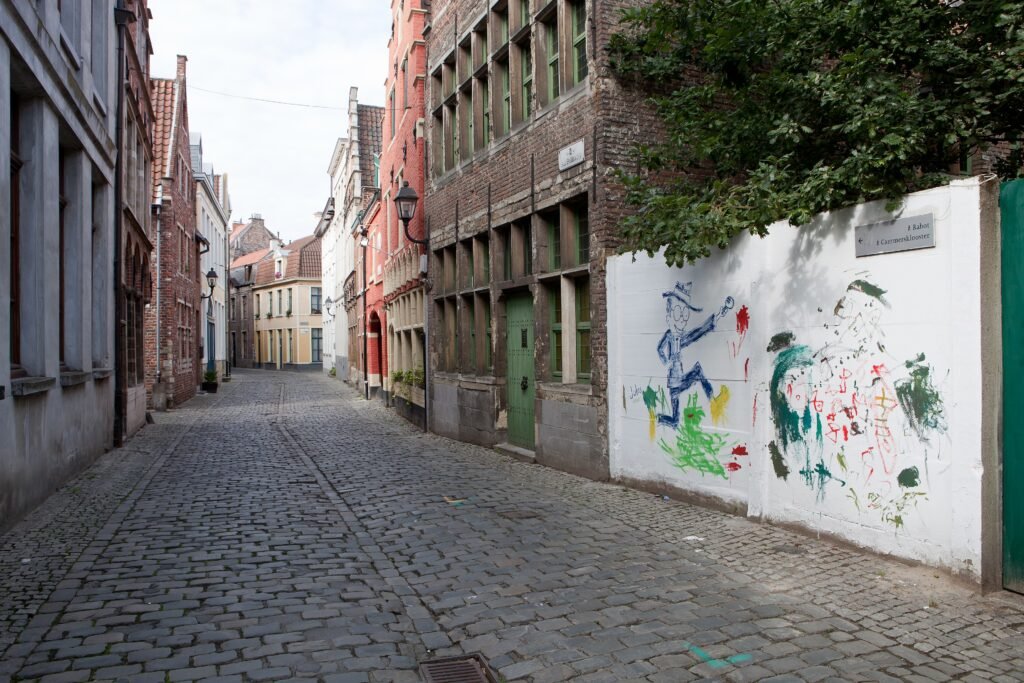
Where to Stay for the Easiest Walking
The historic centre is the simplest base for a first visit. Korenmarkt, Graslei, the three towers and Gravensteen are then close enough for repeated walks without planning around transit. Patershol and Prinsenhof also work well for a quieter historic setting. Kouter is slightly south of the medieval core but gives easier access toward Gent-Sint-Pieters and the Arts Quarter.
Useful Walking Times
Most headline transfers inside the historic core are short. Korenmarkt to Saint Bavo’s Cathedral is roughly five minutes, while Gravensteen is about six minutes away. Vrijdagmarkt sits around seven minutes from Gravensteen, and Portus Ganda is roughly ten minutes beyond Vrijdagmarkt. The important exception is Gent-Sint-Pieters: Visit Gent estimates about 20 minutes on foot to the city centre.
A 2-Day Walking Route
These routes use different sides of central Ghent instead of reversing the same streets. Day 1 concentrates the medieval icons and canal core. The second day starts south of that cluster, follows the Scheldt toward Portus Ganda, then finishes westward around Prinsenhof.
Day 1 — Three Towers, Canals and Medieval Core
Walking route
Day 1 — Three Towers, Canals and Medieval Core
- Saint Bavo’s Cathedral
- Belfry of Ghent
- Saint Nicholas’ Church
- Korenmarkt
- Saint Michael’s Bridge
- Graslei
- Korenlei
- Gravensteen
- Patershol
- Vrijdagmarkt
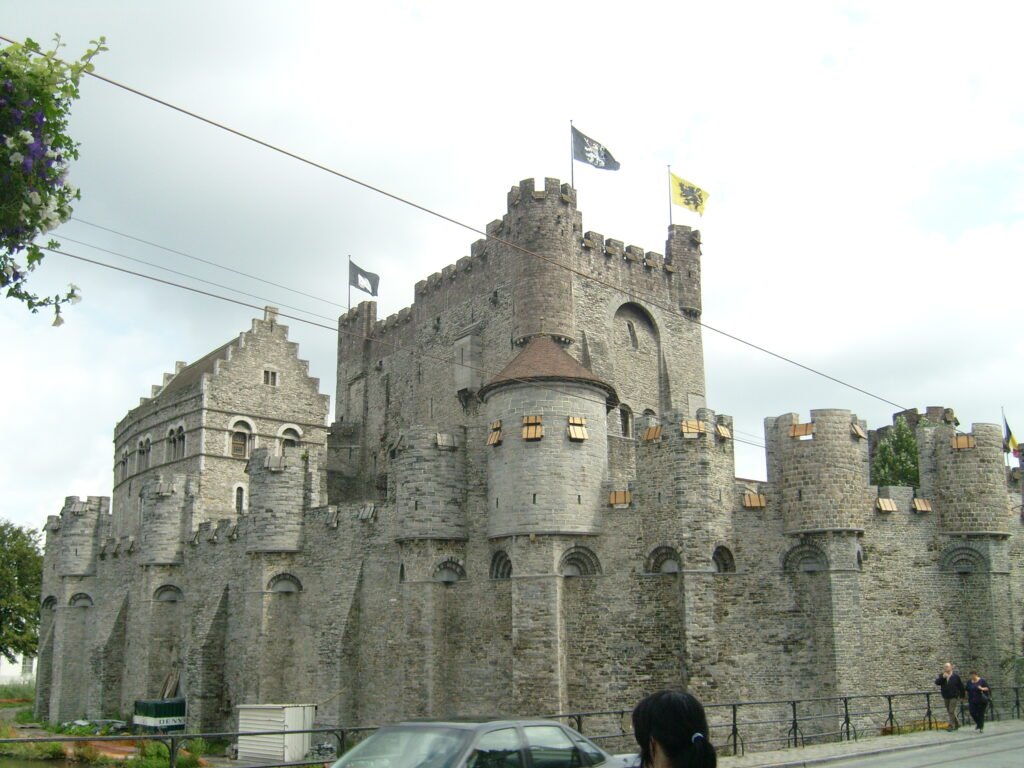
Begin at Saint Bavo’s Cathedral, then move through the Belfry and Saint Nicholas’ Church to Korenmarkt. Cross Saint Michael’s Bridge for the classic three-towers perspective before walking Graslei and Korenlei. Continue north to Gravensteen, enter Patershol’s smaller medieval lanes, and finish at Vrijdagmarkt. The route stays inside the tightest sightseeing cluster and avoids unnecessary transit.
Day 2 — Sint-Pietersplein, Portus Ganda and Prinsenhof
Walking route
Day 2 — Sint-Pietersplein, Portus Ganda and Prinsenhof
- Sint-Pietersplein
- Saint Peter’s Abbey
- De Krook
- De Reep
- Portus Ganda
- Saint Bavo’s Abbey
- Baudelohof
- Augustijnenkaai
- Prinsenhof
Start at Sint-Pietersplein and Saint Peter’s Abbey, then descend toward De Krook and the Scheldt. Follow the river east to De Reep and Portus Ganda, where the Lys and Scheldt meet. After Saint Bavo’s Abbey, turn north through Baudelohof. Continue along Augustijnenkaai and finish in Prinsenhof, keeping the day distinct from the main Korenmarkt circuit.
How Transit Complements Walking
Ghent does not need transit for most trips inside the medieval core, but De Lijn is valuable for the gaps. Tram lines 1, 2, 3 and 4 cross central Ghent, while buses extend coverage beyond the tram corridors. Core tram services commonly run six to eight times per hour, though frequencies and routes should be checked before travel.
Payment is especially simple for occasional visitors. Tap a contactless bank card, phone or watch on the white terminal aboard the vehicle. A standard ride costs €3, and a transfer within 60 minutes is not charged again with the same contactless method. Evening and Sunday service can thin on selected lines, so check the live planner for late trips.
Arriving at Gent-Sint-Pieters Without a Car
Gent-Sint-Pieters is Ghent’s main rail gateway, but it is not the medieval centre. Visit Gent puts the walk to the city centre at about 20 minutes and the Arts Quarter at about 10 minutes. Tram lines 1 and 3 normally connect the station toward central stops, with buses providing additional options. Belgian intercity rail is frequent, and direct trains from Brussels Airport reach Gent-Sint-Pieters without requiring a car.
When a Car Helps—and When It Does Not
A private car adds little to the standard two- or three-day city itinerary. The strongest sights sit inside the low-traffic centre, and the station has useful tram and bus connections. A car becomes more relevant for rural Flanders, scattered countryside stops or multi-destination touring beyond the rail network. Inside central Ghent, parking and circulation rules make walking and transit the more practical tools.
Walking Limitations to Know
Historic paving is the main surface issue. Some central streets are cobbled, though Visit Gent notes many cobbles are relatively flat and evenly laid. Tram tracks and heavy bicycle use add interaction in shared corridors. Rivers and canals can force small detours to the next bridge, while popular quays and squares become crowded at busy times. Gent-Sint-Pieters also remains far enough from the core that luggage can make the tram preferable.
Seasonal Walking Note
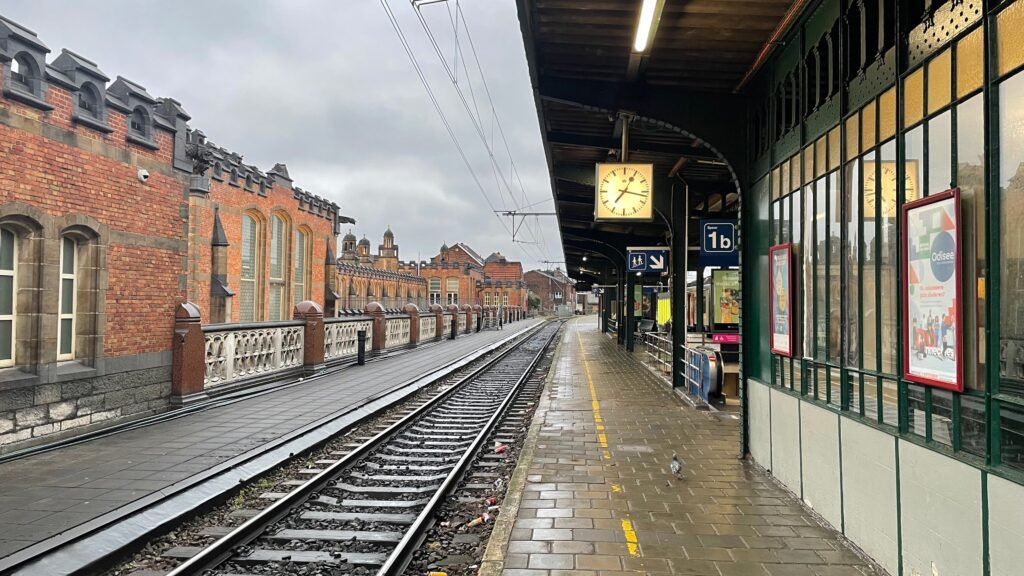
Ghent remains easy to explore on foot throughout the year, but weather and daylight change the experience. Rain and wind can reduce comfort on exposed quays, while winter darkness shortens longer walking days. Busy summer periods can also increase pedestrian activity around Graslei and the historic center.
Bottom Line
Ghent’s historic canal core is built for a walking-first weekend. The major medieval sights connect naturally, and the pedestrian environment is strong despite cobbles, bicycles and tram tracks. Use De Lijn mainly for Gent-Sint-Pieters, tired legs and peripheral districts. For the usual first-time itinerary, renting a car creates more friction than value.