
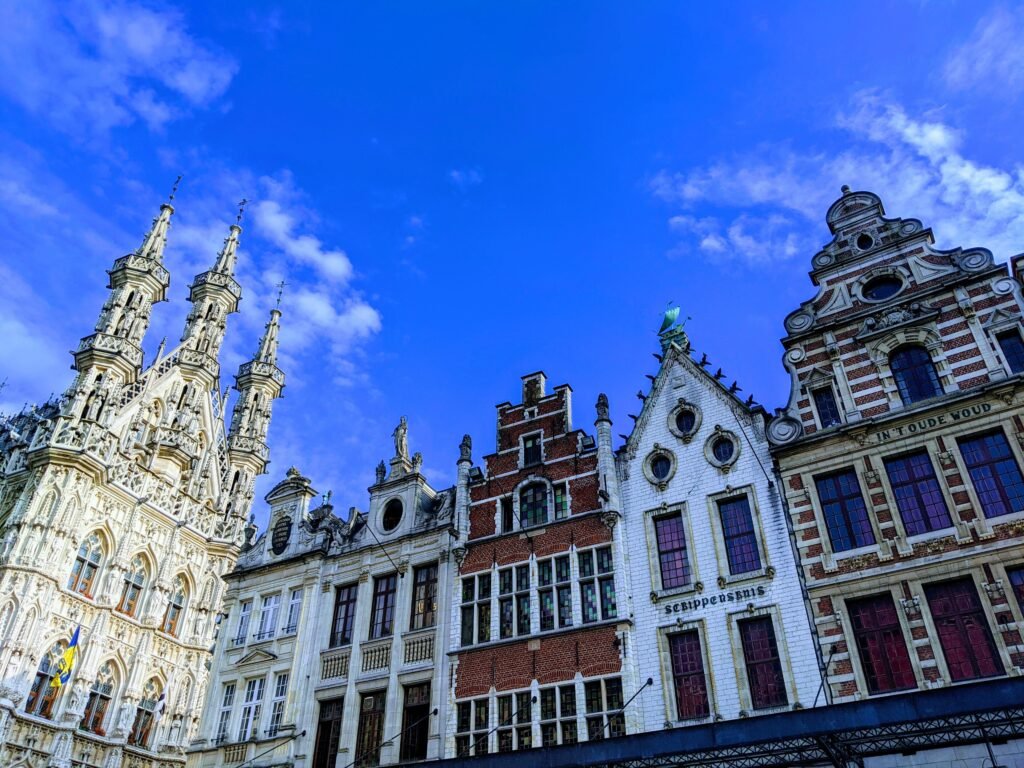
Between the station and historic center, Leuven packs first-time sightseeing into a short chain of university squares and medieval streets. From Martelarenplein, Bondgenotenlaan leads directly toward Rector De Somerplein and the Gothic center in about 1.1 kilometers. Ladeuzeplein and the University Library branch off this same corridor, while M Leuven sits only a few streets away. Oude Markt and the Great Beguinage extend the walking zone south without breaking its continuity. Park Abbey is the main worthwhile outlier, roughly 2.5 kilometers from the visitor center. The trade-off is pedestrian comfort, not distance. Cobbles, busy shared spaces, and constant bicycle movement demand more attention than the compact map suggests.
Why Leuven Works So Well on Foot
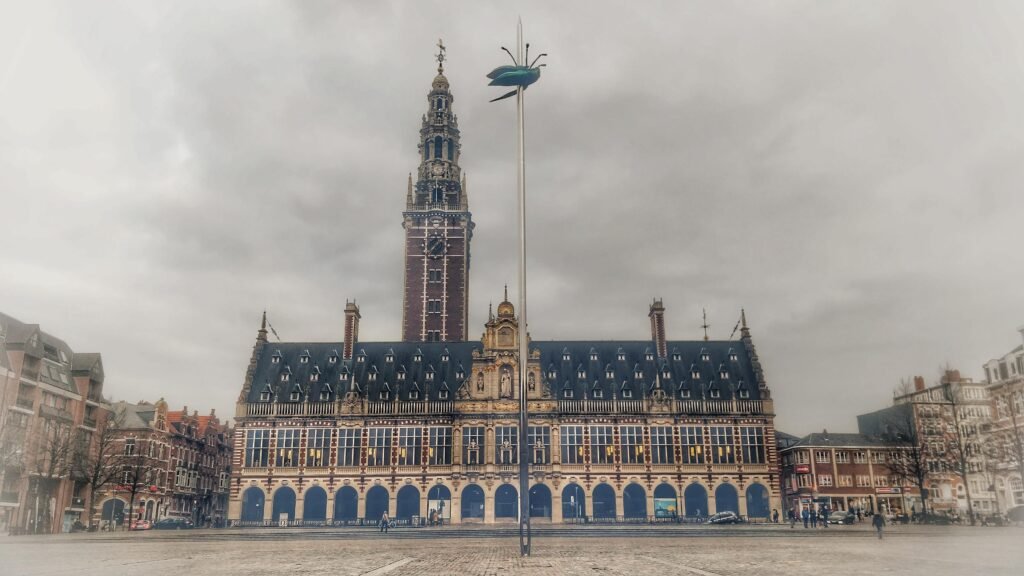
Leuven’s compactness is visible in the official walking network. Visit Leuven’s 2026 must-see route covers the historic highlights in only 3.9 kilometers. The University Library is 800 meters from the station, while Grote Markt is about 1.1 kilometers away. Oude Markt adds only another short step beyond the Gothic center. The street layout creates that density on its own, while buses simply make outer trips easier.
The arrival axis is equally clear. Martelarenplein opens straight onto Bondgenotenlaan, which leads toward Rector De Somerplein and the historic center. Ladeuzeplein and the University Library sit beside that line, with M Leuven only a few streets west. Diestsestraat provides another active station-to-center corridor.
Pedestrian Streets, Cobblestones and Bicycles
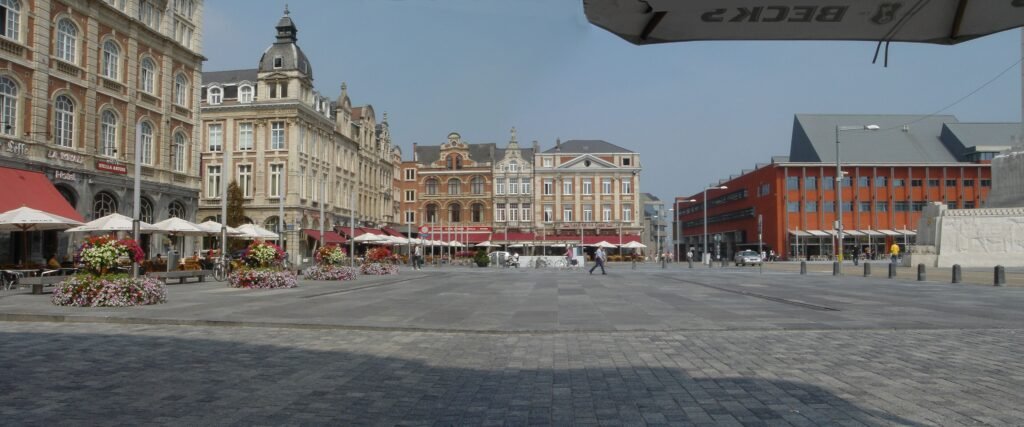
Central Leuven includes extensive pedestrian and car-free space. Grote Markt, Oude Markt, Leopold Vanderkelenstraat and many university streets sit inside restricted zones. Parts of Bondgenotenlaan, Ladeuzeplein and Rector De Somerplein are also classified as car-free pedestrian areas. This produces strong walking continuity through the places visitors use most.
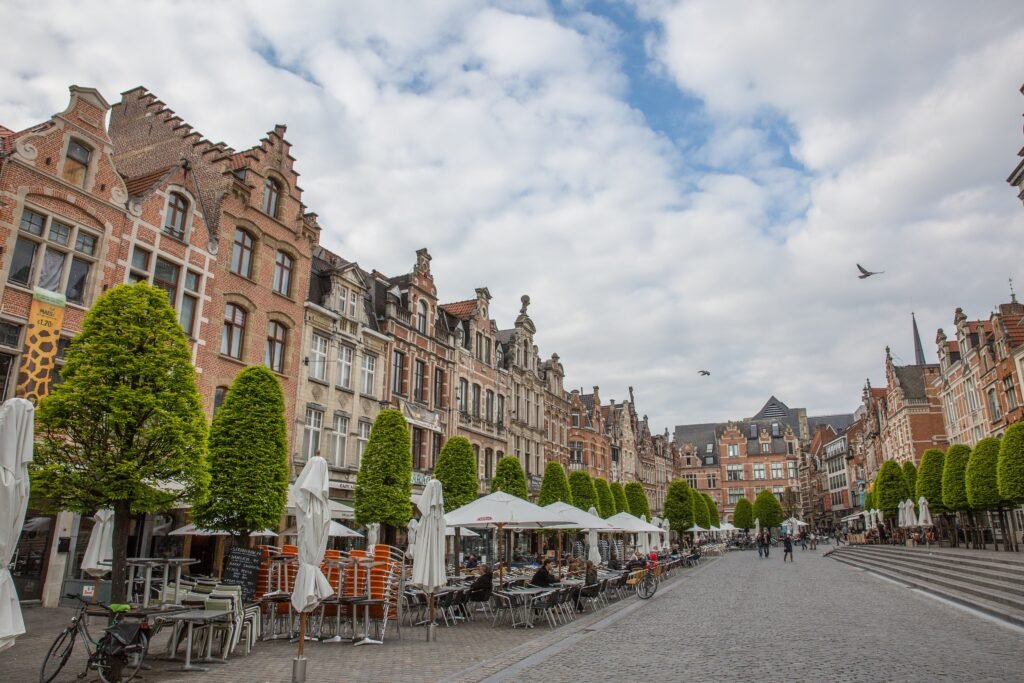
Bicycles are the main shared-space complication. Leuven welcomes cyclists in many pedestrian streets, subject to local signs, and city rules require cyclists not to hinder pedestrians. That still means visitors should check both directions before changing course or crossing a bike movement line. In practice, the result is lively shared space rather than uninterrupted pedestrian-only movement.
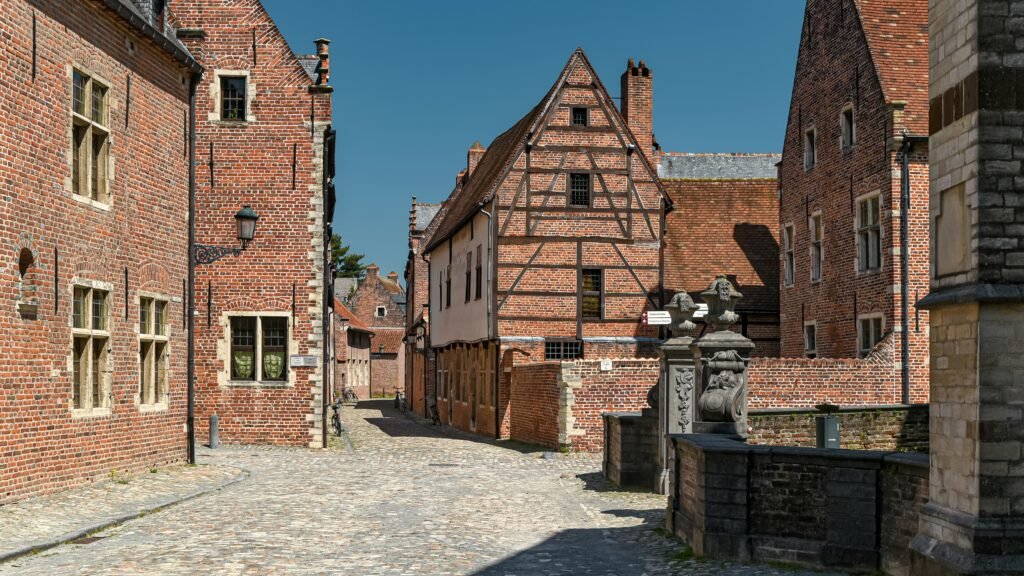
Historic surfaces create a second caveat. Grote Markt and Oude Markt use fairly flat cobbles, but the Great Beguinage is harder for wheelchairs and pushchairs. Short local slopes exist, yet sustained climbing is not a defining part of the standard visitor route. Surface quality matters more than elevation.
Where to Stay for the Easiest Walking
For maximum sightseeing convenience, stay around Grote Markt, Oude Markt, Ladeuzeplein or the university streets between them. These areas keep most first-time sights within minutes on foot. A station-side hotel is also practical because the University Library is only 800 meters away and the historic core begins about 1.1 kilometers from the platforms.
Useful Walking Times
At a normal visitor pace, Leuven Station to the University Library is roughly 10–12 minutes. Grote Markt is about 14–16 minutes from the station, and Oude Markt about 15–18 minutes. The Great Beguinage is roughly one kilometer from Visit Leuven. Park Abbey is different: its 2.5-kilometer distance makes it a separate walk or bus trip.
A 2-Day Walking Route
The two days cover different parts of Leuven without stretching the itinerary for mileage. Day 1 follows the exceptionally direct station-to-core axis. The second day turns south through university streets and the Great Beguinage, then arcs north through the botanical garden and Vaartkom.
Day 1 — Station Axis, Library and Historic Core
Walking route
Day 1 — Station Axis, University Library and Historic Core
- Leuven Railway Station
- Martelarenplein
- Bondgenotenlaan
- University Library
- M Leuven
- Rector De Somerplein
- Leuven Town Hall
- Saint Peter’s Church
- Oude Markt
Start at Leuven Station and cross Martelarenplein into Bondgenotenlaan. Turn to Ladeuzeplein for the University Library, then continue through M Leuven toward Rector De Somerplein. Grote Markt places the Town Hall and Saint Peter’s Church together. Finish around Oude Markt, where the pedestrian square makes an easy evening endpoint. The Town Hall interior is closed for renovation until 2029, but its exterior remains a central landmark.
Day 2 — University Streets, Beguinages and Vaartkom
Walking route
Day 2 — University Streets, Great Beguinage and Vaartkom
- University Hall
- Hogeschoolplein
- Great Beguinage
- Botanical Garden
- Vismarkt
- Small Beguinage
- Vaartkom
Begin at the University Hall on Naamsestraat and pass through Hogeschoolplein before walking south to the Great Beguinage. Continue west to the Botanical Garden, then turn north through Vismarkt. The Small Beguinage and Vaartkom create a quieter finish beyond the busiest historic squares. This route adds variety without repeating Day 1’s main axis.
When to Use De Lijn
Buses are a supplement rather than a requirement for central sightseeing. Leuven Station is the main local-bus departure point, and services fan out across the city and surrounding communes. For occasional rides, a standard ticket costs €3. Contactless bank cards, phones and compatible watches work onboard, with free transfers within 60 minutes using the same payment method.
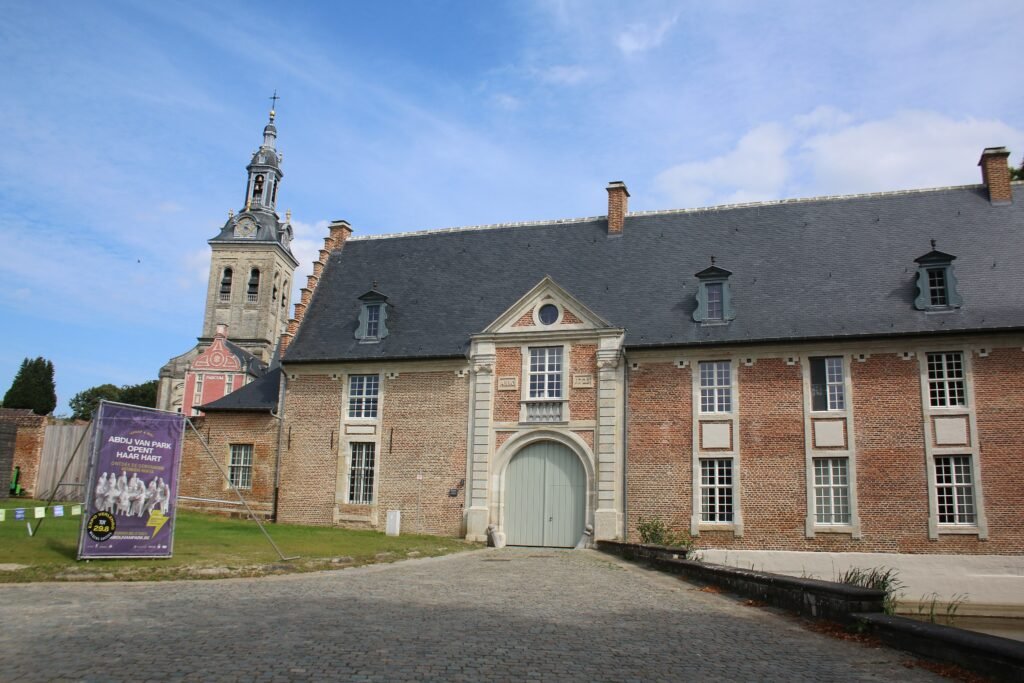
Park Abbey is the clearest visitor use case. De Lijn’s current Abdij van Park stop is served by lines 4a, 4b, 597 and 609. Older tourism pages still show superseded line numbers, so check the live planner before leaving. Late service is strongest on Friday and Saturday nights, when buses run about every 90 minutes.
Arriving in Leuven Without a Car
Leuven Station is unusually well placed for a visitor city break. It opens onto Martelarenplein, with Bondgenotenlaan providing a direct walking line into the center. Direct trains from Brussels reach Leuven in about 25 minutes. The station also has luggage lockers, connecting buses, taxis, lifts and escalators.
Brussels Airport is also exceptionally straightforward by rail. Its railway station sits directly beneath the terminal, and the airport lists Leuven as a direct 13-minute train ride. That makes flying into Brussels practical without converting the city weekend into an airport-transfer exercise.
Is Park Abbey Worth the Extra Distance?
Park Abbey is worthwhile when you want a quieter heritage-and-greenery contrast after the dense university center. However, Park Abbey should be treated as an optional outer excursion. Visit Leuven places it about 2.5 kilometers from its visitor center and offers it as a separate walking loop. Walking there is reasonable, but the bus preserves energy and avoids padding the core itinerary.
When a Car Helps
A private car adds little to a standard two- or three-day Leuven visit. The station, compact center and De Lijn network already cover the main visitor geography. A car becomes more useful only for dispersed countryside, several rural stops or a wider road trip that does not align well with Belgium’s rail network.
Seasonal Walking Note
Leuven remains highly practical for walking throughout the year, but seasonal conditions change comfort. Wet weather can make cobbles and beguinage surfaces more slippery. Busy university-event weekends can increase pedestrian and bicycle traffic, while short winter daylight compresses longer routes.
Bottom Line
Leuven works best when walking is the default and buses are reserved for outer gaps. The main sights are genuinely compact, and the station joins the center through a remarkably direct corridor. The important caveat is not distance. Shared bicycle space, cobbles and busy university streets require more attention than the small map footprint suggests.