
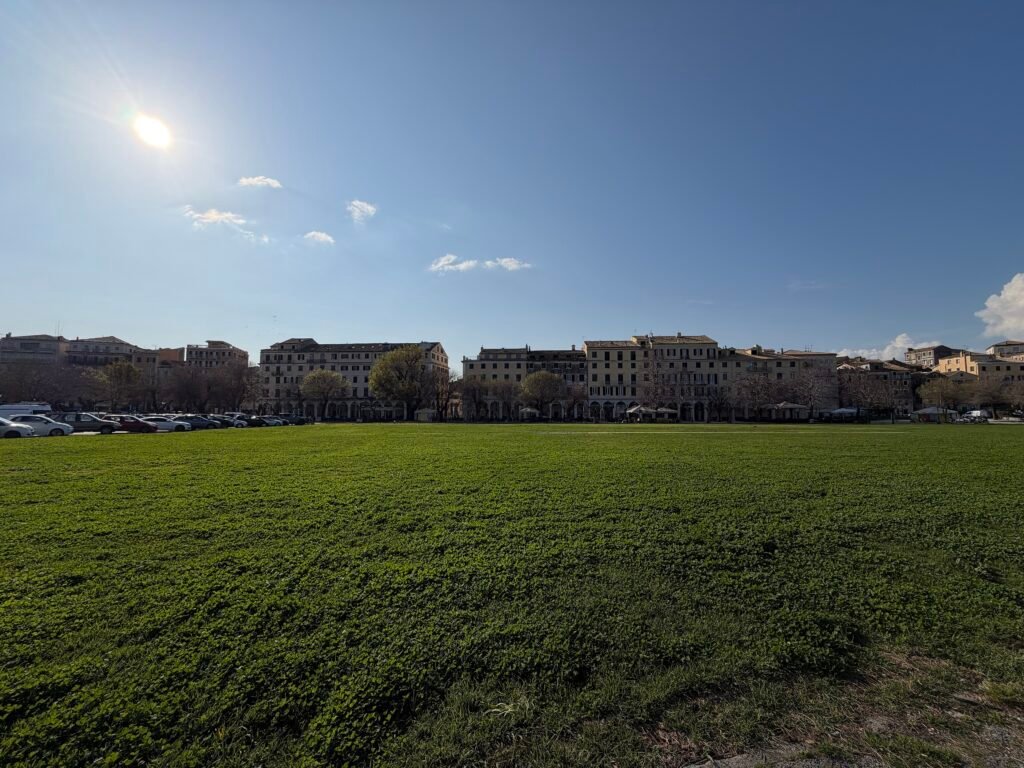
Between the two fortresses, the main visitor core compresses into a remarkably short east-west span. Spianada, Liston, Saint Spyridon and the Palace sit within a few minutes of each other. Narrow cantounia then fold north and west through Campiello, the Jewish Quarter and central shopping streets. Garitsa extends that pattern south along the waterfront, but the geography loosens beyond the old center. Mon Repos sits about two kilometers from central Corfu and requires a longer approach. Kanoni lies roughly four kilometers south and works better as a bus-assisted extension. The result is a weekend dominated by walking, not transfers.
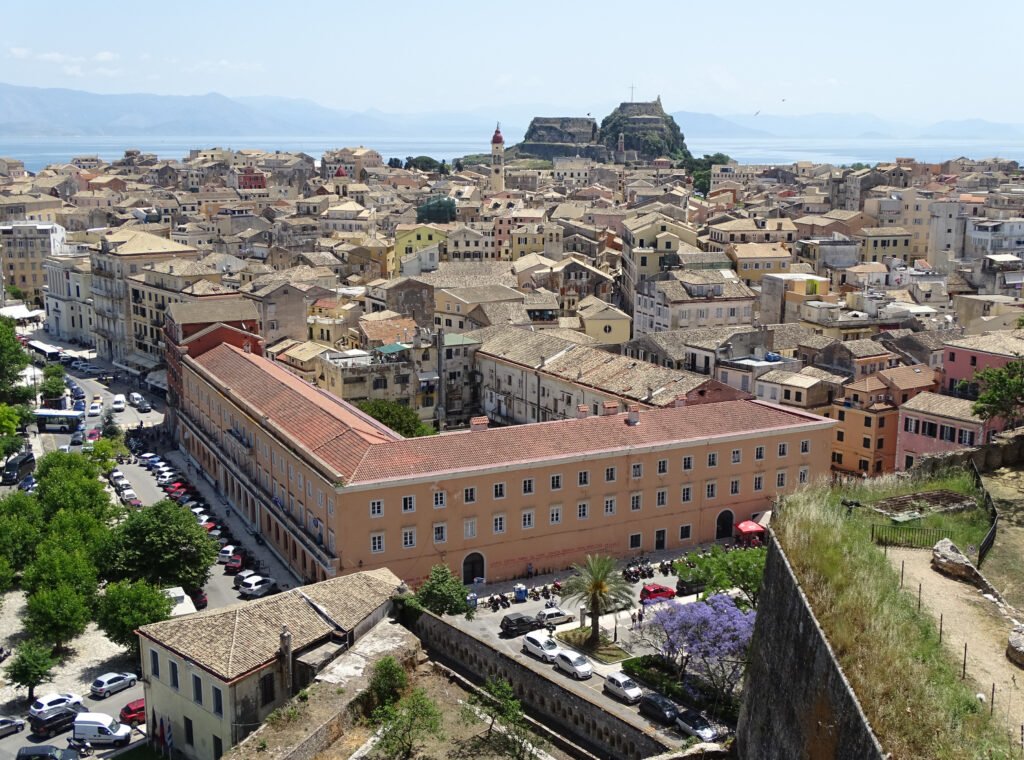
Why Corfu Town Works So Well on Foot
The strongest walking chain sits between Spianada and the Old Town lanes. Hellenic Heritage places the Old Fortress only five minutes from Spianada. The Palace of St Michael and St George stands directly on the square’s northern side, with the Museum of Asian Art inside. Liston borders the same open space, while Saint Spyridon sits just inside the lane network. Campiello and the Jewish Quarter extend the walk without creating a meaningful cross-city gap. Even the New Fortress remains within the compact western edge; Hellenic Heritage also gives five minutes from Spianada. That concentration is the central reason a two-day visit needs little transport.
The Walking Environment: Easy Distances, Historic Surfaces
Short distances do not mean every surface is effortless. Discover Greece describes the cantounia as pedestrianised little roads winding through the Old Town. Those narrow lanes often feel more intimate than conventional city streets, but their stone paving can be uneven. Campiello is especially labyrinthine, with tight passages and small squares. Spianada and Liston offer easier orientation and more open space. Vehicle access is more limited inside the historic center, but it is not a permanently car-free zone. Scooters, deliveries and occasional traffic can still appear. Cruise-day crowding can also compress the narrowest lanes, although that is a temporary comfort issue rather than a structural penalty.
Fortress Climbs Are Localized, Not a Citywide Hill Problem
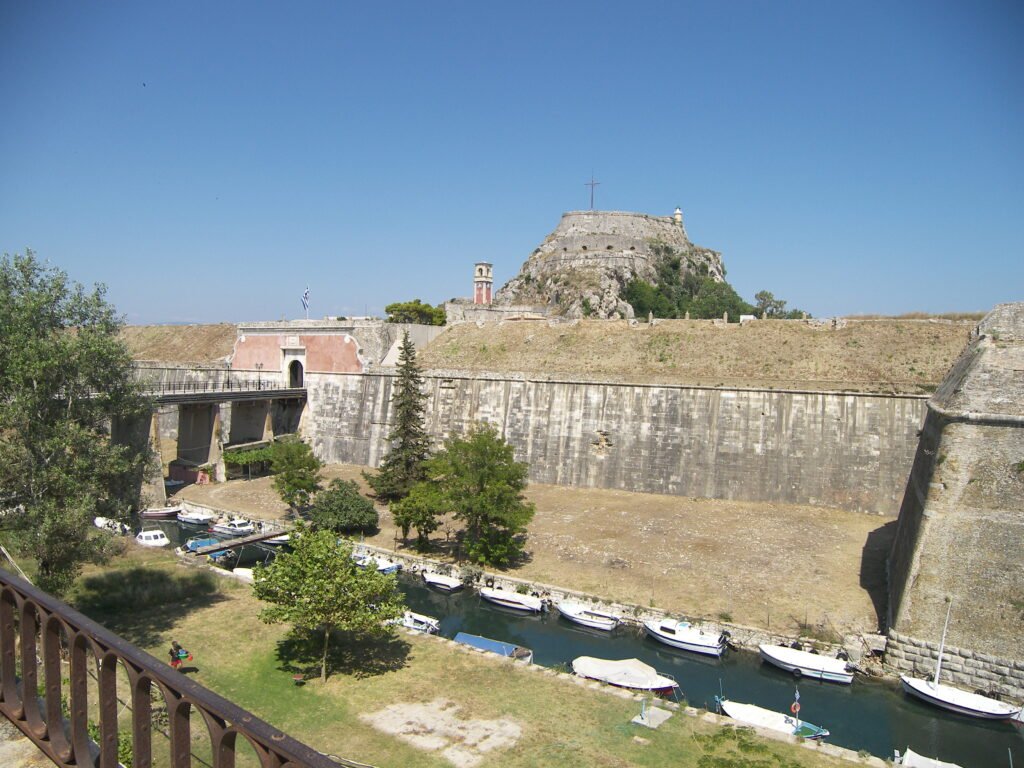
The Old Fortress should be separated into approach and internal effort. Its entrance is only minutes from Spianada, across the moat bridge. Inside, official tourism information describes stone staircases, small inclined planes and a narrow uphill approach to the highest point. The New Fortress creates a second localized climb on Agios Markos Hill at the Old Town’s western edge. These ascents matter during sightseeing, but they do not make the whole city steep. Spianada, Liston and the main Garitsa waterfront are considerably easier. Visitors with limited mobility should check site-specific accessible routes before assuming every upper fortress level is practical.
Best Areas to Stay for Walking
Old Town and the streets around Spianada are the strongest bases for a first visit. They keep Liston, Saint Spyridon, both fortresses and the Palace within easy walking range. San Rocco works well for travelers prioritizing buses and airport arrival, while remaining close to the historic core. Garitsa is a quieter southward option with an easy waterfront connection toward the center. Staying much farther toward Kanoni changes the trip: the iconic viewpoint becomes easier, but the Old Town is no longer outside your door. For a two-to-three-day city break, centrality is more useful than island-wide resort access.
Useful Walking Times and Distances
Spianada to Old Fortress: about 5 minutes. Spianada to New Fortress: about 5 minutes by the official visitor guidance. Spianada to Mon Repos: about 35 minutes on foot, with the estate roughly two kilometers from central Corfu. Kanoni: roughly four kilometers south of the city, so Line 2A usually makes better use of weekend time. Cruise terminal to Old Town: about 1.6 kilometers according to the Port Authority. These are practical planning estimates rather than guaranteed walking times. Historic paving, crowds and individual pace can change the actual time.
A 2-Day Walking Route
Day 1 — Spianada, Old Town and the Old Fortress
Walking route
Day 1 — Spianada, Old Town and Old Fortress
- Spianada Square
- Liston
- Church of Saint Spyridon
- Campiello
- Palace of St Michael and St George
- Museum of Asian Art
- Old Fortress of Corfu
- Boschetto Garden
Start on Spianada, then move along Liston before entering the Old Town toward Saint Spyridon. Continue north through Campiello’s lanes and emerge beside the Palace of St Michael and St George. Visit the Museum of Asian Art if it fits your interests, then cross the square toward the Old Fortress. The route keeps the tight eastern core together instead of repeatedly crossing town. Allow extra time inside the fortress because its internal climb is more demanding than the approach suggests. Finish around the Boschetto and Faliraki waterfront rather than retracing the full route through the lanes.
Day 2 — Jewish Quarter, New Fortress, Garitsa and Mon Repos
Walking route
Day 2 — Jewish Quarter, New Fortress, Garitsa and Mon Repos
- Scuola Greca Synagogue
- New Fortress of Corfu
- San Rocco Square
- Garitsa waterfront
- Anemomylos
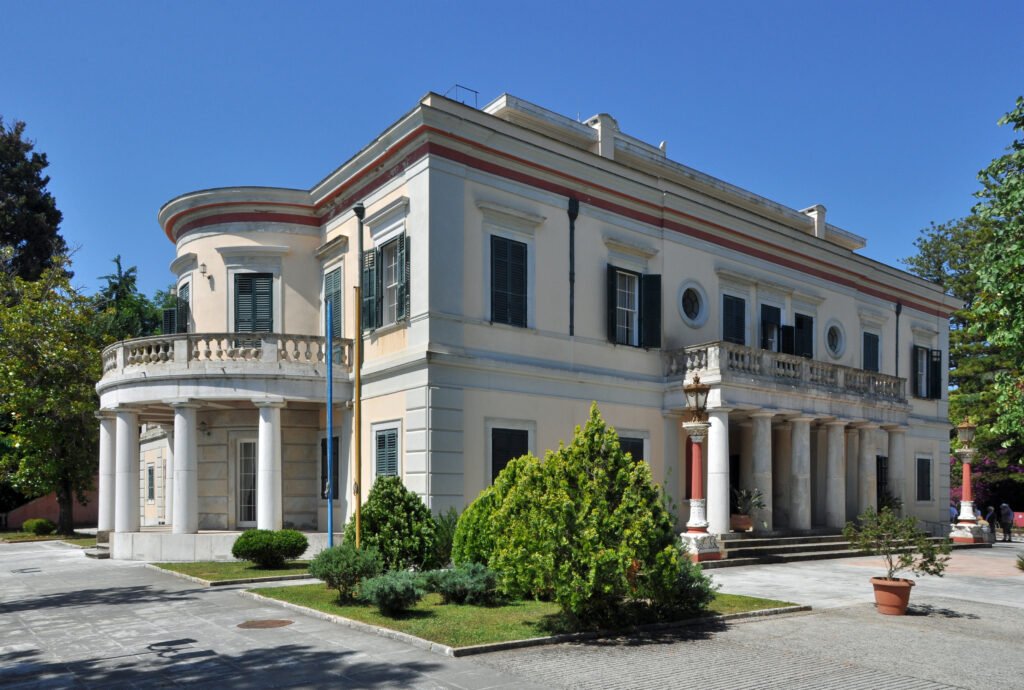
- Mon Repos Estate
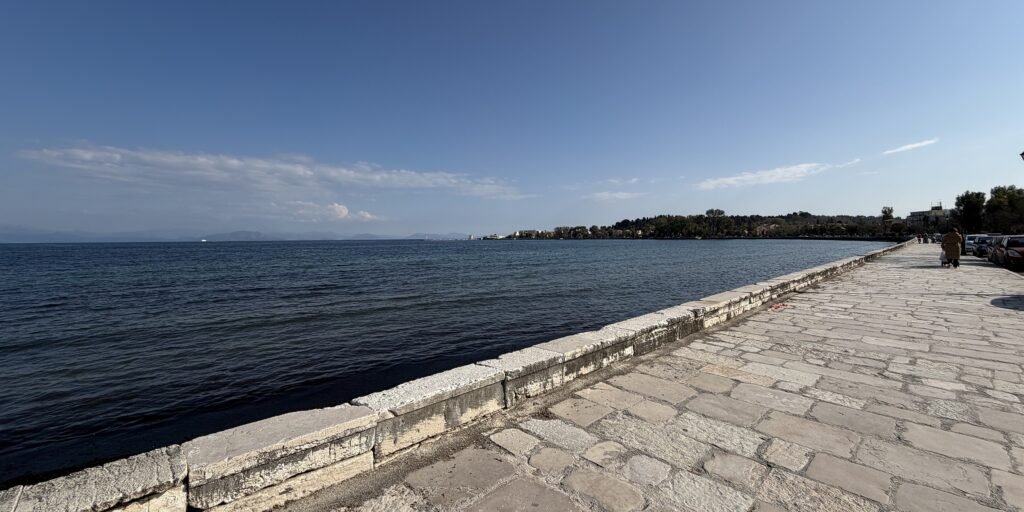
Begin in the Jewish Quarter and climb to the New Fortress while energy is fresh. Afterward, descend through the western center and continue south toward Garitsa. The waterfront turns the second half into a mostly linear walk through Anemomylos toward Mon Repos. Official guidance gives about 35 minutes from Spianada to the estate, so this is a genuine extension. After Mon Repos, use a local bus if you want to continue toward Kanoni and the Vlacherna viewpoint. Do not turn the roughly four-kilometer outer destination into a long road walk simply to avoid transit.
When Local Buses Help
Walking covers Corfu Town’s historic center so efficiently that buses are mainly useful for extensions. Local services connect the center with Mon Repos, Kanoni, the airport and port, while island-wide buses serve destinations farther across Corfu. Routes, fares and ticketing rules can change seasonally, so check current Corfu City Bus information before travel.
Arriving Without a Car
Corfu International Airport sits unusually close to Corfu Town and has direct public-transport connections toward the center. For most central stays, the final walk from the main city stops to the Old Town is short, although luggage on historic paving can add some effort.
When a Car Helps
A private car adds little to a weekend focused on Corfu Town. Parking and historic-center access create more friction than value for the core sights. A car becomes more useful when the trip expands beyond the city into dispersed island destinations. A car becomes more useful for dispersed island destinations such as Paleokastritsa, Sidari, Kassiopi, Glyfada, Pelekas and mountain villages. Treat those as separate island excursions from the Corfu Town weekend.
Walking Limitations to Expect
Historic paving is the most persistent comfort limitation inside the Old Town. Narrow lanes can be uneven, slippery when wet and crowded around popular hours. Fortress staircases and ramps add localized effort, while the New Fortress approach introduces a modest climb. South of Garitsa, sidewalks and road interfaces feel more conventional and less sheltered than the central pedestrian lanes. Kanoni adds distance and elevation beyond that. None of these issues makes the compact core difficult for most visitors, but they matter for wheelchairs, strollers and travelers with limited balance or endurance.
Seasonal Walking Note
Summer heat can make exposed fortress climbs and longer waterfront walks noticeably harder, so start early and use shaded Old Town lanes during the hottest hours. Cruise arrivals can also make Liston, Saint Spyridon and the narrow central lanes temporarily busier. Shoulder seasons usually make longer walks more comfortable, although rain can make polished stone and fortress surfaces slippery.
Bottom Line
Corfu Town works best as a compact historic core with two deliberate extensions. Keep the first day between Spianada, the Old Town and Old Fortress. Use the second to connect the Jewish Quarter, New Fortress and Garitsa before continuing to Mon Repos. Kanoni is better treated as an optional bus-assisted finish. That pattern lets a first-time visitor spend most of a two-to-three-day stay walking, while using local transit only where geography genuinely spreads out.